The Precipice
by Ivan Gontsjarov
On This Page
Description
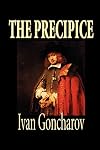
The Precipice considered Goncharov's best work where he was able to realize his artistic ambition to the full. Dreams and aspirations of Raisky sounding like a sonorous chord, praising a Woman, Motherland, God and love.Tags
Recommendations





















Member Reviews
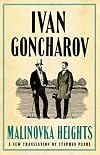
Well, this should be an interesting review (to write if not to read). "Malinovka Heights" was, to be gracious, a disappointment. To be a bit more honest, I came to actively dislike both the book and the author. For a change, let's do the negatives (in my view) first. Then I will try to salvage something positive to say.
The simplest critique is that the book is way, way too long. Neither the plot nor the character development warrant 800 pages. Virtually identical scenes with virtually identical dialog and subject abound. The author also inserts scenes that appear totally unrelated to the story; intended, it is assumed, to provide an entertaining diversion. Without the novel suffering the slightest impairment, 300 pages could be shed. show more
More annoying to me was the author's willingness to insert what are clearly overt political and moral observations. Often, there is little subtlety but a great deal of pompous and unabashed judgments. The truths about life, for Goncharov, are not only knowable but coincidentally identical to his own. He apparently never heard a platitude he didn't endorse.
The characters he presents are generally stereotypical and, despite his best efforts, superficial. A lot of posing but not much content.
As a whole, the novel feels like a cheap but unending romance.
On the positive side, Goncharov (at least in translation), appears to be able to write adequate (albeit not beautiful) prose.
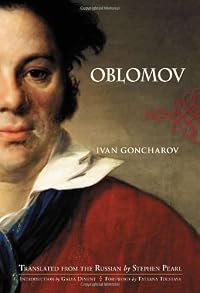
I'm quite open to hearing I missed the whole point but for now, I would encourage people NOT to read "Malinovka Heights". Perhaps "Oblomov" is an entirely different kettle of fish. show less
The simplest critique is that the book is way, way too long. Neither the plot nor the character development warrant 800 pages. Virtually identical scenes with virtually identical dialog and subject abound. The author also inserts scenes that appear totally unrelated to the story; intended, it is assumed, to provide an entertaining diversion. Without the novel suffering the slightest impairment, 300 pages could be shed. show more
More annoying to me was the author's willingness to insert what are clearly overt political and moral observations. Often, there is little subtlety but a great deal of pompous and unabashed judgments. The truths about life, for Goncharov, are not only knowable but coincidentally identical to his own. He apparently never heard a platitude he didn't endorse.
The characters he presents are generally stereotypical and, despite his best efforts, superficial. A lot of posing but not much content.
As a whole, the novel feels like a cheap but unending romance.
On the positive side, Goncharov (at least in translation), appears to be able to write adequate (albeit not beautiful) prose.
I'm quite open to hearing I missed the whole point but for now, I would encourage people NOT to read "Malinovka Heights". Perhaps "Oblomov" is an entirely different kettle of fish. show less
Gontsjarov op z'n Gontsjarovs. Oblomov is nooit ver en alle protagonisten zijn tevens antagonisten. Voor lezers, die het leven lief hebben.
May 4, 2009Dutch
Het leven aan de Wolga...
Sep 22, 2020Dutch
Ratings
Members
- Recently Added By
Author Information

70+ Works 4,630 Members
Born into a wealthy merchant family, Goncharov pursued a career in the civil service; first in the ministry of finance, and later, during more liberal times after 1855, in the censorship department. Most of his life was very placid, troubled only once by an extended sea voyage to Japan, which resulted in a smoothly written travel narrative, The show more Frigate Pallas (1855--57). In his later years, he suffered from paranoia, having become obsessed with the notion that Ivan Turgenev and such foreign writers as Flaubert had plagiarized elements of his last work. Goncharov's solid reputation as a major realist writer rests, above all, on his second novel, Oblomov (1859). The fame of this work derives from its unmatched depiction of human slothfulness and boredom, embodied in the book's likable hero. Oblomov is now a literary and cultural archetype, while the term Oblomovism has entered the Russian language, denoting indolence and inertia of epic proportions. Goncharov's other works are of lesser stature. A Common Story (1847) is an entertaining bildungsroman about a young man's gradual abandonment of his early ideals. The Precipice (1869), on which Goncharov worked for almost 20 years, is a massive portrayal of gentry life in the country. Although its antiradical plot is not terribly successful, the book contains a gallery of striking social and psychological types: particularly memorable are the novel's women. (Bowker Author Biography) show less
Some Editions
Awards and Honors
Series
Belongs to Publisher Series
Gouden Reeks (13)
Work Relationships
Is contained in
Common Knowledge
- Canonical title
- The Precipice
- Original title
- Обрыв
- Alternate titles
- Malinovka Heights
- Original publication date
- 1869
- Original language
- Russian
Classifications
- Genres
- Fiction and Literature, General Fiction
- DDC/MDS
- 891.7 — Literature & rhetoric Asian Literature East Indo-European and Celtic literatures Russian and East Slavic languages
- LCC
- PG3337 .G6 — Language and Literature Slavic languages and literatures. Baltic languages. Albanian language Slavic. Baltic. Albanian Russian literature Individual authors and works 1800-1870
- BISAC
Statistics
- Members
- 147
- Popularity
- 221,986
- Reviews
- 3
- Rating
- (3.62)
- Languages
- 8 — Dutch, English, French, German, Italian, Russian, Spanish, Swedish
- Media
- Paper, Ebook
- ISBNs
- 35
- ASINs
- 6