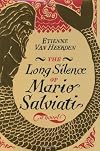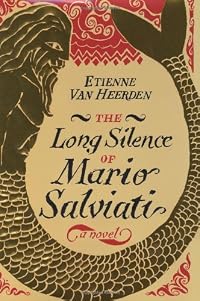
The Long Silence of Mario Salviati: A Novel
by Etienne van Heerden
On This Page
Description
"This is what's always kept us together," said Jonty quietly. "It's the dream and the possibility that give meaning to Yearsonend. . . . For years now it hasn't been about gold . . . it's been about much more than that. . . . Take Mario Salviati, for instance: once the gold is found, the general will let him go. We'd be able to leave the past where it belongs. . . ." Secrets abound in the South African Karoo -- a remote landscape of mountains and desert, where legend weaves its way into show more daily life. A fabulous merman sculpture miraculously appears one morning in the yard of eccentric artist Jonty Jack, and Ingi Friedlander, a young art curator for the National Gallery at Cape Town, comes to Yearsonend to buy the masterpiece. When Jonty refuses her offer, Ingi resolves to stay and win him over. Intrigued by hints of the town's unusual history, Ingi persistently questions its inhabitants, who reveal that a mythical trove of gold is buried nearby. For several centuries gold fever has gripped the town and sent ripples of suspicion through those who live there. Tracing the roots of Yearsonend's violent and magical history of feuding families, troubled love, and corrosive greed, the narrative shuttles between the past and the present, linking two patriarchs with shadowy pasts, an earthy angel, a woman without a face, a ragtag band of soldiers, and a host of other colorful characters. As Ingi delves deeper into the mysteries of Yearsonend, she is inexplicably drawn to Mario Salviati, a deaf, dumb, and blind Italian stonecutter who holds the key to many of the town's secrets. A spectacular climax sheds light on many unanswered questions, and Ingi and the Yearsonenders learn thatthey are searching not only for their past, but also for the promise of the future. With extraordinary imagination and lyricism, Etienne van Heerden captures the essence of a land steeped in myth, and of a culturally diverse people, for whom storytelling and history are inextricably linked. In the rich magic-realism tradition of" One Hundred Years of Solitude, The Long Silence of Mario Salviati is an unforgettable journey toward understanding and inspiration. show lessTags
Recommendations





























Member Reviews
This book started out as a straightforward tale. Ingi Friedlander wanted to make a name for herself in the art world. She was a fairly new curator at the National Gallery in Cape Town. Word had come in of a spectacular new sculpture, The Staggering Merman, to be found in the farthest reaches of the Karoo region in the yard of one Jonty Jack, a sculptor. Found, that is, as Jonty insisted he had nothing to do with its creation, insisted that it just appeared there one day fully formed.
Ingi was determined to acquire this work for the gallery and persuaded the senior people of its merit, sight unseen."Museums almost always bought works on hearsay, desperate to capture the new spirit of now, desperate to remain relevant in the context of show more merciless cuts in government culture budgets". When she arrived in Yearsonend though, trailer firmly attached to Peugeot in full blown anticipation of attaining her goal, Jonty turned her offer down flat, not even allowing her a glimpse of the merman. Determined not to return to Cape Town without the sculpture, Ingi decided to stay in Yearsonend until she could persuade Jonty to change his mind.
This is where the novel veers away from narration and into a world of magic realism. Bit by bit Ingi learns what makes Yearsonenders tick, staying first in the Stonecutter's Cottage, then in the Drostdy with its turrets, gables and secrets. Bit by bit she becomes attuned to the spirit world of the town, a town where the dead continue their lives unseen beside the living townspeople. Unseen, but not unnoticed. These spirits are some of the strongest characters in the novel.
Van Heerden has created a tandem universe of townspeople going about their daily lives and vivid ghosts still going about theirs, still shaping and guiding the town, still splitting the town along the old family loyalty lines in the never ending search for the gold of the doomed President Kruger, the gold brought to Yearsonend in 1901 and hidden. The only person untouched by all this is the other outsider, Mario Salviati the stonecutter. Mario had arrived in the town with a convoy of Italian prisoners of war in 1940, prisoners sent to work the hinterlands. Mario was deaf and dumb then; by the time Ingi met him he was blind as well.
Fact, speculation, myth: lust, love, longing... Ingi patiently worked through the layers as the townspeople, left with nothing but the past, became more and more possessed by the thought of the lost gold and the search for its hiding place. For them, there was no other future. Despite what she managed to learn "...Ingi knew she couldn't intervene; that events took their course and that stories completed themselves in their own time. Life went on its tragic way; irrevocably, forcefully, as water flows along a channel. You couldn't stop it."
My only difficulty with this book was that the ending fell somewhat flat. Seeing that was almost a month ago, I have had time to reconsider and realize that it made complete sense. I suspect I just wanted to stay in other worlds a bit longer. show less
Ingi was determined to acquire this work for the gallery and persuaded the senior people of its merit, sight unseen."Museums almost always bought works on hearsay, desperate to capture the new spirit of now, desperate to remain relevant in the context of show more merciless cuts in government culture budgets". When she arrived in Yearsonend though, trailer firmly attached to Peugeot in full blown anticipation of attaining her goal, Jonty turned her offer down flat, not even allowing her a glimpse of the merman. Determined not to return to Cape Town without the sculpture, Ingi decided to stay in Yearsonend until she could persuade Jonty to change his mind.
This is where the novel veers away from narration and into a world of magic realism. Bit by bit Ingi learns what makes Yearsonenders tick, staying first in the Stonecutter's Cottage, then in the Drostdy with its turrets, gables and secrets. Bit by bit she becomes attuned to the spirit world of the town, a town where the dead continue their lives unseen beside the living townspeople. Unseen, but not unnoticed. These spirits are some of the strongest characters in the novel.
Van Heerden has created a tandem universe of townspeople going about their daily lives and vivid ghosts still going about theirs, still shaping and guiding the town, still splitting the town along the old family loyalty lines in the never ending search for the gold of the doomed President Kruger, the gold brought to Yearsonend in 1901 and hidden. The only person untouched by all this is the other outsider, Mario Salviati the stonecutter. Mario had arrived in the town with a convoy of Italian prisoners of war in 1940, prisoners sent to work the hinterlands. Mario was deaf and dumb then; by the time Ingi met him he was blind as well.
Fact, speculation, myth: lust, love, longing... Ingi patiently worked through the layers as the townspeople, left with nothing but the past, became more and more possessed by the thought of the lost gold and the search for its hiding place. For them, there was no other future. Despite what she managed to learn "...Ingi knew she couldn't intervene; that events took their course and that stories completed themselves in their own time. Life went on its tragic way; irrevocably, forcefully, as water flows along a channel. You couldn't stop it."
My only difficulty with this book was that the ending fell somewhat flat. Seeing that was almost a month ago, I have had time to reconsider and realize that it made complete sense. I suspect I just wanted to stay in other worlds a bit longer. show less
Several months ago, I was perusing the new books section of Barnes and Nobles, and this book stood out to me. It’s a little larger than a regular trade paperback, and has a bright yellow and orange spine, with bold, black, gothic script writing. The back sounded interesting, and the reviewers compared it favorably with 100 Years of Solitude, one of my favorite books. So, I decided to pick it up. I’d never heard of the author before.
Etienne van Heerden is Afrikaans; thus, this book is set in South Africa in a time just after the Apartheid. The reviews are correct in that this book is told in the tradition of 100 Years of Solitude. In the same way that 100 Years of Solitude is both a story about a town and a family, so is The Long show more Silence of Mario Salviati. The town is called Yearsonend, and the book tells the story of this town as it is framed by its two most notorious families, the Bergs and the Pistoriuses. Also like 100 Years of Solitude, there is an element of the fantastic to some of the stories of the town. For instance, it is said that Big Karl Berg, one of the main players in the book, was born with a small gold nugget clutched in his hand.
The book is somewhat through the eyes of Ingi Friedlander, an outsider from the Cape Town National Gallery who first comes to Yearsonend to buy a statue supposedly carved by Jonty Jack Berg. However, Ingi soon loses sight of the reason that she has come to Yearsonend, and instead begins to piece together the history of the town as it is told by its inhabitants. The Long Silence of Mario Salviati tells the story of Yearsonend through three familial generations, starting around the turn of the century. The main portions of the book tell of Big Karl Berg’s efforts to bring water to Yearsonend (Lighting Water) and the search for the mythical Kruger gold and the black ox wagon. But, alongside of the main story, Van Heerden touches upon other more realistic themes, such as the racial issues present in South Africa before the Grand Apartheid, and the role that art and music play within a community.
This book is not another 100 Years of Solitude. It lacks Garcia Marquez’ lyrical writing, and the parts of the story that center around Ingi Friedlander take away from the stories of the past which is where the real interest of this novel is. That being said, it’s a good read and I recommend it. show less
Etienne van Heerden is Afrikaans; thus, this book is set in South Africa in a time just after the Apartheid. The reviews are correct in that this book is told in the tradition of 100 Years of Solitude. In the same way that 100 Years of Solitude is both a story about a town and a family, so is The Long show more Silence of Mario Salviati. The town is called Yearsonend, and the book tells the story of this town as it is framed by its two most notorious families, the Bergs and the Pistoriuses. Also like 100 Years of Solitude, there is an element of the fantastic to some of the stories of the town. For instance, it is said that Big Karl Berg, one of the main players in the book, was born with a small gold nugget clutched in his hand.
The book is somewhat through the eyes of Ingi Friedlander, an outsider from the Cape Town National Gallery who first comes to Yearsonend to buy a statue supposedly carved by Jonty Jack Berg. However, Ingi soon loses sight of the reason that she has come to Yearsonend, and instead begins to piece together the history of the town as it is told by its inhabitants. The Long Silence of Mario Salviati tells the story of Yearsonend through three familial generations, starting around the turn of the century. The main portions of the book tell of Big Karl Berg’s efforts to bring water to Yearsonend (Lighting Water) and the search for the mythical Kruger gold and the black ox wagon. But, alongside of the main story, Van Heerden touches upon other more realistic themes, such as the racial issues present in South Africa before the Grand Apartheid, and the role that art and music play within a community.
This book is not another 100 Years of Solitude. It lacks Garcia Marquez’ lyrical writing, and the parts of the story that center around Ingi Friedlander take away from the stories of the past which is where the real interest of this novel is. That being said, it’s a good read and I recommend it. show less
The Long Silence of Mario Salviati unravels deliciously the magical,mysterious and often sad story of Yearsonend - a small community in South
Africa and its web of people who seem to be stuck in a tangled past. I was absolutely capitvated by this story that weaves the past and the present, the real and the magical into its tale.
Africa and its web of people who seem to be stuck in a tangled past. I was absolutely capitvated by this story that weaves the past and the present, the real and the magical into its tale.
This book has a rating of three, four, or five stars. To say this reader is conflicted is a massive understatement. The story is interesting – five stars. The characters are mildly interesting – four stars. The story is confusing, along with unexplained and unconnected shifts in time – three stars. The structure of some sentences – three stars; others rate four, and a few, very few, rate at five.
A member of my book club selected Long Silence, so I had a certain obligation to continue reading. Something did keep me going – so many mysteries were buried in the rumors and gossip that constituted the life-blood of Yearsonend, I had to keep going to figure them out. A couple of quotes helped me do just that.
The story mixes past show more and present, reality and magical realism, and the “…tangled relationships, the married couples and families who shared so many branches it was difficult to separate one family from another, or the present from the past” (213). Fortunately, a helpful family tree showing all these tangled webs is at the beginning of the book. I would have liked a map, and some indication of when the main members of the family lived. I frequently referred to the tree, but it really only made complete sense after I finished the novel.
One of the most ironic lines occurs in Chapter Two of Part Three, “Mannequin’s Plume.” The narrator explains that Big Karl Berg, aka Karl Thin Air , knew “While he was still in his mother’s womb,…that keeping your head afloat in this country depends on what you have in your hand” (258). Numerous references to hands – and what is in them – permeate the book.
I guess I will give The Long Silence of Mario Salviati four-and-one-half stars simply because of these minor flaws, including the numerous names and nicknames some of the characters had.
All in all, it was a good story and a good read. Like Big Karl’s rushing water, I raced to the end gathering speed and enthusiasm. Unlike his water, I could not “refuse” and give up the ghost. 41/2 stars
--Jim, 1/20/09 show less
A member of my book club selected Long Silence, so I had a certain obligation to continue reading. Something did keep me going – so many mysteries were buried in the rumors and gossip that constituted the life-blood of Yearsonend, I had to keep going to figure them out. A couple of quotes helped me do just that.
The story mixes past show more and present, reality and magical realism, and the “…tangled relationships, the married couples and families who shared so many branches it was difficult to separate one family from another, or the present from the past” (213). Fortunately, a helpful family tree showing all these tangled webs is at the beginning of the book. I would have liked a map, and some indication of when the main members of the family lived. I frequently referred to the tree, but it really only made complete sense after I finished the novel.
One of the most ironic lines occurs in Chapter Two of Part Three, “Mannequin’s Plume.” The narrator explains that Big Karl Berg, aka Karl Thin Air , knew “While he was still in his mother’s womb,…that keeping your head afloat in this country depends on what you have in your hand” (258). Numerous references to hands – and what is in them – permeate the book.
I guess I will give The Long Silence of Mario Salviati four-and-one-half stars simply because of these minor flaws, including the numerous names and nicknames some of the characters had.
All in all, it was a good story and a good read. Like Big Karl’s rushing water, I raced to the end gathering speed and enthusiasm. Unlike his water, I could not “refuse” and give up the ghost. 41/2 stars
--Jim, 1/20/09 show less
De Italiaanse krijgsgevangene Mario Salviati die doofstom en later blind is, wordt tijdens de tweede wereldoorlog naar Jaarengang, een plaats in Zuid-Afrika gestuurd. Hij komt in dienst bij GrootKarel Bergh die samen met hem een irrigatiesysteem zal realiseren, dat op de dag dat het water over de berg Onwaarschijnlijk geleid wordt, niet werkt. Hij verdwijnt daarna en wordt Karel Foetsie genoemd.
Op een dag wordt een kunsthistorica naar het dorp gestuurd om een beeld te kopen van de excentrieke kunstenaar Jonty, de zoon van Karel. Zij wordt geïntrigeerd door het verleden, spreekt met vele bewoners over de geschiedenis van het dorp en begint zo de geheimen te ontraadselen. Tevens begint zij een zoektocht naar zichzelf. Er worden daarna show more verschillende verhalen door elkaar verweven over generaties bewoners.
Ik heb dit mythische verhaal graag gelezen, niet alleen is er de verscheidenheid aan personen, ook thema’s als liefde, oorlog, apartheid, kunst komen aanbod. show less
Op een dag wordt een kunsthistorica naar het dorp gestuurd om een beeld te kopen van de excentrieke kunstenaar Jonty, de zoon van Karel. Zij wordt geïntrigeerd door het verleden, spreekt met vele bewoners over de geschiedenis van het dorp en begint zo de geheimen te ontraadselen. Tevens begint zij een zoektocht naar zichzelf. Er worden daarna show more verschillende verhalen door elkaar verweven over generaties bewoners.
Ik heb dit mythische verhaal graag gelezen, niet alleen is er de verscheidenheid aan personen, ook thema’s als liefde, oorlog, apartheid, kunst komen aanbod. show less
Dec 8, 2009Dutch
1
Meest fantastiese boek ooit!!!
Dec 20, 2009Dutch
Ratings
Members
- Recently Added By
Author Information

Etienne Van Heerden teaches at the University of Cape Town.
Some Editions
Awards and Honors
Awards
Common Knowledge
- Original title
- Die swye van Mario Salviati
- Original publication date
- 2000
- Important places
- Karoo, South Africa
- First words
- When Jonty Jack pushed open the door of his cottage in the gorge above the little town of Yearsonend one morning, and the smell of damp ferns and old wood shavings rose in his nostrils, he found the sculpture standing there, ... (show all)just as though . . . "God's my witness," said Jonty Jack, "just as though it had sprouted from the ground overnight."
- Blurbers
- Brink, André; Nicol, Mike
Classifications
- Genres
- General Fiction, Fiction and Literature
- DDC/MDS
- 839.3636 — Literature & rhetoric German & related literatures Other Germanic literatures Netherlandish literatures Afrikaans Afrikaans fiction 2000–
- LCC
- PT6592.32 .A5235 .S9413 — Language and Literature German, Dutch and Scandinavian literatures Afrikaans literature Individual authors or works
- BISAC
Statistics
- Members
- 136
- Popularity
- 239,658
- Reviews
- 6
- Rating
- (4.32)
- Languages
- 5 — Afrikaans, Dutch, English, French, German
- Media
- Paper
- ISBNs
- 12
- ASINs
- 2