Mary Stuart
by Friedrich Schiller
On This Page
Description
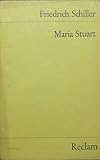
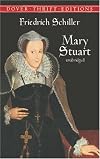
This work details the dramatic final days of Mary, Queen of Scots. The action opens with Mary's unjust imprisonment and ends with her execution, which is ultimately ordered by Mary's morally conflicted cousin, Queen Elizabeth of England. Schiller's play is widely regarded as one of the finest literary distillations of these controversial historical events, and the text served as the basis for the opera Maria Stuarda..
Tags
Recommendations



































Member Recommendations

Member Reviews
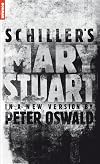
Schiller started researching Mary, Queen of Scots back in the early 1780s, but got sidetracked into writing Don Carlos instead, and didn't pursue the subject any further until Goethe started leaning on him for a new play in 1799. It was completed and first performed in the Weimar theatre in June 1800, and published in 1801. An interesting — oddly modern — detail is that Schiller involved his English translator Mellish in the project from an early stage, so that the German and English versions came out simultaneously. There have been several other English translations since, including ones by Stephen Spender and Peter Oswald. For some reason, Verdi didn't take this one on; Donizetti's (1835) is the best-known opera adaptation of the show more play.
The play deals with the period immediately before Mary's execution at Fotheringhay Castle in February 1587, with the action alternating between Mary in Northamptonshire and Elizabeth in London. Schiller cheats a little bit on the geography in order to make it look as though he's respecting the ideals of Unity of Place and Unity of Time, treating Fotheringhay as though it's only a short ride from central London when in fact it's close to Peterborough, at least a day's journey for a fast messenger. No trains in those days, despite Mary's reference to "...vollen, durstigen Zügen" in III.ii, which might sound like a good description of the East Coast main line! In reality, the action of the play would have been spread over about three weeks, but it is made to seem like three days.
As elsewhere, Schiller is interested in the conflict between free will and historical (political) necessity — Mary is represented as the (mostly) innocent figurehead repeatedly adopted by Catholic conspirators as a focus for their plots against Elizabeth, whilst Elizabeth agonises about signing the death warrant. She doesn't want to have the blood of a woman and a fellow-queen on her hands, but eventually recognises after yet another failed assassination attempt that it just isn't safe to keep her alive any longer. Schiller distorts history slightly by also making the negotiations for Elizabeth's marriage with the Duke of Anjou overlap with the period of the play (in fact they ended in 1581) and allowing Elizabeth's reluctance to be married and the knowledge that Mary's execution would lead to a breach with France play a part in her decision.
As always in Schiller, there's a hot-headed young rebel, Mortimer. His desire for an armed Catholic rising against Elizabeth makes him try to frustrate Mary's attempts to achieve a peaceful solution. His plot inadvertently provides the trigger for Elizabeth to make up her mind and sign the death warrant. But the hothead isn't at the centre of the play this time: the best parts go to Mary, Elizabeth, and Mary's maid Kennedy, and the men are all more or less secondary characters. show less
The play deals with the period immediately before Mary's execution at Fotheringhay Castle in February 1587, with the action alternating between Mary in Northamptonshire and Elizabeth in London. Schiller cheats a little bit on the geography in order to make it look as though he's respecting the ideals of Unity of Place and Unity of Time, treating Fotheringhay as though it's only a short ride from central London when in fact it's close to Peterborough, at least a day's journey for a fast messenger. No trains in those days, despite Mary's reference to "...vollen, durstigen Zügen" in III.ii, which might sound like a good description of the East Coast main line! In reality, the action of the play would have been spread over about three weeks, but it is made to seem like three days.
As elsewhere, Schiller is interested in the conflict between free will and historical (political) necessity — Mary is represented as the (mostly) innocent figurehead repeatedly adopted by Catholic conspirators as a focus for their plots against Elizabeth, whilst Elizabeth agonises about signing the death warrant. She doesn't want to have the blood of a woman and a fellow-queen on her hands, but eventually recognises after yet another failed assassination attempt that it just isn't safe to keep her alive any longer. Schiller distorts history slightly by also making the negotiations for Elizabeth's marriage with the Duke of Anjou overlap with the period of the play (in fact they ended in 1581) and allowing Elizabeth's reluctance to be married and the knowledge that Mary's execution would lead to a breach with France play a part in her decision.
As always in Schiller, there's a hot-headed young rebel, Mortimer. His desire for an armed Catholic rising against Elizabeth makes him try to frustrate Mary's attempts to achieve a peaceful solution. His plot inadvertently provides the trigger for Elizabeth to make up her mind and sign the death warrant. But the hothead isn't at the centre of the play this time: the best parts go to Mary, Elizabeth, and Mary's maid Kennedy, and the men are all more or less secondary characters. show less
Astonishing characters speak in griping poetic prose. I long to see the text brought to life on stage.
I seem to quite like classic German dramas.
German Annotated
Eine Produktion des Bayerischen Rundfunks von 1985 mit Daniela Ziegler als Elisabeth, Anja Kruse als Maria, Dietrich Mattausch (Leicester), Erik Frey (Talbot) ist auf YouTube (https://www.youtube.com/watch?v=cE9fY6jwRuI&t=7s): gut gespielt, nur die englischen Untertitel stören etwas.
Feb 21, 2024German
Ratings
Members
- Recently Added By
Lists

Plays I Like
230 works; 31 members

German Literature
518 works; 56 members

Literary Works Read in College
316 works; 15 members

Set in the 15th and 16th Centuries
28 works; 4 members

Harold Bloom - The Western Canon: B. The Aristocratic Age
231 works; 13 members

Books You Read During High School (For School)
301 works; 52 members

SHOULD Read Books!
354 works; 9 members
My Play Collection
769 works; 3 members
Author Information

1,130+ Works 11,258 Members
Friedrich Schiller was born in Marbach, Germany, the son of an army surgeon, a profession for which he himself was later educated. He never wanted to practice medicine, however, and found an outlet for his dissatisfaction in writing poetry and plays. Schiller's first play was to be performed was The Robbers (1781), a rallying cry for the freedom show more and idealism of youth against the tyranny and hypocrisy that Schiller saw all around him. The play was an immediate success, but Schiller, who had taken unauthorized leave from his regiment to watch the performance, was arrested and forbidden by the ruling Duke to write anything but medical books in the future. In defiance of the order, Schiller fled the duchy and, although suffering great poverty, continued to write. The remainder of Schiller's life was a struggle against poverty and, in his last years, a struggle against tuberculosis. Each of Schiller's nine plays is a masterpiece of situation, characterization, subtle psychology, and brilliant dramatic technique. Most of his plays focus on historical subjects, such as Mary Queen of Scots, Joan of Arc, or the Swiss hero William Tell. Schiller uses these period characters and settings to suit his own themes, which center on individual freedom, justice, and heroism. He often sacrifices historical accuracy in order to make a point. Schiller's place in German literature is very near the top. Among German dramatists there are none better, and perhaps only his friend German poet and playwright Goethe can be called an equal. (Bowker Author Biography) show less
Some Editions
Awards and Honors
Series
Belongs to Publisher Series
Work Relationships
Is contained in
Classical German drama : Lessing : Nathan the wise + Goethe : Egmont + Schiller : Mary Stuart + Kleist : The Prince of Homburg + Büchner : Danton's Death by John Gassner
Schiller’s Werke : nach den vorzüglichsten Quellen revidirte Ausgabe. Vierter-Fünfter Theil. Dramen II. by Friedrich Schiller
Ausgewählte Dramen. Kabale und Liebe. Don Carlos. Maria Stuart. Wilhelm Tell. Mit Illustrationen von Johann Heinrich Ramberg. Ganzlederausgabe. by Friedrich Schiller
Hamburger Lesehefte plus Königs Materialien : Friedrich von Schiller : Maria Stuart by Volker Krischel (indirect)
Schillers Werke Dritter Band (Wallensteins Lager / Die Piccolomini / Wallensteins Tod / Maria Stuart / Die Jungfrau von Orleans / Die Braut von Messina) - Illustrierte Ausgabe by Friedrich Schiller
Has the adaptation
Has as a supplement
Has as a commentary on the text
Has as a student's study guide
Has as a teacher's guide
Common Knowledge
- Canonical title
- Mary Stuart
- Original title
- Maria Stuart
- Original publication date
- 1800
- People/Characters
- Mary, Queen of Scots; Elizabeth I, Queen of England; Robert Dudley, 1st Earl of Leicester; George Talbot, 6th Earl of Shrewsbury; William Cecil, 1st Baron Burghley; Wilhelm Davidson (show all 9); Amias Paulet (1532 – 26 September 1588); Mortimer; Hanna Kennedy
- Important places
- Fotheringhay Castle, Fotheringhay, Northamptonshire, England, UK; Westminster Palace, London, England, UK
- Important events
- The Trial of Mary Queen of Scots (1586)
- Original language
- German
- Disambiguation notice
- 3150000645 Reclam UB
3159600343 Reclam UB eBook
0140447113 1998 Penguin Classics English
0936839007 2000 Applause English
Classifications
- Genre
- Fiction and Literature
- DDC/MDS
- 832.6 — Literature & rhetoric German & related literatures German drama 1750–1832 : 18th century; classical period; romantic period
- LCC
- PT2473 .M3 .M4 — Language and Literature German, Dutch and Scandinavian literatures German literature Individual authors or works 1700-ca. 1860/70
- BISAC
Statistics
- Members
- 953
- Popularity
- 27,953
- Reviews
- 6
- Rating
- (3.60)
- Languages
- 13 — Catalan, Dutch, English, Estonian, French, German, Hungarian, Italian, Latvian, Norwegian (Bokmål), Russian, Spanish, Swedish
- Media
- Paper, Audiobook, Ebook
- ISBNs
- 101
- UPCs
- 3
- ASINs
- 37