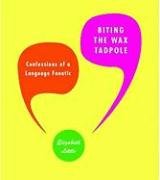
Biting the Wax Tadpole: Confessions of a Language Fanatic
by Elizabeth Little
On This Page
Description
What can Johnny Cash's lyrics teach us about the little-known Tangut dialect? Is 'tabernacle' really a swear word in Quebecois? Which language has absolutely no verbs? What is Earth's politest insult? And what is biting the wax tadpole actually a translation of? Prepare for a hilarious rollercoaster ride through hundreds of well-known, obscure, difficult, dead and even made-up languages. Elizabeth Little has waded through innumerable verb tables in every available mood and tense, untangled show more up to eighteen cases of noun, and wrestled with all kinds of complicated adjective, participles and glottal stops to bring you the best and most bizarre quirks of the ways people communicate all around the globe. From the language that has no different word for 'blue' or 'green', to why Icelanders need official permission to name their children, from what makes a Korean TV hit to what people might think you're saying if you order eggs in Spain, Biting the Wax Tadpolewill ensure you're never lost for words again. show lessTags
Recommendations






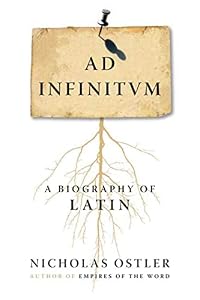
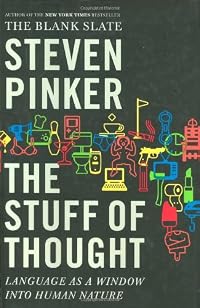
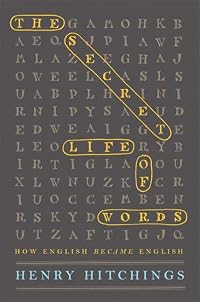

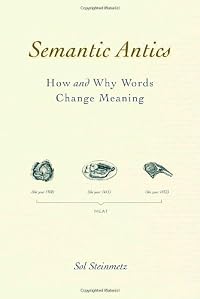
Member Recommendations
Member Reviews
Elizabeth Little is deeply, delightfully in love with languages, and her infectious enthusiasm shines out from every page of this fun little book as she takes us on a whirlwind tour of nouns, verbs, adjectives, and all the other components of human speech. Along the way, she introduces us to some of the weirdest and most wonderful examples of how different languages work, from Arabic's pattern of creating new words by swapping out an existing word's vowels, to the staggeringly complicated things Navajo does with verbs, to the way Thai uses a different word for "three" depending on whether you're talking about three books, three boys, or three cigarettes. Personally, I find all this fascinating but there's no doubt that any discussion of show more grammar can get pretty dry if it's not written properly, so Little's breezy style, entertaining pop culture references, and amusingly self-deprecating anecdotes about her own experiences with language-learning are extremely welcome and keep things moving along at a fast, entertaining clip.
Definitely recommended for anybody with a streak of linguistic nerdiness in their soul. show less
Definitely recommended for anybody with a streak of linguistic nerdiness in their soul. show less
I just finished reading Elizabeth Little's Biting the Wax Tadpole. She goes through the parts of speech and describes the various ways different languages she has run into treat that part of speech - for example languages with 1 to 18 cases. As you may recall I like languages with 4, but 18 seems a bit ridiculous to me.
This is a great book for anyone trying to learn languages. Whatever quirks the one you are working on has, she knows one with either the same quirk taken to horrible extremes, or one with worse quirks, or probably both.
Her Semitic examples are Arabic, but I recognized the basic principles involved from learning Hebrew. Ever wonder why the Greek words have three different kinds of accents on them? It comes from Classical show more Greek, and they were more like Chinese tones than our accents - except that they were only on the accented sylables. (Not that that helps me learn them or even pronounce them, but at least they mean a little bit more now.)
I guess part of why I enjoyed it is that, like me, Little is fascinated by language/s without being one of those people who learns them easily. This is not only a fun book about language, but one that provides insights into how languages work, and therefore how people work. show less
This is a great book for anyone trying to learn languages. Whatever quirks the one you are working on has, she knows one with either the same quirk taken to horrible extremes, or one with worse quirks, or probably both.
Her Semitic examples are Arabic, but I recognized the basic principles involved from learning Hebrew. Ever wonder why the Greek words have three different kinds of accents on them? It comes from Classical show more Greek, and they were more like Chinese tones than our accents - except that they were only on the accented sylables. (Not that that helps me learn them or even pronounce them, but at least they mean a little bit more now.)
I guess part of why I enjoyed it is that, like me, Little is fascinated by language/s without being one of those people who learns them easily. This is not only a fun book about language, but one that provides insights into how languages work, and therefore how people work. show less
I had been lusting after this book after listening to possibly my all-time favorite episode of TTBOOK. And it was great for those of us who can get geeked-out on language. I find that I appreciate some of the same linguistic idiosyncrasies as Little, which is always heartening, and her discussion of Semitic languages has convinced me to add one to my list of languages I'd like to learn someday. This is thoroughly a trivia book that, I think, is best geared toward anyone with a background in foreign language study as I could imagine all the grammar-speak might leave more than a few lost. Although, to her credit, Little goes the extra mile in explaining all the crazy terms and linking them to pop culture to make her passion more show more accessible. For me, the overabundance of pop culture references began to bore me...made her out to be a sort of linguistic Chuck Klostermann--maybe a little cutesier. That sort of in-crowd snarkiness I generally only tolerate in discussions with my friends (my double standard: coming from us it's OK, from others--they're an asshole). But that's just my beef. show less
What a lovely book that I don't remember anything about! First off, Elizabeth Little knows her language. She also knows that language grammar isn't always the easiest, or most entertaining of subjects. She manages to describe all sorts of different languages and how they are classified while keeping things short, to the point, and entertaining.
I don't remember a single thing about the different types of verbs, adverbs, prepositions or nouns, but I do know that there are languages that only have two colors, black or white. Or that Sanskrit is a dead language, but a village in India is bringing it back!
There are a few problems with this book, namely the chick lit type attitude was at times a bit grating. Also, the book needs an index, show more and a list of sources. Other than that, Its a great book, not exactly a primer on language, but gives enough so that a person who knows nothing about language, comes away knowing just enough to get in trouble :) show less
I don't remember a single thing about the different types of verbs, adverbs, prepositions or nouns, but I do know that there are languages that only have two colors, black or white. Or that Sanskrit is a dead language, but a village in India is bringing it back!
There are a few problems with this book, namely the chick lit type attitude was at times a bit grating. Also, the book needs an index, show more and a list of sources. Other than that, Its a great book, not exactly a primer on language, but gives enough so that a person who knows nothing about language, comes away knowing just enough to get in trouble :) show less
Note the description says 'Chinese shopkeepers' made a mistake - Coca-Cola actually used a wiser strategy and came up with a better translation, as Little explains in this odd little book. It's not a thoughtful book. Rather, it reads as if we're in her office, and she's pulling books off the shelves and off stacks, showing us this, telling us about that, saying 'read this' and 'did you know that?!' It's a little breathless, but quite fun.
Little's exploration of the immense world of language is an interesting and intriguing read. Yes, she assumes some knowledge of grammar from her readers, but even if you don't have that knowledge, there is still insight to be gained.
There are tidbits of uniqueness for nearly all the major languages, and plenty of the minor ones, too. This expansive topic is dealt with in an organized, but not a text-book, manner, which I greatly appreciated.
I love words and communication, though I am far from a language fanatic. Still, I loved this book for giving me snippets of languages that might lead me to further exploration and some that might lead me as far away from the language as possible. (For example, as an accountant, I probably would not show more do well with the language Piraha, which has words for numbers only to the extent of "small size or amount" and "slightly larger size or amount.")
This is an easy read, and one that can be flipped through in order to find a bit of trivia, or read in detail to get a better feel for just what language means to each of the cultures in our world. show less
There are tidbits of uniqueness for nearly all the major languages, and plenty of the minor ones, too. This expansive topic is dealt with in an organized, but not a text-book, manner, which I greatly appreciated.
I love words and communication, though I am far from a language fanatic. Still, I loved this book for giving me snippets of languages that might lead me to further exploration and some that might lead me as far away from the language as possible. (For example, as an accountant, I probably would not show more do well with the language Piraha, which has words for numbers only to the extent of "small size or amount" and "slightly larger size or amount.")
This is an easy read, and one that can be flipped through in order to find a bit of trivia, or read in detail to get a better feel for just what language means to each of the cultures in our world. show less
This was a fun book to read on languages. It is not a real introduction to linguistics, but you are edged into the variety of languages and how their grammar differs, soem by quite a bit from English. Discussions are wide ranging:
l. Acquiring second and third anguages.
2. How some languages differentiate between two types of we:
a. We two and not you
b. I and you
3. Pitch accents and tonal languages.
4. Agglutination
5. Gender and sex in languages.
And so forth -- a very delightful read.
l. Acquiring second and third anguages.
2. How some languages differentiate between two types of we:
a. We two and not you
b. I and you
3. Pitch accents and tonal languages.
4. Agglutination
5. Gender and sex in languages.
And so forth -- a very delightful read.
Members
- Recently Added By
Author Information

4 Works 1,217 Members
All Editions
Common Knowledge
- Original publication date
- 2007-11-01
- Dedication
- For my mother
- Blurbers
- Greenman, Ben ; Florey, Kitty Burns ; Casagrande, June
Classifications
Statistics
- Members
- 181
- Popularity
- 180,328
- Reviews
- 9
- Rating
- (3.55)
- Languages
- English, French
- Media
- Paper
- ISBNs
- 4
- ASINs
- 2