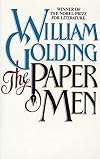
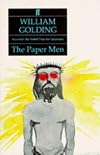
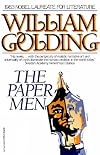
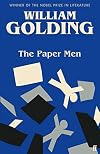
The Paper Men
by William Golding
On This Page
Description
Fame, success, fortune, a drink problem slipping over the edge into alcoholism, a dead marriage, the incurable itches of middle-aged lust. For Wilfred Barclay, novelist, the final unbearable irritation is Professor Rick L. Tucker, implacable in his determination to become The Barclay Man. Locked in a lethal relationship they stumble across Europe, shedding wives, self-respect and illusions. The climax of their odyssey, when it comes, is as inevitable as it is unexpected.Tags
Recommendations


















Member Recommendations
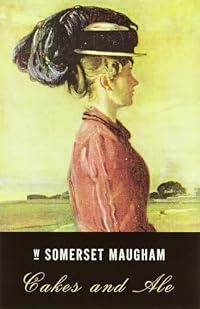
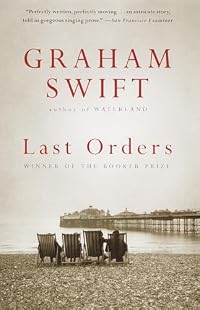
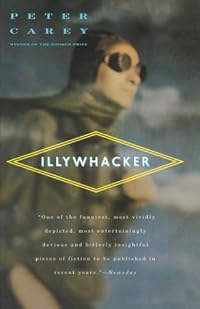
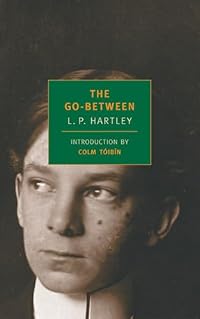
KayCliff Both books show a hostile relationship between biographer and subject.
Member Reviews
I’m having trouble making up my mind about Golding. Until a couple of years ago, I knew him only as the author of Lord of the Flies – his debut novel and his most famous, which must have really hurt – but then I read Rites of Passage and was very impressed. I picked up several of his books in a charity shop, so I had more to read. But… I’m reminded of John Fowles’s oeuvre: he wrote a couple of novels that were stunning pieces of work, but also a number that were almost emblematic of the output of a British white middle-class middle-brow male writer and so not so good. I think Golding was a better writer than Fowles, although none of his books, other than his debut, were as successful as either The Magus or The French show more Lieutenant’s Woman (and while the latter is an excellent piece of work, the former is very much the sort of book that’s admired only by people in their early twenties). So too with Golding: a handful of beautifully-written but quite strange novels, and then some that are pretty much emblematic of the output of a British white middle class male writer, although perhaps never middle-brow. And The Paper Men falls into the latter category. It’s a first-person narrative by a famous writer who has managed to build a successful career out of a critically-acclaimed and commercially-successful novel and a series of much less successful follow-on works. But he’s seen as an important man of letters, and a US academic turns up on his doorstep asking to be his official biographer. The writer refuses. Shortly afterwards, the writer’s marriage breaks up and he heads off to foreign parts. There’s then a sort of hallucinatory chase around the world, with the biographer trying, and failing, to gain permission to access the writer’s papers. There’s something more going on there, or at least it feels like there should be, but if it’s a reference to anything it pass me by. There’s some very male-gazey – well, pretty lecherous – depictions of the biographer’s young wife, and a number of situations with border on farce. In fact, at times The Paper Men feels like it’s supposed to be a comic novel, even though it’s not at all humorous for most of its length. I’ll certainly read more Golding, but the last two books by him I’ve read have been somewhat disappointing. show less
Common advice is to write what you know, which means that a fair parody of serious literature as a genre is a story about an aging male author with some kind of driftless personal life being prompted to go on a transformative adventure, usually in the erotic company of a younger woman. Taken as a member of that genre, The Paper Men is an awful novel. Taken as a parody, it rises to occasional flashes of brilliance.
Wilfred Barclay is a certified titan of English literature, coasting on the reputation of his first novel, and also a miserable and curmudgeonly alcoholic. He crosses paths with the ambitious American academic Richard Tucker, who seeks to become the authorized biographer of Wilf Barclay. And over the course of several years, show more the two men grind each other to pieces.
Barclay's disdain and hatred of Tucker is the animating spirit of this book, a vile gut level enmity that propels him across Europe in an alcoholic fugue. Barclay's misogyny is also a major character trait, he doesn't much care for his ex-wife, daughter, or any of the other women he encounters, except his lust for Tucker's younger wife, but compared to how he treats Tucker himself, the misogyny is small change.
Three scenes illuminate the book: The opening, where Barclay mistakes Tucker for a badger rummaging in his trash bin and shoots him with an air gun, an extended encounter at a Swiss mountain lodge where Tucker attempts to bargain his wife's body for Barclay's assent, and then saves Barclay's life in a mountaineering accident, and the conclusion, which is worth not spoiling. A fantastically savage and ironic spirit of farce animates these scenes.
Unfortunately, they're connected by about 150 pages of nothing much in particular, a venting of bile and delirium tremens that is neither entertaining not informative. show less
Wilfred Barclay is a certified titan of English literature, coasting on the reputation of his first novel, and also a miserable and curmudgeonly alcoholic. He crosses paths with the ambitious American academic Richard Tucker, who seeks to become the authorized biographer of Wilf Barclay. And over the course of several years, show more the two men grind each other to pieces.
Barclay's disdain and hatred of Tucker is the animating spirit of this book, a vile gut level enmity that propels him across Europe in an alcoholic fugue. Barclay's misogyny is also a major character trait, he doesn't much care for his ex-wife, daughter, or any of the other women he encounters, except his lust for Tucker's younger wife, but compared to how he treats Tucker himself, the misogyny is small change.
Three scenes illuminate the book: The opening, where Barclay mistakes Tucker for a badger rummaging in his trash bin and shoots him with an air gun, an extended encounter at a Swiss mountain lodge where Tucker attempts to bargain his wife's body for Barclay's assent, and then saves Barclay's life in a mountaineering accident, and the conclusion, which is worth not spoiling. A fantastically savage and ironic spirit of farce animates these scenes.
Unfortunately, they're connected by about 150 pages of nothing much in particular, a venting of bile and delirium tremens that is neither entertaining not informative. show less
I didn't even finish this garbage. There are already too many books about old white men complaining about how their lives are empty. I'm sure the end resolves in him either having an epiphany or continuing to be a dick. Either way, I can't bring myself to give a shit about this sorry old piteous sod of a character.
A friend challenged me to read this in a day, and that's exactly what I did. This long novella is very interesting though - and despite not receiving the attention that Golding's other works have, I think it's definitely worth a look. His tale of a writer and his would-be biographer, and the cat-and-mouse chase around the world, is stunning in places (though hard to follow in others).
Many have tried to read some depth into this book, but why bother? If Golding is trying to 'say something', he has all the skills needed to make sure it's heard. If you like the first few pages, read on. If not, not.
I didn't even finish this garbage. There are already too many books about old white men complaining about how their lives are empty. I'm sure the end resolves in him either having an epiphany or continuing to be a dick. Either way, I can't bring myself to give a shit about this sorry old piteous sod of a character.
> Babelio : https://www.babelio.com/livres/Golding-Les-Hommes-de-papier/202720
> On lira cet étrange bouquin pour sa liberté de ton et pour son style alcoolisé. À consommer sans modération.
—Danieljean (Babelio)
> On lira cet étrange bouquin pour sa liberté de ton et pour son style alcoolisé. À consommer sans modération.
—Danieljean (Babelio)
Feb 20, 2021 (Edited)French
Members
- Recently Added By
Lists

Top Five Books of 2013
1,564 works; 722 members
Author Information

98+ Works 68,436 Members
William Golding was born in Cornwall, England on September 19, 1911. Although educated to be a scientist at the request of his father, he developed an interest in literature. At Oxford University, he studied natural science for two years and then transferred to a program for English literature and philosophy. He eventually became a schoolmaster at show more Bishop Wordsworth's School in Salisbury. During World War II, he joined the Royal Navy and was involved in the sinking of the German battleship Bismarck. After the war, he returned to Bishop Wordsworth's School and taught there until 1962. His first novel, Lord of the Flies, was published in 1954 and was made into a film in 1963. His other novels include The Inheritors, Free Fall, The Spire, The Pyramid, The Paper Men, Close Quarters, and Fire down Below. He won the Booker Prize for Rites of Passage in 1980 and the Nobel Prize for Literature in 1983. He also wrote plays, essays, and short stories. He was knighted by Queen Elizabeth II in 1988. He died on June 19, 1993. (Bowker Author Biography) show less
Some Editions
Series
Belongs to Publisher Series
Common Knowledge
- Canonical title
- The Paper Men
- Original title
- The paper men
- Original publication date
- 1984
- People/Characters*
- William Barclay; Rick L. Tucker
- Epigraph*
- /
- Dedication
- For my friend and publisher
Charles Monteith - First words
- I knew at once that it was one of those nights.
- Quotations
- `The biography will be a duet, Rick. We'll show the world what we are -- paper men, you can call us. ... Think, Rick --- all the people who get lice like you in their hair, all the people spied on, followed, lied about, all t... (show all)he people offered up to the great public -- we'll be revenged, Rick, I'll be revenged on the whole lot of them.'
What would he turn up, dull and indefatigable, treading through my past life with his huge feet, shoving his nose down to that old, cold trail?
"I majored in flower arranging and bibliography."
Neither of us, critic and author, we knew nothing about people or not enough. We knew about paper, that was all. ... Then, paper man that I am, I began to think -- what a story! - Last words
- (Click to show. Warning: May contain spoilers.)How the devil did Rick L. Tucker manage to get hold of a gu [sic]
- Original language
- English
*Some information comes from Common Knowledge in other languages. Click "Edit" for more information.
Classifications
Statistics
- Members
- 505
- Popularity
- 59,192
- Reviews
- 7
- Rating
- (3.27)
- Languages
- 14 — Danish, Dutch, English, Finnish, French, German, Greek, Hungarian, Polish, Portuguese, Russian, Spanish, Swedish, Turkish
- Media
- Paper, Audiobook, Ebook
- ISBNs
- 29
- ASINs
- 15