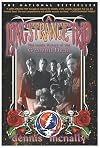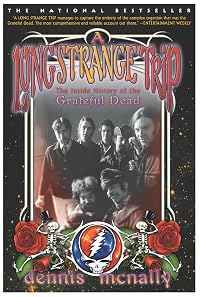
A Long Strange Trip: The Inside History of the Grateful Dead
by Dennis McNally
On This Page
Description
From 1965 to 1995, the Grateful Dead flourished as one of the most beloved, unusual, and accomplished musical entities to ever grace American culture. The creative synchronicity among Jerry Garcia, Bob Weir, Phil Lesh, Bill Kreutzmann, Mickey Hart, and Ron "Pigpen" McKernan exploded out of the early sixties' roots and folk scene, providing the soundtrack for the Dionysian revels of the counterculture. Dennis McNally, the band's historian and publicist for more than twenty years, takes show more readers back through the Dead's history in A Long Strange Trip. McNally not only chronicles their experiences in a fascinatingly detailed fashion, but veers off into side trips on the band's intricate stage setup, or the magic of the Grateful Dead concert experience. McNally carries the Dead's saga through the seventies and into the more recent years of constant touring and incessant musical exploration. Written with the same zeal and spirit that the Grateful Dead brought to its music, the book takes readers on a personal tour through the band's inner circle, highlighting its frenetic and very human faces. A Long Strange Trip is not only a wide-ranging cultural history, it is a definitive musical biography. show lessTags
Recommendations








Member Reviews
I first heard the GD in 67 or 68, my freshman year in college, in New York. It was at a theater later called the Fillmore East; I don't recall what it was called then. I had my choice of seats since the place wasn't full.
The opening act was a female vocalist trying to make it in the pop genre (e.g. Petula Clark) of the times. She was out of tune both in pitch and with the main attraction; the embarrassment I felt for her is one of my uncomfortable memories of the evening. As I recall the small audience did cut her some slack.
I'm not sure I recall my incentive for attending a concert alone in a dubious part of a city that was new to me. I owned a copy of the first GD album and played it quite a lot but I'm not sure whether it was show more before or after hearing them live. I was interested in SF bands because of the electric blues element. It turned out the opening number was Pigpen on harp doing Good Morning Little Schoolgirl, my first experience of live electric high volume music. Got what I came for, but the bonus consisted of extended periods of primarily guitar improvisation, although bass guitar and percussion were right behind. Based on the book under review, the GD sound system was still in its infancy, but I was struck how the lead guitar seemed to float over the ocean of sound: clear, linear, like a stream of fresh water.
Although I later owned the LIve/Dead LP it did not spend a lot of time on the turntable. For me, it was certainly worth it for the live Turn on Your Lovelight, another highlight of my first live show experience even though the smaller audience probably didn't inspire Pig to some of the legendary versions he performed elsewhere. But the GD doing improvised variations on American roots music had been imprinted on me from the several concerts or club dates I heard in NY before 1970, and the Robert Hunter lyrics of L/D seemed to be aimed at listeners who needed to enhance the experience with drugs. Chacun a son gout but personally I have enough distortion in my mental life for any desire to buzz it some more chemically. Their later acoustic transformation seemed at the time to be too close to CSNY. CSNY I still find loathsome though the acoustic GD sounds better as time has passed. I did not follow the Dead much after the early 70s and almost not at all after Working Man's.
Later, middle aged, I found Hundred Year Hall & the Closing of Winterland live concerts at a used CD place. Played HYH a lot relatively speaking. Unlike some of the more committed deadheads I thought the ''chick singer' was a nice enhancement to the sound (at least in recorded form). HYH is from around 72, so I did wonder about the personnel changes over the years. I knew in HYH Pig was nearing his end, and by the time I started to listen to the CD (a live recording in Germany during the first European tour) Garcia was already gone. I basically picked up Dennis McNally's history of the band to get a handle on the changes and how the GD story ended.
It was an easy read, much enhanced by pictures of band, family, and staff. McNally keeps the story moving along, and gives a good sense of the period when the band was coming together in Haight and the Northern California environs. There are "interludes" where the linear history is interrupted to portray the intricacies of keeping a band on the road, the development of the sound system, recording, and performing -- illuminating (at least for the non-fanatic).
The book makes it clear that for the core members, there was a strong commitment to music rather than to fame, politics, family, or money. This for me is largely positive, but the obverse is that fame, business, and politics seemed to cause discomfort, while family and emotional complexities were neglected or avoided. On the other hand, staff were treated like family, and were on occasion actual family, sometimes to the detriment of business. It is noteworthy that the author does not dwell much on personal problems and losses, although this may also be characteristic of the band's ethos, which some may find off-putting.
Disappointments. I was left wondering what happened to Donna Jean Godcheaux after the Godcheauxs left the band, and McNally could have spent more time on Mountain Girl, who seems to have played a crucial role in the band and seems to have had more character and common sense than Garcia's later lovers (or many of the other players in the GD saga). Many will consider that the author allows the female and gay staff to be overshadowed in the narrative by the hypermasculine road crew, not to mention the band's relationship to the bikers, although there is no denying that hair trigger testosterone reactions (not forgetting Bill Graham) do play a significant role in the band's history, if not necessarily the band members themselves.
The GD were an experiment in popular music who took and played popular music seriously, while hardly ever losing the sense of play that makes improvised American music of world interest. Their music respected and did its best to incorporate some elements of classical, jazz, and all varieties of popular music. Not culture wars but an attempt at musical multiculturalism, integrating high and low.The economic and cultural conditions for this experiment may never be closely duplicated again. McNally makes an interesting contrast of the West Coast musical openness and flow with East Coast rock critics like Dave Marsh who preferred the tighter pop structures that were originally based on commercial considerations but in their minds became an underlying aesthetic model for all popular music (Ramones are the Platonic ideal, Television is like GD so Verlaine & Co. were -- to channel South Park's Eric Cartman -- Hippie Trash)
Some 13 years after its original publication, the group's business "plan" now seems ahead of its time, i.e. during their mature period the GD's income was derived from performing rather than recordings. Bootleg recordings were not discouraged but rather served to whet their fans' appetites for more concerts; this was before the Internet. The tipping point seems to have been the development of a mail order system under the control of the band (computers ticket orders would be used today) that opened up their audiences to working baby boomers. My understanding is that the jam bands of the 21st century were influenced by GD business as much as their aesthetic practices.
Despite its limitations, the book inspired me to get further into the GD oeuvre, time and finances permitting. Although the HYH recording was my true gateway to recordings of their live performances, the book provided sufficient context to persuade me to revisit both the Live Dead and Winterland recordings, & to enrich the experience, though I'm still not much of a fan of their original lyrics. Still, Mickey Hart's Fire on the Mountain is beginning to grow on me ...
Very good music journalism of its kind. Self recommending if you like the band's music, and of interest if you want a sense of the positive and negative cultural elements of the 60s and its impact on subsequent decades of the 20th century. show less
The opening act was a female vocalist trying to make it in the pop genre (e.g. Petula Clark) of the times. She was out of tune both in pitch and with the main attraction; the embarrassment I felt for her is one of my uncomfortable memories of the evening. As I recall the small audience did cut her some slack.
I'm not sure I recall my incentive for attending a concert alone in a dubious part of a city that was new to me. I owned a copy of the first GD album and played it quite a lot but I'm not sure whether it was show more before or after hearing them live. I was interested in SF bands because of the electric blues element. It turned out the opening number was Pigpen on harp doing Good Morning Little Schoolgirl, my first experience of live electric high volume music. Got what I came for, but the bonus consisted of extended periods of primarily guitar improvisation, although bass guitar and percussion were right behind. Based on the book under review, the GD sound system was still in its infancy, but I was struck how the lead guitar seemed to float over the ocean of sound: clear, linear, like a stream of fresh water.
Although I later owned the LIve/Dead LP it did not spend a lot of time on the turntable. For me, it was certainly worth it for the live Turn on Your Lovelight, another highlight of my first live show experience even though the smaller audience probably didn't inspire Pig to some of the legendary versions he performed elsewhere. But the GD doing improvised variations on American roots music had been imprinted on me from the several concerts or club dates I heard in NY before 1970, and the Robert Hunter lyrics of L/D seemed to be aimed at listeners who needed to enhance the experience with drugs. Chacun a son gout but personally I have enough distortion in my mental life for any desire to buzz it some more chemically. Their later acoustic transformation seemed at the time to be too close to CSNY. CSNY I still find loathsome though the acoustic GD sounds better as time has passed. I did not follow the Dead much after the early 70s and almost not at all after Working Man's.
Later, middle aged, I found Hundred Year Hall & the Closing of Winterland live concerts at a used CD place. Played HYH a lot relatively speaking. Unlike some of the more committed deadheads I thought the ''chick singer' was a nice enhancement to the sound (at least in recorded form). HYH is from around 72, so I did wonder about the personnel changes over the years. I knew in HYH Pig was nearing his end, and by the time I started to listen to the CD (a live recording in Germany during the first European tour) Garcia was already gone. I basically picked up Dennis McNally's history of the band to get a handle on the changes and how the GD story ended.
It was an easy read, much enhanced by pictures of band, family, and staff. McNally keeps the story moving along, and gives a good sense of the period when the band was coming together in Haight and the Northern California environs. There are "interludes" where the linear history is interrupted to portray the intricacies of keeping a band on the road, the development of the sound system, recording, and performing -- illuminating (at least for the non-fanatic).
The book makes it clear that for the core members, there was a strong commitment to music rather than to fame, politics, family, or money. This for me is largely positive, but the obverse is that fame, business, and politics seemed to cause discomfort, while family and emotional complexities were neglected or avoided. On the other hand, staff were treated like family, and were on occasion actual family, sometimes to the detriment of business. It is noteworthy that the author does not dwell much on personal problems and losses, although this may also be characteristic of the band's ethos, which some may find off-putting.
Disappointments. I was left wondering what happened to Donna Jean Godcheaux after the Godcheauxs left the band, and McNally could have spent more time on Mountain Girl, who seems to have played a crucial role in the band and seems to have had more character and common sense than Garcia's later lovers (or many of the other players in the GD saga). Many will consider that the author allows the female and gay staff to be overshadowed in the narrative by the hypermasculine road crew, not to mention the band's relationship to the bikers, although there is no denying that hair trigger testosterone reactions (not forgetting Bill Graham) do play a significant role in the band's history, if not necessarily the band members themselves.
The GD were an experiment in popular music who took and played popular music seriously, while hardly ever losing the sense of play that makes improvised American music of world interest. Their music respected and did its best to incorporate some elements of classical, jazz, and all varieties of popular music. Not culture wars but an attempt at musical multiculturalism, integrating high and low.The economic and cultural conditions for this experiment may never be closely duplicated again. McNally makes an interesting contrast of the West Coast musical openness and flow with East Coast rock critics like Dave Marsh who preferred the tighter pop structures that were originally based on commercial considerations but in their minds became an underlying aesthetic model for all popular music (Ramones are the Platonic ideal, Television is like GD so Verlaine & Co. were -- to channel South Park's Eric Cartman -- Hippie Trash)
Some 13 years after its original publication, the group's business "plan" now seems ahead of its time, i.e. during their mature period the GD's income was derived from performing rather than recordings. Bootleg recordings were not discouraged but rather served to whet their fans' appetites for more concerts; this was before the Internet. The tipping point seems to have been the development of a mail order system under the control of the band (computers ticket orders would be used today) that opened up their audiences to working baby boomers. My understanding is that the jam bands of the 21st century were influenced by GD business as much as their aesthetic practices.
Despite its limitations, the book inspired me to get further into the GD oeuvre, time and finances permitting. Although the HYH recording was my true gateway to recordings of their live performances, the book provided sufficient context to persuade me to revisit both the Live Dead and Winterland recordings, & to enrich the experience, though I'm still not much of a fan of their original lyrics. Still, Mickey Hart's Fire on the Mountain is beginning to grow on me ...
Very good music journalism of its kind. Self recommending if you like the band's music, and of interest if you want a sense of the positive and negative cultural elements of the 60s and its impact on subsequent decades of the 20th century. show less
The author is the official historian for the Grateful Dead empire, so that fact needs to be considered on how the members are portrayed and what might have been left out.
I read this book concurrently with "Garcia: An American Life" by Blair Jackson (BJ hereafter), who is basically a Dead Head who decided to write books about them. It was interesting to see how the same events were portrayed in the two books; at times, the stories are not consistent.
This one does a pretty good job overall, although the audience for this book is probably pretty much limited to Dead Heads who might be well-versed in the lore already, such as the Merry Prankster and Haight scenes, all the Sixties hippie history he relates is ground well trodden by the show more average DH. Lots of context in relation to the other SF bands of the time here, in contrast to BJ.
Certainly the superlatives will make the occasional non-DH wonder at the level of objectivity used. McNally refers to himself in the third person as "Scrib" throughout the book; he was witness to various events yet he never uses the pronoun "I". He also intersperses the book with "Interludes", intended to give one a glimpse into various aspects of the Dead world as witnessed firsthand; these I found not very compelling and interrupted the flow of the book.
Only the last 100 of the 620 pages covers the last half (15 years) of GD history. Is it coincidental that my personal concert experiences were 3 in that time frame, as opposed to the roughly 20 in the first half? Or that 80% of their original material was written in those first 15 years, and only 20% in those last 15? Much of the 80's and 90's chapters address the various drug problems that various members struggled with, and the last 8 years with the crippling fame and the often troubling DH scenes at concert venues. One can't help but wonder whether McNally consciously spares us of the grim realities of those years, especially those of Jerry Garcia's declining health. BJ's book relates his health problems in depressing detail.
Curiously, JG's long-time writing partner Robert Hunter disappears almost completely in those last 100 pages (they only wrote about a dozen tunes together in those last 15 years), as does Phil Lesh, one of the first founding members and a driving force in the early and middle years of the band's history. Of course, Lesh had some serious problems with alcohol, but there is really not a whole lot about that in this book (Phil's memoir is the place to go for insight).
I believe that this official historian really does not emphasize two really disturbing negative forces in JG's life, and thus the negative effects on the GD: John Kahn's role in encouraging JG's repeated returns to the use of opiates, and Deborah Koon, at the end of JG's life. Her behavior after his death makes one wonder at how many episodes of her anger occurred, and how many included violence. At the very least, she comes across as manipulative and just mean, and since McNally (like BJ) is loathe to get too negative with anyone, one really wonders.
It seems to me that the band's creativity was not adversely affected by ample use of psychedelics; but when cocaine, alcohol, and heroin entered the picture, the band experienced a serious and depressing decline. It's ironic that their greatest popularity occurred so long after their best work.
The reviewer "featherbear" does not remember what the Fillmore East was called previously -- it was the Village Theater, which was easily found via the excellent index in the book. show less
I read this book concurrently with "Garcia: An American Life" by Blair Jackson (BJ hereafter), who is basically a Dead Head who decided to write books about them. It was interesting to see how the same events were portrayed in the two books; at times, the stories are not consistent.
This one does a pretty good job overall, although the audience for this book is probably pretty much limited to Dead Heads who might be well-versed in the lore already, such as the Merry Prankster and Haight scenes, all the Sixties hippie history he relates is ground well trodden by the show more average DH. Lots of context in relation to the other SF bands of the time here, in contrast to BJ.
Certainly the superlatives will make the occasional non-DH wonder at the level of objectivity used. McNally refers to himself in the third person as "Scrib" throughout the book; he was witness to various events yet he never uses the pronoun "I". He also intersperses the book with "Interludes", intended to give one a glimpse into various aspects of the Dead world as witnessed firsthand; these I found not very compelling and interrupted the flow of the book.
Only the last 100 of the 620 pages covers the last half (15 years) of GD history. Is it coincidental that my personal concert experiences were 3 in that time frame, as opposed to the roughly 20 in the first half? Or that 80% of their original material was written in those first 15 years, and only 20% in those last 15? Much of the 80's and 90's chapters address the various drug problems that various members struggled with, and the last 8 years with the crippling fame and the often troubling DH scenes at concert venues. One can't help but wonder whether McNally consciously spares us of the grim realities of those years, especially those of Jerry Garcia's declining health. BJ's book relates his health problems in depressing detail.
Curiously, JG's long-time writing partner Robert Hunter disappears almost completely in those last 100 pages (they only wrote about a dozen tunes together in those last 15 years), as does Phil Lesh, one of the first founding members and a driving force in the early and middle years of the band's history. Of course, Lesh had some serious problems with alcohol, but there is really not a whole lot about that in this book (Phil's memoir is the place to go for insight).
I believe that this official historian really does not emphasize two really disturbing negative forces in JG's life, and thus the negative effects on the GD: John Kahn's role in encouraging JG's repeated returns to the use of opiates, and Deborah Koon, at the end of JG's life. Her behavior after his death makes one wonder at how many episodes of her anger occurred, and how many included violence. At the very least, she comes across as manipulative and just mean, and since McNally (like BJ) is loathe to get too negative with anyone, one really wonders.
It seems to me that the band's creativity was not adversely affected by ample use of psychedelics; but when cocaine, alcohol, and heroin entered the picture, the band experienced a serious and depressing decline. It's ironic that their greatest popularity occurred so long after their best work.
The reviewer "featherbear" does not remember what the Fillmore East was called previously -- it was the Village Theater, which was easily found via the excellent index in the book. show less
Fascinating, detailed account of the GD's struggle to achieve success as a going concern as much out of the music industry as possible while building a massively loud and advanced sound system and battling personal demons and striving to shrug off headwinds. There is a lot of inside dope (pun intended), such as specific profits made at concerts, technological innovations, taking sole ownership of their philanthropic arm and archive live releases, etc. A lot is explored about the Hell's Angels connection beyond Altamont. That apparent contradiction is made more sensible when the personalities are explored as different from deadhead ideals;, at times sexist, not immune to materialistic success, fueled by cocaine for years, etc.
I enjoyed the book and thought the interludes, which many have said they did not like, provided fine in depth looks at aspects of the experience that the main line of the book did not cover.
Giving only 100 pages to the last 15 years suggests the author did not think much of that time period and while I think we deserved more it may be that we would not have liked the more that could have been provided. What was given was pretty negative.
I would give this a 5 except for the last 100 pages.
Giving only 100 pages to the last 15 years suggests the author did not think much of that time period and while I think we deserved more it may be that we would not have liked the more that could have been provided. What was given was pretty negative.
I would give this a 5 except for the last 100 pages.
An exhaustive, painstakingly-sourced study of the seminal American folk rock band. An entertaining, revealing read.
I'm proud to classed as a Deadhead! This is ace book. I'll get down to writing a proper review when I get back from my long, strange trip!
Author takes a deep dive into the history and growth of the Dead.
Members
- Recently Added By
Author Information
5+ Works 655 Members
Awards and Honors
Distinctions
Common Knowledge
- Canonical title*
- A Long Strange Trip : The Inside History of the Grateful Dead and the Making of Modern America
- Original publication date
- 2002
- People/Characters
- The Grateful Dead; Jerry Garcia; Bob Weir; Phil Lesh; Bill Kreutzmann; Mickey Hart (show all 527); Ron"Pigpen" McKernan; Jerry Abrams; Lee Adams; Lou Adler; Peter Albin; Rodney Albin; Lee Anderson; Signe Toly Anderson; Michelangelo Antonioni; Al Aronowitz; Ken Babbs; Joan Baez; Marty Balin; The Band; Lester Bangs; Sonny Barger; Bill Barich; John Perry Barlow; Veronica Barnard; Steve Barncard; Danny Barnett; Paul Barratta; Frank Barsalona; Bob Barsotti; Loose Bruce Baxter; Bill Belmont; John Belushi; Alex Bennett; Peter Berg; Luciano Berio; Malcolm Bessent; Big Brother and the Holding Company; Black Mountain Boys; The Blues Brothers; Connie Bonner; Stanley Booth; Bob Borden; Christie Bourne; Michael Bowen; Barbara Boxer; Steward Brand; Edie Brickell; Candace Brightman; David Bromberg; Steve Brown; Lenny Bruce; Butterfield Blues Band; The Byrds; Herb Caen; Joseph Campbell; Bill "Kidd" Candelario; Betty Cantor; Patrick Carr; Jack Casady; Neil Cassady; Luria Castell; Owen Chamberlain; The Charlatans; The Chieftains; The Chords; Robert Christgau; Vassar Clements; Tillie Clifford; Bill Clifford; Bill Clinton; Sean Coakley; Allen Cohen; Eric Colby; Ornette Coleman; John Coltrane; Concert Halls Managers' Association; Tom "T.C." Constanten; Francis Coppola; Stan Cornyn; Country Joe and the Fish; Peter Coyote (Cohon); Credence Clearwater Revival; David Crosby; Crosby, Stills and Nash; Susan Crutcher; John Cutler; Sam Cutler; David Dalton; Barbara Dane; Rick Danko; Frederic Dannen; Angela Davis; Clive Davis; Miles Davis; R.G. Ronnie Davis; Tom Davis; John "Marmaduke" Dawson; Phil DeGuere; Dave Dennison; Johnny D'Fonseca; Lydia D'Fonseca; Vince Di Biase; Diga Rhythm Band; The Diggers; Willie Dixon; Tom "Big Daddy" Donahue; The Doobie Brothers; The Doors; Jilie Dreyer; Bob Dylan; Thor Eaton; Saad Ed-Din; Joe Edmondston; Cookie Eisenberg; Electronic Frontier Foundation; Faisal of Saudi Arabia; The Family Dog; David Felton; Sam Field; Shelley Finkel; Michael "Fish" Fischer; Fleetwood Mac; Annette Flowers; The Flying Burrito Brothers; Norman "Pogo" Fontaine; Paul Foster; Ken Frankel; Al Franken; Dale Franklin; Free City Collective; David Freiberg; Bill "Sweet William" Fritsch; Front Street Sheiks; Jim Furman; Michael Garbet; Annabelle Garcia; Carolyn "Mountain Girl" Adams Garcia; Deborah Koons Garcia; Heather Garcia; Keelin Garcia; Manuel Garcia; Theresa "Trixie" Garcia; Philip Garris; Jim Garrison; Stephen Gaskin; Leon Gast; Lowell George; Nancy Getz-Evans; Alice Giblin; Dizzy Gillespie; Mikal Gilmore; Allen Ginsberg; Barry Glassberg; Ralph Gleason; Donna Jean Godchaux; Melissa Gold; Ken Goldfinger; Goldman, Elliot; Richard Goldstein; Tipper Gore; Suzanne Gottlieb; Bill Graham; Graham Central Station; Laird Grant; The Great Society; Herb Greene; Eric Greenspan; Rick Griffin; Billy Grillo; David Grisman; Randy Groenke; Emmett Grogan; Albert Grossman; Group Image; Gary Gutierrez; Charlie Haas; Grace Marie Haddy; John Hagen; Haight Commune; Scott Hambly; Keith Haring; Marilyn Harris; Hank Harrison; Lenny Hart; The Hartbeats; Hart Valley Drifters; Dave Hassinger; Jim Haynie; The Head Lights; Dan Healy; Sonny Heard; Wiley Hedrick; Hugh Hefner; Wally Heider; David Hellman; Hell's Angels; Lester Hellum; Levon Helm; Chet Helms; Jon Hendricks; Jimi Hendrix; Freddie Herrera; Rick Hertzberg; Peggy Hitchcock; Abbie Hoffman; Albert Hofmann; Hog Farm; Ambrose Hollingsworth; Nicky Hopkins; Bruce Hornsby; Hot Tuna; Linn House; Garth Hudson; Hubert Humphrey; George Hunter; Meredith Hunter; Robert Hunter; Dan Hupert; Zakir Hassan; Aldous Huxley; Don Ienner; Instant Action Jug Band; Blair Jackson; Rex Jackson; Mick Jagger; Deborah Jahnke; Etta James; Rick Jarrad; Jefferson Airplane; Jefferson Starship; Rhonda Jensen; Sherry Jensen; Vickie Jensen; The Jerry Garcia Band; Shannon Jeske; Steve Jobs; Dwight Johnson; Jill Johnson; Robert Johnson; Tawny Jones; Janis Joplin; John Kahn; Steve "Killer" Kahn; Bert Kanegson; Hal Kant; Paul Kantner; Karen "K.K." Kaplan; Mitch Kapor; Adam Katz; Sara Ruppenthal Garcia Katz; Toni Kaufman; Jorma Kaukonen; Bill Keith; Alton Kelley; John F. Kennedy; Roy Kepler; Jack Kerouac; Ken Kesey; Sunshine Kesey; Martin Luther King, Jr.; Kingfish; Howie Klein; Sue Klein; Michael Klenfer; Art Kleps; Frisco Pete Knell; Jim Koplik; Artie Kornfeld; Paul Krassner; Brenda Kreutzmann; Shelly Kreutzmann; Stanley Krippner; Jim Kweskin; Ned Lagin; Gary Lambert; Michael Lang; Dennis Larkin; Dick Latvala; Cassidy Law; Eileen Law; Patrick Leahy; Timothy Leary; Led Zeppelin; Willy Legate; Legends; Legion of Mary; Marshall Leicester; David Leikin; John Lennon; Don Lenzer; Andy Leonard; Dennis "Wizard" Leonard; Jill Lesh; Richard Lester; Roger Lewis; Light Artist Guild; Hal Lipset; Elaine Loren; Richard Loren; Roy Lott; Vic Lovell; The Lovin' Spoonful; Michael Lydon; Rich McCauley; Michael McClure; Paula McCoy; Rosie McGee (Florence Nathan); George McGovern; Jon McIntire; Glenn McKay; Terence McKenna; Dennis "Scrib" McNally; Dave McQueen; Marina Maguire; Mahesh Yogi Maharishi; Nancy Mallonee; Joe Malone; Lois Malone; Mike Maloney; The Mamas and Papas; Barry Manilow; Charles Manson; Richard Manuel; Branford Marsalis; Manasha Matheson; Bob Matthews; Ruth Marie "Bobbie" Clifford Matusiewicz; Wally Matusiewicz; Mary Ann Mayer; Al Maysles; Barbara Brigid Meier; Mary Joe Meinolf; Barry Melton; David Meltzer; Merry Pranksters; John Meyer; Stanley "Mouse" Miller; Chesley Millikin; Kent Minault; Charles Mingus; Moby Grape; Francis Moffat; Peter Monk; Bill Monroe; Keith Moon; Dana Morgan, Jr.; John Morris; Jim Morrison; Steve Morse; Mother McCree's Uptown Jug Champions; Maria D'Amato Muldaur; Brent Mydland; Graham Nash; Florence Nathan (Rosie McGee); David Nelson (musician); Robert Nelson; Laraine Newman; New Riders of the Purple Sage; Richard M. Nixon; Ken Nordine; Old and in the Way; Andrew Loog Oldham; Barry Olivieri; Keith Olsen; Yoko Ono; Caryl Orbach; Morris Ostin; Ruth Pahkala; Jon Parcels; Steve Parish; Bonnie Parker; Dave Parker; Elaine Parker; Alan Pasaro; Sandy Pearlman; Don Pearson; Debbie Peckham; Herb Pederson; Charles Perry; Peter, Paul and Mary; Bobby Petersen; John Phillips; Planet Drum; Ron Polte; Wes Pomeroy; Harry Popick; Jay Price; John Pritzker; Quicksilver Messenger Service; Gilda Radnor; Ron Rainey; Basia Raizene; Sparky Raizene; Emily Rakow; Ron Rakow; Ram Dass (Richard Alpert); Ronald Reagan; Otis Redding; Charles Reich; Rip Rense; Rex Foundation; Keith Richard; Jonathan Riester; Danny Rifkin; John Roberts; Robbie Robertson; Brian Rohan; The Rolling Stones; Hugh Romney (Wavy Gravy); Fred Rosen; Neil Rosenberg; Joel Rosenman; Sandy Rothman; Peter Rowan; The Rowan Brothers; Jerry Rubin; David Rubinson; Nicki Rudolph; Goldie Rush; Nora Sage; Tom Salter; San Francisco Mime Troupe; San Francisco Music Council; Santana; Carlos Santana; Randy Sarti; Merl Saunders (Washington); John Scher; Richard Scher; Rock Scully; Tim Scully; Cameron Sears; John Sebastian; Bob Seidemann; Sex Pistols; Patrick Shanahan; Ravi Shankar; Gilbert Shelton; Wayne Shorter; Rick Shubb; "Ram Rod" Larry Shurtliff; Paul Simon; Sleepy Hollow Hog Stompers; Darby Slick; Grace Slick; Jerry Slick; Harry Smith; Joe Smith; Gary Snyder; Sopwith Camel; Janet Sudo-Knudsen; Paul Speegle; Skip Spence; Augustus Owsley "Bear" Stanley III; Jody Stecher; Howard Stein; Michael Stepanian; Sue Stephens; Ian "Stu" Stewart; Stephen Stills; Sly Stone; Tom Stone; Neil Sulkes; Sue Swanson; Dallas Taylor; Derek Taylor; Robbie Taylor; Bob Thomas; Bill Thompson; Bob Thompson; Eric Thompson; Hunter Thompson; Thunder Mountain Tub Thumpers; Strom Thurmond; Arnold Townsend; Alan Trist; Tarthang Tulku; Gail Turner; Rick Turner; Uncalled Four; Up Against the War Motherfuckers; Dino Valenti; Norm Van Maastricht; The Velvet Underground; Sid Vicious; Ken Viola; Bill Vitt; Phil Walden; Howard Wales; Bill Walker; Butch Waller; Wall of Sound; Warlocks; Larry Waronker; Eddie Washington; John Wasserman; Rob Wasserman; Alan Watts; Wavy Gravy (Hugh Romney); Weatherman faction, S.D.S.; Troy Weidenheimer; Frankie Azzara Weir; Vince Welnick; Jann Wenner; Frank Werber; The Who; Ron Wickersham; Wildwood Boys; Paul Williams (rock critic); Roger 'Cool Breeze' Williams; Joe Winslow; Tom Wolfe; Stephen Wozniak; Alana Wyn-Ellis; Max Yasgur; Yippies (Youth International Party); Israel Young; Neil Young; Frank Zappa; Warren Zevon; Diane Zellman; Peter "Monk" Zimmels; The Zodiacs; George Harrison (of The Beatles); Paul McCartney; Ringo Starr
- Important places
- Atherton, California, USA; San Francisco, California, USA; Avalon Ballroom, San Francisco, California, USA; Cafe au Go Go, New York, New York, USA (club); Cal Expo Amphitheater, Sacramento, California, USA; California Hall, San Francisco, California, USA (show all 45); Capitol Theater, Port Chester, New York, USA; Carousel Ball Room, San Francisco, California, USA; Cow Palace, San Francisco, California, USA; Fillmore Auditorium, San Francisco, California, USA (Fillmore West); Fillmore East, New York, New York, USA; New York, New York, USA; Giants Stadium, East Rutherford, New Jersey, USA; Greek Theater, Berkeley, California, USA; Haight-Ashbury, San Francisco, California, USA; Knickerbocker Arena, Albany, New York, USA; Lille, Nord, Hauts-de-France, France; London, England, UK; Longshoreman's Hall, San Francisco, California, USA; McNichols Arena, Denver, Colorado, USA; Madison Square Garden, New York, New York, USA; Miami, Florida, USA; New Orleans, Louisiana, USA; Oakland Auditorium, Oakland, California, USA; Oakland Coliseum, Oakland, California, USA; Omni, Atlanta, Georgia, USA; People's Park, San Francisco, California, USA; Portland, Oregon, USA; Potrero Theater, San Francisco, California, USA; Radio City Music Hall, New York, New York, USA; Silver Stadium, Las Vegas, Nevada, USA; Las Vegas, Nevada, USA; Spectrum, Philadelphia, Pennsylvania, USA; Philadelphia, Pennsylvania, USA; Paris, France; Watkins Glen, New York, USA; Winterland, San Francisco, California, USA; Bethel, New York, USA; Sacramento, California, USA; Port Chester, New York, USA; Albany, New York, USA; San Mateo, California, USA; Chicago, Illinois, USA; San Jose, California, USA; Sultan, Washington, USA
- Important events
- Monterrey Pop Festival (1967); New Orleans Pop Festival (1969); Sky River Rock Festival (1968); Trips Festival (1966); US Festival (1982); Vancouver Pop Festival (1969) (show all 10); Watkins Glen Rock Festival (1973); Wild West Festival (1969); Woodstock Music and Art Fair (1969); World Music Festival (1982)
- Dedication
- A Long Strange Trip is dedicated to the memories of Gerry Garcia and Dick Latvala
- First words
- Out on the edge of Western world, the Golden Gate channel cuts through the coastal range to link the Pacific Ocean and a bay, creating a haven called San Francisco.
- Last words
- (Click to show. Warning: May contain spoilers.)Garcia: "But what the fuck do I know, anyway?"
- Blurbers
- Weir, Bob; Kreutzmann, Bill; Stanley, Owsley "Bear"; Hart, Mickey; Coyote, Peter; Leahy, Senator Patrick J. (show all 9); Hiaasen, Carl; Walton, Bill; Hunter, Robet
*Some information comes from Common Knowledge in other languages. Click "Edit" for more information.
Classifications
- Genres
- Music, Nonfiction, Biography & Memoir, General Nonfiction
- DDC/MDS
- 782.421660922 — Arts & recreation Music Vocal Music, Singing Secular forms of vocal music Songs General principles and musical forms Traditions of secular songs {genres} Rock songs modified standard subdivisions History, geographic treatment, biography Biography Collected biography
- LCC
- ML421 .G72 .M36 — Music Literature on music Literature on music History and criticism Biography
- BISAC
Statistics
- Members
- 338
- Popularity
- 93,474
- Reviews
- 7
- Rating
- (3.97)
- Languages
- English, German
- Media
- Paper, Audiobook, Ebook
- ISBNs
- 8
- ASINs
- 3