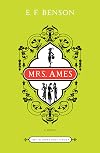
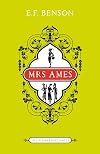
Mrs. Ames
by E. F. Benson
On This Page
Description
Reigning over a social merry-go-round of dinners and parties, Mrs Ames is the undisputed queen bee of Riseborough. That is, until vivacious new villager Mrs Evans catches the eye of both her son and her husband. Not content with captivating the men in her life, 'that wonderful creature' Mrs Evans becomes not just rival to Mrs Ames' marriage, but rival to her village throne. When the whole of Riseborough is invited to Mrs Evans' masked costume party, action must be taken. As the date looms, show more the irrepressible Mrs Ames resolves to seize the chance to win back her position, and thus, her man. show lessTags
Recommendations


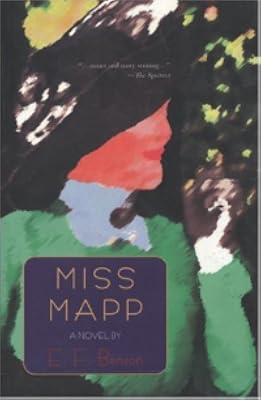


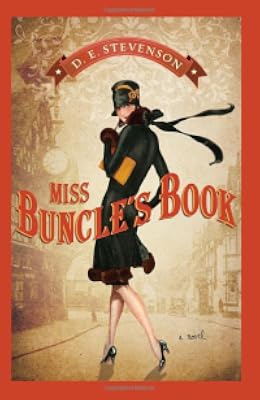


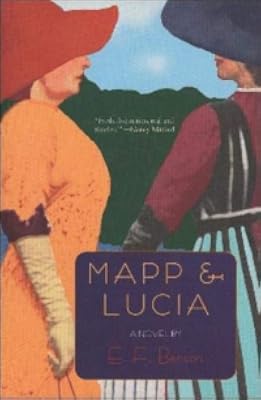
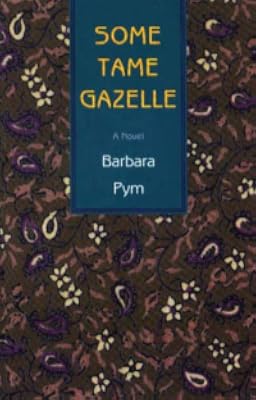

















Member Recommendations
bell7 This story is similarly concerned with events in a small English town, though the characters' class and life situations are much different.
Member Reviews
I don't think it's too early to say that this must have been one of the best novels of 1912!
These funny characters live in a town like Tilling/Riseholme--I forget what it was called in this novel--and are completely all up in each other's business. A definite precursor to the Lucia series but also contains elements of Benson's goofy melodramas like The Weaker Vessel and Arundel.
I was COMPLETELY gobsmacked whenMrs. Ames became a suffragette. I loved her adventure interrupting a speech and chaining herself to a table leg. Trying to tease out the author's attitude, it seemed to me that Fred supported women's suffrage but thought that radical tactics were silly--anyway, he is always looking for the comedy in everything. It was clear that show more the Suffragette movement made Mrs. Ames a finer person, less snobbish and superficial. The way the men talked about her efforts made me want to smack them. At the same time, everything that happened was amusing.
This novel also had a bang-up ending. I truly wasn't sure what would happen. As always, novels of this period make me feel grateful that today we have no-fault divorce and we don't have to worry that our children will be sent down from college or that we'll be shunned by society if we break up our marriages. But mainly, this novel was very funny.
PS. For years I've been reading novels where people have lumbago, and it sounds terrible. Finally I looked up what it is. Do you know what it is?? Lower back pain! I've had lumbago for years. And these characters think sitting in drafts will make it better or worse. Sheesh. show less
These funny characters live in a town like Tilling/Riseholme--I forget what it was called in this novel--and are completely all up in each other's business. A definite precursor to the Lucia series but also contains elements of Benson's goofy melodramas like The Weaker Vessel and Arundel.
I was COMPLETELY gobsmacked when
This novel also had a bang-up ending. I truly wasn't sure what would happen. As always, novels of this period make me feel grateful that today we have no-fault divorce and we don't have to worry that our children will be sent down from college or that we'll be shunned by society if we break up our marriages. But mainly, this novel was very funny.
PS. For years I've been reading novels where people have lumbago, and it sounds terrible. Finally I looked up what it is. Do you know what it is?? Lower back pain! I've had lumbago for years. And these characters think sitting in drafts will make it better or worse. Sheesh. show less
A book strongly of its time and place is usually at a disadvantage when being read a century after its initial appearance, as here. There are elements in it that appear hopelessly dated or even somewhat nonsensical today that would have been timely and at least faintly shocking when it was written, which would have given the undertaking a very different flavor. Now, given the book's nature, there's more than a little tempest-in-a-teapot atmosphere hovering over the whole enterprise.
What redeems the book from a contemporary reader's point of view is that Benson has a wicked wit. His description of the preparations for a Shakespeare-themed costume party makes the book worth reading in and of itself. As for the ending, it's reassuringly show more cynical and oddly uplifting - after all, life does go on and the practical among us find the compromises necessary to see that it does so as pleasantly as possible. I found myself wishing that Benson were still around to take on our celebrity-obsessed popular culture - it'd be fun to see what he'd make of it.
In short, if you're willing to immerse yourself in an unfamiliar social milieu that isn't perhaps quite as well explained as it would be if Benson knew he was writing for an audience a century later, you'll be rewarded with a biting look at human nature and more than a few glimpses of a very clever mind at work. show less
What redeems the book from a contemporary reader's point of view is that Benson has a wicked wit. His description of the preparations for a Shakespeare-themed costume party makes the book worth reading in and of itself. As for the ending, it's reassuringly show more cynical and oddly uplifting - after all, life does go on and the practical among us find the compromises necessary to see that it does so as pleasantly as possible. I found myself wishing that Benson were still around to take on our celebrity-obsessed popular culture - it'd be fun to see what he'd make of it.
In short, if you're willing to immerse yourself in an unfamiliar social milieu that isn't perhaps quite as well explained as it would be if Benson knew he was writing for an audience a century later, you'll be rewarded with a biting look at human nature and more than a few glimpses of a very clever mind at work. show less
 This review was written for LibraryThing Early Reviewers.
This novel is a precisely drawn satire of life in an English village in the early 20th century. Mrs. Ames has been the leader of society in Riseborough for many years, due partly to her commanding presence and partly to her distant familial connection with a nobleman. The other residents of Riseborough both admire and resent her for her position, and many of the local gossips would be glad to see her fail in some way. So when a (relatively speaking) new arrival, Mrs. Evans, begins to set herself up as Mrs. Ames' social rival, the entire town waits with bated breath to see whether their queen will be dethroned. Meanwhile, both Mrs. Ames and Mrs. Evans dimly begin to realize that their lives are unfulfilling, but their search for deeper show more meaning takes them down drastically different paths, one of which may lead to scandal and heartbreak.
I expected this book to be nothing more than a light, witty comedy of manners -- which it is, but it also took a more serious turn than I anticipated. The various social machinations of the ladies of Riseborough are very funny; there's a particularly wonderful scene in which Mrs. Evans hosts a masquerade ball and several ladies (tragically, yet hilariously) show up wearing the same costume. But for me, the more compelling story was Mrs. Ames' slow realization that her dreary, respectable life isn't making her happy. It's only when she begins to identify with a cause greater than herself that she actually finds contentment -- even at the moment when all her respectability and social standing is taken away. So oddly enough, this comedy of manners turns into a coming-of-age story, and I found it a surprisingly thought-provoking read. show less
I expected this book to be nothing more than a light, witty comedy of manners -- which it is, but it also took a more serious turn than I anticipated. The various social machinations of the ladies of Riseborough are very funny; there's a particularly wonderful scene in which Mrs. Evans hosts a masquerade ball and several ladies (tragically, yet hilariously) show up wearing the same costume. But for me, the more compelling story was Mrs. Ames' slow realization that her dreary, respectable life isn't making her happy. It's only when she begins to identify with a cause greater than herself that she actually finds contentment -- even at the moment when all her respectability and social standing is taken away. So oddly enough, this comedy of manners turns into a coming-of-age story, and I found it a surprisingly thought-provoking read. show less
Mrs. Ames begins like the Lucia books with witty observations about the very involved lives of middle-aged people of very comfortable means in a very little English town. We meet society's queen Mrs. Ames, "In appearance ... like a small, good-looking toad in half-mourning..." and her husband Major Ames, ten years her junior. We have her rival Mrs. Altham and we have her younger cousin Millie Evans, newly arrived in Riseborough with her husband, the town's new doctor. So far so good. We laugh at Mrs. Ames and her printed menu cards for a dozen dinners of various quality, elegant and reusable, and at the avid pursuit of gossip among the Riseborough residents.
Then the story turns. Major Ames and Millie Evans begin a minor flirtation, show more fueled mainly by boredom, that eventually takes on a darker character as Mrs. Ames observes its development. The book is still funny, but this is no longer Lucia-like. When Mrs. Ames involves herself in women's suffrage, the tone becomes almost serious. Benson manages to keep us smiling or laughing out loud even while he engages our pity and admiration for a woman's courage. Readers who have no need for non-stop action will find this a charming little book with more depth than the beginning promises. show less
Then the story turns. Major Ames and Millie Evans begin a minor flirtation, show more fueled mainly by boredom, that eventually takes on a darker character as Mrs. Ames observes its development. The book is still funny, but this is no longer Lucia-like. When Mrs. Ames involves herself in women's suffrage, the tone becomes almost serious. Benson manages to keep us smiling or laughing out loud even while he engages our pity and admiration for a woman's courage. Readers who have no need for non-stop action will find this a charming little book with more depth than the beginning promises. show less
This review was written for LibraryThing Early Reviewers.Stayed up late last night finishing up the delightful and surprising Mrs. Ames by E.F. Benson. Written in the jovial tone somewhere between Wodehouse and Thirkell, the novel focusses mainly on two couples of the town gentry who become entangled over the course of a year. At first it seems the story will be all a comedy of manners although Benson paves the way for his heroine, for she is just that, Amy Ames to have an epiphany. She 'gets' the suffragette movement, not just the thrill and 'fun' of the demonstrations but the whole purpose of lifting women out of being onlookers into being participants in the greater world. Meanwhile her husband is getting himself into a dangerous muddle..... A delightful read very much of the early 19th show more century era and style, so not for everyone, but if you like this kind of thing, as I do, I expect you will enjoy it. There is a scene where Mrs. Ames, who is exactly my age, has gone to the beach to 'transform' herself, and she ends up buying a little spade to build things and runs in and out of the waves..... that image of this person unbuttoning and enjoying herself was priceless!
**** show less
**** show less
E.F. Benson appears to have anticipated that some readers might dismiss "Mrs. Ames" as just a tempest in a teacup: "but if you happen to be living in the teacup too, a storm there is just as upsetting as a gale on the high seas." Some might find the language a bit stilted for our modern tastes, but isn't that the charm of reading books from another era -- joining in the cadence and rhythm of another place and people? There is much here of the universal experience: marital angst, mid-life crises and acting out, moon-eyed ridiculous undergraduates, and social competitiveness to name a few.
Edward Frederic Benson (1867-1940) -- called Fred by his friends -- was the son of the Archbishop of Canterbury, a champion figure skater, and one-time show more Mayor of Rye, East Sussex, where he lived in Henry James' former home. Never married himself, he managed nonetheless to credibly describe the interior of several couples' marriages. Most interesting was his sympathetic take on women's suffrage, a divisive issue of the era. His portrayal of various characters' reaction to encroaching middle-age and misplaced efforts to retain their attractiveness is funny, bathetic and nuanced.
To place this book in Mr. Benson's canon, he had written almost 30 novels before penning "Mrs. Ames." It was published in 1912, some eight years before his popular Lucia and Mapp series. Wit and satire abound, with many a felicitous turn of phrase (one character described as "merely an Odysseus who had never voyaged wondered what voyaging was like.") The Althams' rapacious capacity for gossip, the audacity of Mrs. Ames inviting one spouse for a dinner party without the other, and the pathos of Maj. Ames' and Mrs. Evans' feelings for one another are all well and properly skewered. The set piece of the Shakespearean costume party is a highlight. Although it doesn't quite reach the campy heights of the Lucia novels, there is plenty to amuse. show less
Edward Frederic Benson (1867-1940) -- called Fred by his friends -- was the son of the Archbishop of Canterbury, a champion figure skater, and one-time show more Mayor of Rye, East Sussex, where he lived in Henry James' former home. Never married himself, he managed nonetheless to credibly describe the interior of several couples' marriages. Most interesting was his sympathetic take on women's suffrage, a divisive issue of the era. His portrayal of various characters' reaction to encroaching middle-age and misplaced efforts to retain their attractiveness is funny, bathetic and nuanced.
To place this book in Mr. Benson's canon, he had written almost 30 novels before penning "Mrs. Ames." It was published in 1912, some eight years before his popular Lucia and Mapp series. Wit and satire abound, with many a felicitous turn of phrase (one character described as "merely an Odysseus who had never voyaged wondered what voyaging was like.") The Althams' rapacious capacity for gossip, the audacity of Mrs. Ames inviting one spouse for a dinner party without the other, and the pathos of Maj. Ames' and Mrs. Evans' feelings for one another are all well and properly skewered. The set piece of the Shakespearean costume party is a highlight. Although it doesn't quite reach the campy heights of the Lucia novels, there is plenty to amuse. show less
This review was written for LibraryThing Early Reviewers.Mrs. Ames by E.F. Benson is a meaty little novel. It was written in 1912 and takes place in a small English village. Mrs. Ames is the social leader and arbiter of taste. Her cousin Millie has moved to town with husband Dr. Evans. There are daring outdoor costume parties, dinner parties where only a husband or wife is invited, and other food for the gossip mills and grease for the social machine.
The language is exquisite. Benson’s writing is formal almost to the point of being hard to read, but once you figure out a sentence, its rightness and take on a situation are apparent. He slyly makes fun of the people he’s writing about and presents their strengths and weaknesses in a strong light.
“He was not worth argument: you could only show more really argue with the enlightened people who fundamentally agreed with you…”
“Harry had communicated the interesting fact of his passion for Mrs. Evans to the Omar Khayyam Club, and was, of course, bound to prosecute his nefarious intrigue. He had already written several galloping lyrics, a little loose in grammar and rhyme, to his enchantress, which he had copied into a small green morocco notebook, the title page of which he had inscribed as “Dedicated to M.E.”. This looked a Narcissus-like proceeding to anyone who did not remember what Mrs. Evans initials were.”
“Arrayed in a very low collar, which showed the full extent of his rather scraggy neck, and adorned with a red tie, for socialism was no less an orthodoxy in the club than atheistic principles and illicit love, he set secretly out, and had the good fortune to find the goddess alone, and was welcomed with that rather timid, childlike deference that he had found so adorable before.”
One more: “Major Ames sighed; his lumbago felt less acute, his ill temper had found relief in words, and he had long ago discovered that women had no sense of humour. On the whole, it was gratifying to find the truth of this so amply endorsed. For the moment it put him into quite a good temper.”
The formal and to us old-fashioned style of writing and the small-town social aspect tend to obscure some rather important points. First, the Suffragette movement is starting up in England and several of the ladies in the town are involved. There’s a romantic involvement that could potentially ruin two households. There is some enlightenment among the characters, and some definite growth and change.
All in all an excellent read. It makes me want to read more of E.F. Benson. He produced over 100 works - novels, short stories, non-fiction, and autobiography, so I have a lot to choose from. show less
The language is exquisite. Benson’s writing is formal almost to the point of being hard to read, but once you figure out a sentence, its rightness and take on a situation are apparent. He slyly makes fun of the people he’s writing about and presents their strengths and weaknesses in a strong light.
“He was not worth argument: you could only show more really argue with the enlightened people who fundamentally agreed with you…”
“Harry had communicated the interesting fact of his passion for Mrs. Evans to the Omar Khayyam Club, and was, of course, bound to prosecute his nefarious intrigue. He had already written several galloping lyrics, a little loose in grammar and rhyme, to his enchantress, which he had copied into a small green morocco notebook, the title page of which he had inscribed as “Dedicated to M.E.”. This looked a Narcissus-like proceeding to anyone who did not remember what Mrs. Evans initials were.”
“Arrayed in a very low collar, which showed the full extent of his rather scraggy neck, and adorned with a red tie, for socialism was no less an orthodoxy in the club than atheistic principles and illicit love, he set secretly out, and had the good fortune to find the goddess alone, and was welcomed with that rather timid, childlike deference that he had found so adorable before.”
One more: “Major Ames sighed; his lumbago felt less acute, his ill temper had found relief in words, and he had long ago discovered that women had no sense of humour. On the whole, it was gratifying to find the truth of this so amply endorsed. For the moment it put him into quite a good temper.”
The formal and to us old-fashioned style of writing and the small-town social aspect tend to obscure some rather important points. First, the Suffragette movement is starting up in England and several of the ladies in the town are involved. There’s a romantic involvement that could potentially ruin two households. There is some enlightenment among the characters, and some definite growth and change.
All in all an excellent read. It makes me want to read more of E.F. Benson. He produced over 100 works - novels, short stories, non-fiction, and autobiography, so I have a lot to choose from. show less
This review was written for LibraryThing Early Reviewers.Members
- Recently Added By
Lists

Books Read in 2025
4,128 works; 98 members
Author Information

Some Editions
Series
Belongs to Publisher Series
Common Knowledge
- Original title
- Mrs Ames
- Alternate titles
- Mrs. Ames
- Original publication date
- 1912
- People/Characters
- Mrs. Ames (Amy); Major Lyndhurst Ames; Mrs. Altham; Henry Altham; Millicent Evans (Millie); Dr. Wilfred Evans (show all 7); Harry Ames (son of Amy and Lyndhurst)
- Important places
- Riseborough, Kent, England, UK; Overstrand, Cromer, Norfolk, England, UK; Cromer, Norfolk, England, UK
- First words
- Certainly the breakfast tongue, which was cut for the first time that morning, was not of the pleasant reddish hue that Mrs. Altham was justified in expecting, considering that the delicacy in question was not an ordinary tin... (show all)ned tongue (you had to take things as you found them, if your false sense of economy led you to order tinned goods) but one that came out of a fine glass receptacle with an eminent label on it.
- Quotations
- Naturally the introduction of an abstract idea into [Mrs Ames'] mind was a laborious process, since her life had for years consisted of an endless chain of small concrete events, and had been lived among people who had never ... (show all)seen an abstract idea wild, any more than they had seen an elephant in a real jungle.
[Mrs Altham] said, 'I'm sure I never pass the house but what [Major Ames is] either going in or coming out, and he does a good deal more of the going in than of the other, in my opinion.'
Henry penetrated into the meaning... (show all) of what sounded a rather curious achievement... - Last words
- (Click to show. Warning: May contain spoilers.)Henry took his paper there.
- Original language
- British English
Classifications
Statistics
- Members
- 263
- Popularity
- 123,623
- Reviews
- 32
- Rating
- (3.68)
- Languages
- English
- Media
- Paper, Audiobook, Ebook
- ISBNs
- 13
- ASINs
- 13