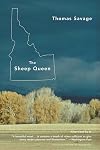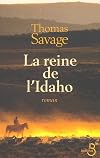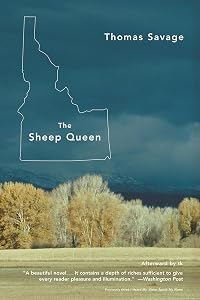
The Sheep Queen
by Thomas Savage
On This Page
Description
An epic family saga set on the sprawling, beautiful ranches of the American West, from the author of The Power of the Dog, "a masterful novelist working at the peak of his form" (Washington Post).A Western family story at once intimate and epic, this rich, compelling, emotionally charged novel tells the story of the Sweringen family of Idaho: Emma, the matriarch, known as the Sheep Queen ("surely one of the most fascinating characters in current fiction" —Publishers Weekly); the daughter show more who disappoints her; the grandson who adores her; and the granddaughter, given up for adoption, who spends nearly half her life finding her way back to her family.
"The Sheep Queen is marvelous...Her reign has a mythic grandeur." —New York Times Book Review
"A fine novel...A sense of family as anchor and root and self-definition [gives] the book its considerable strength...Savage is a writer of the first order, and he possesses in abundance the novelist's highest art — the ability to illuminate and move." —The New Yorker. show less
Tags
Recommendations









Member Reviews
This is the western saga of the Sweringen family. Emma Russell Sweringen is dubbed the Sheep Queen because in 1909 she had 10,000 head of Idaho sheep. Impressive for that time period, considering her gender. Men were supposed to be the dominant members of the family and yet Emma was so powerful she was not one to be messed with. She ran a tight operation and had high standards. Her daughter did nothing but disappoint yet she doted on her grandson. Time moves forward and backwards in Savage's story. It is all about family, identity and legacy. Grandson, Tom, is all grown up with a family of his own when he is contacted by a woman claiming to be the granddaughter of the Sheep Queen; professing to be his sister. Amy is adopted and looking show more for her roots. Tom does not want to accept her but even he understands the power of identity. The theme of loss is also pervasive, sometimes subtle and sometimes profound. There is triumph in discovery. The controversy surrounding giving up children for adoption - should people research their biological families? What is the harm in that? What are the rewards? I found myself asking if one needs to pack up their entire life and physically move to escape ancestral ghosts. show less
Thomas Savage's THE SHEEP QUEEN (1977, originally titled I HEARD MY SISTER SPEAK MY NAME) is a very good book, but you must pay close attention in order to keep the characters, marriages and different generations straight. But fear not. It's more than worth the effort.
Savage (who died in 2003) has enjoyed some major attention just in the past couple months, when the Jane Campion film adaptation of his 1967 novel, THE POWER OF THE DOG, was released by Netflix. I read that novel a dozen years or more ago and thoroughly enjoyed it. The Campion version remained quite true to the book, which was quite dark in its theme. So, while the cinematography was stunning and the acting superb, the overall effect was rather depressing.
THE SHEEP QUEEN show more was highly autobiographical, with its narrator named Tom Burton, a successful novelist living on the Maine coast and looking back at his childhood in Montana and Idaho, where his maternal grandmother was the title character who ruled her empire with an iron will. Tom's quiet world is disturbed by learning he may have an older sister, given up at birth for adoption, a revelation hard for him to accept. The sister's life is also a major part of the story, as are the lives of grandparents, great grandparents and various aunties and uncles. In fact one of the uncles, his stepfather's brother, is very much akin to the to the evil, unwashed brother in THE POWER OF THE DOG, apparently a character Savage couldn't easily let go.
Suffice it to say that THE SHEEP QUEEN is a complex, finely crafted page-turner. Just remember: pay attention! My highest recommendation.
- Tim Bazzett, author of the memoir, BOOKLOVER show less
Savage (who died in 2003) has enjoyed some major attention just in the past couple months, when the Jane Campion film adaptation of his 1967 novel, THE POWER OF THE DOG, was released by Netflix. I read that novel a dozen years or more ago and thoroughly enjoyed it. The Campion version remained quite true to the book, which was quite dark in its theme. So, while the cinematography was stunning and the acting superb, the overall effect was rather depressing.
THE SHEEP QUEEN show more was highly autobiographical, with its narrator named Tom Burton, a successful novelist living on the Maine coast and looking back at his childhood in Montana and Idaho, where his maternal grandmother was the title character who ruled her empire with an iron will. Tom's quiet world is disturbed by learning he may have an older sister, given up at birth for adoption, a revelation hard for him to accept. The sister's life is also a major part of the story, as are the lives of grandparents, great grandparents and various aunties and uncles. In fact one of the uncles, his stepfather's brother, is very much akin to the to the evil, unwashed brother in THE POWER OF THE DOG, apparently a character Savage couldn't easily let go.
Suffice it to say that THE SHEEP QUEEN is a complex, finely crafted page-turner. Just remember: pay attention! My highest recommendation.
- Tim Bazzett, author of the memoir, BOOKLOVER show less
The Sheep Queen is told in four parts. Part One, narrated by Tom Burton, the grandson of the Sheep Queen, tells the story of Amy, who was adopted by the McKinney family in Seattle in 1912. Amy learns that she was adopted when she was a young girl and, for a lifetime, suffers from a feeling of not belonging. As an adult, she attempts to find her birth parents and connect with her real family.
Part Two details the story of Emma Russel, known as the Sheep Queen, who marries Thomas Sweringen whose father had discovered gold in the area. Emma and Thomas have four girls and one boy. The eldest daughter is Elizabeth/Beth who falls in love with a handsome, flashy man named Ben Burton. Against the Sheep Queen's wishes, Beth marries Ben. The show more Sheep Queen, who had boarded a train from Illinois and landed in Idaho as a young woman, is all smarts and business. She eventually runs a large sheep farm which is where she gets her name.
Part Three is again narrated by Tom Burton, an author living in Maine, who reflects on his life. Tom's parents, Beth and Ben Burton, divorced when he was two years old. His mother remarried a man named Charlie when Tom was seven years old. His birth father, who tried to make it big in Hollywood, visits infrequently. Like Amy, Tom likely feels abandoned. As an adult, Tom learns from his Aunt Polly, his mother's sister, that she has received a letter from a woman who claims to be the daughter of Elizabeth Sweringen and Ben Burton, meaning she would be Tom’s sister.
In Part Four the story comes full circle. Tom writes to Amy and tells her the story of their mother. Their mother did in fact give Amy up for adoption when she was a baby. Their mother, Beth, was beautiful and her father's favorite. She loved the outdoors and nature. She had heart, feeling and style. Unfortunately, she drank alcoholically and died quite young. Perhaps Beth drank to drown her regrets and sorrows of having given up a child for adoption, for having made a bad decision about running off with Ben, or for allowing herself to be tortured by Ed, Charlie's cruel brother. Tom never mails the letter to Amy but ends up calling his sister on the phone. show less
Part Two details the story of Emma Russel, known as the Sheep Queen, who marries Thomas Sweringen whose father had discovered gold in the area. Emma and Thomas have four girls and one boy. The eldest daughter is Elizabeth/Beth who falls in love with a handsome, flashy man named Ben Burton. Against the Sheep Queen's wishes, Beth marries Ben. The show more Sheep Queen, who had boarded a train from Illinois and landed in Idaho as a young woman, is all smarts and business. She eventually runs a large sheep farm which is where she gets her name.
Part Three is again narrated by Tom Burton, an author living in Maine, who reflects on his life. Tom's parents, Beth and Ben Burton, divorced when he was two years old. His mother remarried a man named Charlie when Tom was seven years old. His birth father, who tried to make it big in Hollywood, visits infrequently. Like Amy, Tom likely feels abandoned. As an adult, Tom learns from his Aunt Polly, his mother's sister, that she has received a letter from a woman who claims to be the daughter of Elizabeth Sweringen and Ben Burton, meaning she would be Tom’s sister.
In Part Four the story comes full circle. Tom writes to Amy and tells her the story of their mother. Their mother did in fact give Amy up for adoption when she was a baby. Their mother, Beth, was beautiful and her father's favorite. She loved the outdoors and nature. She had heart, feeling and style. Unfortunately, she drank alcoholically and died quite young. Perhaps Beth drank to drown her regrets and sorrows of having given up a child for adoption, for having made a bad decision about running off with Ben, or for allowing herself to be tortured by Ed, Charlie's cruel brother. Tom never mails the letter to Amy but ends up calling his sister on the phone. show less
2245 I Heard My Sister Speak My Name, by Thomas Savage (read 8 Nov 1989) This is a 1977 novel and I found it positively absorbing. It tells a story of a family in Idaho, with touches of Montana, of the "I" in Maine, and of Ann Nofziger, who is seeking her mother. Poignant in the extreme. The ending was so powerful to me that I copied it out in my post-reading note. This book is memorable indeed. I don't think I can forget it.
Ratings
Members
- Recently Added By
Author Information

20+ Works 939 Members
Thomas Savage was born in 1915 in Salt Lake City. His literary career spans five decades & thirteen novels, most notably "The Power of the Dog" (L,B, 1967) & "I Heard My Sister Speak My Name" (L,B, 1977). His most recent novel, "The Corner of Rife & Pacific" (Morrow, 1988), was nominated for the PEN/Faulkner Award, won the Pacific Northwest show more Booksellers Association Award, & was one of "Publisher's Weekly's" fifteen best novels of 1988. He was also the recipient of a Guggenheim Fellowship in 1980. (Bowker Author Biography) show less
Awards and Honors
Distinctions
Common Knowledge
- Canonical title
- The Sheep Queen
- Original title
- I Heard My Sister Speak My Name
- Disambiguation notice
- Original 1977 title: I Heard My Sister Speak My Name.
Classifications
Statistics
- Members
- 99
- Popularity
- 327,743
- Reviews
- 4
- Rating
- (3.89)
- Languages
- Dutch, English, French, Italian
- Media
- Paper, Audiobook, Ebook
- ISBNs
- 14
- ASINs
- 5