On This Page
Tags
Recommendations






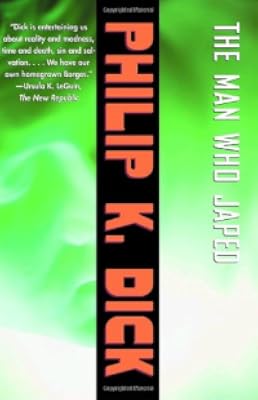

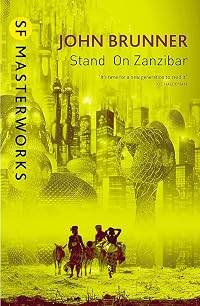

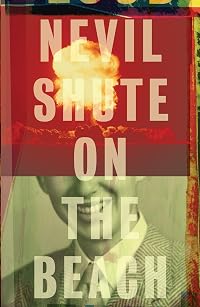


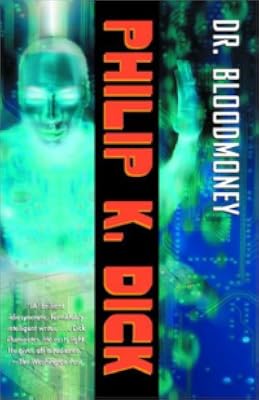














Member Recommendations
gward101 More post-apocalyptic chaos
Member Reviews
Were I a little better at anthropomorphizing, if I could bring myself to impart sentience and a unified will to planet Earth and its ecosphere without giggling, I would say that sometime in the mid to late 20th century, Gaia decided that, once and for all, She needed to get rid of this bad case of humans she's got and started working on a plan. And that furthermore she convinced J.G. Ballard to allow her to use his fiction as the laboratory in which various schemes were tested out. Ballard would perform Her thought experiments so She could pick the best way to bring the human world to ruin, or at least chase us off this planet, without unnecessarily expending all the energy and endangering all of the other life forms She wanted to show more keep.
Hey, you've got to admit it's as good a characterization as any for this cycle of "elemental apocalypse" novels. J.G. Ballard has drowned the world, crystallized the world, dried up and burned the world, and, in The Wind From Nowhere, blown the world to dusty pieces with hurricane-force winds.
But hey, as well I've come to know, even if his world is just one posh apartment building, J.G. Ballard enjoys destroying with gleeful abandon. Or rather, enjoys letting a single force (usually one that humanity has unleashed upon itself in one way or another) have its wild and wicked way with the world, to the world's greatest possible cost. It's not Ballard's fault everything gets trashed; it's ours. Or, very occasionally, that of the odd freak cosmic accident.
Unlike Hollywood, though, which is addicted to focusing on heroic efforts to fight disaster -- fire a missile to destroy the comet that's going to hit the Earth! Infect the invading alien ship with a computer virus! Sic the army on the giant ants! -- Ballard is more interested in watching ordinary, passive, bemused observer-refugees, whose lives usually were already pretty much trashed due to these same faults long before the natural disaster du novel hit, watch the disaster. And occasionally make a token effort to survive it, but, you know, nothing too strenuous.
I'm amused with myself to only now be reading this one, which is not only the first of Ballard's elemental apocalypses, but Ballard's first published novel of any kind (though Ballard dismissed it as "hackwork" and tended to refer to The Drowned World as his first novel). I tend to be fiercely chronological when I take up a new-to-me writer, but I also take advice from friends seriously, and the many passionate Ballardians I'm blessed with in my life, concerned that The Wind From Nowhere might sour me on the author, all told me to start with The Drowned World or Hello, America.* So I did.
And yeah, my friends were right. Had I started with this novel, I might not have gone on to read others, might not have become a Ballard fangirl, because while The Wind From Nowhere features a lot of the things I've come to love or at least find interesting about Ballard, they're buried in a conventional fight/rescue narrative that is weirdly dull compared to the passive/observing motif of the rest of the elemental apocalypse, and flat out boring compared to the disintegration and madness of High Rise.
That being said, this is still not truly a bad book. There are loads of hints of future greatness to be had here, most notably in the small but vivid storyline of Susan Maitland, estranged wife of one of the sort-of protagonists**, who elects to stay in her posh London apartment when everyone else is evacuated to the building's foundations or other underground locations. She wants to watch the houses fall down, she tells the porter, thus presaging so many Ballardian observers, and she and the state of her surroundings prefigure many of the delights of High Rise and other of Ballard's bravura descriptions of destruction and swift decay.
And, of course, speaking of destruction and decay, there's plenty of that to be had, too, for Ballard was obviously a master of depicting that from the get-go. As almost the entire planet (save the extreme northern and southern latitudes) becomes a giant dustbowl and some of the characters begin speculating about most of the formerly human-dominated planet turning into a band of permanent storm a la Saturn, the reader feels every sandblasting whipcrack of the mighty winds that have leveled everything in their path across the earth. One can almost imagine this being apocalypse of which Cormac McCarthy's The Road is post-.
Although I'm not sure that road, to say nothing of its surrounding trees and whatnot, would have survived The Wind From Nowhere.
*Hello, America is still on my to-be-read list. I've actually started it a few times, but only get a few chapters in before I get the screaming willies over how much it reminds me of the later stages of Greg Bear's Blood Music, which is my #1 freak-out novel of all time.
**A big flaw in this book, for me, was the surfeit of characters, none of them in the spotlight for long enough to become anything more than stick figures blowing in or hiding from the wind. A few figures eventually emerge as important to what actual narrative there is here, but they're little more than cameramen, roving around London or the central Mediterranean to show us the awesome destruction. show less
Hey, you've got to admit it's as good a characterization as any for this cycle of "elemental apocalypse" novels. J.G. Ballard has drowned the world, crystallized the world, dried up and burned the world, and, in The Wind From Nowhere, blown the world to dusty pieces with hurricane-force winds.
But hey, as well I've come to know, even if his world is just one posh apartment building, J.G. Ballard enjoys destroying with gleeful abandon. Or rather, enjoys letting a single force (usually one that humanity has unleashed upon itself in one way or another) have its wild and wicked way with the world, to the world's greatest possible cost. It's not Ballard's fault everything gets trashed; it's ours. Or, very occasionally, that of the odd freak cosmic accident.
Unlike Hollywood, though, which is addicted to focusing on heroic efforts to fight disaster -- fire a missile to destroy the comet that's going to hit the Earth! Infect the invading alien ship with a computer virus! Sic the army on the giant ants! -- Ballard is more interested in watching ordinary, passive, bemused observer-refugees, whose lives usually were already pretty much trashed due to these same faults long before the natural disaster du novel hit, watch the disaster. And occasionally make a token effort to survive it, but, you know, nothing too strenuous.
I'm amused with myself to only now be reading this one, which is not only the first of Ballard's elemental apocalypses, but Ballard's first published novel of any kind (though Ballard dismissed it as "hackwork" and tended to refer to The Drowned World as his first novel). I tend to be fiercely chronological when I take up a new-to-me writer, but I also take advice from friends seriously, and the many passionate Ballardians I'm blessed with in my life, concerned that The Wind From Nowhere might sour me on the author, all told me to start with The Drowned World or Hello, America.* So I did.
And yeah, my friends were right. Had I started with this novel, I might not have gone on to read others, might not have become a Ballard fangirl, because while The Wind From Nowhere features a lot of the things I've come to love or at least find interesting about Ballard, they're buried in a conventional fight/rescue narrative that is weirdly dull compared to the passive/observing motif of the rest of the elemental apocalypse, and flat out boring compared to the disintegration and madness of High Rise.
That being said, this is still not truly a bad book. There are loads of hints of future greatness to be had here, most notably in the small but vivid storyline of Susan Maitland, estranged wife of one of the sort-of protagonists**, who elects to stay in her posh London apartment when everyone else is evacuated to the building's foundations or other underground locations. She wants to watch the houses fall down, she tells the porter, thus presaging so many Ballardian observers, and she and the state of her surroundings prefigure many of the delights of High Rise and other of Ballard's bravura descriptions of destruction and swift decay.
And, of course, speaking of destruction and decay, there's plenty of that to be had, too, for Ballard was obviously a master of depicting that from the get-go. As almost the entire planet (save the extreme northern and southern latitudes) becomes a giant dustbowl and some of the characters begin speculating about most of the formerly human-dominated planet turning into a band of permanent storm a la Saturn, the reader feels every sandblasting whipcrack of the mighty winds that have leveled everything in their path across the earth. One can almost imagine this being apocalypse of which Cormac McCarthy's The Road is post-.
Although I'm not sure that road, to say nothing of its surrounding trees and whatnot, would have survived The Wind From Nowhere.
*Hello, America is still on my to-be-read list. I've actually started it a few times, but only get a few chapters in before I get the screaming willies over how much it reminds me of the later stages of Greg Bear's Blood Music, which is my #1 freak-out novel of all time.
**A big flaw in this book, for me, was the surfeit of characters, none of them in the spotlight for long enough to become anything more than stick figures blowing in or hiding from the wind. A few figures eventually emerge as important to what actual narrative there is here, but they're little more than cameramen, roving around London or the central Mediterranean to show us the awesome destruction. show less
Ballard tends to write several bks on variations of the same theme. This is the 1st(?) of his mono-ecological-disaster novels - by wch I mean that one ecological phenomenon reaches disastrous proportions & only a small part of the human (& animal & plant-life, etc) population survives. In this case, a wind whips around the earth faster & faster - gradually flattening all but the sturdiest objects. Ballard has usually managed to stay at the forefront of science fiction that addresses problems of human urban living. I like more or less everything that I've read by him - even when I think the ideas & writing are a bit thin, I still appreciate the bks' realtionship to his overall ouvre.
I know it's not his most popular novel, and I know he tried to disown it, and it is in places a little naive and cliched, but it does keep your attention and is not a bad read. So not such a bad book with which to start your writing career.
The first Ballard book I ever read was The Drowned World. I really didn't like it. So I gave him another try, with what I believe may have been his first novel - The Wind from Nowhere. I didn't like it. I think I'm done with Ballard, we don't seem to jive.
Early Ballard - fairly mainstream.
Primero llegó el polvo... Un polvo rojo que se amontonaba en espesas capas, empezó a cubrir las calles y los repisones de las ventanas. En Londres, el viento derribó los edificios más endebles y forzó a las líneas aéreas a suspender el servicio. Tokio y Singapur reportaron enormes inundaciones e incendios.
Entonces, empezó a aumentar la velocidad del viento. Al cabo de tres semanas, su velocidad era mayor que la de cualquier huracán conocido por la ciencia. Las grandes ciudades empezaron a caer por tierra, mientras los campos y los bosques eran arrasads.
Entonces, empezó a aumentar la velocidad del viento. Al cabo de tres semanas, su velocidad era mayor que la de cualquier huracán conocido por la ciencia. Las grandes ciudades empezaron a caer por tierra, mientras los campos y los bosques eran arrasads.
Nov 15, 2022Spanish
Het is gaan waaien. Het is een wind die rood zand meebrengt en woedt over heel de wereld. Nog vreemder is dat hij elke dag in kracht toeneemt...
Mar 9, 2025Dutch
Members
- Recently Added By
Author Information

290+ Works 37,816 Members
J. G. Ballard was born to British parents in Shanghai, China on November 15, 1930. While a child during World War II, he spent four years in a Japanese POW camp. This experience was the basis for the emotionally moving novel Empire of the Sun, which he adapted into a successful movie, directed by Steven Spielberg. Before becoming a full-time show more writer, he studied medicine at Cambridge University and served as a pilot in the British Royal Air Force. Ballard is best known for his science fiction writings. His early works were heavily influenced by surrealism. Most of his novels deal with death and destruction of the human spirit. Novels such as Crash, Concrete Island, and High Rise portray a society that is devolving into barbaric chaos. Crash was made into a movie by David Cronenberg in 1996. The Drowned World describes an apocalyptic society, with a hero that ushers in the destruction of the world. His novel Empire of the Sun was shortlisted for the Booker Prize and awarded the Guardian Fiction Prize and James Tait Black Memorial Prize for fiction. Empire of the Sun was filmed by Steven Spielberg in 1987, starring a young Christian Bale as Jim (Ballard). Ballard moved away from science fiction, but he is still considered one of the leading authors of the genre. He died on April 19, 2009 at the age of 78. (Bowker Author Biography) show less
Some Editions
Series

Belongs to Publisher Series
Work Relationships
Common Knowledge
- Canonical title*
- Le vent de nulle part
- Original title
- The wind from nowhere
- Original publication date
- 1962-01
- First words
- The dust came first.
Donald Maitland noticed it as he rode back in the taxi from London Airport, after waiting a fruitless forty-eight hours for his Pan-American flight to Montreal. For three days not a single aircraft had... (show all) got off the ground. - Last words
- (Click to show. Warning: May contain spoilers.)Like a cosmic carousel nearing the end of its run, the storm wind was slowly losing speed.
- Original language
- English
*Some information comes from Common Knowledge in other languages. Click "Edit" for more information.
Classifications
Statistics
- Members
- 470
- Popularity
- 65,097
- Reviews
- 7
- Rating
- (3.15)
- Languages
- 6 — Dutch, English, French, German, Italian, Japanese
- Media
- Paper
- ISBNs
- 6
- ASINs
- 12