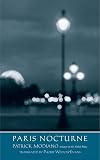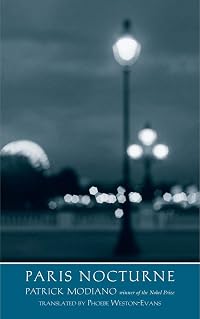
Paris Nocturne
by Patrick Modiano
On This Page
Description
"This uneasy, compelling novel begins with a nighttime accident on the streets of Paris. The unnamed narrator, a teenage boy, is hit by a car whose driver he vaguely recalls having met before. The mysterious ensuing events, involving a police van, a dose of ether, awakening in a strange hospital, and the disappearance of the woman driver, culminate in a packet being pressed into the boy's hand. It is an envelope stuffed full of bank notes. The confusion only deepens as the characters grow show more increasingly apprehensive; meanwhile, readers are held spellbound." -- Provided by publisher show lessTags
Recommendations












Member Reviews
Nocturnal Illuminations
Each Modiano novel is eerily similar. But not disappointingly so. I will often pick one up start reading, only to realise after 30 pages that I'd read it before. It's disorienting. But perhaps reading his works is meant to be like this. We can never be sure where we are, whether in his novel, or on firm ground. What we accept as real all around us here appears as though in an alternate universe, the reader steps into this place asked to answer some metaphysical question he or she can never know the answer to. We join the narrator in this universe of parallels.
Street names, buildings, ports and railway stations form the tangible phenomena in the universe of a Modiano narrator. They tell us something at least is show more real; or at least anchor our thoughts to something familiar - that we think we've seen or known previously. So these tangibles, let's call them, animate the universe of the book like a painted stage backdrop; the narrator like us must wait for the strange searching drama that will occur on the page.
Events happen, but these are also unclear. A car accident opens the novel to a twenty-year-old narrator. The accident exists the way the narrator experienced another accident when he was a six-year-old. And the running over of a dog on another occasion. These three accidents dovetail and erupt as though each is as important as the other. Memory creates a fluid relationship between the three. But memory gives no answer to any of them. The event that opens the novel will also recede into memory, thirty years later, another narrative timeline emerges telling of these events as though now. Some other meaning joins those three events. A woman was at the scene, ether was applied and a long time was spent in a bed as though in a hospital. The search for the woman becomes the action of the story, finding her may or may not provide answers, perhaps just another witness to the mystery. The smell of ether, functions like a modern madeleine moment.
The need for tangibles constantly bothers a Modiano narrator too. Who, what, where, how, when are constants because they are questions, never completed with answers, or the answers never create closure. But that is the space we inhabit within a Modiano novel. This is what I find fascinating, his work illuminates on the page (in so much as it can) the idea of existing in the 20thC: the modern condition, alienated by cities, transactional economic culture, flux and change, the upheaval of war, the absence of a clear view of self all emerge as the constants, but they are unsatisfying because we rarely if ever have an answer, only for the passage of time to erase what we thought we knew and start searching again. In that sense, another novel by Modiano – and there are many – is one more chapter of a corpus, the real the tangible is just the words on the page, the eeriness that we’ve experienced it all before reminds us it is our condition to live like that.
ADDIT: 8 June 2024. I spent the last few days in the Greek city of Thessaloniki. Anyone who knows about the city will know that since the 1500s it was a mostly Jewish city until ww2. during the 19thC, the population of jews was around 60%. I had read that Modiano's father's family came from here. True to form, the name Modiano is a historical one. The old undercover Jewish market is called Modiano Market. A visit to the extensive Jewish museum here shows the name Modiano to be a prominent one over many years, villas, prominent citizens etc. And tragically, the roll call of the deported and dead has dozens and dozens of Modianos. Pehaps Patrick knew this, perhaps the ghosts in his works, the obscure, shady details of personal history among his characters and narrators runs deeper. show less
Each Modiano novel is eerily similar. But not disappointingly so. I will often pick one up start reading, only to realise after 30 pages that I'd read it before. It's disorienting. But perhaps reading his works is meant to be like this. We can never be sure where we are, whether in his novel, or on firm ground. What we accept as real all around us here appears as though in an alternate universe, the reader steps into this place asked to answer some metaphysical question he or she can never know the answer to. We join the narrator in this universe of parallels.
Street names, buildings, ports and railway stations form the tangible phenomena in the universe of a Modiano narrator. They tell us something at least is show more real; or at least anchor our thoughts to something familiar - that we think we've seen or known previously. So these tangibles, let's call them, animate the universe of the book like a painted stage backdrop; the narrator like us must wait for the strange searching drama that will occur on the page.
Events happen, but these are also unclear. A car accident opens the novel to a twenty-year-old narrator. The accident exists the way the narrator experienced another accident when he was a six-year-old. And the running over of a dog on another occasion. These three accidents dovetail and erupt as though each is as important as the other. Memory creates a fluid relationship between the three. But memory gives no answer to any of them. The event that opens the novel will also recede into memory, thirty years later, another narrative timeline emerges telling of these events as though now. Some other meaning joins those three events. A woman was at the scene, ether was applied and a long time was spent in a bed as though in a hospital. The search for the woman becomes the action of the story, finding her may or may not provide answers, perhaps just another witness to the mystery. The smell of ether, functions like a modern madeleine moment.
The need for tangibles constantly bothers a Modiano narrator too. Who, what, where, how, when are constants because they are questions, never completed with answers, or the answers never create closure. But that is the space we inhabit within a Modiano novel. This is what I find fascinating, his work illuminates on the page (in so much as it can) the idea of existing in the 20thC: the modern condition, alienated by cities, transactional economic culture, flux and change, the upheaval of war, the absence of a clear view of self all emerge as the constants, but they are unsatisfying because we rarely if ever have an answer, only for the passage of time to erase what we thought we knew and start searching again. In that sense, another novel by Modiano – and there are many – is one more chapter of a corpus, the real the tangible is just the words on the page, the eeriness that we’ve experienced it all before reminds us it is our condition to live like that.
ADDIT: 8 June 2024. I spent the last few days in the Greek city of Thessaloniki. Anyone who knows about the city will know that since the 1500s it was a mostly Jewish city until ww2. during the 19thC, the population of jews was around 60%. I had read that Modiano's father's family came from here. True to form, the name Modiano is a historical one. The old undercover Jewish market is called Modiano Market. A visit to the extensive Jewish museum here shows the name Modiano to be a prominent one over many years, villas, prominent citizens etc. And tragically, the roll call of the deported and dead has dozens and dozens of Modianos. Pehaps Patrick knew this, perhaps the ghosts in his works, the obscure, shady details of personal history among his characters and narrators runs deeper. show less
A young man, twenty, walking in Paris at night is grazed by a car driven by a woman named Jacqueline Beausergent. He feels he has known her in the past. He leaves the encounter with a bandage and an envelope of cash after recovering in a hospital.
Written from the perspective of an older man, he recalls this incident, other memories of his younger self, and of his estranged father; Patrick Modiano’s favorite themes. The young man is alone. His father had him arrested at 17, an attempt “to get rid of him.” A woman that is possibly his mother attacks him outside his apartment building.
He searches for Jacqueline Beausergent, moving through Paris at night, looking for clues and her car. Dreams feature prominently in the story, and show more some of the things that happen to him at night are possibly dreams. He observes and moves and knows he will find her again. “Remain still and silent and blend into the background.”
A passage describes the purpose and beauty of his night wanderings:
“…at certain hours of the night, you can slip into a parallel world: an empty apartment where the light wasn’t switched off, even a small dead-end street. It’s where you find objects lost long ago: a lucky charm, a letter, an umbrella, a key, and cats, dogs and horses that were lost over the course of your life.” show less
Written from the perspective of an older man, he recalls this incident, other memories of his younger self, and of his estranged father; Patrick Modiano’s favorite themes. The young man is alone. His father had him arrested at 17, an attempt “to get rid of him.” A woman that is possibly his mother attacks him outside his apartment building.
He searches for Jacqueline Beausergent, moving through Paris at night, looking for clues and her car. Dreams feature prominently in the story, and show more some of the things that happen to him at night are possibly dreams. He observes and moves and knows he will find her again. “Remain still and silent and blend into the background.”
A passage describes the purpose and beauty of his night wanderings:
“…at certain hours of the night, you can slip into a parallel world: an empty apartment where the light wasn’t switched off, even a small dead-end street. It’s where you find objects lost long ago: a lucky charm, a letter, an umbrella, a key, and cats, dogs and horses that were lost over the course of your life.” show less
Our unnamed narrator is hit by a car and injured slightly. The female driver appears familiar to him. Over the next several weeks, he tries to find her and to put together the possible connection: to his disappeared father? to his childhood? To a crime boss? We watch his obsession and are drawn into his search.
Unfortunately, I found that the effort to deal with all the ambiguity during the quest was not "rewarded" by the ultimate resolution. I liked the book more a few days after finishing it, but still am not rating it very highly.
Unfortunately, I found that the effort to deal with all the ambiguity during the quest was not "rewarded" by the ultimate resolution. I liked the book more a few days after finishing it, but still am not rating it very highly.
fter an automobile accident in which he is struck, as a pedestrian, by a woman driving a sea-green Fiat, our 20-year-old unnamed narrator becomes obsessed with finding the woman and understanding the bizarre events in the hours and days immediately following the accident. Narrated with a detached, disimpassioned tone, the novel recounts emotional reactions with the same voice as a description of a list of addresses found in the narrator's dead father's notebook. The result is less than fully satisfying for a reader who most responds to character development, but it was also oddly compelling. Themes of memory, illusion, and the vague boundary between dreams and reality kept me engaged.
A 2015 article in the New York Times about show more Nobel-winning Modiano suggested that reading more than one of his novels will enhance the experience of reading any individual work. Having read that article, I was admittedly a bit proud to have set the novel, in my mind because it was not provided directly in the narrative, in the year immediately after the Nazi occupation of France. That sombre air was present throughout. show less
A 2015 article in the New York Times about show more Nobel-winning Modiano suggested that reading more than one of his novels will enhance the experience of reading any individual work. Having read that article, I was admittedly a bit proud to have set the novel, in my mind because it was not provided directly in the narrative, in the year immediately after the Nazi occupation of France. That sombre air was present throughout. show less
I really liked this book! Modiano drifts skillfully and effortlessly between the past and the present, between dream and the narrator's imagination and reality. Another compliment is due to translator Elisabeth Edl for making this book available to me — unfortunately, I don't read French.
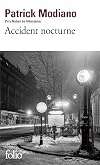
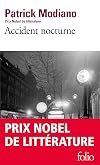
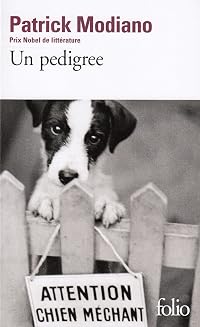
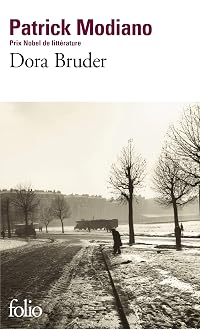
Gallimard, folio 4184. I love the touch and feel of these folio editions - and in this case the atmospheric subdued front cover.
Non c'è dubbio, Modiano riscrive sempre lo stesso libro, continua a tornare sulla solitudine e lo spaesamento, ma la magia del suo sguardo, sospeso e attonito, sul presente e sul passato si rinnova ogni volta. Mi ascrivo definitivamente al suo fan club.
Sep 7, 2017Italian
Members
- Recently Added By
Author Information

82+ Works 11,080 Members
Paul Modiano is a French writer who was born on July 30, 1945, in Boulogne-Billancourt. He won the Nobel Prize for Literature in 2014 for his lifetime body of work. He previously won the Austrian State Prize for European Literature in 2012 and the Prix mondial Cino Del Duca from the Institut de France for his lifetime achievement in 2010. His show more other awards include the Prix Goncourt in 1978 for his novel Rue des boutiques obscures and the Grand prix du roman de l'Académie française in 1972 for Les Boulevards de ceinture. Modiano's works explore the traumas of the Nazi occupation of France and the puzzle of identity. His preoccupation with the theme of identity can be seen throughout many of his works including his 2005 memoir entitled Un Pedigree. Modiano was greatly influenced by his parents' relationship. His mother and father began their clandestine relationship during occupied France. Growing up, his father was absent for most of his life and his mother was away frequently while on tour acting. He was alone much of the time and went to school because of government aid. His younger brother died of a disease at age 10 and this added to his "lost identity" feelings while growing up. Modiano first came to prominence in France when he wrote the 1968 book La Place de L'Étoile. He has published over 30 works which include novels, screenplays and children's books. His other works include: La Ronde de nuit (1969), English translation: Night Rounds; Rue des boutiques obscures (1978), English translation: Missing Person; and Quartier Perdu (1984), English translation: A Trace of Malice. Although he is well known in France, only about 12 of his works have been translated into English. (Bowker Author Biography) show less
Some Editions
Awards and Honors
Awards
Distinctions
Notable Lists
Series
Belongs to Publisher Series
Work Relationships
Is contained in
Common Knowledge
- Canonical title
- Paris Nocturne
- Original title
- Accident nocturne
- Original publication date
- 2003
- Important places
- Paris, Île-de-France, France
- Dedication
- voor Douglas
For Douglas - First words
- Late at night, a long time ago, when I was about to turn twenty-one, I was crossing Place des Pyramides on my way to Place de la Concorde when a car appeared suddenly from out of the darkness.
- Last words
- (Click to show. Warning: May contain spoilers.)There was nothing above us but the glow of a night-light.
- Blurbers*
- Grunberg, Arnon
- Original language*
- Français
*Some information comes from Common Knowledge in other languages. Click "Edit" for more information.
Classifications
Statistics
- Members
- 313
- Popularity
- 101,965
- Reviews
- 10
- Rating
- (3.53)
- Languages
- 9 — Chinese, Dutch, English, French, German, Greek, Italian, Slovenian, Spanish
- Media
- Paper, Ebook
- ISBNs
- 20
- ASINs
- 6