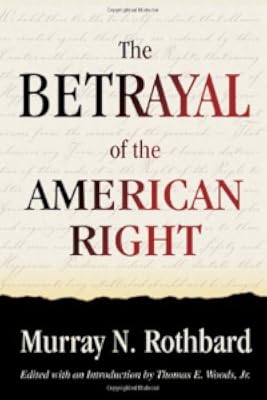
The Betrayal of the American Right
by Murray Rothbard
On This Page
Description
LARGE PRINT EDITION! More at LargePrintLiberty.com This remarkable piece of history will change the way you look at American politics. It shows that the corruption of American "conservatism" began long before George W. Bush ballooned the budget and asserted dictatorial rights over the country and the world. The American Right long ago slid into the abyss.Betrayal of the American Right is the full story, and the author is none other than Murray N. Rothbard, who witnessed it all first hand. He show more tells his own story and reveals that machinations behind the subversion of an anti-state movement into one that cheers statism of the worst sort.The book was written in the mid-1970s and is only now published for the first time. Each time a prospective publisher promised to go ahead, the deal fell through. Even so, it has been privately circulated for the 30 years since it was written - and everyone lucky enough to own a copy of the manuscript knew he had a treasure.People who have read it swear that it is the best account ever how the old right was subverted to become a propaganda branch of the state, not just recently but fifty years ago. So Rothbard's account is not only a critical historical document; it also has explosive explanatory power. show lessTags
Recommendations













Member Reviews
Rothbard wrote The Betrayal of the American Right as a kind of personal intellectual history, a partizan’s idiosyncratic view of the evolution of right-wing thought in American politics through the 1960s. The laissez-faire/isolationist Old Right to which he pledged allegiance emerged from the individualist tradition, in opposition to the New Deal and US entry into WWII. By the mid-1940s, Rothbard had graduated from Colombia and was calling himself ‘an extreme right winger.’ His discovery of Austrian economics in 1949 and subsequent conversion to anarchism (‘a simple exercise in logic’) Rothbard calls the ‘two most exciting and shattering intellectual events’ of his life. Naturally, he says, the anarchism he adopted was show more individualistic and free-market. None of that ‘woolly communalism’ for Murray. In Rothbard's telling, the Old Right was suppressed during WWII, by calumny and obloquy and political espionage, but experienced a short renaissance after the war as Cold War anxieties opened up space for its freedom & free-enterprise agitation. Alas, the antiwar isolationist Old Right made its last stand at the Korean War, and by the mid-1950s had been ‘betrayed’ by the New Right and the theocratic warmongering civil-liberties-crushing ‘conservative’ intellectuals given a platform at William F. Buckley’s National Review. The Goldwater campaign was a dagger through the heart of the Old Right, and Rothbard surprisingly found himself in agreement with the Free Speech/antiwar New Left in the 1960s.
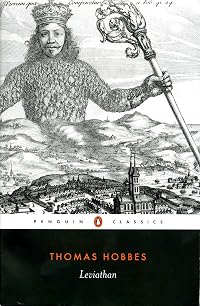
Between the lines, The Betrayal of the American Right is an entertaining intellectual dissection of the ideologue, with his aversion to complexity and ambiguity; the obsessively meticulous assignment of factional labels, from Tory Anarchists to Minnesota Trotskyists; the unfounded assumptions and the hysterical hyperbole. Murray says that ‘the despotism of Prohibition’ was ‘surely the greatest single act of tyranny ever imposed in America.’ Come on. A well-sourced narrative history of the Prohibition era like Daniel Okrent’s Last Call tells instead of the ineptitude of the State, the futility of commanding particular behaviors, and the capacity of enterprising and resourceful people to subvert stupid laws. For the ideologue, though, every slope is slippery. The New Deal unleashed ‘the tyranny of the Executive’ and transferred the ‘ultimate power of initiative’ from private enterprise to government. Nope. WWII, according to Murray, ‘would transform America into a Leviathan state, a domestic totalitarian collectivism.’ (yikes!) It did not, unless that is what you believe you see.
Murray and his friends spend a lot of time trying to figure out where exactly they sit on the ideological spectrum, which they assume is a linear arrangement from Left to Right. Time and again, though, he tells us that such and such a development led to a ‘reshuffling’ of the ideological spectrum. The drive of the New Deal toward war was supported by Left-Liberals. Business interests once opposed to FDR supported the stimulus provided by government spending on armaments and materiel. Conservatives/liberals didn't like this/that, then they did. Murray even tells us that Robert A. Taft was ‘on the extreme left wing of the extreme right wing’ (?!), but never really figures out how and why the conventional Left/Right designations are inadequate for anything but polemical jousting.
Rothbard got his anti-pragmatic myopia from his mentor, Ludwig von Mises, who wrote in his magnum opus Human Action that his economic theories were ‘not open to any verification or falsification on the ground of experience’ (p. 862). Deduce from your preferred first principle, then stick with it regardless. Except that laissez faire and isolationism in the American context are ahistorical and impracticable. The American State was never not expansionist and interventionist, and market economies do not exist apart from government activity. Perhaps they could, but they never have.
Murray wants you to think of him as a libertarian, forever committed to individual liberty, and you might if all you read was The Betrayal of the American Right, written in 1971 (published 2007). Oh, but Murray went bad. By the 1990s, he was promoting a boorish social conservatism, arguing in favor of obedience to tradition as the foundation of liberty, property and order—the individualist tendency jettisoned in favor of a retrograde right-wing populism. Blech. So long, Murray. show less
Between the lines, The Betrayal of the American Right is an entertaining intellectual dissection of the ideologue, with his aversion to complexity and ambiguity; the obsessively meticulous assignment of factional labels, from Tory Anarchists to Minnesota Trotskyists; the unfounded assumptions and the hysterical hyperbole. Murray says that ‘the despotism of Prohibition’ was ‘surely the greatest single act of tyranny ever imposed in America.’ Come on. A well-sourced narrative history of the Prohibition era like Daniel Okrent’s Last Call tells instead of the ineptitude of the State, the futility of commanding particular behaviors, and the capacity of enterprising and resourceful people to subvert stupid laws. For the ideologue, though, every slope is slippery. The New Deal unleashed ‘the tyranny of the Executive’ and transferred the ‘ultimate power of initiative’ from private enterprise to government. Nope. WWII, according to Murray, ‘would transform America into a Leviathan state, a domestic totalitarian collectivism.’ (yikes!) It did not, unless that is what you believe you see.
Murray and his friends spend a lot of time trying to figure out where exactly they sit on the ideological spectrum, which they assume is a linear arrangement from Left to Right. Time and again, though, he tells us that such and such a development led to a ‘reshuffling’ of the ideological spectrum. The drive of the New Deal toward war was supported by Left-Liberals. Business interests once opposed to FDR supported the stimulus provided by government spending on armaments and materiel. Conservatives/liberals didn't like this/that, then they did. Murray even tells us that Robert A. Taft was ‘on the extreme left wing of the extreme right wing’ (?!), but never really figures out how and why the conventional Left/Right designations are inadequate for anything but polemical jousting.
Rothbard got his anti-pragmatic myopia from his mentor, Ludwig von Mises, who wrote in his magnum opus Human Action that his economic theories were ‘not open to any verification or falsification on the ground of experience’ (p. 862). Deduce from your preferred first principle, then stick with it regardless. Except that laissez faire and isolationism in the American context are ahistorical and impracticable. The American State was never not expansionist and interventionist, and market economies do not exist apart from government activity. Perhaps they could, but they never have.
Murray wants you to think of him as a libertarian, forever committed to individual liberty, and you might if all you read was The Betrayal of the American Right, written in 1971 (published 2007). Oh, but Murray went bad. By the 1990s, he was promoting a boorish social conservatism, arguing in favor of obedience to tradition as the foundation of liberty, property and order—the individualist tendency jettisoned in favor of a retrograde right-wing populism. Blech. So long, Murray. show less
Murray Rothbard in his Betrayal of the American Right gives the history of the "right" side of the political spectrum and how it changed in the twentieth century. The "extremists" of the Old Right were Isolationist Libertarians who opposed the economics of the New Deal and the foreign policy that sought to involve us in wars to save the British, French, and Spanish empires. These men included Howard Buffett, Frank Chodorov, Garet Garrett, Robert McCormick, and Robert A. Taft.
Rothbard was an undergraduate at Columbia University during World War II while his libertarian and non-interventionist views continued to solidify. This work is extremely helpful to any who may not know that there is another side to the story during those years. show more Rothbard gives a very first hand account during many of the events covered in the book as he speaks about the groups he was with and the reasons he was with them. It is refreshing as he continues to give admissions of where he feels his and his friends were wrong and the reasons they were wrong.
Anyone that doesn't have a complete familiarity with the political spectrum of ideas from the 1930s to the 1960s will be motivated to expand upon this book and become familiar with the many sides of the debates mentioned. Rothbard's extreme peace position can be shocking at first but does bring to mind many questions. Why does the establishment and all of its surrogates never question any of the many wars that we have been involved in? Was going to war really the only answer or was it the best option for the military-industrial complex and an economy that is largely dependent on this? In addition to the peace question is the economics questions and the very clear understanding that our economy is not even close to a true laissez-faire capitalism. show less
Rothbard was an undergraduate at Columbia University during World War II while his libertarian and non-interventionist views continued to solidify. This work is extremely helpful to any who may not know that there is another side to the story during those years. show more Rothbard gives a very first hand account during many of the events covered in the book as he speaks about the groups he was with and the reasons he was with them. It is refreshing as he continues to give admissions of where he feels his and his friends were wrong and the reasons they were wrong.
Anyone that doesn't have a complete familiarity with the political spectrum of ideas from the 1930s to the 1960s will be motivated to expand upon this book and become familiar with the many sides of the debates mentioned. Rothbard's extreme peace position can be shocking at first but does bring to mind many questions. Why does the establishment and all of its surrogates never question any of the many wars that we have been involved in? Was going to war really the only answer or was it the best option for the military-industrial complex and an economy that is largely dependent on this? In addition to the peace question is the economics questions and the very clear understanding that our economy is not even close to a true laissez-faire capitalism. show less
Ratings
Members
- Recently Added By
Author Information

123+ Works 4,763 Members
Classifications
- Genres
- Nonfiction, Politics and Government, History, General Nonfiction, Philosophy
- DDC/MDS
- 320.51 — Society, government, & culture Political science Types of Government Political ideologies Liberalism
- LCC
- JC585 — Political Science Political theory Political theory. The state. Theories of the state Purpose, functions, and relations of the state
- BISAC
Statistics
- Members
- 63
- Popularity
- 485,415
- Reviews
- 2
- Rating
- (4.56)
- Languages
- English
- Media
- Paper, Audiobook
- ISBNs
- 2
- ASINs
- 1