Random Acts of Heroic Love
by Danny Scheinmann
On This Page
Description
THE SUNDAY TIMES BESTSELLER A BESTSELLING RICHARD AND JUDY BOOKCLUB PICK SHORTLISTED FOR THE DESMOND ELLIOTT PRIZE SHORTLISTED FOR THE AUTHOR'S CLUB BEST FIRST NOVEL AWARD 'A lush, romantic novel' Daily Mail 1992: Leo Deakin wakes up in a hospital somewhere in South America, his girlfriend Eleni is dead and Leo doesn't know where he is or how Eleni died. He blames himself for the tragedy and is sucked into a spiral of despair. But Leo is about to discover something which will change his life show more forever. 1917: Moritz Daniecki is a fugitive from a Siberian POW camp. Seven thousand kilometres over the Russian Steppes separate him from his village and his sweetheart, whose memory has kept him alive through carnage and captivity. The Great War may be over, but Moritz now faces a perilous journey across a continent riven by civil war. When Moritz finally limps back into his village to claim the hand of the woman he left behind, will she still be waiting? 'Special' Sunday Express 'Tender' Observer 'Mesmerising' Publishing News show lessTags
Recommendations















Member Reviews
[This is a review I wrote in 2008]
** 'And when Love speaks, the voice of all the gods make heaven drowsy with the harmony.' (Shakespeare). 2 beautiful love stories.**
Five stars are not enough! 'Random Acts of Heroic Love', is an incredible debut novel from Danny Scheinmann. A labour of love in itself; in his acknowledgements the author says it took six years and numerous drafts to get it right, but all that painstaking work has paid dividends. It's a wonderfully rich, insightful and wrenchingly emotional novel.
The story begins in 1992 with Leo, a young PhD student, waking up in an Ecuadorian clinic to find that his girlfriend Eleni is dead. Eleni. His soulmate. The other half of his whole. She's been killed in a bus crash they were in - show more the only victim of the crash. Leo's loss, and his attempt to go on living, picking up the pieces of his previous existence, without Eleni, is just one half of the book. Leo turns to Physics to try and find some answers and interspersed throughout the pages of the novel are facsimile pages from a journal Leo was keeping to help him get through Eleni's death... One of the quotes Leo finds is the one I used for the title of my review.
The other story, which picks up at chapter 3, is every bit as heart-wrenching. It is the story of another young man from Galicia, Moritz Daniecki, caught up in the war on the Russian Front as a soldier from 1914 through to 1917. In 1914 before the outbreak of war, young Moritz meets the love of his life, Lotte, and they declare their love for each other before Moritz goes to war. During the war he suffers unbearable conditions before finally escaping from a prisoner of war camp in Sibera. Moritz tells the story of how he is driven across the Siberian wilderness by his everlasting love for Lotte. It is her memory and the letters that he writes to her that keeps him going on his journey... not knowing what he will find at the end.
The two stories are truly beautiful. Both young men are kept going through each and every day by their memories of love, and the connection between the two is revealed at the end (if you haven't already guessed). Superbly written. The harshness of a Siberian winter and First World War horrors are vividly brough to life by Scheinmann. The book takes you on a non-stop emotional roller coaster and only those with cast-iron feelings will remain unmoved! An exceptional book. show less
** 'And when Love speaks, the voice of all the gods make heaven drowsy with the harmony.' (Shakespeare). 2 beautiful love stories.**
Five stars are not enough! 'Random Acts of Heroic Love', is an incredible debut novel from Danny Scheinmann. A labour of love in itself; in his acknowledgements the author says it took six years and numerous drafts to get it right, but all that painstaking work has paid dividends. It's a wonderfully rich, insightful and wrenchingly emotional novel.
The story begins in 1992 with Leo, a young PhD student, waking up in an Ecuadorian clinic to find that his girlfriend Eleni is dead. Eleni. His soulmate. The other half of his whole. She's been killed in a bus crash they were in - show more the only victim of the crash. Leo's loss, and his attempt to go on living, picking up the pieces of his previous existence, without Eleni, is just one half of the book. Leo turns to Physics to try and find some answers and interspersed throughout the pages of the novel are facsimile pages from a journal Leo was keeping to help him get through Eleni's death... One of the quotes Leo finds is the one I used for the title of my review.
The other story, which picks up at chapter 3, is every bit as heart-wrenching. It is the story of another young man from Galicia, Moritz Daniecki, caught up in the war on the Russian Front as a soldier from 1914 through to 1917. In 1914 before the outbreak of war, young Moritz meets the love of his life, Lotte, and they declare their love for each other before Moritz goes to war. During the war he suffers unbearable conditions before finally escaping from a prisoner of war camp in Sibera. Moritz tells the story of how he is driven across the Siberian wilderness by his everlasting love for Lotte. It is her memory and the letters that he writes to her that keeps him going on his journey... not knowing what he will find at the end.
The two stories are truly beautiful. Both young men are kept going through each and every day by their memories of love, and the connection between the two is revealed at the end (if you haven't already guessed). Superbly written. The harshness of a Siberian winter and First World War horrors are vividly brough to life by Scheinmann. The book takes you on a non-stop emotional roller coaster and only those with cast-iron feelings will remain unmoved! An exceptional book. show less
Despite the title, I suspect that there is very little that is random about this novel, since Scheinmann spent six years of his life honing this, his first published work. Perhaps the time scale is a consequence of the semi-autobiographical nature of the central stories: one tale is based on Scheinmann’s personal history; the other is a fabrication loosely based on an epic journey made by his grandfather during the First World War. Both are tales of love and loss, obsession and despair. Whether or not it has helped Scheinmann to achieve any kind of catharsis, writing the novel has led to a very positive reaction from readers and reviewers alike. ‘Random Acts of Heroic Love’ made it into the Richard and Judy Book Club and gained show more fulsome praise from reviewers, although, pleasingly, the editors have decided to allow the book to speak for itself, instead of slathering it with sound-bites. So what did I think?
First impressions / hopes
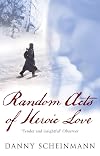
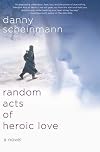
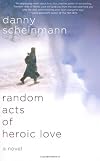
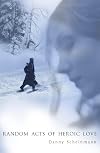
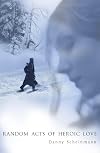
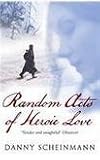
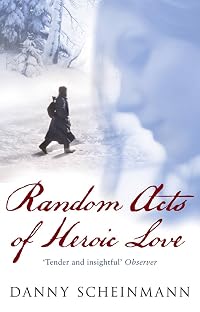
The title intrigued me, as did the image on the front cover: a man, dressed for icy weather, strides through a white landscape; superimposed over this is the image of a young woman’s face, eyes averted from the traveller, her visage somehow expressing stoic sadness. The man’s garb and setting led me to believe that this was part of the story of the soldier who, having survived fighting in the Great War, struggles for three years through the Siberian wilderness to join his childhood sweetheart.
The premise is an exciting one, suggesting an action packed journey and, hopefully, a romantic resolution. What will happen to Moritz along the way? And, if he is able to survive the journey, will his young love still be waiting? I anticipated dramatic plotlines and wickedly hoped for a sad ending, to see how the author would handle it. (Happy endings are rather easy and, dare I say it, often a bit dull; I sometimes prefer a bit of well-managed anguish. Although it obviously wouldn’t work at the end of, say, anything by Jane Austen, or a Mills and Boon.) Moritz would be battle toughened, weary, but a hero to root for.
I found it slightly surprising then that the novel opens with another story. In 1992, a young man called Leo Deakin discovers that his girlfriend has died in a bus accident while they were travelling together in a foreign country. Although he does not initially remember what has happened, or even where he is, once the pieces begin to come together Leo is absorbed by his feelings of guilt. As time passes, Leo refuses to move on. He becomes obsessed by capturing random acts of love and tears pages from library books in order to create a journal of ‘love’. He dives into unsuitable, meaningless relationships and the world of physics, befriending a lecturer with unusual views on the nature of love. In short, he becomes stuck, fixed in place by a random tragic event.
Perhaps he sounds like a sympathetic character – I’m sure that he is a sympathetic character – yet somehow, although Leo’s position is worse than Moritz’s (in the sense that Eleni is dead), I found Leo intensely irritating. Unable, or perhaps unwilling, to draw solace from his friends or family, Leo loses interest in his post graduate work and, in a memorably mad moment, begins to pair up leaves. Perhaps my response reflects little more than my own lack of experience in this kind of grief; I’ve lost people I’m close to, but never a partner. My impatience with Leo is quite possibly a result of my own personality, but I really couldn’t warm to him as a character. The notebook he keeps (which is presented in appropriately doodled-up form between chapters) is a mish mash of pretentious quotations and notes about how animals mate, as if the elaborate dating rituals of birds or elephants can teach him how to bear his loss.
It was quite a relief to join Moritz, who speaks in the first person and quickly establishes a compelling narrative:
‘Ah there you are. I’m glad. I’ve got a story to tell you. Come closer, that’s it, right up to my bed. Don’t be shy. Bring the chair right up. It’s all right, I’m not contagious. You can rest your feet on it if you like.’
Although he is speaking to his young son, the bed bound and dying old man captures the reader easily when he asks us to ‘imagine a fast clean river flowing through a dense forest’. Unlike Leo, who is absorbed by death, Moritz celebrates life, even as he waits to die, hunched in a dirty trench and sheltered by only a sandbag. He recalls the taste of fresh bread, the feel of fire-warmed underwear against his skin, and the scrunch of autumn leaves underfoot. Moritz launches into his personal tale and enthrals both his son, who never speaks, and the reader. His story contains loss, danger and humour, especially when he is forced to team up with a man named Kiraly, a bitter, complaining man (who reminds me of Leo, if he were given the opportunity to be cruel). Despite their differences, Kiraly and Moritz are able to work together and their final parting contains a genuine sadness. I enjoyed reading about their interaction and felt that it was consistently believable.
In contrast, Leo decides to ‘let [his friends] rot’ when they try to challenge his bathing in guilt and sadness. He moves into lodgings and begins an affair with a woman who ultimately revolts him. Can Leo ever let go of Eleni? Will he ever want to? These are the questions I should have wanted to ask, but I didn’t, because I didn’t believe that Leo’s grief was about Eleni. Leo’s grief is about Leo. Leo has been bereaved. Leo is alone. There is very little sense of Eleni in the novel; she is simply the justification for Leo’s indulgent retreat from the world. This may be overly harsh, but this is how I felt when I was reading these sections of the story. In fact, I found that I was skimming these sections impatiently so that I could return to the ‘main’ storyline with Moritz.
Linking the stories
The blurb promises that the ‘hidden connections’ between the two men and their stories will be revealed in a ‘stunning climax’. However, the connection between the two is easy enough to guess quite early on, and certainly didn’t stun me – or any of the other readers in my book group. In fact, the ending as a whole, while parts of it are certainly very moving, is largely predictable. I actually found myself wishing that a certain event wouldn’t happen as I felt that it would render the conclusion of Leo’s story too facile – but it did, and it was. After struggling to cope with his feelings throughout the novel, Leo’s final situation allows him to almost sidestep the issue of grieving. I cannot say more without revealing the ending, but I do wish that Scheinmann had not taken what I cannot help thinking of as the easy way out, for him as a writer and Leo as a character. My response to the conclusion of Moritz’s story is very similar; after a hiccup, there is a fairly predictable ending, although I suppose that if he is being true to history, I cannot really blame the writer! Suffice it to say that, despite the undercurrent of loss and longing that inevitably pervades the novel, the endings are suitably packaged to please most audiences.
Conclusions
The tale of Moritz Daniecki’s trek through Russia to join his childhood sweetheart was genuinely engaging and well told. The sections describing Leo’s bereavement were less interesting and frequently resulted in me feeling irritated by Leo’s apparent intention to wrap himself in grief forever. Although this is a personal response and would not necessarily be endured by a more patient reader, I am aware that many readers have felt similarly, or at the very least that the story about Moritz does not need to be twinned with Leo’s tale. It might have resulted in a shorter novel, but the storyline is ‘weighty’ enough to stand alone.
Overall, I think this would make an excellent read for all the romantics out there; grim realists (such as myself) may be slightly disappointed. However, despite finding Leo so irritating, I feel that the novel was well worth reading – especially if you skim over Leo’s sections! show less
First impressions / hopes
The title intrigued me, as did the image on the front cover: a man, dressed for icy weather, strides through a white landscape; superimposed over this is the image of a young woman’s face, eyes averted from the traveller, her visage somehow expressing stoic sadness. The man’s garb and setting led me to believe that this was part of the story of the soldier who, having survived fighting in the Great War, struggles for three years through the Siberian wilderness to join his childhood sweetheart.
The premise is an exciting one, suggesting an action packed journey and, hopefully, a romantic resolution. What will happen to Moritz along the way? And, if he is able to survive the journey, will his young love still be waiting? I anticipated dramatic plotlines and wickedly hoped for a sad ending, to see how the author would handle it. (Happy endings are rather easy and, dare I say it, often a bit dull; I sometimes prefer a bit of well-managed anguish. Although it obviously wouldn’t work at the end of, say, anything by Jane Austen, or a Mills and Boon.) Moritz would be battle toughened, weary, but a hero to root for.
I found it slightly surprising then that the novel opens with another story. In 1992, a young man called Leo Deakin discovers that his girlfriend has died in a bus accident while they were travelling together in a foreign country. Although he does not initially remember what has happened, or even where he is, once the pieces begin to come together Leo is absorbed by his feelings of guilt. As time passes, Leo refuses to move on. He becomes obsessed by capturing random acts of love and tears pages from library books in order to create a journal of ‘love’. He dives into unsuitable, meaningless relationships and the world of physics, befriending a lecturer with unusual views on the nature of love. In short, he becomes stuck, fixed in place by a random tragic event.
Perhaps he sounds like a sympathetic character – I’m sure that he is a sympathetic character – yet somehow, although Leo’s position is worse than Moritz’s (in the sense that Eleni is dead), I found Leo intensely irritating. Unable, or perhaps unwilling, to draw solace from his friends or family, Leo loses interest in his post graduate work and, in a memorably mad moment, begins to pair up leaves. Perhaps my response reflects little more than my own lack of experience in this kind of grief; I’ve lost people I’m close to, but never a partner. My impatience with Leo is quite possibly a result of my own personality, but I really couldn’t warm to him as a character. The notebook he keeps (which is presented in appropriately doodled-up form between chapters) is a mish mash of pretentious quotations and notes about how animals mate, as if the elaborate dating rituals of birds or elephants can teach him how to bear his loss.
It was quite a relief to join Moritz, who speaks in the first person and quickly establishes a compelling narrative:
‘Ah there you are. I’m glad. I’ve got a story to tell you. Come closer, that’s it, right up to my bed. Don’t be shy. Bring the chair right up. It’s all right, I’m not contagious. You can rest your feet on it if you like.’
Although he is speaking to his young son, the bed bound and dying old man captures the reader easily when he asks us to ‘imagine a fast clean river flowing through a dense forest’. Unlike Leo, who is absorbed by death, Moritz celebrates life, even as he waits to die, hunched in a dirty trench and sheltered by only a sandbag. He recalls the taste of fresh bread, the feel of fire-warmed underwear against his skin, and the scrunch of autumn leaves underfoot. Moritz launches into his personal tale and enthrals both his son, who never speaks, and the reader. His story contains loss, danger and humour, especially when he is forced to team up with a man named Kiraly, a bitter, complaining man (who reminds me of Leo, if he were given the opportunity to be cruel). Despite their differences, Kiraly and Moritz are able to work together and their final parting contains a genuine sadness. I enjoyed reading about their interaction and felt that it was consistently believable.
In contrast, Leo decides to ‘let [his friends] rot’ when they try to challenge his bathing in guilt and sadness. He moves into lodgings and begins an affair with a woman who ultimately revolts him. Can Leo ever let go of Eleni? Will he ever want to? These are the questions I should have wanted to ask, but I didn’t, because I didn’t believe that Leo’s grief was about Eleni. Leo’s grief is about Leo. Leo has been bereaved. Leo is alone. There is very little sense of Eleni in the novel; she is simply the justification for Leo’s indulgent retreat from the world. This may be overly harsh, but this is how I felt when I was reading these sections of the story. In fact, I found that I was skimming these sections impatiently so that I could return to the ‘main’ storyline with Moritz.
Linking the stories
The blurb promises that the ‘hidden connections’ between the two men and their stories will be revealed in a ‘stunning climax’. However, the connection between the two is easy enough to guess quite early on, and certainly didn’t stun me – or any of the other readers in my book group. In fact, the ending as a whole, while parts of it are certainly very moving, is largely predictable. I actually found myself wishing that a certain event wouldn’t happen as I felt that it would render the conclusion of Leo’s story too facile – but it did, and it was. After struggling to cope with his feelings throughout the novel, Leo’s final situation allows him to almost sidestep the issue of grieving. I cannot say more without revealing the ending, but I do wish that Scheinmann had not taken what I cannot help thinking of as the easy way out, for him as a writer and Leo as a character. My response to the conclusion of Moritz’s story is very similar; after a hiccup, there is a fairly predictable ending, although I suppose that if he is being true to history, I cannot really blame the writer! Suffice it to say that, despite the undercurrent of loss and longing that inevitably pervades the novel, the endings are suitably packaged to please most audiences.
Conclusions
The tale of Moritz Daniecki’s trek through Russia to join his childhood sweetheart was genuinely engaging and well told. The sections describing Leo’s bereavement were less interesting and frequently resulted in me feeling irritated by Leo’s apparent intention to wrap himself in grief forever. Although this is a personal response and would not necessarily be endured by a more patient reader, I am aware that many readers have felt similarly, or at the very least that the story about Moritz does not need to be twinned with Leo’s tale. It might have resulted in a shorter novel, but the storyline is ‘weighty’ enough to stand alone.
Overall, I think this would make an excellent read for all the romantics out there; grim realists (such as myself) may be slightly disappointed. However, despite finding Leo so irritating, I feel that the novel was well worth reading – especially if you skim over Leo’s sections! show less
Sometimes I found this book exhausting the grief is so overwhelming.
On a few rare occasions I didn't like it - moments when, I imagine, the author was writing from real experience but it didn't translate well to text (as when he named all the insects after his dead girlfriend.)
Mostly, though, I really loved it, and the ending moved me to tears.
On a few rare occasions I didn't like it - moments when, I imagine, the author was writing from real experience but it didn't translate well to text (as when he named all the insects after his dead girlfriend.)
Mostly, though, I really loved it, and the ending moved me to tears.
In 1992 a young man named Leo deals with the death of his girlfriend. During the 1st world war a soldier walks out of a POW camp in Siberia and keeps walking for thousands of miles, hoping to return to his sweetheart at home. By the end of the book these stories are connected.
For the first hundred pages I wasn't sure I'd enjoy this book. Although the soldier's story is fascinating and powerful, Leo is a difficult character, and his obsession with his dead girlfriend's corpse is tedious and off-putting. His plight is a little bit superficial when compared to that of the soldier. But as the stories go on Leo gains some perspective. And the soldier's story is interesting enough that I would have enjoyed reading the book just for that.
The show more love stories waver between beautiful and cheesy. It will depend very much on the reader whether you finish this book crying or rolling your eyes. show less
For the first hundred pages I wasn't sure I'd enjoy this book. Although the soldier's story is fascinating and powerful, Leo is a difficult character, and his obsession with his dead girlfriend's corpse is tedious and off-putting. His plight is a little bit superficial when compared to that of the soldier. But as the stories go on Leo gains some perspective. And the soldier's story is interesting enough that I would have enjoyed reading the book just for that.
The show more love stories waver between beautiful and cheesy. It will depend very much on the reader whether you finish this book crying or rolling your eyes. show less
When I first started reading this book I was surprised that the girlfriend of one of the main characters, Leo, dies right at the beginning of the book. It made for an unusual and depressing start to the story.
The book alternates between Leo's story and Moritz's story. When Moritz's story starts he is facing a battle in the beginning of World War I that he is sure he will die in, and from there he goes to a prisoner of war camp in Siberia. Not a very cheery start for either story, but I saw as I read through the book, that the themes of the two stories play off of each other. Both men face hardship and loss, yet one faces it with hope while the other despairs.
Random Acts of Heroic Love is a serious and thought provoking book. Some of the show more issues addressed are: depression, grief, existense of the afterlife, philosophies of physics and coping with loss.
In his search for answers about death, Leo explores some new age and humanistic philosphies, which I didn't see as an endorsement of those philosophies, but rather that he was searching through every theory he could find.
This book is well written, and while I did find the first half of the book to be depressing; in the second half the themes of the stories came together and I found myself intrigued and wanting to find out what happened to Leo and Moritz. I did guess the ending about halfway through the book, but it was still satisfying to read, and it gave hope for the characters' futures.
If you are willing to read a story with some serious themes, then I would recommend this book. show less
The book alternates between Leo's story and Moritz's story. When Moritz's story starts he is facing a battle in the beginning of World War I that he is sure he will die in, and from there he goes to a prisoner of war camp in Siberia. Not a very cheery start for either story, but I saw as I read through the book, that the themes of the two stories play off of each other. Both men face hardship and loss, yet one faces it with hope while the other despairs.
Random Acts of Heroic Love is a serious and thought provoking book. Some of the show more issues addressed are: depression, grief, existense of the afterlife, philosophies of physics and coping with loss.
In his search for answers about death, Leo explores some new age and humanistic philosphies, which I didn't see as an endorsement of those philosophies, but rather that he was searching through every theory he could find.
This book is well written, and while I did find the first half of the book to be depressing; in the second half the themes of the stories came together and I found myself intrigued and wanting to find out what happened to Leo and Moritz. I did guess the ending about halfway through the book, but it was still satisfying to read, and it gave hope for the characters' futures.
If you are willing to read a story with some serious themes, then I would recommend this book. show less
I was quite surprised at how much I disliked this book. I was intrigued by the title (which I still love) and the blurb and cover were good. However, I found it really difficult to engage with any of the characters and sometimes found myself disgusted by them or the way things were described. I didn't like the writing style and I think this created a barrier that stopped me immersing myself fully in the story. I would not recommend this, in fact I would encourage people not to read it. I did read the whole thing and the general concept and plot seemed good but the writing style ruined it for me.
I don't mind admitting that I was a little bit disappointed by this book. Not that it wasn't good - just that I expected more. The book tells the story of two men, and the narrative switches from one to another throughout the book. The first of the men is Moritz Daniecki, who fought in the Austro-Hungarian army and survives fighting in the Great War, only to become a POW in Siberia. In 1917, determined to see the love of his life, Lotte, again, Moritz has to trek over the Russian Steppes, encountering danger and hardship along the way. He does not even know if Lotte is still alive, or if she still wants to be with him, but the memory of her love is enough to make him keep going.
Leo Deakin wakes in a South American hospital in 1992, show more having survived the bus crash which killed his girlfriend Eleni. Leo sinks into a depression, from which it seems that there is no way out, but he is about to make a discovery which may change his life forever.
The connection between these two men is not revealed at first, although I guessed it very early on. Although the book is an easy enough read, at times I did find myself on the verge of getting bored with it, and even getting slightly irritated. That's not to say that it isn't well written...I just found it very difficult to engage with the characters on any level. show less
Leo Deakin wakes in a South American hospital in 1992, show more having survived the bus crash which killed his girlfriend Eleni. Leo sinks into a depression, from which it seems that there is no way out, but he is about to make a discovery which may change his life forever.
The connection between these two men is not revealed at first, although I guessed it very early on. Although the book is an easy enough read, at times I did find myself on the verge of getting bored with it, and even getting slightly irritated. That's not to say that it isn't well written...I just found it very difficult to engage with the characters on any level. show less
Members
- Recently Added By
Lists

Blue Pyramid 1,276 Best Books of All Time
1,248 works; 32 members
Author Information

2 Works 512 Members
Awards and Honors
Common Knowledge
- Canonical title*
- Gemiste tijd
- Original title
- Random Acts of Heroic Love
- Original publication date
- 2007
- People/Characters*
- Leo Deakin; Moritz Daniecki; Lotte Steinberg
- Important events
- World War I
- Epigraph*
- Een liefdesgeschiedenis
- Dedication*
- Ter liefdevolle nagedachtenis aan Stella
Opgedragen aan Sarah - First words*
- De geest na een harde klap tegen het hoofd is als een huis na een orkaan: onherkenbare stukken, scherven en splinters.
- Last words*
- (Click to show. Warning: May contain spoilers.)Zo begon het en er was geen eind.
*Some information comes from Common Knowledge in other languages. Click "Edit" for more information.
Classifications
Statistics
- Members
- 506
- Popularity
- 59,800
- Reviews
- 18
- Rating
- (3.64)
- Languages
- 7 — Dutch, English, German, Italian, Norwegian (Bokmål), Portuguese, Spanish
- Media
- Paper, Audiobook, Ebook
- ISBNs
- 21
- ASINs
- 9