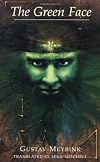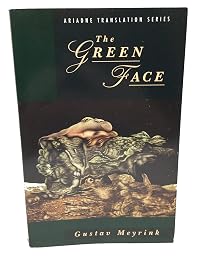
The Green Face
by Gustav Meyrink
On This Page
Description
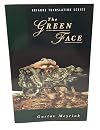
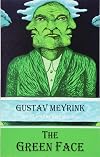
The quest for the Wandering Jew in a fin-de-siecle Amsterdam. "Of the volumes available to the English public, The Green Face, first published in 1916, is the most enjoyable. In an Amsterdam that very much resembles the Prague of The Golem, a stranger, Hauberisser, enters by chance a magician's shop. The name on the shop, he believes, is Chidher Green; inside, among several strange customers, he hears an old man, who says his name is Green, explain that, like the Wandering Jew, he has been show more on earth 'ever since the moon has been circling the heaven.' When Hauberisser catches sight of the old man's face, it makes him sick with horror. The face haunts him. The rest of the novel chronicles Hauberisser's quest for the elusive and horrible old man." Alberto Manguel in The Observer show lessTags
Recommendations




















Member Reviews
Readers of The Golem who felt they were had by the shaggy-dog-story ending may expect the same sort of literary trickery with The Green Face. However, this novel, which is very much in the genre of mystical fantasy (if such a category exists) which The Golem pretends to be right up to its final page — is a deeply philosophical, even mystical novel right through to its final words: No clever punch lines to mar the effect.
Novels like this are probably unfashionable today, yet it is quite compelling if the reader is in the right frame of mind. What we have here is a novel of redemption almost in the guise of an initiation. Written during WWI but set in an imagined Amsterdam at the end of the war, with intimations of apocalypse at the end show more of the novel, Meyrink again applies his considerable understanding of gnostic and theosophical lore to lure the reader into a deeply mystical adventure.
The Green Face — not unlike The Golem — is an archetypal entity which plays the role of elusive spiritual guide, pursuit of which leads the protagonist down paths that take him to a Jungian kind of wholeness. Read as an allegory of such a psychological journey, the book provides an interesting milieu, unusual characters and a satisfying sense of completion.
The only jarring note concerns a description of mystical ecstasy which climaxes in an Abraham-and-Isaac kind of horrific child murder. A similar ecstatic murder mars the mysticism of The Golem and leads one to wonder which side Meyrink was on. He certainly knows and understands the gnostic brand of mysticism, but is he a practitioner or is he engaged in a subtle attack? That is the question raised by both The Golem and The Green Face. show less
Novels like this are probably unfashionable today, yet it is quite compelling if the reader is in the right frame of mind. What we have here is a novel of redemption almost in the guise of an initiation. Written during WWI but set in an imagined Amsterdam at the end of the war, with intimations of apocalypse at the end show more of the novel, Meyrink again applies his considerable understanding of gnostic and theosophical lore to lure the reader into a deeply mystical adventure.
The Green Face — not unlike The Golem — is an archetypal entity which plays the role of elusive spiritual guide, pursuit of which leads the protagonist down paths that take him to a Jungian kind of wholeness. Read as an allegory of such a psychological journey, the book provides an interesting milieu, unusual characters and a satisfying sense of completion.
The only jarring note concerns a description of mystical ecstasy which climaxes in an Abraham-and-Isaac kind of horrific child murder. A similar ecstatic murder mars the mysticism of The Golem and leads one to wonder which side Meyrink was on. He certainly knows and understands the gnostic brand of mysticism, but is he a practitioner or is he engaged in a subtle attack? That is the question raised by both The Golem and The Green Face. show less
Written in the middle of World War One, Meyrink’s novel imagines a post-war Amsterdam crammed with refugees and underemployed intellectuals, counterfeit counts, real and haughty aristocrats, a Zulu witch doctor, and a group of mystics who want to transform their bodies.
It starts with our hero Hauberrisser, an engineer, wandering into Chider Green’s Hall of Riddles. Weary of life, he seeks re-birth and a new life. He will be introduced to Eva, a young Jewish woman, whose guardian thinks she and Hauberrisser are destined to marry and bring in a new world.
Given Meyrink’s occult interests, I expected a story clotted with mysticism. Instead this book, which plays with the legend of the Wandering Jew among other things, is witty and show more suspenseful, apocalyptic and hopeful and ends in an unexpected manner. show less
It starts with our hero Hauberrisser, an engineer, wandering into Chider Green’s Hall of Riddles. Weary of life, he seeks re-birth and a new life. He will be introduced to Eva, a young Jewish woman, whose guardian thinks she and Hauberrisser are destined to marry and bring in a new world.
Given Meyrink’s occult interests, I expected a story clotted with mysticism. Instead this book, which plays with the legend of the Wandering Jew among other things, is witty and show more suspenseful, apocalyptic and hopeful and ends in an unexpected manner. show less
The legend of the Wandering Jew is a thread connecting the episodes of this novel of occult initiation, set in early 20th-century Amsterdam. But Meyrink was neither a folklorist nor a religious propagandist. His literary skill serves to give the reader a sense of the tenuousness of the mundane events and places that we consent to call real, and he captured the apocalyptic zeitgeist of the early years of the New Aeon of the Crowned and Conquering Child.
Franz Rottensteiner's afterword in the Daedalus European Classics edition of The Green Face goes further than any other single source I have read in attempting to call out the specific occultist interests and involvements of Meyrink. I would certainly like more detail on Meyrink's 1895 show more correspondent from Manchester, who assigned him a new name or occult motto; it sounds as if this instructor was an initiate of the Hermetic Brotherhood of Luxor. In fact, Rottensteiner insists that Meyrink "apparently had no knowledge of English fiction of the supernatural," (221) although Godwin, Chanel and Deveney relate that Meyrink was responsible for a German edition of P.B. Randolph's Dhoula Bel (The Hermetic Brotherhood of Luxor, p. 365). Meyrink was also involved "with French and British Freemasons," including the Antient and Primitive Rite, and Rottensteiner claims that he joined the "Order of Illumination" (Reuss' Illuminati Order?) in 1897. All these details serve to make his work of special historical interest to initiates of O.T.O. and its emulators, as well as relating far more clearly to the metaphysical content of Meyrink's work than the usual biographical gloss of him simply being Theosophist.
The Green Face has a status in Meyrink's oeuvre second only to The Golem, and the two were written during the same period (1910-1916). While brimming over with supernatural revelation, it maintains a vigorously esoteric perspective independent of any social institution or codified tradition.
The Dutch setting, largely in the shadow of the Sint Nicolaas Kerk, was especially effective for me as a reader. In fact, it worked almost exactly like my viewing of The Matrix (a curiously similar story, despite its science-fictional premises). In that film, there were frequent dialogue references to Chicago street geography, although the movie's cityscape was actually shot in Sydney, Australia, which created an alienating sense of familiarity for this Chicagoan. Just so, my time in 21st-century Amsterdam helped me achieve the same sense of situated displacement with respect to Meyrink's Zeedijk. show less
Franz Rottensteiner's afterword in the Daedalus European Classics edition of The Green Face goes further than any other single source I have read in attempting to call out the specific occultist interests and involvements of Meyrink. I would certainly like more detail on Meyrink's 1895 show more correspondent from Manchester, who assigned him a new name or occult motto; it sounds as if this instructor was an initiate of the Hermetic Brotherhood of Luxor. In fact, Rottensteiner insists that Meyrink "apparently had no knowledge of English fiction of the supernatural," (221) although Godwin, Chanel and Deveney relate that Meyrink was responsible for a German edition of P.B. Randolph's Dhoula Bel (The Hermetic Brotherhood of Luxor, p. 365). Meyrink was also involved "with French and British Freemasons," including the Antient and Primitive Rite, and Rottensteiner claims that he joined the "Order of Illumination" (Reuss' Illuminati Order?) in 1897. All these details serve to make his work of special historical interest to initiates of O.T.O. and its emulators, as well as relating far more clearly to the metaphysical content of Meyrink's work than the usual biographical gloss of him simply being Theosophist.
The Green Face has a status in Meyrink's oeuvre second only to The Golem, and the two were written during the same period (1910-1916). While brimming over with supernatural revelation, it maintains a vigorously esoteric perspective independent of any social institution or codified tradition.
The Dutch setting, largely in the shadow of the Sint Nicolaas Kerk, was especially effective for me as a reader. In fact, it worked almost exactly like my viewing of The Matrix (a curiously similar story, despite its science-fictional premises). In that film, there were frequent dialogue references to Chicago street geography, although the movie's cityscape was actually shot in Sydney, Australia, which created an alienating sense of familiarity for this Chicagoan. Just so, my time in 21st-century Amsterdam helped me achieve the same sense of situated displacement with respect to Meyrink's Zeedijk. show less
just started .. looks good in a crazy sort of way.
EL ROSTRO VERDE
La leyenda del judío errante es un hilo que conecta los episodios de esta novela de iniciación oculta, ambientada en Amsterdam a principios del siglo XX. Pero Meyrink no era ni folclorista ni propagandista religioso. Su habilidad literaria sirve para darle al lector un sentido de la fragilidad de los sucesos y lugares mundanos que aceptamos llamar real , y capturó el espíritu de época apocalíptico de los primeros años del Nuevo Eón del Coronado y el Niño Conquistador.
El epílogo de Franz Rottensteiner en la edición Daedalus European Classics de The Green Faceva más allá que cualquier otra fuente única que he leído al intentar llamar los intereses ocultistas específicos y las implicaciones de Meyrink. Sin show more duda me gustaría obtener más detalles sobre el corresponsal de Meyrink en 1895 de Manchester, que le asignó un nuevo nombre o lema oculto; suena como si este instructor fuera un iniciado de la hermandad hermética de Luxor. De hecho, Rottensteiner insiste en que Meyrink "aparentemente no tenía conocimiento de la ficción inglesa de lo sobrenatural" (221) aunque Godwin, Chanel y Deveney relatan que Meyrink era responsable de una edición alemana de Dhoula Bel de PB Randolph ( Hermandad hermética de Luxor)., pag. 365). Meyrink también estuvo involucrado "con francmasones franceses y británicos", incluido el rito antient y primitivo, y Rottensteiner afirma que se unió a la "Orden de la iluminación" (¿Orden Illuminati de Reuss?) En 1897. Todos estos detalles sirven para hacer su trabajo de especial interés histórico para los iniciados de la OTO y sus emuladores, así como para relacionarse mucho más claramente con el contenido metafísico de la obra de Meyrink que con el brillo biográfico habitual de él simplemente como teósofo.
La cara verde tiene un estatus en la obra de Meyrink después de The Golem , y las dos fueron escritas durante el mismo período (1910-1916). Mientras rebosa revelación sobrenatural, mantiene una perspectiva esotérica vigorosa independiente de cualquier institución social o tradición codificada. show less
La leyenda del judío errante es un hilo que conecta los episodios de esta novela de iniciación oculta, ambientada en Amsterdam a principios del siglo XX. Pero Meyrink no era ni folclorista ni propagandista religioso. Su habilidad literaria sirve para darle al lector un sentido de la fragilidad de los sucesos y lugares mundanos que aceptamos llamar real , y capturó el espíritu de época apocalíptico de los primeros años del Nuevo Eón del Coronado y el Niño Conquistador.
El epílogo de Franz Rottensteiner en la edición Daedalus European Classics de The Green Faceva más allá que cualquier otra fuente única que he leído al intentar llamar los intereses ocultistas específicos y las implicaciones de Meyrink. Sin show more duda me gustaría obtener más detalles sobre el corresponsal de Meyrink en 1895 de Manchester, que le asignó un nuevo nombre o lema oculto; suena como si este instructor fuera un iniciado de la hermandad hermética de Luxor. De hecho, Rottensteiner insiste en que Meyrink "aparentemente no tenía conocimiento de la ficción inglesa de lo sobrenatural" (221) aunque Godwin, Chanel y Deveney relatan que Meyrink era responsable de una edición alemana de Dhoula Bel de PB Randolph ( Hermandad hermética de Luxor)., pag. 365). Meyrink también estuvo involucrado "con francmasones franceses y británicos", incluido el rito antient y primitivo, y Rottensteiner afirma que se unió a la "Orden de la iluminación" (¿Orden Illuminati de Reuss?) En 1897. Todos estos detalles sirven para hacer su trabajo de especial interés histórico para los iniciados de la OTO y sus emuladores, así como para relacionarse mucho más claramente con el contenido metafísico de la obra de Meyrink que con el brillo biográfico habitual de él simplemente como teósofo.
La cara verde tiene un estatus en la obra de Meyrink después de The Golem , y las dos fueron escritas durante el mismo período (1910-1916). Mientras rebosa revelación sobrenatural, mantiene una perspectiva esotérica vigorosa independiente de cualquier institución social o tradición codificada. show less
Jan 27, 2018Spanish
Members
- Recently Added By
Lists

Weird and Weirder Fiction
270 works; 35 members

First published in 1916
68 works; 4 members

Speculative Fiction from around the World
610 works; 18 members

Fiction With Familiar Settings
280 works; 93 members
Author Information

Some Editions
Series
Belongs to Publisher Series
Work Relationships
Is contained in
Common Knowledge
- Canonical title
- The Green Face
- Original title
- Das grüne Gesicht
- Original publication date
- 1916; 1992 (English: Mitchell) (English: Mitchell)
- Important places
- Amsterdam, North Holland, Netherlands; The Netherlands; North Holland, Netherlands
- Important events
- Apocalypse
- Quotations*
- Nell'aria odore di decomposizione. Giorni morenti in una calura di serra, notti nebbiose. Sui prati erba marcia, al mattino presto, chiazze di ragnatele color bianco muffa. Tra le zolle pozzanghere di un marrone quasi violace... (show all)o, fredde e opache, che non credono più nel sole; fiori color paglia cui manca la forza di levare il volto verso il cielo vitreo, farfalle dal volo incerto con le ali lacere che hanno perso la loro polvere, e lungo i viali della città alberi le cui foglie stormiscono su piccioli fradici.
Vivaci come gli arabeschi di un caleidoscopio, i numeri dello spettacolo si susseguivano senza posa, alla rinfusa: ricciute babygirls inglesi di un'innocenza terrificante, apache con scialli di lana rossa, una danzatrice del ... (show all)ventre siriana con tanto di viscere ballonzolanti, imitatori di campane e cantanti popolari bavaresi che ruttavano seguendo la melodia.
Un tale miscuglio di assurdità aveva sui nervi un effetto quasi narcotizzante, come se conservasse una traccia del fascino misterioso dei giocattoli, quello che spesso medica un animo fiaccato dalla vita con maggior efficacia dell'opera d'arte più sublime. - Last words*
- (Click to show. Warning: May contain spoilers.)Adesso era "di qua" e "di là", un uomo vivo.
- Original language
- German
*Some information comes from Common Knowledge in other languages. Click "Edit" for more information.
Classifications
Statistics
- Members
- 293
- Popularity
- 110,012
- Reviews
- 7
- Rating
- (3.79)
- Languages
- 11 — Czech, Dutch, English, Estonian, French, German, Italian, Polish, Russian, Spanish, Swedish
- Media
- Paper, Ebook
- ISBNs
- 30
- ASINs
- 5