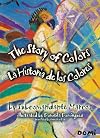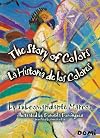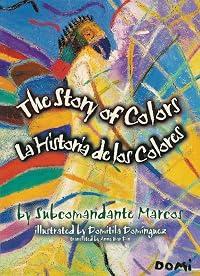
The Story of Colors/La Historia de los Colores: A Bilingual Folktale from the Jungles of Chiapas
by Subcomandante Marcos
Zapatista Folktales (1)
On This Page
Description
"Beautiful bilingual retelling for children of a folktale from Chiapas that explains how colors were created, why people differ in color and ways of thinking, and why the macau sports all the colors. Excellent translation; stunning illustrations. A remarkable book"--Handbook of Latin American Studies, v. 58.Tags
Recommendations









Member Reviews
Subcomandante Marcos, the public face of the Zapatista uprising in Chiapas State, Mexico, relates a traditional Mayan folktale in this bilingual picture-book, originally published in Mexico in 1996, and translated into English in 1999. The story of how colors came into the world, it follows the gods - but not, as the narrator informs us, the original gods who created the world - as they become bored with the ubiquitous black, white and gray all about them, and set out in their various ways to create brighter hues. Discovering red through one of the god's spilled blood, and blue through another god's ascent to the heavens, they slowly gather a collection of beautiful colors, which they then disperse throughout the world. As a reminder of show more the diversity of colors to be found in creation - and more obliquely, of the diversity of ways of seeing and thinking - the gods then paint the macaw every shade under the sun, making it into an emblem of their great work painting the world.
I understand that there was some controversy surrounding the publication of The Story of Colors/La Historia de los Colores - apparently the National Endowment for the Arts withdrew their initial support for a bilingual edition, in light of its author's controversial status as an insurgent - so I am particularly glad that it was eventually made available to English readers! A lovely pourquois story explaining the origin of color, as well as a teaching tale emphasizing the beauty of diversity, it boasts some beautiful (and very colorful) artwork as well. I particularly liked the contrast between the scenes occurring in the black and white world, which naturally enough were accompanied by stark black and white artwork, and those occurring after color entered the world. Parents might want to screen this beforehand, as there are repeated references to love-making - nothing graphic, it's just mentioned naturally in the narrative - but with that caveat aside, I would recommend this one to folklore enthusiasts young and old. show less
I understand that there was some controversy surrounding the publication of The Story of Colors/La Historia de los Colores - apparently the National Endowment for the Arts withdrew their initial support for a bilingual edition, in light of its author's controversial status as an insurgent - so I am particularly glad that it was eventually made available to English readers! A lovely pourquois story explaining the origin of color, as well as a teaching tale emphasizing the beauty of diversity, it boasts some beautiful (and very colorful) artwork as well. I particularly liked the contrast between the scenes occurring in the black and white world, which naturally enough were accompanied by stark black and white artwork, and those occurring after color entered the world. Parents might want to screen this beforehand, as there are repeated references to love-making - nothing graphic, it's just mentioned naturally in the narrative - but with that caveat aside, I would recommend this one to folklore enthusiasts young and old. show less
This Mayan folk tale describes how colors were born. Initially, there was only black and white, but one by one the Gods created new colors. Each color stands for something (yellow is a child's laugh) and eventually they paint the whole world. They painted people different colors which is why everyone has different skin tones.
The images are crude oil pastels, and are hard to tell exactly what the images are depicting, but the colors are conveyed which is the main focus.
The story is told in both Spanish and English, good for bilingual students. Also, good for speakers trying to learn colors of the opposite language (Spanish or English).
The images are crude oil pastels, and are hard to tell exactly what the images are depicting, but the colors are conveyed which is the main focus.
The story is told in both Spanish and English, good for bilingual students. Also, good for speakers trying to learn colors of the opposite language (Spanish or English).
http://lectureslibres.blogspot.fr/2014/09/easy-helene-33.html
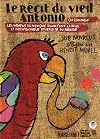
Le Récit du Vieil Antonio est le conte consacré à l'invention des couleurs par les dieux. Le monde était en noir et blanc, les humains s'aimaient mais les dieux avaient envie d'améliorer tout ça et découvrent par hasard, par jeu et par recherche des couleurs par lesquelles embellir le monde. Le rouge, le vert, le bleu et les autres couleurs sont alors utilisées par les dieux et le monde devient beau. Et, pour les ranger quelque part, c'est comme ça que l'ara s'est retrouvé si coloré : elles étaient toutes au même endroit. Un magnifique conte sur la diversité et la beauté de celle-ci.
L'ouvrage est mis en page pour en faire un livre de contes pour enfant, avec des show more illustrations pleine pages et le texte en gros caractères et découpé en bref passage accompagnant les images. show less
Le Récit du Vieil Antonio est le conte consacré à l'invention des couleurs par les dieux. Le monde était en noir et blanc, les humains s'aimaient mais les dieux avaient envie d'améliorer tout ça et découvrent par hasard, par jeu et par recherche des couleurs par lesquelles embellir le monde. Le rouge, le vert, le bleu et les autres couleurs sont alors utilisées par les dieux et le monde devient beau. Et, pour les ranger quelque part, c'est comme ça que l'ara s'est retrouvé si coloré : elles étaient toutes au même endroit. Un magnifique conte sur la diversité et la beauté de celle-ci.
L'ouvrage est mis en page pour en faire un livre de contes pour enfant, avec des show more illustrations pleine pages et le texte en gros caractères et découpé en bref passage accompagnant les images. show less
Sep 24, 2014French
Ratings
Members
- Recently Added By
Author Information

65 Works 1,250 Members
Some Editions
Awards and Honors
Series

Common Knowledge
- Canonical title
- The Story of Colors/La Historia de los Colores: A Bilingual Folktale from the Jungles of Chiapas
- Important places
- Chiapas, Mexico
Classifications
Statistics
- Members
- 137
- Popularity
- 239,320
- Reviews
- 4
- Rating
- (3.88)
- Languages
- English, French, Portuguese, Spanish
- Media
- Paper
- ISBNs
- 4
- ASINs
- 1