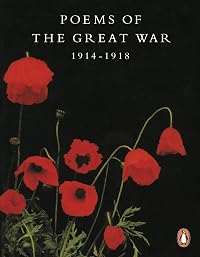
Poems of the Great War, 1914-1918
by Luigi Pirandello
On This Page
Description
Published to commemorate the eightieth anniversary of Armistice, this collection is intended to be an introduction to the great wealth of First World War Poetry. The sequence of poems is random - making it ideal for dipping into - and drawn from a number of sources, mixing both well-known and less familiar poetry.Tags
Recommendations











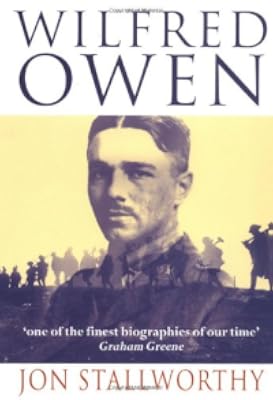

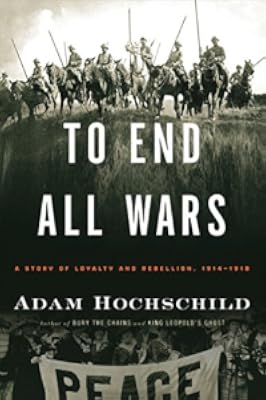
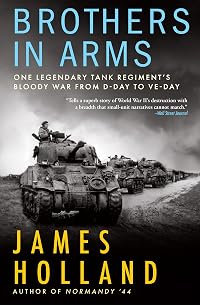
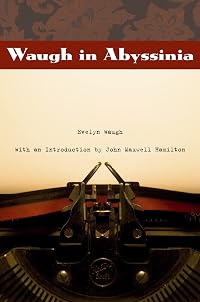


Member Reviews
A comprehensive introduction to First World War poetry, however, you feel that many of these are remembered for being 'war poems' rather than for being good poems. Still, a revealing look at the psychological shock of the realities of war on upper and upper middle class Englishmen.
I rate it so high because it defines the common spirit of humanity to,
even when experiencing the most dire hardships,
express itself in the creation of beauty.
even when experiencing the most dire hardships,
express itself in the creation of beauty.
Alleen Engelstalige gedichten en nogal wisselend van niveau. Maar niettemin toch een twaalftal "pareltjes", al is dat heel cynisch in deze context. Vooral Wilfred Owen en Siegfried Sassoon weten treffend en dus ook schokkend de verschrikkingen in beeld te brengen. Ik las dit boekje tijdens een meerdaags bezoek aan de frontstreek rond Ieper en dan snijden sommige gedichten echt wel door het hart. In dat opzicht doorbreekt Owen's "Dulce et decorum est" alle grenzen, in een tastbaar gruwelijke uitbeelding van een gasaanval.
Jun 6, 2013Dutch
Ratings
Members
- Recently Added By
Author Information

733+ Works 13,648 Members
Born in Sicily, Pirandello attended the universities of Palermo, Rome, and Bonn. He obtained his doctorate in philology with a thesis on the dialect of his native town, Agrigento before settling in Rome to teach and write. In 1894, he married a Sicilian girl, Antonietta Portulano, who bore him three children before she went mad and afterwards show more provided the inspiration for many of his stories and plays. In all, Pirandello wrote 6 novels, some 250 short stories, and about 50 plays. It was a novel, Il fu Mattia Pascal (1904), that first brought him fame. Only in 1920, when he was past 50, did he turn seriously to playwriting. His first stage success had been a comedy, Liola (1917), written in the Agrigento dialect. It took its theme, if not its mood, from the Mandragola of Machiavelli (see Vols. 3 and 4). In 1921, Pirandello presented his most famous play Six Characters in Search of an Author. Here he seeks to confuse his spectators, who are forced into a paradox of reality and illusion when six "characters" search out the actors of a theatrical troupe to play out their inexorable story. The play exemplifies the Pirandellian conflict between art, which is unchanging and constant, and life, which is a continuous succession of mutations. Pirandello deliberately destroyed the traditional boundaries between audience and spectacle, reflecting the relativity and subjectivity of human existence. The play's unconventional format, which resulted in a riot, established Pirandello as Europe's leading avant-garde dramatist. The main body of Pirandello's plays falls into three overlapping categories, the first exploring the nature of the theater, the second the complexities of personality in the etymological or dramatic sense of the term, and the third rising to dramatic representation of the categorical imperatives of social, religious, and artistic community. Besides the world-famous Six Characters in Search of an Author (1918), his best plays in the three categories include Each in His Own Way (1924), It Is So (If You Think So) (1917), Henry IV (1922), The New Colony (1925), Lazarus, As You Desire Me (1930), and The Mountain Giants (1937), written after he had been awarded the Nobel Prize in 1934 and left incomplete. Pirandello is the forerunner of much modern theater and literature; among the figures who owe their roots to the innovations of Pirandello are Bertolt Brecht, Jean Genet, Jean-Paul Sartre, and Samuel Beckett (see Vol. 1). (Bowker Author Biography) show less
All Editions
Common Knowledge
- Important events
- World War I (1914 | 1918)
Classifications
- Genres
- Poetry, Fiction and Literature
- DDC/MDS
- 821.912080358 — Literature & rhetoric English & Old English literatures British Poetry 1900- 1900-1999 1900-1945 Collections of literary texts Poetry dealing with specific themes and subjects Humanity Historical, political, military themes
- LCC
- PR1195 .W65 .P744 — Language and Literature English English Literature Collections of English literature
- BISAC
Statistics
- Members
- 165
- Popularity
- 197,875
- Reviews
- 3
- Rating
- (4.14)
- Languages
- English
- Media
- Paper, Ebook
- ISBNs
- 1
- ASINs
- 1