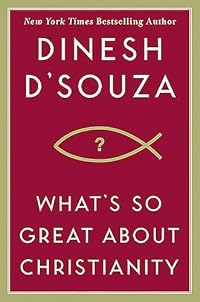
What's So Great About Christianity?
by Dinesh D'Souza
On This Page
Description
Today, more than ever, Christianity is under attack. In his new book, best-selling author Dinesh D'Souza takes on the leading critics of Christianity and shows that, against all expectations, Christianity is the fastest-growing religion in the world and that secularism and atheism are on the decline.Tags
Recommendations

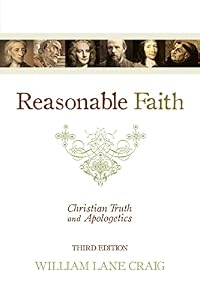
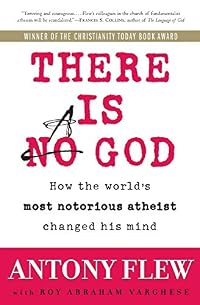
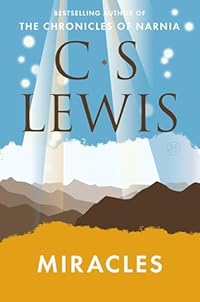
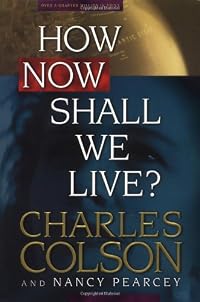
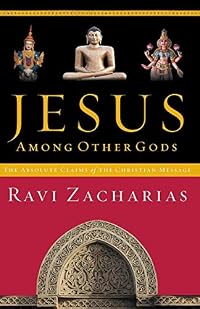
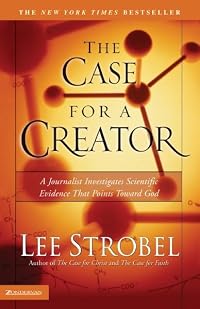
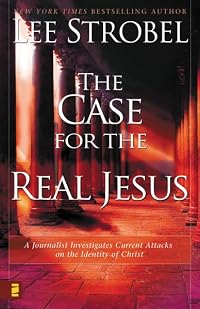
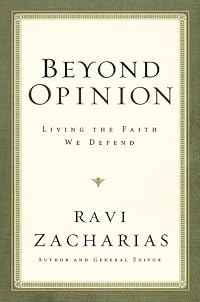









Member Recommendations
by anonymous user
Member Reviews
I smiled at D’Sousa’s portrayal of liberal Christians (readers know me as one): “Instead of being the church’s missionaries to the world, they have become the world’s missionaries to the church. They devote their moral energies to trying to make the church more democratic, to assure equal rights for women, to legitimize homosexual marriage, and so on … Liberal Christians are distinguished by how much intellectual and moral ground they concede to the adversaries of Christianity.” Guilty as charged.
So D’Sousa is unafraid to voice his opinion, but they are admittedly studied opinions, fun to contemplate, and worth the effort. His purpose, of course, is to highlight what is great about Christianity. This he does by appealing show more to our Christian roots in America, debunking atheist arguments about the evils of Christianity through the ages and instead listing Christianity’s accomplishments, and appealing to our common sense of values and morals as God-given. In discussing Christianity’s failings (such as witch hunts and holy wars) D’Sousa points out that atheist regimes have destroyed far more lives than Christian regimes (he convincingly paints Hitler as an atheist).
D’Sousa’s writing is engaging and intelligent, but he occasionally seems to miss the point. His portrayal of how atheists think is off the mark. He claims the Anthropic Principle for his side, to argue for design, favoring, without making a distinction, the “strong” variant—that the creation must have been fine tuned (presumably by a designer) to meet the needs of intelligent life. He ignores the AP’s weaker and more original stance—that of course the universe contains the natural laws and perfect timing for life to evolve, because if perchance it did not, no one would know it. The weak Anthropic Principle hints that there may be other unfriendly universes where no life could evolve, an idea which D’Sousa dismisses with a wave of his hand, stating that such speculation would hardly survive Occam’s Razor.
Of critical importance in D’Sousa’s Christianity is miracles. (What happened to Occam’s Razor?) He rightly notes that Christianity is founded upon a miracle: the resurrection of Jesus. He quotes Paul in 1 Corinthians 15:14 to say that without Christ’s resurrection, “our preaching is useless and so is your faith” (D’Sousa ignores the fact that Paul saw the risen Jesus not as a physical resurrection, but as a light from heaven, and presumes other Jesus sightings were the same). From a required belief in bodily resurrection, D’Sousa extrapolates to define a Christian as one who believes literally in all of the nature miracles reported in the New Testament. Don’t believe a man could really walk on water? Then you’re not a Christian. I’m not complaining—I’m quite used to this attitude—I’m just pointing out where D’Sousa draws the line between believer and nonbeliever. D’Sousa’s line requires a belief in nature miracles.
There is no condemnation of competing religions in this book, and only a small argument at the very end of the book for the historicity of the Christ story, by arguing that the resurrection really happened. This book is not really going to convince you that the Bible is true; more effort goes into finding room for a creator god in our philosophy (the big bang discovery really helped!), and accepting that religion is good for us. But perhaps this is the appropriate direction for 21st-century apologetics? We recognize the accomplishments of science, and that by making our life better, science “works”—yet we also recognize science’s shortcomings and the viability of a creator. Evolution, while certainly true, cannot account for the origin of life, consciousness, human rationality or morality (here, D’Souza’s arguments for a soul seem to compete with his assumption that only humans have souls). So why dump on Christianity as a solution? As D’Souza points out, Christianity “works” too, bringing meaning and comfort to lives, speaking to human longings and needs.
While many of the topics D’Souza introduces are unoriginal, his arguments are well-prepared and often fresh. In rereading my review, I may have come down a little harder than intended; the fact is I very much enjoyed the book. show less
So D’Sousa is unafraid to voice his opinion, but they are admittedly studied opinions, fun to contemplate, and worth the effort. His purpose, of course, is to highlight what is great about Christianity. This he does by appealing show more to our Christian roots in America, debunking atheist arguments about the evils of Christianity through the ages and instead listing Christianity’s accomplishments, and appealing to our common sense of values and morals as God-given. In discussing Christianity’s failings (such as witch hunts and holy wars) D’Sousa points out that atheist regimes have destroyed far more lives than Christian regimes (he convincingly paints Hitler as an atheist).
D’Sousa’s writing is engaging and intelligent, but he occasionally seems to miss the point. His portrayal of how atheists think is off the mark. He claims the Anthropic Principle for his side, to argue for design, favoring, without making a distinction, the “strong” variant—that the creation must have been fine tuned (presumably by a designer) to meet the needs of intelligent life. He ignores the AP’s weaker and more original stance—that of course the universe contains the natural laws and perfect timing for life to evolve, because if perchance it did not, no one would know it. The weak Anthropic Principle hints that there may be other unfriendly universes where no life could evolve, an idea which D’Sousa dismisses with a wave of his hand, stating that such speculation would hardly survive Occam’s Razor.
Of critical importance in D’Sousa’s Christianity is miracles. (What happened to Occam’s Razor?) He rightly notes that Christianity is founded upon a miracle: the resurrection of Jesus. He quotes Paul in 1 Corinthians 15:14 to say that without Christ’s resurrection, “our preaching is useless and so is your faith” (D’Sousa ignores the fact that Paul saw the risen Jesus not as a physical resurrection, but as a light from heaven, and presumes other Jesus sightings were the same). From a required belief in bodily resurrection, D’Sousa extrapolates to define a Christian as one who believes literally in all of the nature miracles reported in the New Testament. Don’t believe a man could really walk on water? Then you’re not a Christian. I’m not complaining—I’m quite used to this attitude—I’m just pointing out where D’Sousa draws the line between believer and nonbeliever. D’Sousa’s line requires a belief in nature miracles.
There is no condemnation of competing religions in this book, and only a small argument at the very end of the book for the historicity of the Christ story, by arguing that the resurrection really happened. This book is not really going to convince you that the Bible is true; more effort goes into finding room for a creator god in our philosophy (the big bang discovery really helped!), and accepting that religion is good for us. But perhaps this is the appropriate direction for 21st-century apologetics? We recognize the accomplishments of science, and that by making our life better, science “works”—yet we also recognize science’s shortcomings and the viability of a creator. Evolution, while certainly true, cannot account for the origin of life, consciousness, human rationality or morality (here, D’Souza’s arguments for a soul seem to compete with his assumption that only humans have souls). So why dump on Christianity as a solution? As D’Souza points out, Christianity “works” too, bringing meaning and comfort to lives, speaking to human longings and needs.
While many of the topics D’Souza introduces are unoriginal, his arguments are well-prepared and often fresh. In rereading my review, I may have come down a little harder than intended; the fact is I very much enjoyed the book. show less
I honestly went into this ready and willing to give the author's argument serious consideration. He let me down in so many ways. D'Souza used the pages of this book to perpetrate a propaganda war. He was either extremely naive and misinformed or willfully ignorant and deceptive. How can one respect such nonsense as was written in this book? Although this book might preach to the choir, it is a long way off from convincing people like me who didn't already embrace the arguments. In fact, this book only succeeded in convincing me that the author is someone who is not to be trusted to have an honest dialog.
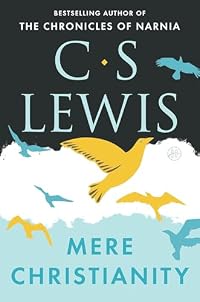
Great systematic apologetic, especially for those who wouldn’t feel comfortable reading a “theological” book like Mere Christianity. Engages new atheism on its own terms, deconstructing philosophical arguments, identifying its assumptions, and giving historical and scientific evidence to make his case.
For once I would like to read an intellectual defense of Christianity without the author invoking C.S. Lewis. Although he was a great author, enough already. Besides this minor flaw this book tackles every possible argument against Christianity and offers up convincing proofs. Everyone should read it!
Dinesh D'Souza became one of my favorite writers with this book. It gives clear and logical answers to the modern attack on Christianity, as well as explaining the ins and outs of Christianity fairly well. And he's a funny guy too. A must-read for anyone interested in the Christian faith.
NCLA Review -Arguments from Darwin, Dawkins, Huxley, Hitchens, Hume, Nietzsche and other secularists are answered, sometimes even used, in defense of traditional Christian beliefs. The author demonstrates the compatibility of the theory of evolution and the Biblical account of creation, while condemning Darwinism. He points out the irrationality of some of the rationalist’s foundational beliefs, defends Christian versus materialist views of human morality and the soul, and discusses motivations of atheists. Atrocities, both those perpetrated by Christians and those perpetrated by secularists, are analyzed and compared. This book is forceful, readable and well documented. Rating: 4 —MS 368p, paper, Tyndale 2008, 978-1-414326016, show more $14.99 [230] show less
Last two chapters bring it together for me
Members
- Recently Added By
Lists

Sonlight Books
1,487 works; 25 members
Author Information

50+ Works 6,063 Members
Dinesh D'Souza was born on April 25, 1961 in Mumbai, Maharashtra, India. He came to the U.S. in 1978 and attended Union High School in Patagonia, Arizona. He went on to Dartmouth College, where he graduated Phi Beta Kappa in English in 1983. While attending Dartmouth, he became the editor of a conservative monthly called The Prospect. The paper show more ignited controversy during D'Souza's editorship by criticizing the College's affirmative action policies. He also became known as a writer for the Dartmouth Review which was subsidized by several right-wing organizations. After Dartmouth he moved to Washington, D.C. where he was an editor of Policy Review, an influential conservative journal. In 1988 he left the magazine on to serve as an advisor in Ronald Regan's White House. He joined the American Enterprise Institute in 1989 where he was the institute's John M. Olin fellow. He has appeared on several news shows as a political commentator such as: CNN, Glen Beck, and ABC's Nightline. D'Souza's first book, Lliberal Education was published in 1991. Since then, he has written numerous bestselling political commentaries, including: America: Imagine a World Without Her, Obama's America: Unmaking the American Dream, Letters to a Young Conservative, The End of Racism, and The Big Lie: Exposing the Nazi Roots of the American Left. D'Souza's title's, Hilary's America and Death of a Nation, made the New York Times Bestseller List. (Bowker Author Biography) show less
Awards and Honors
Distinctions
Work Relationships
Has as a student's study guide
Common Knowledge
- Canonical title
- What's So Great About Christianity?
- Blurbers
- Schuller, Robert H.; Collins, Francis; Fish, Stanley; Johnson, Paul
Classifications
Statistics
- Members
- 1,131
- Popularity
- 22,238
- Reviews
- 8
- Rating
- (3.87)
- Languages
- 5 — Czech, Dutch, English, German, Spanish
- Media
- Paper, Audiobook, Ebook
- ISBNs
- 17
- UPCs
- 1
- ASINs
- 9