Unformed Landscape
by Peter Stamm
On This Page
Description
Unformed Landscape begins in a small village on a fjord in the Finnmark, on the northeastern coast of Norway, where the borders between Norway, Sweden, Finland, and Russia lie covered in snow and darkness, where the real borders are between day and night, summer and winter, and between people. Here, a sensitive young woman like Kathrine finds few outlets for her desires. Half Norwegian, half Sami (an indigenous people), Kathrine works for the customs office inspecting the fishing boats show more arriving regularly in the harbor. She is in her late 20s, has a son from an early marriage, and has drifted into a second loveless marriage to a man whose cold and dominating conventionality forms a bold stroke through the unformed landscape of her life. After she makes a discovery about her husband that deeply wounds her, Kathrine cuts loose from her moorings and her confusion and sets off in search of herself. Her journey begins aboard a ship headed south, taking her below the Arctic Circle for the first time in her life. Kathrine makes her way to France and has the bittersweet experience of a love affair that flares and dies quickly, her starved senses rewarded by the shimmering beauty of Paris. Through a series of poignant encounters, Kathrine is led to the richer life she was meant to have and is brave enough to claim. Using simple words strung together in a melodic alphabet, Peter Stamm introduces us, through a series of intimate sketches, to the heart of an unforgettable woman. Her story speaks eloquently about solitude, the fragility of love, lost illusions, and self-discovery. show lessTags
Recommendations































Member Reviews
The themes in this novel by Peter Stamm are familiar. Loneliness, impossibility of lasting meaningful connections with others, absurdity of human existence, illusory and ultimately futile attempts to escape. Yet in all this apparent hopelessness, there are some choices that are still better than others. One could refuse to pretend, one could choose not to lie and not to accept being lied to, one could avoid building a make-belief fanciful facade of 'proper' life that hides the emptiness and darkness within, one could attempt to be honest first and foremost with oneself. This is probably the most directly Camus-esque of Peter Stamm's novels, the one where he does not yet venture beyond the unformed landscape sketched out by the great show more existentialist. show less
Starting and ending in the far north of Norway with a main character who has never been south of the Arctic circle. She abandons her unhappy family to drift through Europe with vague plans to meet an acquaintance. But this is no cliched story of her finding herself on her travels, and more honestly she returns north with her problems largely unresolved and no particular plan for her future. This echoes the landscape where snow covers the borders and nothing is clearly defined or neatly ordered. The writing style too is spare in the best traditions of Nordic fiction.
The book has echoes of Cora Sandel's Alberta trilogy, with its far north setting, Paris interlude, and unhappy unsettled lives. But the tale it tells brings it up to date to show more incorporate modern female loneliness. show less
The book has echoes of Cora Sandel's Alberta trilogy, with its far north setting, Paris interlude, and unhappy unsettled lives. But the tale it tells brings it up to date to show more incorporate modern female loneliness. show less
A minimalist narrative about a woman in Finnmark. Several reviewers see this as a narrative of self-discovery and "awakening," but Kathrine, the principal character, doesn't develop through the book, and she never has significant insights about herself. Most of her life, and the lives of the people she meets, are spent not thinking about themselves. In that respect this belongs more with Beckett's "Ill Seen Ill Said" than with novels of discoveries. Other reviewers have seen this as a book about a journey, but Kathrine's first trip south of the Arctic Circle doesn't occupy more than a quarter of the book, and only involves on peripheral character in her life. Stamm makes a point of saying the things Katherine photographs in France are show more nondescript, and she forgets the subjects of her photographs soon after she returns.
The book suffers from some of the common problems of indirect narration in emotional and narrative minimalism. At times it's hard to believe Kathrine's lack of introspection, especially because the author of the book -- who is managing the narration of an un-self-reflective character -- is clearly introspective himself. It's not hard to believe in a character like Kathrine, who drifts from one encounter to another. It is hard to suspend disbelief that a character who can encounter, and describe, people as sharply drawn as Thomas and his family could also be as unaware of herself as Stamm wants us to imagine her being.
At other times the book shows the commonplace signs of the writer's craft, which can be concealed in fuller and maximalist narratives, but tend to show through in minimalism: a scene in which Kathrine tries to imagine herself as a liar, making up stories (that's what novelists do every second, and sometimes it leaches into the story when characters in the story are said to be trying to invent things, and having the same troubles that novelists routinely have); a scene in which a woman in a hotel doesn't speak, so it's necessary to guess about her past (that happens all the time to novelists, who can't always get rich background information on interesting people they encounter, so they have to make it up; again, it leaks into the narrative here); and scenes of traveling in which the details have clearly been noted as Stamm experienced them, or failed to experience them (scenes on trains, with the usual paucity of characteristic details, caused simply by the limited time Stamm spent on such trains). It fits this book that the descriptions of Finnmark are threadbare; but it is also a sign of the lack of time Stamm spent there. Compare the dim recollections of dim summers in this book with the unbelievably rich description in Vollmann's "The Rifles."
I suppose this amounts to saying that a book about a dimly perceived life, in a dim part of the world, should either be more strictly minimalist, or should permit its central character a greater richness of inner life: a problem inherent in minimalist treatments of minimal lives. show less
The book suffers from some of the common problems of indirect narration in emotional and narrative minimalism. At times it's hard to believe Kathrine's lack of introspection, especially because the author of the book -- who is managing the narration of an un-self-reflective character -- is clearly introspective himself. It's not hard to believe in a character like Kathrine, who drifts from one encounter to another. It is hard to suspend disbelief that a character who can encounter, and describe, people as sharply drawn as Thomas and his family could also be as unaware of herself as Stamm wants us to imagine her being.
At other times the book shows the commonplace signs of the writer's craft, which can be concealed in fuller and maximalist narratives, but tend to show through in minimalism: a scene in which Kathrine tries to imagine herself as a liar, making up stories (that's what novelists do every second, and sometimes it leaches into the story when characters in the story are said to be trying to invent things, and having the same troubles that novelists routinely have); a scene in which a woman in a hotel doesn't speak, so it's necessary to guess about her past (that happens all the time to novelists, who can't always get rich background information on interesting people they encounter, so they have to make it up; again, it leaks into the narrative here); and scenes of traveling in which the details have clearly been noted as Stamm experienced them, or failed to experience them (scenes on trains, with the usual paucity of characteristic details, caused simply by the limited time Stamm spent on such trains). It fits this book that the descriptions of Finnmark are threadbare; but it is also a sign of the lack of time Stamm spent there. Compare the dim recollections of dim summers in this book with the unbelievably rich description in Vollmann's "The Rifles."
I suppose this amounts to saying that a book about a dimly perceived life, in a dim part of the world, should either be more strictly minimalist, or should permit its central character a greater richness of inner life: a problem inherent in minimalist treatments of minimal lives. show less
Ein norwegisches Dorf nördlich des Polarkreises, am Rande der Welt. Hier lebt Kathrine, die Zöllnerin. Hier ist sie aufgewachsen, hat mit zwanzig von Helge ein Kind bekommen und sich wieder getrennt. Tagsüber kontrolliert sie die einlaufenden Trawler, ißt zu Mittag im Fischerheim und trinkt abends ab und an im Elvekroa, der einzigen Bar im Dorf, ein Bier. Nur manchmal, wenn im April endlich die Sonne ihr diffuses Licht über die weite Schneelandschaft wirft, bricht sie aus dem grauen Einerlei der Tage aus, schnallt ihre Langlaufskier unter und fährt zum Leuchtturm. Mit achtundzwanzig heiratet Kathrine zum zweitenmal: Thomas, Produktionsleiter in der Fischfabrik, promoviert, sportlich, weitgereist, reiche Eltern. Eine "gute Partie" show more und ein Mann, der weiß, was er will, der von nun an einen Strich durch die ungefähre Landschaft von Kathrines Leben zieht. Doch Thomas hält nicht, was er verspricht, und als das Schiff der Hurtigroute in den Hafen einläuft, geht Kathrine an Bord und fährt mit der Polarlys nach Süden...
Peter Stamm, der Autor der vielgerühmten Debüts "Agnes" und "Blitzeis", erzählt in seinem neuen Buch "Ungefähre Landschaft" mit einer wunderbaren, schwebenden Leichtigkeit und atmosphärisch dicht von einer jungen Frau und ihrer Reise in eine nur scheinbare Fremde. show less
Peter Stamm, der Autor der vielgerühmten Debüts "Agnes" und "Blitzeis", erzählt in seinem neuen Buch "Ungefähre Landschaft" mit einer wunderbaren, schwebenden Leichtigkeit und atmosphärisch dicht von einer jungen Frau und ihrer Reise in eine nur scheinbare Fremde. show less
I found this a very moving story of one woman's awakening set in the cold, dark north of Norway, above the arctic circle. The language the author uses is as stark as the landscape (and the tone somehow reminds me of another novel I read, April Witch by Axelsson - Swedish, I think. Hmmm.) and his character, Katherine is a woman whom we can all recognize in ourselves. I also read this during the storm...seemed appropriate somehow.
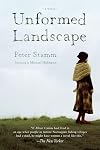
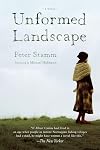
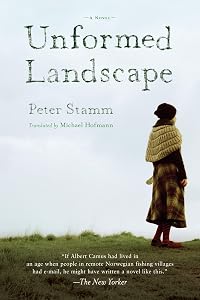
I think the cover is the best part of the book. When I see that big fluffy shawl, I want to start knitting. As for the inside, the protagonist is a very young woman who falls into life passively.
Abandoned half way through. Tedious, gray, half-hearted, no energy. The main character is supremely uninteresting and vaguely irritating. The story is told relentlessy at arms length.
Members
- Recently Added By
Lists

Arctic novels
35 works; 5 members
Author Information

40+ Works 1,861 Members
Some Editions
Awards and Honors
Awards
Notable Lists
Common Knowledge
- Original title
- Ungefähre Landschaft
- Original publication date
- 2001
- Important places
- Norway; Paris, France; Switzerland
Classifications
- Genres
- Fiction and Literature, General Fiction
- DDC/MDS
- 833.914 — Literature & rhetoric German & related literatures German fiction 1900- 1900-1990 1945-1990
- LCC
- PT2681 .T3234 .U6413 — Language and Literature German, Dutch and Scandinavian literatures German literature Individual authors or works 1961-2000
- BISAC
Statistics
- Members
- 184
- Popularity
- 178,694
- Reviews
- 13
- Rating
- (3.40)
- Languages
- 7 — Catalan, Dutch, English, Estonian, French, German, Spanish
- Media
- Paper, Audiobook, Ebook
- ISBNs
- 16
- ASINs
- 6