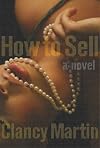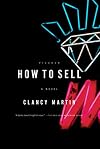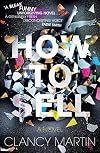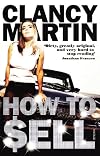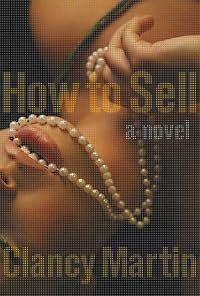
How to Sell
by Clancy Martin
On This Page
Description
Bobby Clark is just sixteen when he drops out of school to follow his big brother, Jim, into the jewelry business. Bobby idolizes Jim and is in awe of Jim's girlfriend, Lisa, the best saleswoman at the Fort Worth Deluxe Diamond Exchange. What follows is the story of a young man's education in two of the oldest human passions: love and money. Through a dark, sharp lens, Clancy Martin captures the luxury business in all its exquisite vulgarity and outrageous fraud, finding in the show more diamond-and-watch trade a metaphor for the American soul at work. show lessTags
Recommendations

























Member Reviews
A little hard to see what all the fuss is about. HOW TO SELL is droll and reasonably emblematic of our times, but hardly the dazzling tour de force and fictional indictment of contemporary consumerism that some folks are claiming it for. A while back Martin had a (presumably nonfiction) piece in the LONDON REVIEW OF BOOKS that was a good deal more harrowing and vivid than anything in this book.
A very noir coming-of-age for a young Canadian lad.
Bobby Clark is 16 and a thief when he drops out of school, leaves his demanding girlfriend, and follows his big brother to Texas and into the shady retail jewelry business. Fronting as respectable businessmen, the brothers live high and fast, scamming and charming their way through the fast-paced plot.
In the brothers’ world, nearly everybody is on the make; the cheaters cheating each other as the chicanery goes round and round. Bobby is up to his neck in swindles and shady deals but never feels any culpability. He’s always just doing what he feels he much to keep his head above water as he gets in deeper and deeper.
Martin’s characters make their choices and take their chances, show more but frequently with blinders on. The brothers are too busy keeping their balance on the tightrope to look around and see where they’re headed. Their father wears internal blinders but loves them in his own (crazy) way. Only one character sees and turns her back—taking up a profession conventionally considered less moral then selling jewelry. But we know better.
All in all, a dark but fascinating tale of moral choices that doesn’t preach moral absolutes. show less
Bobby Clark is 16 and a thief when he drops out of school, leaves his demanding girlfriend, and follows his big brother to Texas and into the shady retail jewelry business. Fronting as respectable businessmen, the brothers live high and fast, scamming and charming their way through the fast-paced plot.
In the brothers’ world, nearly everybody is on the make; the cheaters cheating each other as the chicanery goes round and round. Bobby is up to his neck in swindles and shady deals but never feels any culpability. He’s always just doing what he feels he much to keep his head above water as he gets in deeper and deeper.
Martin’s characters make their choices and take their chances, show more but frequently with blinders on. The brothers are too busy keeping their balance on the tightrope to look around and see where they’re headed. Their father wears internal blinders but loves them in his own (crazy) way. Only one character sees and turns her back—taking up a profession conventionally considered less moral then selling jewelry. But we know better.
All in all, a dark but fascinating tale of moral choices that doesn’t preach moral absolutes. show less
 This review was written for LibraryThing Early Reviewers.
Clancy Martin’s first book, HOW TO SELL was a great ride. We meet Bobby Clark, the sociopathic anti-hero, as a lying, stealing teenager in Canada – something like Holden Caulfield, but without the angst. His older brother Jim, who he idolizes, has moved to Texas to sell jewelry at the Fort Worth Diamond Exchange. This is the story of their misadventures.
Martin, who worked in the jewelry business for several years, gives us “fly on the wall” insights into the ruthlessness of the high-end jewelry business. If you ever wondered if you really got a good deal on that diamond or watch now you’ll know (answer: no, you probably got screwed).
That person you know who would rather lie than tell the truth, even when the truth would be show more more profitable? She’s in the book. The one who doesn’t think about consequences? He’s a main character. Like your relative going through drug rehab, or your high school friend doing time in prison, you really hope they’ll come out on the other end straight, but secretly you know they’ll never change? That covers just about everyone in the book.
People this ruthless are hard to care about, but the main characters are so well-drawn I found I kept rooting for them. The pace is quick and the book was hard to put down.
I liked it. show less
Martin, who worked in the jewelry business for several years, gives us “fly on the wall” insights into the ruthlessness of the high-end jewelry business. If you ever wondered if you really got a good deal on that diamond or watch now you’ll know (answer: no, you probably got screwed).
That person you know who would rather lie than tell the truth, even when the truth would be show more more profitable? She’s in the book. The one who doesn’t think about consequences? He’s a main character. Like your relative going through drug rehab, or your high school friend doing time in prison, you really hope they’ll come out on the other end straight, but secretly you know they’ll never change? That covers just about everyone in the book.
People this ruthless are hard to care about, but the main characters are so well-drawn I found I kept rooting for them. The pace is quick and the book was hard to put down.
I liked it. show less
This review was written for LibraryThing Early Reviewers.Described on the jacket as "Raymond Carver without hope," I have to agree that this book was bleak even for me, the original grim novel consumer. Drugs, sex, thievery, deception, jewelry scams and sales, it was educational, filled with unhappy, unregenerate souls yet I could not stop reading just to see if anyone made it out alive. The writing was heavily dialogue.
Described on the jacket as "Raymond Carver without hope," I have to agree that this book was bleak even for me, the original grim novel consumer. Drugs, sex, thievery, deception, jewelry scams and sales, it was educational, filled with unhappy, unregenerate souls yet I could not stop reading just to see if anyone made it out alive. The writing was heavily dialogue.
Clancy Martin's novel -- his first -- can, depending on the reader, live in the territory of the coming of age novel, the crime, drugs and swindling novel, the state of the US in the 80s novel, or in the land of the philosophical novel a la Camus. Told in spare prose in the first person, "How To Sell" depicts a young Canadian's life in the jewelry trade in the States, working with his brother, ambiguously sharing a girlfriend and a father, and -- perhaps taking as a cue the professional ways of the jewelry biz -- learning and practising most every variety of deception and dishonesty categorizable.
I found the book interesting and worth reading, though I have not yet decided whether it will seem substantial to me in the months following show more the reading. Certainly Martin has found a rich environment for his story in the jewelry business, which by his telling is all about lies and appearances. The book is tellingly entitled "How To Sell" not "How To Lie" because it is ultimately more about the ability to create reality through a salesman's pitch than it is about simple falsehoods -- and then about the limits of that ability. Without giving away too much, I'll suggest that two characters mark something like polar responses to that experience: the narrator's father, something like a new age minister with the salesman's touch of probably believing what he is selling, and the girlfriend Lisa, who of all the characters best knows the reality behind the lies and deceptions she too practices.
It is an interesting and quick read, and not a difficult one. (Don't be put off by the blurbs or references you might see to the book as a philosophical novel.) But readers who are put off by books in which they do not find the characters fully likeable might be put off by this one. show less
I found the book interesting and worth reading, though I have not yet decided whether it will seem substantial to me in the months following show more the reading. Certainly Martin has found a rich environment for his story in the jewelry business, which by his telling is all about lies and appearances. The book is tellingly entitled "How To Sell" not "How To Lie" because it is ultimately more about the ability to create reality through a salesman's pitch than it is about simple falsehoods -- and then about the limits of that ability. Without giving away too much, I'll suggest that two characters mark something like polar responses to that experience: the narrator's father, something like a new age minister with the salesman's touch of probably believing what he is selling, and the girlfriend Lisa, who of all the characters best knows the reality behind the lies and deceptions she too practices.
It is an interesting and quick read, and not a difficult one. (Don't be put off by the blurbs or references you might see to the book as a philosophical novel.) But readers who are put off by books in which they do not find the characters fully likeable might be put off by this one. show less
This review was written for LibraryThing Early Reviewers.If you're reading HOW TO SELL for a juicy, fictionalized exposé of luxury jewelery sales you're going to be at least a little bit disappointed. Craft and deception among salesmen runs through the pages (based on the author's own professional experience), but that element is here to serve a much larger story about . . . Well, there's a good question. Is it coming-of-age? Is it an outsider's indoctrination into the American dream?
HOW TO SELL reads like detective noir without a central mystery, or even clear antagonists. There's drug abuse, dangerous relationships, crime, and female characters overloaded with negative characteristics. (But, to be fair, no person between these covers is a hero.) Much of it told in a deadpan, matter-of-fact show more style. The narrator doesn't make a lot of apologies, and he keeps his motivation his own concern. A lot of bad decisions pass by without any consequences.
In some respects, the best recommendation to make for this book is its treatment of the dark side of chasing a dream. Outside of that specific interest, many readers might find this a puzzle with a few large pieces that don't quite fit. show less
HOW TO SELL reads like detective noir without a central mystery, or even clear antagonists. There's drug abuse, dangerous relationships, crime, and female characters overloaded with negative characteristics. (But, to be fair, no person between these covers is a hero.) Much of it told in a deadpan, matter-of-fact show more style. The narrator doesn't make a lot of apologies, and he keeps his motivation his own concern. A lot of bad decisions pass by without any consequences.
In some respects, the best recommendation to make for this book is its treatment of the dark side of chasing a dream. Outside of that specific interest, many readers might find this a puzzle with a few large pieces that don't quite fit. show less
This review was written for LibraryThing Early Reviewers.Members
- Recently Added By
Published Reviews
ThingScore 88
The novel is a good, pacey and ultimately unchallenging read. Why couldn’t they just say that on the cover? “Entertaining, zippy and unchallenging — X, author of Y.”
added by jam13
If you ever bought overpriced jewelry from Clancy Martin, he's sorry. If you buy his novel, you won't be.
added by jlelliott
Author Information

22+ Works 562 Members
Awards and Honors
Distinctions
Common Knowledge
- Canonical title
- How to Sell
Classifications
Statistics
- Members
- 170
- Popularity
- 190,648
- Reviews
- 21
- Rating
- (2.93)
- Languages
- English, French
- Media
- Paper, Audiobook, Ebook
- ISBNs
- 15
- ASINs
- 3