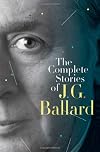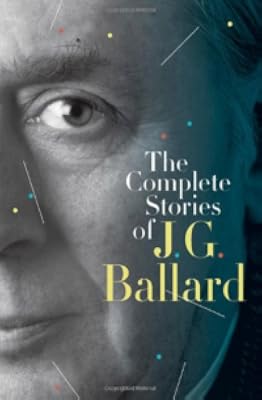
The Complete Stories of J. G. Ballard
by J. G. Ballard
The Complete Short Stories of J.G. Ballard (1-2)
On This Page
Description
Named a Best Book of the Year by the Washington Post, the Boston Globe, the Los Angeles Times, and the San Francisco Chronicle A collection of 98 enthralling and pulse-quickening stories, spanning five decades, venerates the remarkable imagination of J. G. Ballard. With a body of work unparalleled in twentieth-century literature, J. G. Ballard is recognized as one of the greatest and most prophetic writers in the world. With the much-hailed release of The Complete Stories of J. G. Ballard, show more readers now have a means to celebrate the unmatched range and mesmerizing cadences of a literary genius. Whether writing about musical orchids, human cannibalism, or the secret history of World War III, Ballard's Complete Stories evokes the hallucinations of Kafka and Borges in its ability to render modern paranoia and fantastical creations on the page. Includes the story "The Garden of Time," the inspiration for the 2024 Met Gala Dress code. show lessTags
Recommendations


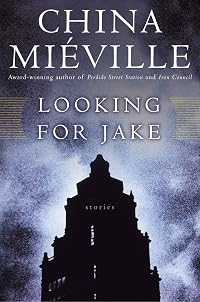
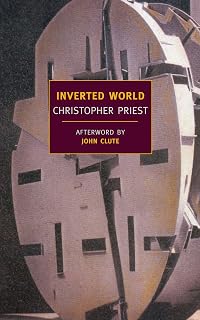
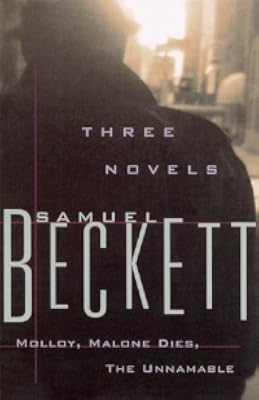
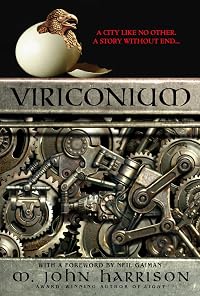


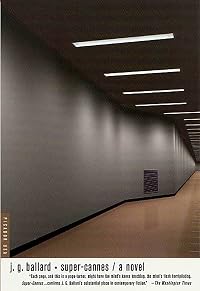
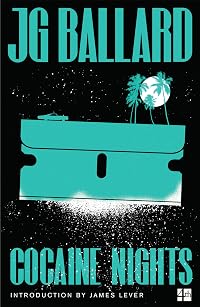




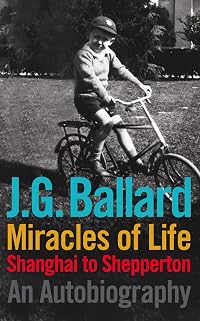



Member Recommendations
Member Reviews
J.G. Ballard was one of the most distinctive penetrating voices of 20th century fiction. This book, the complete stories is a monument. And in true Ballardian fashion, it takes the form of a grotesque Brutalist labyrinth, and endless transit from reality into a psychosis of non-space and non-time. In some sense, this review is also a review of my own failure. I began this book in October 2017, nearly five years ago, with the plan of reading one story a day, paired with a brief reaction in words and images. My expectations for the project, formed by reading The Best Short Stories of J.G. Ballard as well as several of his novels, was inadequate preparation for The Complete Stories. Indeed, I am uncertain if anything could have prepared me show more for The Complete Stories.
Ballard's major theme is the implosion of modernity. His early stories play with crowded, stimulated, commercialized societies reaching points of parodic collapse with grim irony for his protagonists. The overt science-fiction themes ebb in the mid 1960s (coincident with the death of his wife), and the stories focus on alienated individuals undergoing a destructive final psychological crisis, often a collapse of time perception with fugues and blackouts, or perhaps a novel relation to space. The central image here is the beach, a sun-burnt strip of sand between the vast unchanging ocean and the detritus strewn land.
Ballard wrote some truly impressive stories. "Thirteen to Centaurus" is a first rank story in any form. "The Cage of Sand" was written at the height of the space race and imagines Cape Canaveral as a toxic desert haunted by obsessives maintaining a vigil on the orbiting capsules of dead astronauts. The deconstructed stories like "Answers to a Questionnaire" and "The Assassination of John Fitzgerald Kennedy Considered As a Downhill Motor Race" do clever and ambitious things with form. Ballard wrote at least a dozen fascinating and provocative stories.
The problem is that there are about 100 stories in the book, and after those top dozen the quality begins to fall fast. I can't bring myself to care about the dissipated artists and aristocrats of the Vermillion Sands cycle. There are far too many meditations on how space flight was a cosmic sin which will be punished by eliminating time. The general misanthropy of these stories is a key part of the theme and tone, a cosmological realization that our present mode of life is a brief blip between an animal past and a dead future. But there's also a very particular and ugly misogyny, with story after story of unfaithful wives and the kamikaze husbands who destroy them.
Should you read Ballard? Absolutely. Should you read The Complete Stories? Only if you have a specific desire for literary exhaustion. show less
Ballard's major theme is the implosion of modernity. His early stories play with crowded, stimulated, commercialized societies reaching points of parodic collapse with grim irony for his protagonists. The overt science-fiction themes ebb in the mid 1960s (coincident with the death of his wife), and the stories focus on alienated individuals undergoing a destructive final psychological crisis, often a collapse of time perception with fugues and blackouts, or perhaps a novel relation to space. The central image here is the beach, a sun-burnt strip of sand between the vast unchanging ocean and the detritus strewn land.
Ballard wrote some truly impressive stories. "Thirteen to Centaurus" is a first rank story in any form. "The Cage of Sand" was written at the height of the space race and imagines Cape Canaveral as a toxic desert haunted by obsessives maintaining a vigil on the orbiting capsules of dead astronauts. The deconstructed stories like "Answers to a Questionnaire" and "The Assassination of John Fitzgerald Kennedy Considered As a Downhill Motor Race" do clever and ambitious things with form. Ballard wrote at least a dozen fascinating and provocative stories.
The problem is that there are about 100 stories in the book, and after those top dozen the quality begins to fall fast. I can't bring myself to care about the dissipated artists and aristocrats of the Vermillion Sands cycle. There are far too many meditations on how space flight was a cosmic sin which will be punished by eliminating time. The general misanthropy of these stories is a key part of the theme and tone, a cosmological realization that our present mode of life is a brief blip between an animal past and a dead future. But there's also a very particular and ugly misogyny, with story after story of unfaithful wives and the kamikaze husbands who destroy them.
Should you read Ballard? Absolutely. Should you read The Complete Stories? Only if you have a specific desire for literary exhaustion. show less
Ballard’s voice is unique and compelling. This massive volume offers story after story after story, most of them quite good and several of them astonishing. My favorites included “Prima Belladonna,” “The Watch-Towers,” “The Illuminated Man,” “The Day of Forever,” “Storm-Bird, Storm-Dreamer,” “The 60 Minute Zoom,” “The Smile,” and “The Ultimate City.”
These are stories of obsession and alienation, of humanity disoriented by a rapidly changing world. Many of them seem to tread the same conceptual ground over and over; many of them probe disturbed psychological ground in which time seems to slow or even stop. Many of them feature bloody ends to dysfunctional relationships. While many of them are set in a show more world changed by technology, very few of them feel anything like traditional science fiction.
Ballard’s settings are typically bizarre and often very dark. The early stories are occasionally quite funny, but the later stories are uniformly bleak. At times they are rather in your face. Everything about Jung that seems even remotely plausible turns up here again and again.
In other words, amazingly good stuff. show less
These are stories of obsession and alienation, of humanity disoriented by a rapidly changing world. Many of them seem to tread the same conceptual ground over and over; many of them probe disturbed psychological ground in which time seems to slow or even stop. Many of them feature bloody ends to dysfunctional relationships. While many of them are set in a show more world changed by technology, very few of them feel anything like traditional science fiction.
Ballard’s settings are typically bizarre and often very dark. The early stories are occasionally quite funny, but the later stories are uniformly bleak. At times they are rather in your face. Everything about Jung that seems even remotely plausible turns up here again and again.
In other words, amazingly good stuff. show less
Ballard's writing is always a little off, but incredibly inventive and generally quite enjoyable. You aren't going to get deep characterizations here; just detached, almost clinical descriptions of impenetrable men going about their cryptic business in unreal situations.
The collection is long in the reading, but having now reached the final, almost twelve-hundredth page, I'm going to miss not having this to turn to when other reading sours the palate.
The collection is long in the reading, but having now reached the final, almost twelve-hundredth page, I'm going to miss not having this to turn to when other reading sours the palate.
This review is written with a GPL 4.0 license and the rights contained therein shall supersede all TOS by any and all websites in regards to copying and sharing without proper authorization and permissions. Crossposted at WordPress, Blogspot & Librarything by Bookstooge’s Exalted Permission
Title: The Complete Stories of J.G. Ballard
Series: ----------
Author: Jerry Ballard
Rating: 2 of 5 Stars
Genre: SF
Pages: 1199/DNF@55%
Format: Digital Edition
Synopsis:
A massive collection of short stories by the author Jerry Ballard. Mainly from the 60's and 70's, Ballard's stories one and all revolved around broken characters; broken mentally, broken physically, broken emotionally, broken psychologically, broken in any way you can imagine. The world is show more dystopian, hope has been removed and the inexorable pessimistic fate for humanity cannot be thwarted.
My Thoughts:
Ballard was a qualified writer, ie, he knew his craft and did it well. However, his style and subject matter destroyed any positives for me in that aspect. In the over 600 pages I read I would have expected SOME variety in the stories but nope, uniform brokenness was what Ballard thought and what he wrote. By the time I'd decided to DNF this, I wasn't even depressed, I was simply bored. I imagine I felt like what an art connoisseur would have felt like if Edvard Munch had only painted Scream style paintings.
At the 25% mark I was raging inside. The brokenness of the characters really had gotten to me and I was sick that Ballard could write such people over and over and over. Every man was a coward in one way or another, every woman a harpy or drone. Then like I said earlier, I just got bored. You can only read the same type of character and story so many times before it stops having an impact.
Originally, this book was published in 2 separate volumes and honestly, I think that was the correct choice. This 1 volume was just too big. Maybe if you wanted to slowly read a story here and there every day or week and you could set this down whenever you wanted, you'd not get bored. I still would have gotten bored though and there was no way I was going to spend a prolonged time period with this author's outlook. One week of reading it every day, approximately 100 pages a day (anywhere from 4-10 stories), was enough.
Ballard also hasn't aged well. The wonders of psychology would solve all the problems, but of course with Ballard that was misused so it would create all the problems. In one story psychologists had been outlawed by a right-wing world order and the main character had gone to jail for trying to help someone in an underground psychology session. I don't see Ballard becoming an enduring author. To the dustbins of history with him I say!
Finally, I couldn't help but compare this massive collection to the volumes of short stories by Asimov that I read back in '16. That was also a 2 volume collection, Volume One and Volume Two and together they about equaled the same number of pages as this. Their tone however, was much more positive and upbeat, which allowed the more negative stories in that collection to be more of a savory contrast, like sweet and sour chicken. Ballard was just sour chicken. That is only yummy if you're a sick, sick individual.
★★☆☆☆ show less
Title: The Complete Stories of J.G. Ballard
Series: ----------
Author: Jerry Ballard
Rating: 2 of 5 Stars
Genre: SF
Pages: 1199/DNF@55%
Format: Digital Edition
Synopsis:
A massive collection of short stories by the author Jerry Ballard. Mainly from the 60's and 70's, Ballard's stories one and all revolved around broken characters; broken mentally, broken physically, broken emotionally, broken psychologically, broken in any way you can imagine. The world is show more dystopian, hope has been removed and the inexorable pessimistic fate for humanity cannot be thwarted.
My Thoughts:
Ballard was a qualified writer, ie, he knew his craft and did it well. However, his style and subject matter destroyed any positives for me in that aspect. In the over 600 pages I read I would have expected SOME variety in the stories but nope, uniform brokenness was what Ballard thought and what he wrote. By the time I'd decided to DNF this, I wasn't even depressed, I was simply bored. I imagine I felt like what an art connoisseur would have felt like if Edvard Munch had only painted Scream style paintings.
At the 25% mark I was raging inside. The brokenness of the characters really had gotten to me and I was sick that Ballard could write such people over and over and over. Every man was a coward in one way or another, every woman a harpy or drone. Then like I said earlier, I just got bored. You can only read the same type of character and story so many times before it stops having an impact.
Originally, this book was published in 2 separate volumes and honestly, I think that was the correct choice. This 1 volume was just too big. Maybe if you wanted to slowly read a story here and there every day or week and you could set this down whenever you wanted, you'd not get bored. I still would have gotten bored though and there was no way I was going to spend a prolonged time period with this author's outlook. One week of reading it every day, approximately 100 pages a day (anywhere from 4-10 stories), was enough.
Ballard also hasn't aged well. The wonders of psychology would solve all the problems, but of course with Ballard that was misused so it would create all the problems. In one story psychologists had been outlawed by a right-wing world order and the main character had gone to jail for trying to help someone in an underground psychology session. I don't see Ballard becoming an enduring author. To the dustbins of history with him I say!
Finally, I couldn't help but compare this massive collection to the volumes of short stories by Asimov that I read back in '16. That was also a 2 volume collection, Volume One and Volume Two and together they about equaled the same number of pages as this. Their tone however, was much more positive and upbeat, which allowed the more negative stories in that collection to be more of a savory contrast, like sweet and sour chicken. Ballard was just sour chicken. That is only yummy if you're a sick, sick individual.
★★☆☆☆ show less
There were some good stories here. Now: Zero made me think of Death Note, to the degree that someone should probably be paying Ballard royalties. Ballard's prose is awesome, crunchy, full, verbose. Many of Ballard's characters seem to be introspectively naval-gazing, astrally projecting, time-traveling going mad. The thinly veiled Poe and Conrad fan fiction was well received. More of his stuff should be made into movies in an updated format.
I'd never heard of Ballard when I read a review of this collection, so I approached this work as an introduction to him, which is precisely the wrong thing to do.
It is the 'complete' stories, after all, which means there are gems and clunkers in here. I started out with 'The Drowned Giant', a story about how people react to the discovery of a giant washed up on shore. The story was a weird little portrait of a strange world, though not heavy on the characters. Still, I liked it enough to want to read more.
But, what to read next?
I opted for some help from the web, and found the excellent 'The Best Short Stories of J. G. Ballard', and I'm working through that one from front to back.
If you're a Ballard fan, I'm sure this book is for you. show more If not, try the shorter collection, reviewed by me elsewhere on this site. show less
It is the 'complete' stories, after all, which means there are gems and clunkers in here. I started out with 'The Drowned Giant', a story about how people react to the discovery of a giant washed up on shore. The story was a weird little portrait of a strange world, though not heavy on the characters. Still, I liked it enough to want to read more.
But, what to read next?
I opted for some help from the web, and found the excellent 'The Best Short Stories of J. G. Ballard', and I'm working through that one from front to back.
If you're a Ballard fan, I'm sure this book is for you. show more If not, try the shorter collection, reviewed by me elsewhere on this site. show less
Librarything cannot seem to access to the well-known Complete collection of Ballard's short stories published in two chunky volumes in 2001 (Flamingo) and again 2011 (Fourth Estate). This man's writing shaped me and my generation inside our heads. These stories were our future and they are our present. Ballard's imagination is still prescient today. The plots and characters may be somewhat (!) underdone, but the writing is often superb. I often see the world in the terms Ballard uses, from the displaced, not-even-alienated standpoint he adopts. I return to these stories as I do to Chekhov's (though in a very different way), always finding something new .
Members
- Recently Added By
Lists

Speculative Fiction: Slipstream Literature
166 works; 16 members

SantaThing 2014 Gifts
299 works; 17 members

Books Read in 2021
5,361 works; 113 members
Author Information

291+ Works 37,767 Members
J. G. Ballard was born to British parents in Shanghai, China on November 15, 1930. While a child during World War II, he spent four years in a Japanese POW camp. This experience was the basis for the emotionally moving novel Empire of the Sun, which he adapted into a successful movie, directed by Steven Spielberg. Before becoming a full-time show more writer, he studied medicine at Cambridge University and served as a pilot in the British Royal Air Force. Ballard is best known for his science fiction writings. His early works were heavily influenced by surrealism. Most of his novels deal with death and destruction of the human spirit. Novels such as Crash, Concrete Island, and High Rise portray a society that is devolving into barbaric chaos. Crash was made into a movie by David Cronenberg in 1996. The Drowned World describes an apocalyptic society, with a hero that ushers in the destruction of the world. His novel Empire of the Sun was shortlisted for the Booker Prize and awarded the Guardian Fiction Prize and James Tait Black Memorial Prize for fiction. Empire of the Sun was filmed by Steven Spielberg in 1987, starring a young Christian Bale as Jim (Ballard). Ballard moved away from science fiction, but he is still considered one of the leading authors of the genre. He died on April 19, 2009 at the age of 78. (Bowker Author Biography) show less
All Editions
Awards and Honors
Distinctions
Notable Lists
Series

Work Relationships
Common Knowledge
- Canonical title
- The Complete Stories of J. G. Ballard
- Original title
- The Complete Stories of J. G. Ballard
- Original publication date
- 2001
- First words
- I first met Jane Ciracylides during the Recess, that world slump of boredom, lethargy and high summer which carried us all so blissfully through ten unforgettable years, and I supposed that may have had a lot to do with what ... (show all)went on between us.
- Last words
- (Click to show. Warning: May contain spoilers.)Perhaps only in her death did we truly come together, and the Tower of Pisa served a purpose for which it had waited for so many centuries.
- Blurbers
- Amis, Martin; Gaiman, Neil; Gray, John; Cowley, Jason; Boyd, William
- Original language
- English
- Disambiguation notice
- This is the single volume edition of J.G. Ballard's collected short stories. Please do not combine with any of the volumes from the multi-volume edition.
Classifications
Statistics
- Members
- 828
- Popularity
- 33,322
- Reviews
- 14
- Rating
- (4.22)
- Languages
- English, Spanish
- Media
- Paper, Audiobook, Ebook
- ISBNs
- 9
- ASINs
- 6