On This Page
Description
A psychopath's accidental murder of an elderly woman is the catalyst for a crime spree in 1970s London. Winner of the British Crime Writers' Association's Gold Dagger Award for Best Novel.Tags
Recommendations

















Member Reviews
This is one of the worst books I’ve ever finished. Never mind winning a prestigious award, I’m honestly baffled it was ever published. I would have given up about 30 pages in were it not for a sense of duty to my four loyal readers.
Where to start? Perhaps with the plot. We have two protagonists, both young men. To begin with, the focus is on Joe Bogey (really), an essentially good lad who is led astray by his essentially bad childhood friend, W. Sledge. You might ask why this friend is styled “W. Sledge” rather than Sledge, or Winston. It’s because an obscure point is being made about his rejection of his given name. I think. Anyway, Sledge takes Bogey along as his driver on a robbery that escalates to murder. The rest of the show more book is about whether Sledge will get away with the murder and how many more people he’ll kill trying to do so. The focus shifts from Bogey to Sledge, at first gradually, then rather sharply as Bogey totally vanishes from the story about two-thirds through.
There are two possible sources of narrative tension here. First: has Bogey vanished because Sledge has killed him? Well, no, definitely not: we have been given an exhaustive account of all that Sledge has been up to, so we know he’s not had time to knock of his pal (turns out he’s fled to Ireland, where is happily farming potatoes, because that’s what they do in Ireland). Second: will Sledge get away with it? Well, no, definitely not: his imminent death is foretold by a fortune teller well before it actually happens. You might think that source leaves room for uncertainty, but we’re firmly told that this fortune teller really does have the gift of extra-sensory perception, so no doubts there.
OK, so no real mystery, suspense, or tension to speak of. Perhaps we’re here for an acute psychological portrait of the killer, a study of the mind of delinquent youth, perhaps some examination of the conditions that engender criminality? This is what the cover text promises: “a fitting comment on the Youth Underworld of today” (sic for the Weird Capitalisation). The trouble is, Fleming has absolutely nothing precise, telling, or nuanced to say about any of this. Much like in her previous Gold Dagger winner (“When I Grow Rich”, 1962), you get the sense that she is writing about a world that she has absolutely no knowledge of, inventing her characters and settings on the basis of stuff she’s read in the more lurid parts of her evening paper. The lads grew up and live in a London tower block (shudder). They are rude to their parents. They consort with people who might possibly take drugs and they sometimes wear jazzy clothes. Etc, etc.
Now, in “When I Grow Rich”, Fleming at least gave the impression that she liked her main character and her setting, and wanted to be kind. Here, it’s clear that she views the whole lot with utter distaste. The characters and action are constantly distanced from the authorial voice, held with tongs and a hankie over the nose. We’re often reminded that the way in which Sledge’s thoughts are being described are not the way in which he himself would formulate them, being too thick to do so. Words and phrases are carefully set off in quotation marks when Fleming wants to be clear that she herself would never use them, or think in the terms they suggest: “foul play”, “bird”, “luxury flat”. I suppose, even given this obvious contempt for the subject, insight could be attained into it, but there’s no insight here. We are, more or less, given to understand that the difference between Bogey’s essential goodness and Sledge’s essential badness is down to how their parents treated them as kids. Bogey’s parents are loving salt-of-the-earth types; his father is a sympathetic cripple (obviously). Sledge’s took the piss out of his red hair when he was young and like to gamble a bit. So obviously he’s going to end up killing old ladies and pushing his wife off a balcony. (by the way, she’s a pliant teenage Indian, whose “caste mark” Sledge is given to kissing as a good-luck charm. I haven’t go the strength to go in to the portrayals of the minor characters, but I imagine that you can imagine)
I could probably stop here, but I’ve not yet nailed all the ways in which this book is woeful. Structurally, it is exhaustingly repetitive. There are stretches of several pages where literally all that happens is that characters recount to each other the events thus far, of which the reader is already painfully aware. Conversations and scenes are essentially repeated, to no cumulative effect—for example, numerous encounters between Sledge’s parents and a host of wooden minor characters.
Within these tedious conversational scenes, the dialogue is appalling, written with no feel at all for how anyone actually speaks. At one point, Bogey starts talking to his parents in itemised lists: (a) my first point, (b), my second point (with careful parenthetical), (c) my third point, and thus I conclude. Now, OK, I do know people who might speak like that, but not if they’ve spent the last 50 pages talking a crude approximation of London youth slang. Meanwhile, the action, when there is any, is described in a weirdly distant, passive voice that drains it of any vitality or zest—especially when it’s then described again, to no greater effect.
But the writing is awful at more basic levels than this, and that’s really what makes me wonder how on Earth this was ever published as it is. The whole thing has an air of a slapdash first draft. There are “this will do for now” paragraphs:
“It was, in fact, less risky than he thought, life itself continually offering far more coincidences than fiction, such as the announcement in the obituary column of The Times of the deaths of two unrelated people on the same day, called, for instance, Kipper”.
This has nothing to do with the rest of the story. There are no obituaries and no Kippers. This is just Fleming plonking down the first coincidental thing that comes to mind.
There are absolutely terrible similes. At one point, Bogey encounters another unlikely minor character, a posh runaway, sleeping on the tower block roof. She’s wearing a coat belted tightly at the waist, “making her look like some enormous damaged wasp”. Bad enough, but then a page later, the runaway gets angry, stands up tall, and so “in her wild and woolly coat she looked bigger than the biggest possible wasp, a wasp more like some crumpled and injured sea bird, crash-landed on the roof”. I’m trying to retain a cool air in these reviews, but here I have to ask: what the actual fuck?
Individual sentences and parts of them are astonishing artefacts of prose. Some shabby pall-bearers are “shiny-seated as to trousers”. The tower block at night? “It was an imaginary tower of the ‘young-Roland-to-the-dark-tower-came’ kind of tower”. Sledge’s bright yellow trousers? “snazzi-pants”. There’s something like this every other page. Even the sentences that aren’t remarkable in this way are remarkable in their clunkiness, and at times in their ungrammatical structure. There are commas scattered randomly, there are rambling long sentences that lose the run of their clauses, there are perversely fussy interjections and constructions (till now, I had only ever seen “up with which he would not put” as the punchline to a weak joke about grammar).
It really, really is puzzling to me how any editor at all could read any of this and say, yes, sure Joan, this is great stuff, let’s get it out there. It’s fundamentally incompetent writing, from the top levels of structure and plot and theme down to the basic level of putting words together such that they make sensible sentences. I have no idea at all how this won the Gold Dagger. Only plus point: whatever is next can only be better. show less
Where to start? Perhaps with the plot. We have two protagonists, both young men. To begin with, the focus is on Joe Bogey (really), an essentially good lad who is led astray by his essentially bad childhood friend, W. Sledge. You might ask why this friend is styled “W. Sledge” rather than Sledge, or Winston. It’s because an obscure point is being made about his rejection of his given name. I think. Anyway, Sledge takes Bogey along as his driver on a robbery that escalates to murder. The rest of the show more book is about whether Sledge will get away with the murder and how many more people he’ll kill trying to do so. The focus shifts from Bogey to Sledge, at first gradually, then rather sharply as Bogey totally vanishes from the story about two-thirds through.
There are two possible sources of narrative tension here. First: has Bogey vanished because Sledge has killed him? Well, no, definitely not: we have been given an exhaustive account of all that Sledge has been up to, so we know he’s not had time to knock of his pal (turns out he’s fled to Ireland, where is happily farming potatoes, because that’s what they do in Ireland). Second: will Sledge get away with it? Well, no, definitely not: his imminent death is foretold by a fortune teller well before it actually happens. You might think that source leaves room for uncertainty, but we’re firmly told that this fortune teller really does have the gift of extra-sensory perception, so no doubts there.
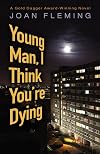
OK, so no real mystery, suspense, or tension to speak of. Perhaps we’re here for an acute psychological portrait of the killer, a study of the mind of delinquent youth, perhaps some examination of the conditions that engender criminality? This is what the cover text promises: “a fitting comment on the Youth Underworld of today” (sic for the Weird Capitalisation). The trouble is, Fleming has absolutely nothing precise, telling, or nuanced to say about any of this. Much like in her previous Gold Dagger winner (“When I Grow Rich”, 1962), you get the sense that she is writing about a world that she has absolutely no knowledge of, inventing her characters and settings on the basis of stuff she’s read in the more lurid parts of her evening paper. The lads grew up and live in a London tower block (shudder). They are rude to their parents. They consort with people who might possibly take drugs and they sometimes wear jazzy clothes. Etc, etc.
Now, in “When I Grow Rich”, Fleming at least gave the impression that she liked her main character and her setting, and wanted to be kind. Here, it’s clear that she views the whole lot with utter distaste. The characters and action are constantly distanced from the authorial voice, held with tongs and a hankie over the nose. We’re often reminded that the way in which Sledge’s thoughts are being described are not the way in which he himself would formulate them, being too thick to do so. Words and phrases are carefully set off in quotation marks when Fleming wants to be clear that she herself would never use them, or think in the terms they suggest: “foul play”, “bird”, “luxury flat”. I suppose, even given this obvious contempt for the subject, insight could be attained into it, but there’s no insight here. We are, more or less, given to understand that the difference between Bogey’s essential goodness and Sledge’s essential badness is down to how their parents treated them as kids. Bogey’s parents are loving salt-of-the-earth types; his father is a sympathetic cripple (obviously). Sledge’s took the piss out of his red hair when he was young and like to gamble a bit. So obviously he’s going to end up killing old ladies and pushing his wife off a balcony. (by the way, she’s a pliant teenage Indian, whose “caste mark” Sledge is given to kissing as a good-luck charm. I haven’t go the strength to go in to the portrayals of the minor characters, but I imagine that you can imagine)
I could probably stop here, but I’ve not yet nailed all the ways in which this book is woeful. Structurally, it is exhaustingly repetitive. There are stretches of several pages where literally all that happens is that characters recount to each other the events thus far, of which the reader is already painfully aware. Conversations and scenes are essentially repeated, to no cumulative effect—for example, numerous encounters between Sledge’s parents and a host of wooden minor characters.
Within these tedious conversational scenes, the dialogue is appalling, written with no feel at all for how anyone actually speaks. At one point, Bogey starts talking to his parents in itemised lists: (a) my first point, (b), my second point (with careful parenthetical), (c) my third point, and thus I conclude. Now, OK, I do know people who might speak like that, but not if they’ve spent the last 50 pages talking a crude approximation of London youth slang. Meanwhile, the action, when there is any, is described in a weirdly distant, passive voice that drains it of any vitality or zest—especially when it’s then described again, to no greater effect.
But the writing is awful at more basic levels than this, and that’s really what makes me wonder how on Earth this was ever published as it is. The whole thing has an air of a slapdash first draft. There are “this will do for now” paragraphs:
“It was, in fact, less risky than he thought, life itself continually offering far more coincidences than fiction, such as the announcement in the obituary column of The Times of the deaths of two unrelated people on the same day, called, for instance, Kipper”.
This has nothing to do with the rest of the story. There are no obituaries and no Kippers. This is just Fleming plonking down the first coincidental thing that comes to mind.
There are absolutely terrible similes. At one point, Bogey encounters another unlikely minor character, a posh runaway, sleeping on the tower block roof. She’s wearing a coat belted tightly at the waist, “making her look like some enormous damaged wasp”. Bad enough, but then a page later, the runaway gets angry, stands up tall, and so “in her wild and woolly coat she looked bigger than the biggest possible wasp, a wasp more like some crumpled and injured sea bird, crash-landed on the roof”. I’m trying to retain a cool air in these reviews, but here I have to ask: what the actual fuck?
Individual sentences and parts of them are astonishing artefacts of prose. Some shabby pall-bearers are “shiny-seated as to trousers”. The tower block at night? “It was an imaginary tower of the ‘young-Roland-to-the-dark-tower-came’ kind of tower”. Sledge’s bright yellow trousers? “snazzi-pants”. There’s something like this every other page. Even the sentences that aren’t remarkable in this way are remarkable in their clunkiness, and at times in their ungrammatical structure. There are commas scattered randomly, there are rambling long sentences that lose the run of their clauses, there are perversely fussy interjections and constructions (till now, I had only ever seen “up with which he would not put” as the punchline to a weak joke about grammar).
It really, really is puzzling to me how any editor at all could read any of this and say, yes, sure Joan, this is great stuff, let’s get it out there. It’s fundamentally incompetent writing, from the top levels of structure and plot and theme down to the basic level of putting words together such that they make sensible sentences. I have no idea at all how this won the Gold Dagger. Only plus point: whatever is next can only be better. show less
I found Young Man, I Think You’re Dying by Joan Fleming a fascinating crime story that contrasts the lives and choices of two young men. Both grew up in London working class families, but where one family bestowed a good upstanding morality, the other did not. Joe works in a pizza house and dreams of one day owing his own restaurant. Winston grew up to be a psychopath, he lives a life of crime, loyal to no one but himself.
Joe was not perfect, he was still involved with his friends in a group they called The Wotchas. The purpose of this group was to be the side man and driver for Winston. Joe realizes that Winston is going to go too far one day and wants to get out, but at the same time, the money he makes is being banked towards his show more future. One night Winston comes for Joe to get him to drive him to his crime site, and this is the night that Winston goes too far and kills an elderly lady. While Joe ponders whether he is going to the police or not, he meets a young runaway girl called Francis who has her own beef with Winston.
Young Man, I Think You’re Dying won the British Crime Writers Association’s Gold Dagger Award for best crime novel of 1970. As the author explores the minds of both the young psychopath and the ambitious dreamer an intriguing story emerges, one that is well crafted and unusual. show less
Joe was not perfect, he was still involved with his friends in a group they called The Wotchas. The purpose of this group was to be the side man and driver for Winston. Joe realizes that Winston is going to go too far one day and wants to get out, but at the same time, the money he makes is being banked towards his show more future. One night Winston comes for Joe to get him to drive him to his crime site, and this is the night that Winston goes too far and kills an elderly lady. While Joe ponders whether he is going to the police or not, he meets a young runaway girl called Francis who has her own beef with Winston.
Young Man, I Think You’re Dying won the British Crime Writers Association’s Gold Dagger Award for best crime novel of 1970. As the author explores the minds of both the young psychopath and the ambitious dreamer an intriguing story emerges, one that is well crafted and unusual. show less
Ratings
Members
- Recently Added By
Lists

Crime Writers' Association Daggers
76 works; 4 members

H.R.F. Keating's 100 Best Crime & Mystery Books
100 works; 8 members

Books Read in 2018
4,360 works; 110 members
Author Information
37+ Works 334 Members
Awards and Honors
Awards
Notable Lists
Series

Belongs to Publisher Series
Common Knowledge
- Canonical title*
- Nuori mies, kuolema kolkuttaa
- Original title
- Young Man, I Think You're Dying
- Original publication date
- 1970
- People/Characters*
- Joe Bogey; W. Sledge
- Important places*
- Lontoo, Englanti, Yhdistynyt kuningaskunta
- Epigraph*
- Niin verkkaan verkkaan hän nousi,
ja verkkaan miestä lähestyi,
ja syrjään verhot veti.
"Sä pian kuolet, nuori mies."
"Te neidot hyvästi jääkää",
hän lausui, "ja opiksi ottakaa,
mun ... (show all)kohtaloni ja syyni,
mun, julman Barbaran."
Skotlantilaisen balladin mukaan - First words
- Pizzas!
- Last words*
- (Click to show. Warning: May contain spoilers.)"Mistä minä tiedän!" hänen äitinsä tiuskaisi.
*Some information comes from Common Knowledge in other languages. Click "Edit" for more information.
Classifications
Statistics
- Members
- 38
- Popularity
- 763,883
- Reviews
- 2
- Rating
- (3.75)
- Languages
- Dutch, English, Finnish
- Media
- Paper, Ebook
- ISBNs
- 10
- ASINs
- 4