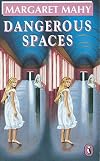
Dangerous Spaces
by Margaret Mahy
On This Page
Description
Anthea is drawn into a ghostly nightmare when she finds some objects belonging to her great-uncle Henry.Tags
Recommendations





















Member Reviews
Dangerous Spaces features a Jungian-esque plot with majorly creepy vibes! It drifts back and forth between the real world and a very unique dream world. While tween cousins are the main characters, this could easily be enjoyed by adult readers, too.
One of the most impressive things Margaret Mahy does in this book is finding a way to talk about one of the saddest subjects ever (both of your parents dying) and making it feel not devastating to read about.
Dangerous Spaces is such a thoughtful book. There were a handful of sentences that were so profound that they stopped me in my tracks while reading. The book also dips into horror territory, with quite a few spooky scenes that were unlike anything I’ve read before.
Most likely to be show more enjoyed by readers who are interested in dreams, delving into the psychology of characters, and who don’t mind the pacing being wonky here and there! show less
One of the most impressive things Margaret Mahy does in this book is finding a way to talk about one of the saddest subjects ever (both of your parents dying) and making it feel not devastating to read about.
Dangerous Spaces is such a thoughtful book. There were a handful of sentences that were so profound that they stopped me in my tracks while reading. The book also dips into horror territory, with quite a few spooky scenes that were unlike anything I’ve read before.
Most likely to be show more enjoyed by readers who are interested in dreams, delving into the psychology of characters, and who don’t mind the pacing being wonky here and there! show less
Eleven-year-old Anthea’s parents drowned in a sailing accident six months ago. Their bodies were never recovered. She is now living with her same-aged cousin Flora and Flora’s liberal, noisy, and disorderly family, the Wakefields, who have a sort of back-to-the-land project going: a vegetable garden, chickens, and pigs. The family lives in the house that belonged to her and Anthea’s deceased grandfather, “Old Lionel”. Everyone says the dwelling is haunted. The old man’s portrait hangs in the hall and his spirit drifts about the place, making clear that he disapproves of his son’s—Flora’s dad’s—desultory attempts at renovation. Lionel Junior has stripped the panels from the walls of “the big room,” exposing all show more the wires and pipes, and there’s a huge hole in the wall between Anthea’s and Flora’s bedrooms. Anthea feels as though she has no private space here.
The story opens with Anthea’s reporting a strange dream at breakfast one morning. In this dream, she emerged from a crack in the earth in a high, windy place. The world she found herself in—and, indeed finds herself in repeatedly on subsequent nights—is linked with the old picture cards found in the spare room. As children, Grandfather and his younger brother (“dead Henry”) used to view these cards with a stereoscope (an old-fashioned device which merged two photos of the same scene or object, providing a sense of depth and solidity.) It doesn’t take very long for Anthea to realize that the dream world she is entering is based on these cards. Dead Henry (who seemingly did not live into adulthood) created and mapped this world, known as “Viridian”. He and his older brother appear to have played some sort of imaginative game in which they travelled there, using special names—“Griff” for Henry and “Leo” for Lionel.
Forsaken for years by his brother, who obsessively guards the house instead of travelling with him as promised, Griff has now summoned Anthea as a companion. In her he recognizes the loneliness and desire for space that he craved as a child. He wants her to make the long journey with him to the dragon-shaped island in the inland sea, from which no one can return. For Anthea’s part, she believes she might find her parents there.
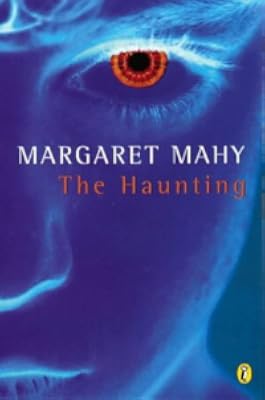
Initially, Anthea’s nightly trips into this vast realm are mysterious and exhilarating. However, as she begins to be assimilated into her new family—in the real world, she has reservations about Griff, Viridian, and their destination. (I kept envisioning Swiss artist Arnold Böcklin’s eerie 1883 painting The Island of the Dead [https://artsandculture.google.com/asset/the-isle-of-the-dead-arnold-b%C3%B6cklin/0wFgMTIQ3kZCpg?hl=en] and wonder if Mahy may have had it in mind when writing this novel.) The path to the sea that holds the island eventually becomes treacherous, and an ominous dark cloud follows the children. Recognizing Anthea’s increasing doubts about continuing with him, Griff becomes desperate, threatening, and aggressive. I have to say that even as an adult reader, I found him and their destination frightening. (I’m familiar with Mahy’s skill in evoking such moods, having read her wonderful novel The Haunting, which kept me up late into the night the first time I encountered it.) The story’s conclusion involves Anthea’s cousin coming through for her in an unexpected way.
While Dangerous Spaces is billed as children’s literature, it is actually a very sophisticated and rather abstract psychological novel. I cannot imagine that it would have much appeal for most older children. The backstory is lacking: there are no details about Henry/Griff’s early death, his sense (while living) that there was no space for him—that he was crowded out by his older brother. The reader is also left in the dark about Old Lionel’s sadness and why his spirit will not leave the house. What is actually holding him there? A great deal must be inferred and much—too much, I think— of the book operates on a symbolic, psychological level. Descriptions are intricate and require close reading and strong mental visualizing capacities in the reader. Since so much of Dangerous Spaces involves the dream world, the story quite naturally lends itself to Jungian interpretation.
While this is an interesting novel with some marvellous writing,I cannot in the end recommend it for anyone but a diehard Mahy fan. show less
The story opens with Anthea’s reporting a strange dream at breakfast one morning. In this dream, she emerged from a crack in the earth in a high, windy place. The world she found herself in—and, indeed finds herself in repeatedly on subsequent nights—is linked with the old picture cards found in the spare room. As children, Grandfather and his younger brother (“dead Henry”) used to view these cards with a stereoscope (an old-fashioned device which merged two photos of the same scene or object, providing a sense of depth and solidity.) It doesn’t take very long for Anthea to realize that the dream world she is entering is based on these cards. Dead Henry (who seemingly did not live into adulthood) created and mapped this world, known as “Viridian”. He and his older brother appear to have played some sort of imaginative game in which they travelled there, using special names—“Griff” for Henry and “Leo” for Lionel.
Forsaken for years by his brother, who obsessively guards the house instead of travelling with him as promised, Griff has now summoned Anthea as a companion. In her he recognizes the loneliness and desire for space that he craved as a child. He wants her to make the long journey with him to the dragon-shaped island in the inland sea, from which no one can return. For Anthea’s part, she believes she might find her parents there.
Initially, Anthea’s nightly trips into this vast realm are mysterious and exhilarating. However, as she begins to be assimilated into her new family—in the real world, she has reservations about Griff, Viridian, and their destination. (I kept envisioning Swiss artist Arnold Böcklin’s eerie 1883 painting The Island of the Dead [https://artsandculture.google.com/asset/the-isle-of-the-dead-arnold-b%C3%B6cklin/0wFgMTIQ3kZCpg?hl=en] and wonder if Mahy may have had it in mind when writing this novel.) The path to the sea that holds the island eventually becomes treacherous, and an ominous dark cloud follows the children. Recognizing Anthea’s increasing doubts about continuing with him, Griff becomes desperate, threatening, and aggressive. I have to say that even as an adult reader, I found him and their destination frightening. (I’m familiar with Mahy’s skill in evoking such moods, having read her wonderful novel The Haunting, which kept me up late into the night the first time I encountered it.) The story’s conclusion involves Anthea’s cousin coming through for her in an unexpected way.
While Dangerous Spaces is billed as children’s literature, it is actually a very sophisticated and rather abstract psychological novel. I cannot imagine that it would have much appeal for most older children. The backstory is lacking: there are no details about Henry/Griff’s early death, his sense (while living) that there was no space for him—that he was crowded out by his older brother. The reader is also left in the dark about Old Lionel’s sadness and why his spirit will not leave the house. What is actually holding him there? A great deal must be inferred and much—too much, I think— of the book operates on a symbolic, psychological level. Descriptions are intricate and require close reading and strong mental visualizing capacities in the reader. Since so much of Dangerous Spaces involves the dream world, the story quite naturally lends itself to Jungian interpretation.
While this is an interesting novel with some marvellous writing,I cannot in the end recommend it for anyone but a diehard Mahy fan. show less
In a way, quite brilliant. Just the right amount of eerie mystery, and some nice family stuff, too. Who can forget the dad who cannot get around to finishing the work on the house, because (cue creepy music). And the names of the pets, Glorious, Taffeta, and Zeppelin.
Can't be read at a normal pace. Some bits are to savor, some bits challenge. Best read while awake, in big chunks, immersively.
LFL find that I might just have to reread. Even though I'm not fond of paranormal or ghost stories, personally.
Can't be read at a normal pace. Some bits are to savor, some bits challenge. Best read while awake, in big chunks, immersively.
LFL find that I might just have to reread. Even though I'm not fond of paranormal or ghost stories, personally.
Dangerous Spaces is about two eleven year olds. Anthea, recently orphaned, has come to stay with her aunt and uncle, in the house her grandfather built, and she and her cousin Flora are still adjusting to living together.
So when Anthea dreams her way into an empty landscape, at first she is relieved to find a space that she doesn't have to share...
This is the sort of adventure in which the resolution is finding a way out of a fantasy space, with the implied intention of never returning, which isn't my favourite. However, I read this for Margaret Mahy's prose, which is really lovely, and for the believable family dynamics.
Now, that silver honey-pot, wrapped carefully in tissue paper, was packed away in a wooden chest, waiting for the show more day when Anthea had a home of her own once more. [...] If Anthea could have wrapped herself in tissue paper and packed herself away with the honey-pot, she would have done so happily. Then, when things became better, when there was a true space for her, she would rise up out of the tissue paper (while people exclaimed at her beauty and value) and move gracefully into that space, where she would sit, looking serenely at the world. show less
So when Anthea dreams her way into an empty landscape, at first she is relieved to find a space that she doesn't have to share...
This is the sort of adventure in which the resolution is finding a way out of a fantasy space, with the implied intention of never returning, which isn't my favourite. However, I read this for Margaret Mahy's prose, which is really lovely, and for the believable family dynamics.
Now, that silver honey-pot, wrapped carefully in tissue paper, was packed away in a wooden chest, waiting for the show more day when Anthea had a home of her own once more. [...] If Anthea could have wrapped herself in tissue paper and packed herself away with the honey-pot, she would have done so happily. Then, when things became better, when there was a true space for her, she would rise up out of the tissue paper (while people exclaimed at her beauty and value) and move gracefully into that space, where she would sit, looking serenely at the world. show less
Decidedly creepy ghost story for the upper primary age
Ratings
Members
- Recently Added By
Author Information

287+ Works 13,564 Members
Margaret Mahy was born on March 21, 1936 in Whakatane, Bay of Plenty, New Zealand. She received a B.A. degree from the University of New Zealand. She worked as a nurse, an assistant librarian, and a children's librarian in England and New Zealand. Her first book, A Lion in the Meadow, was published in 1969. She became a full-time author in 1980. show more During her lifetime, she wrote more than 120 children's books including The Haunting, The Changeover, Memory, The Seven Chinese Brothers, The Man Whose Mother Was a Pirate and A Summery Saturday Morning. She won the Esther Glen Award five times, the Carnegie Medal of the British Library Association three times, the Boston Globe-Horn Book Award, Hans Christian Andersen Award, and in 1999, she won the New Zealand Post Children's Book Award in two categories, Picture Book and Supreme Award. She died after a brief illness on July 23, 2012 at the age of 76. (Bowker Author Biography) show less
Awards and Honors
Common Knowledge
- Original publication date
- 1991
- Canonical DDC/MDS
- 823.91
Classifications
- Genres
- Fiction and Literature, Children's Books, Kids, Tween, Young Adult
- DDC/MDS
- 823.91 — Literature & rhetoric English & Old English literatures English fiction 1900- 1901-1999
- LCC
- PZ7 .M2773 .D — Language and Literature Fiction and juvenile belles lettres Fiction and juvenile belles lettres Juvenile belles lettres
- BISAC
Statistics
- Members
- 119
- Popularity
- 274,971
- Reviews
- 5
- Rating
- (3.86)
- Languages
- 10 — Catalan, Dutch, English, Finnish, French, German, Italian, Norwegian, Spanish, Swedish
- Media
- Paper
- ISBNs
- 16
- ASINs
- 2