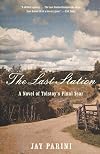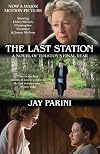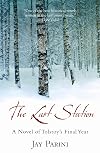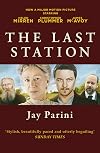
The Last Station: A Novel of Tolstoy's Final Year
by Jay Parini
On This Page
Description
As Leo Tolstoy's life draws to a tumultuous close, his tempestuous wife and most cunning disciple are locked in a whirlwind battle for the great man's soul. Torn between his professed doctrine of poverty and chastity and the reality of his enormous wealth and thirteen children, Tolstoy dramatically flees his home, only to fall ill at a tiny nearby rail station. The famous (and famously troubled) writer believes he is dying alone, unaware that over a hundred newspapermen camp outside awaiting show more hourly reports on his condition. Jay Parini moves deftly between a colorful cast of characters to create a stunning portrait of one of the world's most treasured authors. Dancing between fact and fiction, The Last Station is a brilliant and moving literary performance. show lessTags
Recommendations










Member Reviews
To understand and appreciate Russian author Leo Tolstoy, one has to understand and appreciate Russian history. Leo Tolstoy was born as a part of the aristocratic class in Russia, yet he spoke up for the serf. Russia has millions of uneducated serfs – and has had for generations. Most viewed them as worthless. Like Abraham Lincoln, Tolstoy saw value in their lives; he, as they say, saw their humanity. Even though many did not read Tolstoy (or anyone else) closely, his magnanimity was felt by all in Russia. His name reverberates in their ears, again, much like Lincoln’s name reverberates in African-American homes.
Leo Tolstoy is an enigma. His life is full of contradictions. On the one hand, he spoke out for the serf and – as an show more ascetic – sought to renounce the luxury and pleasure he was born into; on the other, he had a wife who sought financial security and thirteen children. (Hardly a life of asceticism…) For most of his life, he maintained a troubled soul – not only about the plight of Russia’s ubiquitous serfs but also about any goodness in the world more generally. This led to personal instability. Unlike the other great Russian author Fyodor Dostoyevsky (who celebrated life’s inherent goodness), Tolstoy sought to escape the world in the philosophy of his writings (while living in a lavish mansion).
These contradictions and tensions came to a head in his final years. The most famous Russian in history to that point, he routinely fought with his wife over the royalties of his books. Embarrassingly, most Russians well knew of his marital spats. Eventually, he left home and died near a railway station, seemingly of pneumonia. Throughout this time, Tolstoy’s adoring fans and disciples seem embroiled in a never-ending conflict with his wife of forty-eight years.
The author of this account, the biographer Jay Parini, sketches a fictionalized account of this final year. He uses the diaries of numerous people in Tostoy’s inner circle as sources. These sources paint a picture of conflict and personalities and provide a 360-degree view of Tolstoy’s life. Parini weaves them together brilliantly into a beautiful tapestry that encases the whole of Tolstoy’s personality. Indeed, no one person, whether disciple or family member, could fully grasp Tolstoy’s insightfulness and historical impact.
Overall, this is a fun and interesting read that was made into a well-received Hollywood movie. I am planning to watch the movie and would recommend it if you do not have the time to flip through this biopic. Parini, as always, spins good yarn about an interesting topic. show less
Leo Tolstoy is an enigma. His life is full of contradictions. On the one hand, he spoke out for the serf and – as an show more ascetic – sought to renounce the luxury and pleasure he was born into; on the other, he had a wife who sought financial security and thirteen children. (Hardly a life of asceticism…) For most of his life, he maintained a troubled soul – not only about the plight of Russia’s ubiquitous serfs but also about any goodness in the world more generally. This led to personal instability. Unlike the other great Russian author Fyodor Dostoyevsky (who celebrated life’s inherent goodness), Tolstoy sought to escape the world in the philosophy of his writings (while living in a lavish mansion).
These contradictions and tensions came to a head in his final years. The most famous Russian in history to that point, he routinely fought with his wife over the royalties of his books. Embarrassingly, most Russians well knew of his marital spats. Eventually, he left home and died near a railway station, seemingly of pneumonia. Throughout this time, Tolstoy’s adoring fans and disciples seem embroiled in a never-ending conflict with his wife of forty-eight years.
The author of this account, the biographer Jay Parini, sketches a fictionalized account of this final year. He uses the diaries of numerous people in Tostoy’s inner circle as sources. These sources paint a picture of conflict and personalities and provide a 360-degree view of Tolstoy’s life. Parini weaves them together brilliantly into a beautiful tapestry that encases the whole of Tolstoy’s personality. Indeed, no one person, whether disciple or family member, could fully grasp Tolstoy’s insightfulness and historical impact.
Overall, this is a fun and interesting read that was made into a well-received Hollywood movie. I am planning to watch the movie and would recommend it if you do not have the time to flip through this biopic. Parini, as always, spins good yarn about an interesting topic. show less
'The Last Station,' by Jay Parini, is a portrait of life at Leo Tolstoy's estate, Yasnaya Polyana, during the last year of the great man's life. Each chapter captures the perspective of one of those most familiar with Tolstoy at the time, the details of which have been painstakingly recreated from diaries, letters and biographies. The transition from one character to the next is at times disconcerting, but the overall effect is truly beautiful. This work brought to mind an impressionist painting -- each chapter a brush stroke that, from a distance, creates a vivid landscape.
Strife permeated life at Yasnaya Polyana and likewise finds itself the central theme in this novel. Leo Tolstoy and his wife of nearly fifty years, Sophia, were show more firmly set on opposite sides of nearly every issue. She represented a traditional view of Russian life while Tolstoy was a revolutionary icon for the Russian people. Parini does an excellent job of presenting each perspective independently and on its own merits -- leaving it to the reader to decide who, if anyone, is in the right. This may come across as dry reading to some, but I found it an excellent way to represent Tolstoy's own devotion to simple, unadorned truth.
A slow read at first this novel picks up speed as it goes. Intricately written and all the more engaging because of it. For all fans of historical fiction or, of course, for those who enjoy the works of Leo Tolstoy. show less
Strife permeated life at Yasnaya Polyana and likewise finds itself the central theme in this novel. Leo Tolstoy and his wife of nearly fifty years, Sophia, were show more firmly set on opposite sides of nearly every issue. She represented a traditional view of Russian life while Tolstoy was a revolutionary icon for the Russian people. Parini does an excellent job of presenting each perspective independently and on its own merits -- leaving it to the reader to decide who, if anyone, is in the right. This may come across as dry reading to some, but I found it an excellent way to represent Tolstoy's own devotion to simple, unadorned truth.
A slow read at first this novel picks up speed as it goes. Intricately written and all the more engaging because of it. For all fans of historical fiction or, of course, for those who enjoy the works of Leo Tolstoy. show less
Plot sequence and coverage were good, but more character depth, notably of Count Leo, would have been welcome.
The author eases readers into each personality.
No reasons were given related to why he and Sonja could not, in those long years mostly together,
have worked out a compromise where the family was supported after both had died AND
Tolstoy's works available for a reasonable cost.
Still hard to understand the draw of Chertkov.
The author eases readers into each personality.
No reasons were given related to why he and Sonja could not, in those long years mostly together,
have worked out a compromise where the family was supported after both had died AND
Tolstoy's works available for a reasonable cost.
Still hard to understand the draw of Chertkov.
This novelised account of Tolstoy's last year has been created from his diaries and those of his family, colleagues and followers.
We find out that the aged Tolstoy is the most famous man in Russia and everybody wants a piece of him. His wife wants acknowledgement that being married to such a celebrity is a burden, and assurances that his family will be looked after once he's gone; his manager Chertkov wants him to sign a will leaving his works to the 'people'; his children just want to be loved. Add to this secretaries, doctors and paparazzi, and it's not a wonder that the 82yr old can't get any peace.
Each chapter is written in the voice of one of the main characters, including Leo himself, and you get a real feel for the pressures show more they're all under living with or being a true superstar. But it doesn't make for an easy read, and as always with Russian novels, getting to grips with all the different names a single person is known by can be confusing, but get past this and it is a remarkable book. show less
We find out that the aged Tolstoy is the most famous man in Russia and everybody wants a piece of him. His wife wants acknowledgement that being married to such a celebrity is a burden, and assurances that his family will be looked after once he's gone; his manager Chertkov wants him to sign a will leaving his works to the 'people'; his children just want to be loved. Add to this secretaries, doctors and paparazzi, and it's not a wonder that the 82yr old can't get any peace.
Each chapter is written in the voice of one of the main characters, including Leo himself, and you get a real feel for the pressures show more they're all under living with or being a true superstar. But it doesn't make for an easy read, and as always with Russian novels, getting to grips with all the different names a single person is known by can be confusing, but get past this and it is a remarkable book. show less
The author has obviously been thorough in his research, digging through all the sources and letters. It must have been quite difficult to meld all this research into an interesting narrative, especially one where it's difficult to have any positive feelings for any of the main characters. By turns one gets aggravated by all the Tolstoyans, most of Tolstoy's family and even Tolstoy himself. Bulgakov is perhaps an exception.
And of course one knows the ending.
The strongest thread and one that kept me going was Sonya with all her unpredictability and 'bad' behaviour. But one could see how she'd be peeved by the constant presence of these acolytes and especially Chertkov. It was difficult, to say the least, in these last years of her married show more life to feel like a discard. Parini makes a good job of conveying all the tensions at Yasnaya Polyana.
As with all the famous Russian novels the names are sometimes a stumbling block and I had to remind myself time and again of who is who but there's not much the author can do about that.
A decent read on the whole but I can see that a good film version might heighten the atmosphere especially with outdoor scenes of 'Mother Russia'.
__________________ show less
And of course one knows the ending.
The strongest thread and one that kept me going was Sonya with all her unpredictability and 'bad' behaviour. But one could see how she'd be peeved by the constant presence of these acolytes and especially Chertkov. It was difficult, to say the least, in these last years of her married show more life to feel like a discard. Parini makes a good job of conveying all the tensions at Yasnaya Polyana.
As with all the famous Russian novels the names are sometimes a stumbling block and I had to remind myself time and again of who is who but there's not much the author can do about that.
A decent read on the whole but I can see that a good film version might heighten the atmosphere especially with outdoor scenes of 'Mother Russia'.
__________________ show less
A wonderful evocation of Tolstoy's last days, the people surrounding him and the aura created by the event. Just as Tolstoy was a writer, larger than life, he becomes, in death, a mythic figure.
A big disappointment! Forced myself to slog through this mess of family fights and polarization. Told in voices of several narrators, so we get events from their much-varied points of view. Novel was a mishmash of fact [from characters'' diaries] and fiction.
Members
- Recently Added By
Lists

Books To Get From The Library
115 works; 5 members

Llibres que he llegit el 2008
33 works; 1 member

Lives of the Poets (and Philosophers)
110 works; 5 members

Films
217 works; 1 member
Author Information

75+ Works 3,147 Members
Jay Parini was born in Pittston, Pennsylvania in 1948. In 1970 he graduated from Lafayette College and he received a doctorate from the University of St. Andrews in 1975. Before becoming a professor of Engliah and Creative Writing at Vermont's Middlebury College in 1982, Parini taught at Dartmouth College. Parini writes poetry, novels, show more biographies, and criticism, and he has published numerous reviews and essays in major journals and newspapers. He co-founded the New England Review in 1976. In 1995, he was appointed literary executor for author Gore Vidal. A film version of The Last Station, his 1990 novel, was released in 2009. Parini's novel, One Matchless Time: A Life of William Faulkner, made the New York Times bestseller list in 2015. (Bowker Author Biography) show less
Work Relationships
Has the adaptation
Common Knowledge
- Canonical title
- The Last Station: A Novel of Tolstoy's Final Year
- Original title
- The Last Station: A Novel of Tolstoy's Final Year
- Original publication date
- 1990
- People/Characters
- Leo Tolstoy; Sonya Tolstoy
- Related movies
- The Last Station (2009 | IMDb)
- Dedication
- For Devon, every word, always
- First words
- The year has turned again, bringing us to the end of the first decade of the new century.
- Quotations
- Whenever I act from powerful and genuine feelings, they call me 'a lunatic.' When Lyovochka does the same, he is called 'a genius.'
Classifications
Statistics
- Members
- 415
- Popularity
- 74,930
- Reviews
- 17
- Rating
- (3.56)
- Languages
- 13 — Dutch, English, Finnish, French, German, Hungarian, Icelandic, Italian, Lithuanian, Portuguese, Romanian, Spanish, Swedish
- Media
- Paper, Audiobook, Ebook
- ISBNs
- 38
- UPCs
- 1
- ASINs
- 6