On This Page
Description
The paper identifies France’s structural reforms that would yield the largest competitiveness gains based on macro-empirical evidence, and reviews signs of potential gains from a deregulation of the services sector. It is expected that completing deregulation in the services sector would benefit the entire French economy, by boosting productivity and exports. Econometric results have estimated the impact of reducing the labor taxation and labor market rigidities and of increasing show more innovation to the average level of other advanced countries. show lessTags
Recommendations































Member Reviews
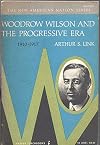
Arthur Link's history presents a somewhat satisfying explanation for America's entry into WWI using a "traditional" methodology. By studying the foreign policy of the Wilson administration within the context of its domestic policy, Arthur Link explains why official America was so hesitant to embark on a war in Europe. The Progressive movement, which Link demonstrates often moved ahead of the president, stood for social reform at home but was divided between Theodore Roosevelt's Republican Progressives and Wilson's Democratic wing. Electing a Democratic Progressive candidate in 1912 and 1916, the American populace expected domestic reform and in the latter case abstention from Europe's conflicts.
Link concentrates on periodical show more literature to glean the texture of popular sentiment. For official policy, he makes extensive use of source materials but does not refer extensively to the opinions of other historians. The former tends to neglect the intellectual and cultural context of popular sentiment, the later has the weakness of glossing over interpretive controversies. Concentrating on Woodrow Wilson and his circle of advisors presents a limited view of American entry into the war, but these are the most significant figures in the long run. Despite recent criticism, the history of high politics is still the stuff of American foreign policy and diplomacy. A traditional approach to the history of America's response to the Mexican Revolution and entry into WWI still has much to offer. show less
Link concentrates on periodical show more literature to glean the texture of popular sentiment. For official policy, he makes extensive use of source materials but does not refer extensively to the opinions of other historians. The former tends to neglect the intellectual and cultural context of popular sentiment, the later has the weakness of glossing over interpretive controversies. Concentrating on Woodrow Wilson and his circle of advisors presents a limited view of American entry into the war, but these are the most significant figures in the long run. Despite recent criticism, the history of high politics is still the stuff of American foreign policy and diplomacy. A traditional approach to the history of America's response to the Mexican Revolution and entry into WWI still has much to offer. show less
Great explanation of the progressive era, not so much about Woodrow Wilson. Good look at the US right before our entrance into WWI.
Ratings
Members
- Recently Added By
Author Information
55+ Works 712 Members
Arthur S. Link: August 8, 1920 - March 26, 1998 Arthur S. Link was born in New Market, Virginia, to a German Lutheran family. He graduated from the University of North Carolina at Chapel Hill, where he received a B.A. in 1941 and a Ph.D. in 1945. He was the leading specialist on Woodrow Wilson, with a five volume biography of Wilson (to the start show more of the First World War). In addition, he edited 69 volumes of Wilson's papers. Although he wrote numerous textbooks, he concentrated his scholarship on the politics and diplomacy of the decade 1910-1920. Link taught at Princeton University (1945-1949 and 1960-1992), and Northwestern University (1949-1960). He died of lung cancer at age 77 on March 26, 1998. (Bowker Author Biography) show less
Series

Common Knowledge
- Canonical title
- Woodrow Wilson and the Progressive Era, 1910-1917
- Original publication date
- 1954
- People/Characters
- Woodrow Wilson; William Jennings Bryan; Edward M. House; Herbert Croly; Louis Brandeis; Theodore Roosevelt (show all 28); Elihu Root; William Howard Taft; Johan von Bernstorff; Theobald von Bethmann-Hollweg; Robert La Follette; Robert Lansing; Pancho Villa; Edward Grey; Venustiano Carranza; Champ Clark; Victoriano Huerta; Carter Glass; William G. McAdoo; Walter Page; Henry Cabot Lodge; Charles Evans Hughes; John J. Pershing; Samuel Gompers; Eugene V. Debs; Claude Kitchin; Oscar Underwood; Joseph Tumulty
- Important places
- USA
- Important events
- Progressive Era (1910 | 1917); World War I (1914 | 1918); Mexican Revolution; Federal Reserve Act; Sinking of the Lusitania; Child Labor Act (show all 16); Preparedness Movement; New Freedom; Sussex Crisis; Income Tax Acts; Federal racial segregation; Pacifist Movement; Zimmermann note; Federal Trade Commission Act; Clayton Act; United States presidential election (1912, 1916)
- Dedication
- For My Mother and Father
- First words
- The election of 1912 marked the culmination of more than twenty years of popular revolt against a state of affairs that seemed to guarantee perpetual political and economic control to the privileged few in city, state, and na... (show all)tion.
- Last words
- (Click to show. Warning: May contain spoilers.)A new epoch in the history of the United States had begun.
- Publisher's editor
- Commager, Henry Steele; Morris, Richard B.
Classifications
- Genres
- History, Nonfiction, General Nonfiction, Biography & Memoir, Politics and Government
- DDC/MDS
- 973.913 — History & geography History of North America United States 1901- World Wars and Depression Era (1901-1953) Woodrow Wilson, (1913-1921) World War I, Federal Reserve Act, Treaty of Versailles
- LCC
- E766 .L5 — History of the United States United States Twentieth century Wilson's administrations, 1913-1921
- BISAC
Statistics
- Members
- 200
- Popularity
- 164,005
- Reviews
- 3
- Rating
- (3.30)
- Languages
- Czech, English
- Media
- Paper, Ebook
- ISBNs
- 7
- ASINs
- 16