On This Page
Description
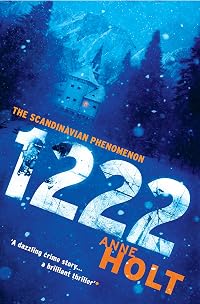
From Norway's #1 bestselling crime writer comes a suspenseful locked-room mystery, the US debut of a new series, set in an isolated hotel where guests stranded during a monumental snowstorm begin turning up dead.A train on its way to the northern reaches of Norway careens off the track during a massive blizzard, 1,222 meters above sea level. The passengers abandon the train for a nearby, century-old hotel that is practically empty except for the staff. With plenty of food and shelter from show more the storm, the passengers think they are safe-until one of them turns up dead. With no sign of rescue and the storm continuing to rage, retired police inspector Hanne Wilhelmsen is asked to investigate. Paralyzed by a bullet lodged in her spine, Hanne has no wish to return to police work. Bitter and antisocial, she is slowly coaxed back to her old habits as curiosity and a natural talent for observation compel her to take an interest in the passengers and their secrets. When another body turns up, Hanne realizes that time is running out and she must act fast before panic takes over. Trapped in her wheelchair, trapped by the storm, and now trapped with a killer, Hanne has to fit the pieces of the puzzle together before they strike again.Anne Holt's books have sold more than five million copies in Europe, and her books are #1 bestsellers in Sweden, Norway, Denmark, Iceland, and Finland. Now she is poised to gain a huge American following with this captivating new mystery that pays homage to Agatha Christie and her classic book, And Then There Were None. show lessTags
Recommendations



















Member Reviews
I listened to this and there's a lot to like. It is set in a snowbound hotel to which the passengers of a train are transferred after a crash in a storm on the Oslo-Bergen trainline. Which makes it certainly unusual, if nothing else. It also turns out to be the 8th in a series, of which this is the first I've read, but I certainly didn't feel I'd missed anything not having read the earlier books. The central character is Hanna Willemsen, and she narrates this. She's an ex police officer who was shot in the back and is now paralysed from the waist down. She's also rather grumpy, anti social, and has a lesbian muslim lover. Which, again, is somewhat unusual. She's also quite aware that she's grumpy, antisocial and inclined to be brusk, show more rude and less than communicative, which at least gives her an air of humanity that the is more appealing than the veneers she presents to the world is. The cast of characters is equally varied, with some religious people, some divisive characters, a runaway, families, a murderer, the works, really. There is also an additional carriage with police escort and lots of speculation. It's inventive, varied, neatly done and I really liked the way each chapter is prefaced with the description of the Beaufort scale, from calm to hurricane. It's an effective mystery and it works really well. show less
And then there were none
I need to read this Agatha Christie classic. I’m overdue, because this is the second novel I’ve read in the past few months that owes a significant debt to Ms. Christie’s novel. And that’s not a criticism. It’s a brilliant structure, and it’s used to good effect in Anne Holt’s latest, 1222.
I’ll start by noting the unusual title of the novel refers to the elevation (meters above sea level) of the novel’s setting, and the name of a hotel at that elevation. In the opening pages there is a train crash high up in Norway’s snowy mountains. Most of the 269 passengers and crew get off with fairly minor injuries, but they’re trapped in the mountains by a severe winter storm. It’ll be several days show more before organized help can arrive. Fortunately, a handful of locals form a rescue team and evacuate the passengers to the nearby hotel, which opens its doors wide to accommodate everyone.
The main character of the novel is a wheelchair-bound former police inspector named Hanne Wilhelmsen. I believe that Hanne has appeared in prior novels by Holt, but this is the first of the series to be published in the US. She’s not a warm and fuzzy first-person narrator. In fact, she’s rather prickly, but she’s an interesting lady with a complex back-story, and she’s a keen observer of human nature. In other words, she’s exactly the sort of person you might want around when you’re trapped in a remote location with a bunch of quirky strangers—and suddenly people start turning up dead.
Ms. Holt kept me guessing along with everyone else for the duration of this very enjoyable who-done-it. She embellishes the basic plot with several other side mysteries and red herrings. I warmed up to Hanne enough that I’d love to continue reading her series. Other characters were used more to fulfill their functions within the plot, but they were ably handled. 1222 isn’t a major literary work, but I don’t have a single complaint to voice. It was written to entertain, and on that count, I found it to be entirely successful. show less
I need to read this Agatha Christie classic. I’m overdue, because this is the second novel I’ve read in the past few months that owes a significant debt to Ms. Christie’s novel. And that’s not a criticism. It’s a brilliant structure, and it’s used to good effect in Anne Holt’s latest, 1222.
I’ll start by noting the unusual title of the novel refers to the elevation (meters above sea level) of the novel’s setting, and the name of a hotel at that elevation. In the opening pages there is a train crash high up in Norway’s snowy mountains. Most of the 269 passengers and crew get off with fairly minor injuries, but they’re trapped in the mountains by a severe winter storm. It’ll be several days show more before organized help can arrive. Fortunately, a handful of locals form a rescue team and evacuate the passengers to the nearby hotel, which opens its doors wide to accommodate everyone.
The main character of the novel is a wheelchair-bound former police inspector named Hanne Wilhelmsen. I believe that Hanne has appeared in prior novels by Holt, but this is the first of the series to be published in the US. She’s not a warm and fuzzy first-person narrator. In fact, she’s rather prickly, but she’s an interesting lady with a complex back-story, and she’s a keen observer of human nature. In other words, she’s exactly the sort of person you might want around when you’re trapped in a remote location with a bunch of quirky strangers—and suddenly people start turning up dead.
Ms. Holt kept me guessing along with everyone else for the duration of this very enjoyable who-done-it. She embellishes the basic plot with several other side mysteries and red herrings. I warmed up to Hanne enough that I’d love to continue reading her series. Other characters were used more to fulfill their functions within the plot, but they were ably handled. 1222 isn’t a major literary work, but I don’t have a single complaint to voice. It was written to entertain, and on that count, I found it to be entirely successful. show less
I enjoyed this Norwegian mystery of the locked-room type. A train comes off the tracks 1222 meters above sea level in a raging blizzard. The passengers are helped to a hotel in the area to wait out the storm, where one is found dead. Although reluctant to help, Hanne Wilhelmsen, a former police officer is asked to investigate. In the course of her last case Hanne was paralyzed by a bullet, and is now retired and in a wheelchair. Prickly and outspoken, she gradually uses her natural curiosity to observe those around her. Holt’s story is not complex or twisty but it kept my interest throughout. Now I’m looking forward to reading more Hanne Wilhelmsen books.
This is Anne Holt's homage to Agatha Christie's style of murder mysteries, taken to modern Norway. Hanne Wilhelmsen is an ex-cop, a paraplegic traveling by train through the Norwegian mountains to Bergen to see a specialist. The train derails near an isolated holiday resort and the passengers are taken by snowmobile to the hotel to wait out the fierce winter storm that prevents them from being rescued. Sometime during that first night, a man is murdered and Hanne finds herself unwillingly heading up a quiet investigation, helped by the red cross worker who rescued her, a doctor and the hotel manager.
Holt excels at the character study and here she has plenty to work with. She remains true to the spirit of the genre, while creating a show more modern collection of people, who are on edge after surviving the crash and learning that a murderer is living among them. Holt even ends the story in a particularly Christie-like way, while retaining the its very modern setting.
I didn't look at her. Instead I met Geir Rugholmen's gaze. He was still standing on the table, his legs wide apart; he was strong, but there was an air of resignation about him. We were both thinking the same thing.
The people who were snowed in at Finse 1222 had begun to let go of their dignity. And only eighteen hours had passed since the accident. show less
Holt excels at the character study and here she has plenty to work with. She remains true to the spirit of the genre, while creating a show more modern collection of people, who are on edge after surviving the crash and learning that a murderer is living among them. Holt even ends the story in a particularly Christie-like way, while retaining the its very modern setting.
I didn't look at her. Instead I met Geir Rugholmen's gaze. He was still standing on the table, his legs wide apart; he was strong, but there was an air of resignation about him. We were both thinking the same thing.
The people who were snowed in at Finse 1222 had begun to let go of their dignity. And only eighteen hours had passed since the accident. show less
An excellent mystery featuring a wheelchair-bound (at least in this part of the series) ex-detective stranded at a mountaintop hotel following a train accident during a Norwegian blizzard. When a priest is murdered, she is reluctantly drawn in while they all await the end of the storm and arrival of the police. Meanwhile, a mystery train passenger is kept isolated by armed men.
The protagonist, Hanne Wilhelmsen, is one of the most enjoyable characters I've run across. Since being shot and paralyzed she's withdrawn from the world except for her nuclear family, and she's independent, bitter and very sarcastic, but she's very observant and smart. And a delightful storyteller.
I'd call this a mystery rather than suspense - a good yarn in show more which you know someone will die - but not the main character. And with a trainload of suspects, there'e lots of suspicion to throw around. I whipped right through this in a day. It's the first I've read in the series, but certainly not the last. show less
The protagonist, Hanne Wilhelmsen, is one of the most enjoyable characters I've run across. Since being shot and paralyzed she's withdrawn from the world except for her nuclear family, and she's independent, bitter and very sarcastic, but she's very observant and smart. And a delightful storyteller.
I'd call this a mystery rather than suspense - a good yarn in show more which you know someone will die - but not the main character. And with a trainload of suspects, there'e lots of suspicion to throw around. I whipped right through this in a day. It's the first I've read in the series, but certainly not the last. show less
At 1222 metres above sea level, a train is derailed and the passengers are forced to move to a nearby hotel. Outside the worst storm in Norwegian history rages while, inside, a murderer is at work.
1222, by Norwegian author Anne Holt, is a locked room mystery reminiscent of 'Then There Were None' by Agatha Christie. As the number of possible suspects dwindles, Hanne Wilhemson, once a police detective, now wheelchair bound, uses her considerable deductive talents with only the aid of her 'little grey cells' a la Hercule Poirot to eventually solve the case.
Like the books from the Golden Age of Mysteries it pays homage to, 1222 is more puzzle than gore. However, if this superb novels follows many of the conventions of the British Cozy, it show more certainly does not adopt all of them. This is no sexually repressed, slowly evolving story. Hanne is a lesbian who, with her Muslim partner, has a daughter. And, as for the plot, well, let's just say it has all the twists and turns, as well as the quirky characters of any modern thriller, but is able to keep the reader enthralled without the need for long and often deeply disturbing descriptions of murder's aftermath. show less
1222, by Norwegian author Anne Holt, is a locked room mystery reminiscent of 'Then There Were None' by Agatha Christie. As the number of possible suspects dwindles, Hanne Wilhemson, once a police detective, now wheelchair bound, uses her considerable deductive talents with only the aid of her 'little grey cells' a la Hercule Poirot to eventually solve the case.
Like the books from the Golden Age of Mysteries it pays homage to, 1222 is more puzzle than gore. However, if this superb novels follows many of the conventions of the British Cozy, it show more certainly does not adopt all of them. This is no sexually repressed, slowly evolving story. Hanne is a lesbian who, with her Muslim partner, has a daughter. And, as for the plot, well, let's just say it has all the twists and turns, as well as the quirky characters of any modern thriller, but is able to keep the reader enthralled without the need for long and often deeply disturbing descriptions of murder's aftermath. show less
When the seventh Hanne Wilhelmsen novel left us on a cliff, hanging on for dear life, we could only hope there would be another in the series. The Anne Holt has fulfilled our hopes with 1222, a marvelous mystery that is quite a departure for Hanne and those of us who admire this taciturn, reclusive, and emotionally distant detective.
Hanne has recovered as far as she is able from her wounds inflicted at the end of Beyond the Truth. She is in a wheelchair, losing use of her legs thanks to a bullet in her lower back that severed her spinal cord. No longer a police officer, she works from home as a consultant. Her partner and she have a three year old child and other than lingering pain and difficulty breathing from her spinal injury, she show more is content and has adapted to her new life. She’s on a train to Bergen to see a specialist about her difficulty breathing when the train is derailed entering a tunnel, just a short distance from a winter resort hotel and railway station 1222 meters above sea level. She’s injured, as are the other 269 people who are evacuated to the hotel and the several cabins that surround it as a hurricane force blizzard descends on them, isolating them from the rest of Norway.
There’s plenty of mystery to pique our interest. First there is the heavily guarded extra coach that was at the end of the train. Some think a member of the royal family might have been on the train, or perhaps a celebrity. Hanne thinks the answer may be more sinister. Then there are the combustible interpersonal dynamics, with a white nationalist propagandist sowing suspicion about the Middle Eastern couple Hanne believes are Kurds–Kurds with weapons.
Then there is the annoying Cato Hammer who wants them all to get along, ostentatiously genial and benign. Obviously, he was the first victim, found the next morning nearly buried in snow, a bullet through his brain. The hotel owner, a mountain man who was a lawyer for his day job, and a littler person who is a doctor join with Hanne to make most of the decisions, including the decision to cover up the murder until the police can arrive, concerned that investigation might induce more murders.
Well, that didn’t work, A colleague of the murdered religious leader tries to tell Hanne who he suspects of the murder, and of course, he is soon murdered before that happens. Now it’s out of the bag and the struggle is to keep the people who are stranded from panicking and resorting to misguided violence and vigilantism while trying to solve the murder without any of the usual assets of investigation.
In addition, the weather itself is an opponent, not just isolating them from the police and officialdom but from people in the other buildings. The constant buffeting of the snow, smashing through windows and even the doors, the freezing and murderous cold, the screaming wind, all contribute to a sense of menace and danger.
Hanne has to rely on “the little grey cells” and solve the case using psychology. Yes! At its core, 1222 is an homage to Agatha Christie. They are cut off, dying one by one as in And Then There Were None. Hanne herself refers to using her little grey cells. In true Christie fashion, the mystery is solved by psychology, clever observation, and a deep understanding and sympathy for human nature.
I enjoyed this book quite a bit. It is more interior than others in the series. Hanne does not have access to autopsy and crime scene reports. There is no analysis, no questioning of all the witnesses, no canvassing, no series of interviews to learn alibis or test them. There is only observation and conversation and thinking, using those little grey cells to make connections from a word here or there. The observation of small incongruities is vital and they add up to a fair solution, even though 90% of the world would not make those connections. It’s another successful edition in a strong series.
★★★★
http://tonstantweaderreviews.wordpress.com/2016/12/31/1222-by-anne-holt/ show less
Hanne has recovered as far as she is able from her wounds inflicted at the end of Beyond the Truth. She is in a wheelchair, losing use of her legs thanks to a bullet in her lower back that severed her spinal cord. No longer a police officer, she works from home as a consultant. Her partner and she have a three year old child and other than lingering pain and difficulty breathing from her spinal injury, she show more is content and has adapted to her new life. She’s on a train to Bergen to see a specialist about her difficulty breathing when the train is derailed entering a tunnel, just a short distance from a winter resort hotel and railway station 1222 meters above sea level. She’s injured, as are the other 269 people who are evacuated to the hotel and the several cabins that surround it as a hurricane force blizzard descends on them, isolating them from the rest of Norway.
There’s plenty of mystery to pique our interest. First there is the heavily guarded extra coach that was at the end of the train. Some think a member of the royal family might have been on the train, or perhaps a celebrity. Hanne thinks the answer may be more sinister. Then there are the combustible interpersonal dynamics, with a white nationalist propagandist sowing suspicion about the Middle Eastern couple Hanne believes are Kurds–Kurds with weapons.
Then there is the annoying Cato Hammer who wants them all to get along, ostentatiously genial and benign. Obviously, he was the first victim, found the next morning nearly buried in snow, a bullet through his brain. The hotel owner, a mountain man who was a lawyer for his day job, and a littler person who is a doctor join with Hanne to make most of the decisions, including the decision to cover up the murder until the police can arrive, concerned that investigation might induce more murders.
Well, that didn’t work, A colleague of the murdered religious leader tries to tell Hanne who he suspects of the murder, and of course, he is soon murdered before that happens. Now it’s out of the bag and the struggle is to keep the people who are stranded from panicking and resorting to misguided violence and vigilantism while trying to solve the murder without any of the usual assets of investigation.
In addition, the weather itself is an opponent, not just isolating them from the police and officialdom but from people in the other buildings. The constant buffeting of the snow, smashing through windows and even the doors, the freezing and murderous cold, the screaming wind, all contribute to a sense of menace and danger.
Hanne has to rely on “the little grey cells” and solve the case using psychology. Yes! At its core, 1222 is an homage to Agatha Christie. They are cut off, dying one by one as in And Then There Were None. Hanne herself refers to using her little grey cells. In true Christie fashion, the mystery is solved by psychology, clever observation, and a deep understanding and sympathy for human nature.
I enjoyed this book quite a bit. It is more interior than others in the series. Hanne does not have access to autopsy and crime scene reports. There is no analysis, no questioning of all the witnesses, no canvassing, no series of interviews to learn alibis or test them. There is only observation and conversation and thinking, using those little grey cells to make connections from a word here or there. The observation of small incongruities is vital and they add up to a fair solution, even though 90% of the world would not make those connections. It’s another successful edition in a strong series.
★★★★
http://tonstantweaderreviews.wordpress.com/2016/12/31/1222-by-anne-holt/ show less
Members
- Recently Added By
Published Reviews
ThingScore 75
It might lack the myriad twists and turns of Christie at her best, but 1222 is a splendidly chilling read this icy December.
added by souloftherose
Lists

Scandinavian Crime Fiction
224 works; 37 members

Troublesome bodies
110 works; 7 members

BBC World Book Club
267 works; 5 members

A Good Read (Radio 4)
287 works; 1 member
Author Information

40+ Works 6,940 Members
Anne Holt was born on November 16, 1958 in Larvik, Norway. She graduated from the University of Bergen with a law degree in 1986 and worked for the Oslo Police Department for two years. She has also had careers as a lawyer, journalist, and anchor woman. In 1993, Holt published her first crime novel. She has since become a bestselling thriller show more writer and resides in Norway and France. (Bowker Author Biography) show less
Some Editions
Awards and Honors
Awards
Distinctions
Series

Common Knowledge
- Canonical title
- 1222
- Original title
- 1222
- Original publication date
- 2007; 2010 (UK) (UK)
- People/Characters
- Hanne Wilhelmsen; Adrian; Geir Rugholmen; Magnus Streng; Berit Tverre; Roar Hanson (show all 16); Veronica Larsen; Kari Thue; Cato Hammer; Kurdish man; Kurdish woman; Mikkel; Steinar Aass; Johan; Per Langerud; Severin Heger
- Important places
- Finse, Norway; Norway
- Dedication
- This book is a little bit serious and a lot of fun, Iohanne.
That's why it's my first little book for you. - First words
- As it was only the train driver who died, you couldn't call it a disaster.
- Quotations
- And beneath all this, beneath an inconceivable number of hexagonal ice crystals, dry and almost weightless in the biting cold, beneath this immense covering of air and frozen water that stretched from Hallingdal to Flåm, fro... (show all)m Hardanger to Hemsedal, beneath all this there were people, tiny as insects, who didn't yet dare to believe that the whole thing was over, and that they could creep out into the world once more.
- Last words
- (Click to show. Warning: May contain spoilers.)I really didn't have any idea what it was.
- Blurbers
- Marklund, Liza; McDermid, Val
- Original language
- Norwegian
Classifications
- Genres
- Fiction and Literature, Mystery
- DDC/MDS
- 839.82 — Literature & rhetoric German & related literatures Other Germanic literatures Danish and Norwegian literatures Norwegian literature
- LCC
- PT8952.18 .O386 .A61313 — Language and Literature German, Dutch and Scandinavian literatures Norwegian literature Individual authors or works 2001-
- BISAC
Statistics
- Members
- 934
- Popularity
- 28,633
- Reviews
- 66
- Rating
- (3.38)
- Languages
- 11 — Danish, Dutch, English, Finnish, German, Hungarian, Italian, Norwegian (Bokmål), Portuguese, Spanish, Swedish
- Media
- Paper, Audiobook, Ebook
- ISBNs
- 60
- ASINs
- 7