
Manchild in the Promised Land
by Claude Brown
On This Page
Description
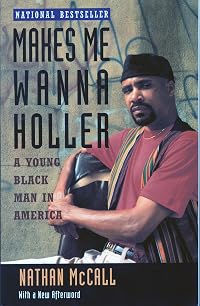
With more than two million copies in print, Manchild in the Promised Land is one of the most remarkable autobiographies of our time - the definitive account of African-American youth in Harlem of the 1940s and 1950s, and a seminal work of modern literature. Published during a literary era marked by the ascendance of Black writers such as Richard Wright, Ralph Ellison, James Baldwin, and Alex Haley, this thinly fictionalized account of Claude Brown's childhood as a hardened, streetwise show more criminal trying to survive the toughest streets of Harlem has been heralded as the definitive account of everyday life for the first generation of African Americans raised in the Northern ghettos of the 1940s and 1950s. When the book was first published in 1965, it was praised for its realistic portrayal of Harlem - the children, young people, hardworking parents; the hustlers, drug dealers, prostitutes, and numbers runners; the police; the violence, sex, and humor. The book continues to resonate generations later, not only because of its fierce and dignified anger, not only because the struggles of urban youth are as deeply felt today as they were in Brown's time, but also because of its inspiring message. Now with an introduction by Nathan McCall, here is the story about the one who "made it" - the boy who kept landing on his feet and grew up to become a man. show lessTags
Recommendations

















Member Reviews
I wish I could give this book a rating of 10 stars. The language in the book is crude, but it serves only to make the story more authentic. Although this book was published five decades ago, it is just as pertinent today as it was then. It is such a precise and honest appraisal of black life in the ghetto, it could have been written about Baltimore, Detroit, Newark or Ferguson, as well as Harlem. It is the quintessential book on racism, crime and growing up poor. The culture of the ghetto is self-defeating. The effort to get out is monumental. The need to provide a way to do so is paramount.
This is a novel, but it is also the autobiographical story of Claude Brown’s life in his own words. Claude Brown was born in 1937, before drugs show more ravaged Harlem. Still there was terrible poverty. Some kids never had food. Some were simply always hungry. Some simply stole to eat. There mothers were not home; mostly they worked in menial jobs for white people who could afford help in the home, and some sold their bodies. Fathers who were employed did pretty much the same menial work, or they were often absent or unemployed or out drinking. The kids did what they had to do in order to get by, and so did the parents. When betrayed, they punished the betrayers, when preyed upon, they tracked down the bullies and fought them to maintain reputations so they would not be bullied further. Pride was power. If you didn’t prove yourself, you were a target.
Claude Brown had little respect for law and order, and he fully expected to be arrested at some time in his life. He defied the rules and the police, and he accepted his fate as unavoidable. He described the environment in the early forties, in Harlem, as he grew up, in an environment in which he revered those who would teach him to be a hustler. By the age of four, someone had already offered to school him in breaking the rules. The offer was made to teach him how to play hooky once he began school. By six he was already a thief. At 13 he was shot and wounded. At 14 he was in reform school. It was in these places that these young criminals were sent, that they honed their skills and learned more and more about shake-downs and breaking the law. They learned that cops would not always arrest them, fearing outcries of racism and brutality. They learned how to push that envelope to the breaking point. These places they were sent were also where many neglected and abused kids wanted to go for a time, to get three meals, a place to sleep that was warm and a roof over their heads. Their friends were all in the same place. It was better than home for some.
By the time he was a teenager, Claude was an accomplished criminal. He took what he wanted, abused others who didn’t’ agree with him and committed crimes with abandon, protecting and preserving his image. He had pride, above all, and it was important to show that to all in the world in which he lived. No matter what rules were in place at home, in school or in the community at large, he could defy them. He followed the rules of his friends, good or bad, because they were his mentors; they had his back. So, from the get-go, Claude, known as Sonny to his friends, was doomed. He had to grow up, when he was still just a child. By the time he neared the end of his teens, he had lived a lifetime. But, also by that time, he discovered that he had to get out of Harlem. He had always stayed away from habit forming drugs, fearing the consequences. That eventually was his saving grace. He did not want to be an addict.
Junkies were overrunning the community. Getting high with friends was a social event. Junkies committed crimes wantonly. The habit controlled them completely, and the habit destroyed them. Hospital beds in Bellevue filled with junkies who had committed crimes and were going mad with the desire for the drugs. Once a junkie got clean, even if he stayed clean which was rare, he still went back to the street and sold drugs turning others on to that awful habit and a life destined to failure. These victims of themselves and of the failure of society, blamed everyone but themselves for their addiction, their criminality and their poverty. The belief that they were continuously being oppressed was ingrained into the culture.
Various groups rose up to exacerbate the situation. Instead of encouraging hard work, they encouraged a belief in a black culture that was superior to the white culture, essentially trying to create a society that would be just as lopsided, but one in which they would be in control. Some groups wanted revolution, but there were also some that wanted to educate the young so they could get out of Harlem, break free from the culture of crime and poverty. That was largely the church effort, not the effort of groups like the Coptics, or the Black Muslims or the Black Panthers. Those groups seemed to want power, not progress. At first, it was believed whatever would create pride in being black was good, and some groups attracted large followings. Some of the men who joined them straightened out their lives, but many slipped back as they lost faith in the preachings of the groups, or saw through their arguments and recognized that they were self-defeating. Some groups taught hate and anger and anti-Semitism. Most taught hatred of the police whom they believed oppressed them. Unfortunately, it appeared from what I read, that violence and brutality to show strength, power and conrol, was respected far more than integrity, intellect and/or honest achievement. Gangs ruled with authority using fear and their own kind of justice to create obedience and unity. No slight could be ignored without retribution in order to maintain one’s reputation so as not to make one a continual target. The children of Harlem were sucked into the criminal culture at an early age by those hanging out in the neighborhood, by brothers and sisters and their friends, by the idea that this was the way of life to aspire to, this was all they would be able to accomplish in life, so why fight it. They became sexually active at a very young age. They “played”. They learned to simply take what they wanted and never look back. This was just the way their life was; you needed to get a reputation that made others fear you or you would be someone else’s prey.
For Claude, “real jail” was not an option. By the time he neared legal age, he knew he was going to have to make a change. He realized that a permanent mark on a police record, which could never be expunged, would condemn him to the ghetto for the rest of his life. He realized that he had to get out of Harlem because he couldn’t get Harlem’s way of life out of himself in any other way. He moved to Greenwich Village where all kinds of people were accepted. He went to work for a Jewish couple. The wife gave him books to read. His options broadened as his view of the world widened. He worked pretty steadily. He went to school and earned his High School diploma at night. Eventually, Claude even wanted to go to College. He passed the exam for Columbia, but he couldn’t afford to go to school. He became involved with a group from a church that promoted higher education and helped qualified students get a higher education. He learned to play the piano. He recognized that he no longer belonged in Harlem. This is not to say that he did not face obstacles or prejudice. He did, but he managed to forge on. He learned to control his temper. He visited different places of worship, trying to find a fit. He saw prejudice on both sides, white on black, black on white, and he was aware of anti-semitism, of the view that the “Goldbergs” were taking advantage of them. Some even vowed to shop only in black owned businesses, so no whites could fleece them any longer. They promoted the beauty of being black, they promoted their superiority, but It was no longer good enough to be equal, they wanted to be better. The problem seemed to be that they didn’t want to have an opportunity to get better, they simply wanted it to be that way. Everyone blamed someone else for the ills in society that they faced. He tried to influence others to escape from Harlem, including his brother, by making changes in their lives. He understood that there were too many funerals and too many young men locked up in prison from Harlem.
This was written in 1965 about the preceding 25 or so years, and, yet, today, some 50 years later, not much has changed. There are still some Claudes, but there are also those who continue to perpetuate that self-fulfilling prophecy of doom, just like his brother Pimp who never got out. As Brown took me on his journey from boyhood to manhood, dreams of crime to college dreams, in a story suffused with some tongue in cheek humor, I wanted to believe that progress does not have to be so elusive. I wanted to feel hope, Yet, the stereotypes still abound; as Claude writes in the book “whites are mean and stingy, if he is more stingy than mean he is a jew, if he is more mean than stingy, he is a cracker!” In a culture that reveres stealing and believes it is fun, that believes rioting is exciting and adventurous, is it any wonder that most wind up with lackluster lives, with little education and few accomplishments? Blame need not be assigned. It is unproductive, but solutions to this monumental failure of society have to be found before chaos reigns. It has to begin at the beginning. In a paraphrase of a common saying, “doctor heal thyself,” I say, people heal "thyselves", and that means all people! show less
This is a novel, but it is also the autobiographical story of Claude Brown’s life in his own words. Claude Brown was born in 1937, before drugs show more ravaged Harlem. Still there was terrible poverty. Some kids never had food. Some were simply always hungry. Some simply stole to eat. There mothers were not home; mostly they worked in menial jobs for white people who could afford help in the home, and some sold their bodies. Fathers who were employed did pretty much the same menial work, or they were often absent or unemployed or out drinking. The kids did what they had to do in order to get by, and so did the parents. When betrayed, they punished the betrayers, when preyed upon, they tracked down the bullies and fought them to maintain reputations so they would not be bullied further. Pride was power. If you didn’t prove yourself, you were a target.
Claude Brown had little respect for law and order, and he fully expected to be arrested at some time in his life. He defied the rules and the police, and he accepted his fate as unavoidable. He described the environment in the early forties, in Harlem, as he grew up, in an environment in which he revered those who would teach him to be a hustler. By the age of four, someone had already offered to school him in breaking the rules. The offer was made to teach him how to play hooky once he began school. By six he was already a thief. At 13 he was shot and wounded. At 14 he was in reform school. It was in these places that these young criminals were sent, that they honed their skills and learned more and more about shake-downs and breaking the law. They learned that cops would not always arrest them, fearing outcries of racism and brutality. They learned how to push that envelope to the breaking point. These places they were sent were also where many neglected and abused kids wanted to go for a time, to get three meals, a place to sleep that was warm and a roof over their heads. Their friends were all in the same place. It was better than home for some.
By the time he was a teenager, Claude was an accomplished criminal. He took what he wanted, abused others who didn’t’ agree with him and committed crimes with abandon, protecting and preserving his image. He had pride, above all, and it was important to show that to all in the world in which he lived. No matter what rules were in place at home, in school or in the community at large, he could defy them. He followed the rules of his friends, good or bad, because they were his mentors; they had his back. So, from the get-go, Claude, known as Sonny to his friends, was doomed. He had to grow up, when he was still just a child. By the time he neared the end of his teens, he had lived a lifetime. But, also by that time, he discovered that he had to get out of Harlem. He had always stayed away from habit forming drugs, fearing the consequences. That eventually was his saving grace. He did not want to be an addict.
Junkies were overrunning the community. Getting high with friends was a social event. Junkies committed crimes wantonly. The habit controlled them completely, and the habit destroyed them. Hospital beds in Bellevue filled with junkies who had committed crimes and were going mad with the desire for the drugs. Once a junkie got clean, even if he stayed clean which was rare, he still went back to the street and sold drugs turning others on to that awful habit and a life destined to failure. These victims of themselves and of the failure of society, blamed everyone but themselves for their addiction, their criminality and their poverty. The belief that they were continuously being oppressed was ingrained into the culture.
Various groups rose up to exacerbate the situation. Instead of encouraging hard work, they encouraged a belief in a black culture that was superior to the white culture, essentially trying to create a society that would be just as lopsided, but one in which they would be in control. Some groups wanted revolution, but there were also some that wanted to educate the young so they could get out of Harlem, break free from the culture of crime and poverty. That was largely the church effort, not the effort of groups like the Coptics, or the Black Muslims or the Black Panthers. Those groups seemed to want power, not progress. At first, it was believed whatever would create pride in being black was good, and some groups attracted large followings. Some of the men who joined them straightened out their lives, but many slipped back as they lost faith in the preachings of the groups, or saw through their arguments and recognized that they were self-defeating. Some groups taught hate and anger and anti-Semitism. Most taught hatred of the police whom they believed oppressed them. Unfortunately, it appeared from what I read, that violence and brutality to show strength, power and conrol, was respected far more than integrity, intellect and/or honest achievement. Gangs ruled with authority using fear and their own kind of justice to create obedience and unity. No slight could be ignored without retribution in order to maintain one’s reputation so as not to make one a continual target. The children of Harlem were sucked into the criminal culture at an early age by those hanging out in the neighborhood, by brothers and sisters and their friends, by the idea that this was the way of life to aspire to, this was all they would be able to accomplish in life, so why fight it. They became sexually active at a very young age. They “played”. They learned to simply take what they wanted and never look back. This was just the way their life was; you needed to get a reputation that made others fear you or you would be someone else’s prey.
For Claude, “real jail” was not an option. By the time he neared legal age, he knew he was going to have to make a change. He realized that a permanent mark on a police record, which could never be expunged, would condemn him to the ghetto for the rest of his life. He realized that he had to get out of Harlem because he couldn’t get Harlem’s way of life out of himself in any other way. He moved to Greenwich Village where all kinds of people were accepted. He went to work for a Jewish couple. The wife gave him books to read. His options broadened as his view of the world widened. He worked pretty steadily. He went to school and earned his High School diploma at night. Eventually, Claude even wanted to go to College. He passed the exam for Columbia, but he couldn’t afford to go to school. He became involved with a group from a church that promoted higher education and helped qualified students get a higher education. He learned to play the piano. He recognized that he no longer belonged in Harlem. This is not to say that he did not face obstacles or prejudice. He did, but he managed to forge on. He learned to control his temper. He visited different places of worship, trying to find a fit. He saw prejudice on both sides, white on black, black on white, and he was aware of anti-semitism, of the view that the “Goldbergs” were taking advantage of them. Some even vowed to shop only in black owned businesses, so no whites could fleece them any longer. They promoted the beauty of being black, they promoted their superiority, but It was no longer good enough to be equal, they wanted to be better. The problem seemed to be that they didn’t want to have an opportunity to get better, they simply wanted it to be that way. Everyone blamed someone else for the ills in society that they faced. He tried to influence others to escape from Harlem, including his brother, by making changes in their lives. He understood that there were too many funerals and too many young men locked up in prison from Harlem.
This was written in 1965 about the preceding 25 or so years, and, yet, today, some 50 years later, not much has changed. There are still some Claudes, but there are also those who continue to perpetuate that self-fulfilling prophecy of doom, just like his brother Pimp who never got out. As Brown took me on his journey from boyhood to manhood, dreams of crime to college dreams, in a story suffused with some tongue in cheek humor, I wanted to believe that progress does not have to be so elusive. I wanted to feel hope, Yet, the stereotypes still abound; as Claude writes in the book “whites are mean and stingy, if he is more stingy than mean he is a jew, if he is more mean than stingy, he is a cracker!” In a culture that reveres stealing and believes it is fun, that believes rioting is exciting and adventurous, is it any wonder that most wind up with lackluster lives, with little education and few accomplishments? Blame need not be assigned. It is unproductive, but solutions to this monumental failure of society have to be found before chaos reigns. It has to begin at the beginning. In a paraphrase of a common saying, “doctor heal thyself,” I say, people heal "thyselves", and that means all people! show less
I've read this incredible book three (3) Manchild in the Promised Land is undoubtedly one of the best books I have ever read, period. I love many authors, but few have touched me the way Claude Brown has. His work sprung during the times of James Baldwin; I read this book first when I was only 14-years-old and was very impressed by what real life, outside the home was going to be about. I read it when I was young and impressionable, when the world was fighting for Civil Rights; when I could appreciate a man telling a story about his life, growing up mostly in a reform school; that was more pleasing to a young boy than that thing we call "home." On the streets life became so real when Claude met so many crooks, thieves and pimps that show more changed his life. In this book he introduced me to a homosexual for the first time; because at fourteen, I was discovering this fact of life through his words with him; through inquisitive eyes. His description of this person was brand new to me and invigorating to me. I was transfixed that a man could want to be a woman when we needed men in those days in the Black community so badly. When Claude saw his brother, he worked hard to keep off the street having Heroin for the first time, this was cataclysmic to me. I was transfixed and I was hopeful that his brother would not end up on drugs or in reform school. Later, when the writer is describing seeing his brother nodding on that log, I recalled how hard I cried for his brother. It is the singular one reason I never used drugs in my life. So, that's what I mean about impressionable. What I took away from this groundbreaking novel about one boy's life, was how sad a fact it is when a reform school is more familiar/preferrable to a boy than his own sad, depressed home. Claude knew if he got in trouble on the streets, he'd be tossed back into the reform school where State authorities became more of a family/friend to him than his own lean family. This book changed my life in so many ways. At 66 I am mindful of how our words as they are written, have the incredible power and influence of changing lives, even before life truly begins. show less
An autobiographical account of the life of a young black man growing up in Harlem in the 1940s, the book chronicles his shockingly early introduction into a crime-filled life (by the age of nine (!) he was a seasoned thief and gang member), through his stints in institutions such as Eleanor Roosevelt's Wiltwyck, and his amazing efforts to leave behind that life to make a better one for himself. I can't say that I liked it - this isn't a book that you enjoy reading. It's hard and harsh and bleak. But it's also incredibly well-written and inspiring, and still an important read today; I learned so much about what life was like for kids growing up in Harlem at that time, a world that, as a white farm-raised girl from the Midwest in the show more 80's, I knew nothing about. So I'm grateful for this narrative and humbled by Brown's ability to rise up out of his beginnings and become the impressive scholar and writer he was. Be warned, though: Brown pulls no punches in his no-nonsense way of detailing scenes of violence, drug use, and even gang rape. (I nearly put it down several times, but decided to push on because I thought it overall an important story to finish.) show less
This was a unique read for me. It's been described as epic, and it is very much an epic tale of youth in black Harlem. The earliest years of the author in this autobiography I found quite reminiscent of Mark Twain's The Adventures of Tom Sawyer. Twain intended humor; I wasn't sure whether or not the author did, but the candid, direct commentary on life was very refreshing, despite some unsavory situations. The author continues his journey well into early adulthood, showing amazing insight and candor into general life changes as a youth, life as a black person in Big City America, and most especially as his own individual self making choices about if, when, and how to fit in with a group or strike out on his own. Even though this was set show more mostly around the 1950s and has some dated phrases, it's stunning how much it applies to present day intercity life. It makes the reader want to rethink very presumption that he or she may have made about black youth in our urban communities. show less
Revisiting something I read in Junior High, I think, perhaps high school. At first, I thought, yeah, yeah I have read many like this but it really does hold up well and offers insight and humor. The last page about living in and returning to Harlem as home but not in the sense of a house, but rather, the streets as home was very personally familiar. Well done.
"Manchild in the Promised Land" was an easy book to read, based on the writing, but a difficult book to read based on the content. Claude Brown describes life of a young black man in Harlem in the 1950's. Harlem culture for a young black man in that era seemed devoid of hope, or perhaps better described as one of failure of recognizition anything more than a future of petty crime, drugs, frequent arrests, and time in jail. There appeared to be no recognition of a life outside of Harlem, of the benefits of an education, of a respect for others, for family, or social rules. Playing hooky from school, stealing, fighting, and striving for nothing else but being seen as street tough and street smart was the way life was portrayed. Being in show more and out of youth facilities, reform schools, and later working up through the various prison systems in NY was the simple reality of life in Claude Brown's Harlem.
How Claude Brown managed to escape the neighborhood, find a job, find his way to night school to earn his high school diploma, learn to play the piano, etc., seems miraculous to me. It was an era of lost lives and grim futures. Those few that managed to escape should be applauded, but for most, it seemed that escape wasn't ever an option. While not a recent book, it's still a worthwhile read, both for inner city youth, as well as for people raised in relative wealth who have trouble understanding the problems of life in the ghetto. show less
How Claude Brown managed to escape the neighborhood, find a job, find his way to night school to earn his high school diploma, learn to play the piano, etc., seems miraculous to me. It was an era of lost lives and grim futures. Those few that managed to escape should be applauded, but for most, it seemed that escape wasn't ever an option. While not a recent book, it's still a worthwhile read, both for inner city youth, as well as for people raised in relative wealth who have trouble understanding the problems of life in the ghetto. show less
This 1965 autobiographical Harlem memoir from Claude Brown chronicles the author's coming-of-age story amidst poverty, street drugs, and violence in Harlem during the 1940s and 1950s. Published at the height of the civil rights movement, the book reached far beyond the traditional literary world, drawing new attention to the lives of those living in urban environments. It has sold more than millions copies and has appeared on banned book lists for offensive language and violence but is celebrated by critics for its realism. The infamy drew me to it and I finally read it. The candid depictions of violence and drug usage is arresting. The story of hope realized is in three clear acts and would make a great movie - I wonder what that show more hasn't happened: Act I: young Claude "Sonny" Brown takes to street life and institutions (Warwick, Wiltwyck); Act II: Our hero seeks to overcome the street life through Black Muslim faith, college, books, new associations, etc; Act III: Our hero having saved himself loses others and cannot keep the dangers of the junkie life from affecting his family. show less
Members
- Recently Added By
Lists

1960s
281 works; 16 members

Schomburg Centennial Reading List
100 works; 4 members
Author Information

2+ Works 1,240 Members
Awards and Honors
Awards
Distinctions
Work Relationships
Has as a student's study guide
Common Knowledge
- Original publication date
- 1965
- Important places
- New York, New York, USA; Harlem, New York, New York, USA
- Dedication
- To the late Eleanor Roosevelt, who founded the Wiltwyck School for Boys.
And to the Wiltwyck School, which is still finding Claude Browns. - First words
- "Run!"
- Last words
- (Click to show. Warning: May contain spoilers.)But I knew I had.
- Blurbers
- Mailer, Norman; Baldwin, James; Schaap, Dick; Wolfe, Tom; Linney, Romulus; Hentoff, Nat (show all 9); Stanley, Donald; Poling, Daniel A.; Mathes, William
Classifications
- Genre
- Biography & Memoir
- DDC/MDS
- 305.896073092 — Society, government, & culture Social sciences, sociology & anthropology Social group - Age, Gender, Ethnicity Ethnic and national groups Other ethnic and national groups Africans and people of African descent; Blacks of African origin standard subdivisions / located in North America African Americans {United States Blacks}
- LCC
- E185.97 .B86 .A3 — History of the United States United States Elements in the population Afro-Americans Biography. Genealogy
- BISAC
Statistics
- Members
- 1,201
- Popularity
- 20,733
- Reviews
- 17
- Rating
- (4.12)
- Languages
- Danish, English, Japanese, Swedish
- Media
- Paper, Audiobook, Ebook
- ISBNs
- 27
- ASINs
- 32