On This Page
Description
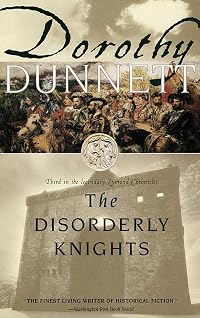
Disorderly Knights takes place in 1551. Francis Crawford of Lymond is dispatched to embattled Malta, to assist the Knights of Hospitallers in defending the island against the Turks. But shortly the swordsman and scholar discovers that the greatest threat to the Knights lies within their own ranks, where various factions vie secretly for master.Tags
Recommendations
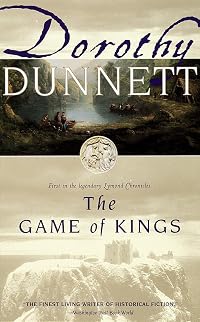


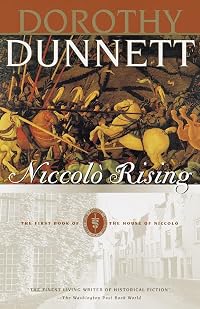





Member Reviews
Oh, I am so happy. I am heartbroken. I’ve just run an exhausting mixture of a sprint and a marathon and collapsed after the finish line, gasping.
Dunnett is shatteringly ruthless in this book. Beloved characters die in horrible ways. The knives are invisible and they pierce you slowly, until Dunnett starts to twist. Things are not what they seem, this is not the story you think you are reading! There are clues, of course, but you gallop past them – because of the plot, because of some of the best action I’ve ever encountered on a page, because of masks so skilfully worn.
As for the characters…:
There is a maturity, a sense of responsibility, an urgency to Lymond that was missing from the first two books. I’m full of admiration, show more both for the character arc and the author’s skill in creating it. This is not a game any more. (Richard to Lymond: “Not for the first time, you frighten me silly.”)
I loved the chemistry between Lymond and Gabriel and Jerott. Yes, I want a slashfic, is that really too much to ask? Obviously (for those in the know), I mean Gabriel from the first half of the book, this Gabriel:
“I wish… you did not need to mock,” he said, and rested his fingertips, briefly, as once before, on Lymond’s arm. “For of all men, my God could love you; and I, too.”
Oonagh, whose storyline I hated in the previous book, managed to make me root for her and break my heart.
“Could she not teach him other comforts, though? The comfort of planning, of action; the great panacea of success. On this stricken island there was no one who knew what a leader should be like… except Oonagh O’Dwyer.”
Joleta… So much potential, so much talent that was wasted and twisted. I can’t help feeling a lot of sympathy and sorrow.It’s interesting how Dunnett crams all this convent-bred innocence down the reader’s throat – it should give you a clue, but it doesn’t.
Sibylla, you are such a joy, in so many ways, always. “The Church,” said Sibylla definitely, “should excommunicate girls who do not replace lids on sticky jars and wash their hair every day with the best towels.”
Somervilles are an awesome family. I hated Philippa the brat, and then she turned into a seed of something magnificent (I’ll see what the rest of the books bring). Well, maybe it is not that surprising, with such a mother. “… and being Kate, she had stayed, gnawing at her nails, where she was, and had left Philippa to do her growing-up without interference.”
I really wanted an epic sword fight between certain characters – as the book was drawing to a close, I grew worried. And then it happened! It *was* epic (too short, though).
The ending makes you want to grab the next book. I won’t, though, not right now. I need to breathe and come to my senses. show less
Dunnett is shatteringly ruthless in this book. Beloved characters die in horrible ways. The knives are invisible and they pierce you slowly, until Dunnett starts to twist. Things are not what they seem, this is not the story you think you are reading! There are clues, of course, but you gallop past them – because of the plot, because of some of the best action I’ve ever encountered on a page, because of masks so skilfully worn.
As for the characters…:
There is a maturity, a sense of responsibility, an urgency to Lymond that was missing from the first two books. I’m full of admiration, show more both for the character arc and the author’s skill in creating it. This is not a game any more. (Richard to Lymond: “Not for the first time, you frighten me silly.”)
I loved the chemistry between Lymond and Gabriel and Jerott. Yes, I want a slashfic, is that really too much to ask? Obviously (for those in the know), I mean Gabriel from the first half of the book, this Gabriel:
“I wish… you did not need to mock,” he said, and rested his fingertips, briefly, as once before, on Lymond’s arm. “For of all men, my God could love you; and I, too.”
Oonagh, whose storyline I hated in the previous book, managed to make me root for her and break my heart.
“Could she not teach him other comforts, though? The comfort of planning, of action; the great panacea of success. On this stricken island there was no one who knew what a leader should be like… except Oonagh O’Dwyer.”
Joleta… So much potential, so much talent that was wasted and twisted. I can’t help feeling a lot of sympathy and sorrow.
Sibylla, you are such a joy, in so many ways, always. “The Church,” said Sibylla definitely, “should excommunicate girls who do not replace lids on sticky jars and wash their hair every day with the best towels.”
Somervilles are an awesome family. I hated Philippa the brat, and then she turned into a seed of something magnificent (I’ll see what the rest of the books bring). Well, maybe it is not that surprising, with such a mother. “… and being Kate, she had stayed, gnawing at her nails, where she was, and had left Philippa to do her growing-up without interference.”
I really wanted an epic sword fight between certain characters – as the book was drawing to a close, I grew worried. And then it happened! It *was* epic (too short, though).
The ending makes you want to grab the next book. I won’t, though, not right now. I need to breathe and come to my senses. show less
I listen to audiobooks as I’m doing other things, like driving or housework, but with this book there were several occasions when, having finished my tasks, I just sat in an armchair and kept listening, because I was so engrossed! This story is intense and compelling, and… wow.
In the summer of 1551, Francis Crawford of Lymond is asked to come to Malta, where the knights in the Order of St John face a Turkish attack; later, in Scotland, Lymond is again involved with some of the knights as Lymond sets about establishing a company of mercenaries.
I found the second half especially captivating, because for so many of the people Lymond knows in Scotland (and England), the reader is also acquainted with their families, friends and show more neighbours. This means I’m much more invested in their wellbeing and survival. In particular, I like seeing Philippa Somerville -- who was only ten during The Game of Kings -- take on a more active role in the story.
I knew to expect Dunnett’s skill with twists and with tying a loosely-connected string of events into a tightly cohesive whole, but I was nevertheless impressed. Impressed and also left reeling -- because some developments are tragic and some revelations are devastating and just from the aftermath of all that tension.
As a story, this is arguably darker than I usually prefer, but not, I found, darker than I could bear. I appreciate that certain horrifying or otherwise distasteful incidents occur largely off-screen, and that Dunnett is able to still convey their impact and make it clear that these things are not condoned.
In case it needs saying, there is a lot in this book which I enjoyed. There are scenes which are not (or not just) tense or insightful, but very entertaining. The clever plotting, from both author and certain characters, is satisfying, and the nuanced portrayal of characters is fascinating -- there’s a noteworthy amount of perspicacity from both author and some of her characters. And even if the actions of a few cast long shadows, many of the characters are just plain likeable.
She said baldly, “You’ve left St Mary’s to itself for three days. If you daren’t leave it any longer, after all the time you’ve devoted to it, then you must know you’ve failed.”
Lymond said softly, “That is the only thing you may not say to me... Kate, superb Kate: I will not be mothered.”
“Mothered!” Kate’s small, undistinguished face was black with annoyance. “I would sooner mother a vampire. I am merely trying to point out what your browbeaten theorists at St Mary’s ought surely to have mentioned in passing. Health is a weapon of war. Unless you obtain adequate rest, first your judgement will go, and then every other qualification you may have to command, and either way, the forces of light will have a field-day in the end.” show less
In the summer of 1551, Francis Crawford of Lymond is asked to come to Malta, where the knights in the Order of St John face a Turkish attack; later, in Scotland, Lymond is again involved with some of the knights as Lymond sets about establishing a company of mercenaries.
I found the second half especially captivating, because for so many of the people Lymond knows in Scotland (and England), the reader is also acquainted with their families, friends and show more neighbours. This means I’m much more invested in their wellbeing and survival. In particular, I like seeing Philippa Somerville -- who was only ten during The Game of Kings -- take on a more active role in the story.
I knew to expect Dunnett’s skill with twists and with tying a loosely-connected string of events into a tightly cohesive whole, but I was nevertheless impressed. Impressed and also left reeling -- because some developments are tragic and some revelations are devastating and just from the aftermath of all that tension.
As a story, this is arguably darker than I usually prefer, but not, I found, darker than I could bear. I appreciate that certain horrifying or otherwise distasteful incidents occur largely off-screen, and that Dunnett is able to still convey their impact and make it clear that these things are not condoned.
In case it needs saying, there is a lot in this book which I enjoyed. There are scenes which are not (or not just) tense or insightful, but very entertaining. The clever plotting, from both author and certain characters, is satisfying, and the nuanced portrayal of characters is fascinating -- there’s a noteworthy amount of perspicacity from both author and some of her characters. And even if the actions of a few cast long shadows, many of the characters are just plain likeable.
She said baldly, “You’ve left St Mary’s to itself for three days. If you daren’t leave it any longer, after all the time you’ve devoted to it, then you must know you’ve failed.”
Lymond said softly, “That is the only thing you may not say to me... Kate, superb Kate: I will not be mothered.”
“Mothered!” Kate’s small, undistinguished face was black with annoyance. “I would sooner mother a vampire. I am merely trying to point out what your browbeaten theorists at St Mary’s ought surely to have mentioned in passing. Health is a weapon of war. Unless you obtain adequate rest, first your judgement will go, and then every other qualification you may have to command, and either way, the forces of light will have a field-day in the end.” show less
The Lymond Chronicles demand a fair amount of effort from the reader, as the huge cast and byzantine political manouverings can be a lot to keep up with. Yet the rewards are considerable. Dunnett provides the most audacious action set- pieces (including the best duel I’ve ever read in [b:The Game of Kings|112077|The Game of Kings (The Lymond Chronicles, #1)|Dorothy Dunnett|https://images.gr-assets.com/books/1342486295s/112077.jpg|2219130]), breathtakingly exciting plot twists, as well as extremely witty dialogue and a brilliant sense of time and place. This third novel, though, took me some while to get into and had what I consider to be significant flaws. I found Lymond more trying than usual. His string of oblique and sarcastic show more statements, coupled with near omniscience and omnipotence, were similar to the previous two chronicles. In ‘The Disorderly Knights’, however, he is more inclined to punch teenage girls, which I object to in the strongest possible terms. This made it harder than ever to swallow all the commentary on his apparent charisma and success with women. Every character other than his mother and brother gives the clear impression of being in love with him, while periodically also wanting to murder him. Such inhuman charm suggests he’s some kind of fae. My favourite assessment of him in the whole book:
I must also note that Dunnett’s sex scenes invariably contain hilariously purple prose, for example:
After a slow start, I did get carried away by the plot, in which Lymond decides he wants his own private army. The twist in the last third of the book is excellently done. While the action was as thrilling and impressive as ever, I can only give the novel three stars overall because I found the role of Joleta so thoroughly distasteful.This beautiful sixteen year old girl, with her ‘apricot’ coloured hair is at various times shown as an innocent child, a ‘bitch’ (several people use the epithet), a manipulative seductress, a nymphomaniac, a sadist, a victim of incestuous child abuse, and a murdered corpse. At no point does she seem like a believable person and everyone except Jerott treats her appallingly. Lymond is rude and violent, then sleeps with her under incredibly dubious circumstances. All the female characters find her tedious and spoiled, without apparently wondering why she’s like this. It’s mostly left to the reader’s imagination what Gabriel did to her in the past, but it was clearly horrific, and in the end he murders both her and her (their?!) unborn child. It surprises me to find a female author treating a female character in this fashion. I refuse to believe that the plot required Joleta to suffer as she did, without ever being presented as sympathetic.
On the other hand, I thought her brother Gabriel was handled much better.It was very satisfying when he turned out to be the true villain of the piece, although the depths of his villainy were unnecessarily hyperbolic. Did he need to be Joleta’s abuser? I think not. Overall, though, he worked very well as a dark mirror of Lymond. Both of them are charismatic and machiavellian blond men who seem too good to be true. In Gabriel’s case, his facade of piety apparently conceals absolute evil. In Lymond’s case, he can’t be bothered with a mask of politeness and would rather irritate everyone with his insouciant competence. The climactic fight between Gabriel and Lymond in St Giles’ Church is a delightful slice of pure melodrama, particularly satisfying as I regularly walk past the place. Other especially dramatic moments include Will Scott’s death (which was genuinely moving), the whipping scene, and the powder magazine fire. Dunnett is very good at fires, actually.
It might be a while before I read the next in the Lymond Chronicles as they are rich, intermittently indigestible fare. While Dunnett’s plots and action scenes are exemplary, the romance elements range from the absurd to the truly horrifying. Lymond himself can try your patience with his shenanigans; I have every sympathy for his long-suffering and sardonic mother Sybilla. show less
"He’s a tongue, Mr Crawford has, hasn’t he?” said Chester Herald in a pleased voice. “We found that out in France. A proper lad. And what he got up to!”
“You should see what he gets up to here,” said Jerott, bored.
I must also note that Dunnett’s sex scenes invariably contain hilariously purple prose, for example:
When, late at night, the shadow darkened the starlight behind her silent shrouds, and the door, whispering, admitted a deeper shadow, soft-footed and deft, it found her already perfect as a flower brought to its full-breathing height.
After a slow start, I did get carried away by the plot, in which Lymond decides he wants his own private army. The twist in the last third of the book is excellently done. While the action was as thrilling and impressive as ever, I can only give the novel three stars overall because I found the role of Joleta so thoroughly distasteful.
On the other hand, I thought her brother Gabriel was handled much better.
It might be a while before I read the next in the Lymond Chronicles as they are rich, intermittently indigestible fare. While Dunnett’s plots and action scenes are exemplary, the romance elements range from the absurd to the truly horrifying. Lymond himself can try your patience with his shenanigans; I have every sympathy for his long-suffering and sardonic mother Sybilla. show less
Oh, Lymond, Lymond, how I do want to love thee. And every book you almost, almost talk me out of it. Every book you look guilty as hell of whatever crimes most have all of Scotland/France/Malta/Wherever up in arms, and every book you turn out to be, well, I'm trying not to spoil anything here, but there are three more books in this series, so certain truths are probably pretty evident, even to the kinds of people you're so very, very good at fooling...
The Disorderly Knights, the third in the great Dorothy Dunnet's great Lymond Chronicles, broadens the geographic, political and moral scope of our favorite Renaissance bad boy considerably. The Knights of the title are none other than the famous Hospitallers, aka the Knights of Malta -- show more though an argument could be made for that title also applying to a mercenary company our man forms when he finally gets back to Scotland about halfway through the novel -- and they're in a bit of a pickle, one that the King of France seems to think Lymond might be able to help them out of, or at least bear honest witness to. The King of France being something of a Lymond fanboy after Lymond's exploits last novel in defense of the six-year-old Mary, Queen of Scots, who is engaged to marry the King's son. Ah, dynastic politics!
The problem the Hospitallers face is the same one they were formed to face, namely the Turk, whom they've helped to protect Europe and bits of North Africa from for a good 400 years. But as of the late 16th century, though, well, the Knights have gone a bit to seed. The Grand Master is a bit of a jerk, and a Spanish jerk at that, and the Holy Roman Emperor being Spanish as well, unseating the GM and putting an effective leader in charge is tricky, especially when the good candidates for that job are all either French or Scottish...
Really there's only one Scottish candidate, though, a man in whom our Lymond has definitely met his match. Sir Graham Reid Mallett, nicknamed Gabriel, is everything Lymond is but turned up a notch: a great big gorgeous blue-eyed blonde who is also a genius, a brilliant leader of men, a great strategist, fighter and tactician, but also a holy man, because like the more famous Templars, the Hospitallers are all warrior monks, in the service of God and the Roman Catholic Church, priests with swords. When he and Lymond meet up, the whole world seems fixed to change. Gabriel becomes obsessed with winning Lymond over for Jeebus and won't take no for an answer; Lymond, of course, is loyal only to Scotland and his family and finds religion profoundly unnecessary, if not actually detrimental to a well-lived life. But like I said, Gabriel won't take no for an answer, and soon insinuates himself into every possible aspect of Lymond's life as the duo and a small contingent of Hospitallers first fail to defend various tiny Mediterranean islands from the Turkish onslaught and then, for an encore, lose the famous stronghold city of Tripoli to the Turks. Oops.
Covered in glory like that, what can they do but return to Scotland, where Gabriel has stashed his drop-dead gorgeous sister, Joleta, whom he has already intimated is his ace in the hole (umm) as far as winning Lymond's soul for Christ is concerned, because of course Lymond will convert for the privilege of maybe getting to schtup her. Really, kind of a Lymond thing to hope to do, as Lymond has, more than once, proven that he's not above seducing the odd strategically important round-heeled woman to achieve his goals. Did I mention Lymond has met his match here? Except that now we find there are two of them!
Of course by about two thirds of the way through the novel, the reader discovers she's misread pretty much everything, because the only person better at deception and red herringry than Lymond is his creator, Ms. Dunnett. But when it's artistes like these, it's a pleasure so to be fooled.
Meanwhile, there is everything one would turn to some good historical fiction like this in order to enjoy: more amazing sword fights, sieges, battles of all sorts, border reivers and the Hot Trodd law (and lots of other weird Renaissance English/Scottish border law), sexual politics and oh, about the sexual politics...
I've not yet mentioned the women of The Disorderly Knights, apart from the sex bomb Joleta, who is really the least interesting figure in the book. Most of my old favorites are back and getting good page time, with Lymond's mother Sybilla stealing scenes as usual, but also of note are two others, who come to the fore in this novel after kind of making me yawn in The Game of Kings and Queens Play: Oonagh O'Dwyer -- former mistress of a would-be king of Ireland, who spent most of Queens Play trying to abet her man in his plots to conspire with the French and Scots to throw the English out of Ireland (we all know how well that worked), only to have an encounter with Lymond that looks to turn out to be way more important than it seemed at the time -- and Philippa Somerville, twelve or thirteen-year-old daughter of an English lord who was friendly with Lymond back in the day but who herself hates Lymond like poison and spends a lot of The Disorderly Knights just entertainingly gnashing her teeth at him until circumstances and her own sense of fair play cause her to woman up and kick about 20 kinds of ass all over northern England and southern Scotland and become my new favorite Dorothy Dunnett lady.*
So I find myself so eager to tear into the next book, Pawn in Frankincense, that I don't see any reason not to, even though lots of other good stuff beckons from my to-be-read pile. I was warned that this might happen.
*Though her presence reminds me that my other favorite bratty Dunnett tween, Lady Agnes, has disappeared completely from this narrative, and that makes me a little sad. Agnes does not hold a candle to Philippa in the awesomeness department, but she was terribly amusing in The Game of Kings and I miss her a lot. show less
The Disorderly Knights, the third in the great Dorothy Dunnet's great Lymond Chronicles, broadens the geographic, political and moral scope of our favorite Renaissance bad boy considerably. The Knights of the title are none other than the famous Hospitallers, aka the Knights of Malta -- show more though an argument could be made for that title also applying to a mercenary company our man forms when he finally gets back to Scotland about halfway through the novel -- and they're in a bit of a pickle, one that the King of France seems to think Lymond might be able to help them out of, or at least bear honest witness to. The King of France being something of a Lymond fanboy after Lymond's exploits last novel in defense of the six-year-old Mary, Queen of Scots, who is engaged to marry the King's son. Ah, dynastic politics!
The problem the Hospitallers face is the same one they were formed to face, namely the Turk, whom they've helped to protect Europe and bits of North Africa from for a good 400 years. But as of the late 16th century, though, well, the Knights have gone a bit to seed. The Grand Master is a bit of a jerk, and a Spanish jerk at that, and the Holy Roman Emperor being Spanish as well, unseating the GM and putting an effective leader in charge is tricky, especially when the good candidates for that job are all either French or Scottish...
Really there's only one Scottish candidate, though, a man in whom our Lymond has definitely met his match. Sir Graham Reid Mallett, nicknamed Gabriel, is everything Lymond is but turned up a notch: a great big gorgeous blue-eyed blonde who is also a genius, a brilliant leader of men, a great strategist, fighter and tactician, but also a holy man, because like the more famous Templars, the Hospitallers are all warrior monks, in the service of God and the Roman Catholic Church, priests with swords. When he and Lymond meet up, the whole world seems fixed to change. Gabriel becomes obsessed with winning Lymond over for Jeebus and won't take no for an answer; Lymond, of course, is loyal only to Scotland and his family and finds religion profoundly unnecessary, if not actually detrimental to a well-lived life. But like I said, Gabriel won't take no for an answer, and soon insinuates himself into every possible aspect of Lymond's life as the duo and a small contingent of Hospitallers first fail to defend various tiny Mediterranean islands from the Turkish onslaught and then, for an encore, lose the famous stronghold city of Tripoli to the Turks. Oops.
Covered in glory like that, what can they do but return to Scotland, where Gabriel has stashed his drop-dead gorgeous sister, Joleta, whom he has already intimated is his ace in the hole (umm) as far as winning Lymond's soul for Christ is concerned, because of course Lymond will convert for the privilege of maybe getting to schtup her. Really, kind of a Lymond thing to hope to do, as Lymond has, more than once, proven that he's not above seducing the odd strategically important round-heeled woman to achieve his goals. Did I mention Lymond has met his match here? Except that now we find there are two of them!
Of course by about two thirds of the way through the novel, the reader discovers she's misread pretty much everything, because the only person better at deception and red herringry than Lymond is his creator, Ms. Dunnett. But when it's artistes like these, it's a pleasure so to be fooled.
Meanwhile, there is everything one would turn to some good historical fiction like this in order to enjoy: more amazing sword fights, sieges, battles of all sorts, border reivers and the Hot Trodd law (and lots of other weird Renaissance English/Scottish border law), sexual politics and oh, about the sexual politics...
I've not yet mentioned the women of The Disorderly Knights, apart from the sex bomb Joleta, who is really the least interesting figure in the book. Most of my old favorites are back and getting good page time, with Lymond's mother Sybilla stealing scenes as usual, but also of note are two others, who come to the fore in this novel after kind of making me yawn in The Game of Kings and Queens Play: Oonagh O'Dwyer -- former mistress of a would-be king of Ireland, who spent most of Queens Play trying to abet her man in his plots to conspire with the French and Scots to throw the English out of Ireland (we all know how well that worked), only to have an encounter with Lymond that looks to turn out to be way more important than it seemed at the time -- and Philippa Somerville, twelve or thirteen-year-old daughter of an English lord who was friendly with Lymond back in the day but who herself hates Lymond like poison and spends a lot of The Disorderly Knights just entertainingly gnashing her teeth at him until circumstances and her own sense of fair play cause her to woman up and kick about 20 kinds of ass all over northern England and southern Scotland and become my new favorite Dorothy Dunnett lady.*
So I find myself so eager to tear into the next book, Pawn in Frankincense, that I don't see any reason not to, even though lots of other good stuff beckons from my to-be-read pile. I was warned that this might happen.
*Though her presence reminds me that my other favorite bratty Dunnett tween, Lady Agnes, has disappeared completely from this narrative, and that makes me a little sad. Agnes does not hold a candle to Philippa in the awesomeness department, but she was terribly amusing in The Game of Kings and I miss her a lot. show less
The first half had me glued to the pages like very few books ever do. The second half had me checking my watch once in a while wondering when the big news would break that Graham and Joleta sucked. I also hope Philippa will end up a better love interest than those before her, because I didn’t like the storylines around Oonagh, Joleta and Katelina. (Gelis is on thin ice)
I think I now also understand why so many readers who read this first dislike the house of Niccolo. A 12 year old who hates the main character but eventually will become his wife? Check. A cliffhanger at exactly halfway that results in chasing a child? Check. Being injured and/or on trial but somehow having all the cards to play? Double check. It’s a lot of repetition show more that definitely feels unoriginal the second time around. I can’t hold it against this book since this one was the blueprint, but it did lower my enthusiasm a little.
I think I now also understand why I the house of Niccolò 1-4 and the Malta section were more to my taste than Niccolo 5-8, Game of kings and Queen’s play: They span more places and travels, with their own languages and customs and people. I enjoyed life on the road with the merchants and sailors more than the castles, because it showed glimpses of what life was like back then, including dirt roads and handwritten ledgers.
I also ejoyed the variety in characters more. With Lymond, he is the star of the series and everyone else comes second, while House of Niccolo was an ensemble cast of memorable people. (and I guess Nicholas was there?) They each had their own skills and personality and were more often than not lucky and/or educated commoners instead of nobles with a heritage. Again, I felt like they represented daily life and its proceedings better than Lymond's secondary characters, who are mostly tied to titles, estates and political power.
So I look forward to learning more about Jerrott and Dragut’s shared history with Lymond, his pirate friend and Salablanca. show less
I think I now also understand why so many readers who read this first dislike the house of Niccolo. A 12 year old who hates the main character but eventually will become his wife? Check. A cliffhanger at exactly halfway that results in chasing a child? Check. Being injured and/or on trial but somehow having all the cards to play? Double check. It’s a lot of repetition show more that definitely feels unoriginal the second time around. I can’t hold it against this book since this one was the blueprint, but it did lower my enthusiasm a little.
I think I now also understand why I the house of Niccolò 1-4 and the Malta section were more to my taste than Niccolo 5-8, Game of kings and Queen’s play: They span more places and travels, with their own languages and customs and people. I enjoyed life on the road with the merchants and sailors more than the castles, because it showed glimpses of what life was like back then, including dirt roads and handwritten ledgers.
I also ejoyed the variety in characters more. With Lymond, he is the star of the series and everyone else comes second, while House of Niccolo was an ensemble cast of memorable people. (and I guess Nicholas was there?) They each had their own skills and personality and were more often than not lucky and/or educated commoners instead of nobles with a heritage. Again, I felt like they represented daily life and its proceedings better than Lymond's secondary characters, who are mostly tied to titles, estates and political power.
So I look forward to learning more about Jerrott and Dragut’s shared history with Lymond, his pirate friend and Salablanca. show less
I loved the first two books of the Lymond Chronicles, but when I began to read this book I couldn’t help thinking that those books were laying foundations and that this book would be where she really hit her stride.
It was wonderful to be back in Scotland with familiar characters from the first book who I had rather missed in the second. The opening sequence moved from Will Scott’s wedding to a skirmish with English border raiders and then back to the wedding party again. It and it was vibrant, it was colourful and it was a joy to read.
That set the scene perfectly.
In the first part of the book, Lymond was drawn into the cause of the Knights of Malta, as they struggled to defend their island home from the Turks. There was intrigue, show more because it was clear that there were more than the stated reasons the invitation extended to Lymond, and for his accepting that invitation. This early part of the story set in Malta and Tripoli, evoked those places wonderfully well. It was perfectly executed, it was immaculately written; there were some wonderful moments, there were some significant plot developments; and yet it was only setting the stage for events that would unfold back in Scotland.
Lymond was charged with creating a new military force for Scotland, its objective to break the cycle of clan warfare so that all of Scotland’s forces could be set against the English. Among the company is a group of refugee Knights of Malta, led by Sir Graham Malett, known as Gabriel, who is set on creating a religious force and making Lymond part of that force.
That’s as much as I can say about specifics of the plot; because there is such clever and effective sleight of hand, because my understanding of events shifted, and because if you have read this book you will know and if you have you should read and you shouldn’t know too much before you do.
The depth and the complexity of the characterisation is extraordinary; and a cast populated by fictional characters and historical figures lived and breathed. I have come to love many of them – Janet Beaton and Kate Somerville are particular favourites – and the death of one early in the story made me realise how very real this world and the people who moved through it have become to me.
There would be other deaths and some of them broke my heart. Most were dictated by the real history that is missed so effectively with fiction, and others I understood served the unfolding plot.
I reacted more emotionally to this book than others; and fortunately there were scenes to inspire laughter, anger and joy as well as grief.
Two new characters – a man and a woman – became central to the story. They were both quite unlike anyone else in the story, they were psychologically complicated and interesting, and they brought much colour and drama.
The success or failure of this book though, rested firmly on the shoulders of its central character. I am still drawn right in with his charisma, his manifold talents, and the evolution of his character and his story.
There were times when he seemed to have matured, but there were times when he seemed childishly, foolishly reckless. I would come to understand his reasons, that there were times when he had to position himself and play a part, but there was something there that came from character rather than pure necessity.
Certain things within the Crawford family that I had observed before were emphasised in this book, and I am very curious to find out more.
There were not as many set pieces as I expected in this book, but I didn’t miss them because there was so much that was rooted in character and history, and because I saw that much of what had happened before was building the story arc that would grow through this book.
I loved one scene that I haven’t seen mentioned much; an extended scene that had echoes of something the happened at the very beginning of the first book.
The finale was a tour de force, an extended set piece rich with colour, drama and emotion that set things up perfectly for the next book and the books to come after that.
I love that the thee books in this series have been distinctive but they have also been worked together to reveal different aspects of a character and to move his story forward.
I know that I will come back to them again and see things that I missed reading them for the first time, but now I have to get back to ‘Pawn in Frankincense – the fourth book – and find out what happens next. show less
It was wonderful to be back in Scotland with familiar characters from the first book who I had rather missed in the second. The opening sequence moved from Will Scott’s wedding to a skirmish with English border raiders and then back to the wedding party again. It and it was vibrant, it was colourful and it was a joy to read.
That set the scene perfectly.
In the first part of the book, Lymond was drawn into the cause of the Knights of Malta, as they struggled to defend their island home from the Turks. There was intrigue, show more because it was clear that there were more than the stated reasons the invitation extended to Lymond, and for his accepting that invitation. This early part of the story set in Malta and Tripoli, evoked those places wonderfully well. It was perfectly executed, it was immaculately written; there were some wonderful moments, there were some significant plot developments; and yet it was only setting the stage for events that would unfold back in Scotland.
Lymond was charged with creating a new military force for Scotland, its objective to break the cycle of clan warfare so that all of Scotland’s forces could be set against the English. Among the company is a group of refugee Knights of Malta, led by Sir Graham Malett, known as Gabriel, who is set on creating a religious force and making Lymond part of that force.
That’s as much as I can say about specifics of the plot; because there is such clever and effective sleight of hand, because my understanding of events shifted, and because if you have read this book you will know and if you have you should read and you shouldn’t know too much before you do.
The depth and the complexity of the characterisation is extraordinary; and a cast populated by fictional characters and historical figures lived and breathed. I have come to love many of them – Janet Beaton and Kate Somerville are particular favourites – and the death of one early in the story made me realise how very real this world and the people who moved through it have become to me.
There would be other deaths and some of them broke my heart. Most were dictated by the real history that is missed so effectively with fiction, and others I understood served the unfolding plot.
I reacted more emotionally to this book than others; and fortunately there were scenes to inspire laughter, anger and joy as well as grief.
Two new characters – a man and a woman – became central to the story. They were both quite unlike anyone else in the story, they were psychologically complicated and interesting, and they brought much colour and drama.
The success or failure of this book though, rested firmly on the shoulders of its central character. I am still drawn right in with his charisma, his manifold talents, and the evolution of his character and his story.
There were times when he seemed to have matured, but there were times when he seemed childishly, foolishly reckless. I would come to understand his reasons, that there were times when he had to position himself and play a part, but there was something there that came from character rather than pure necessity.
Certain things within the Crawford family that I had observed before were emphasised in this book, and I am very curious to find out more.
There were not as many set pieces as I expected in this book, but I didn’t miss them because there was so much that was rooted in character and history, and because I saw that much of what had happened before was building the story arc that would grow through this book.
I loved one scene that I haven’t seen mentioned much; an extended scene that had echoes of something the happened at the very beginning of the first book.
The finale was a tour de force, an extended set piece rich with colour, drama and emotion that set things up perfectly for the next book and the books to come after that.
I love that the thee books in this series have been distinctive but they have also been worked together to reveal different aspects of a character and to move his story forward.
I know that I will come back to them again and see things that I missed reading them for the first time, but now I have to get back to ‘Pawn in Frankincense – the fourth book – and find out what happens next. show less
Members
- Recently Added By
Lists

Best Historical Fiction
620 works; 261 members

Books Read in 2017
4,249 works; 129 members

al.vick-wishlist-historical fiction
129 works; 1 member

Fiction With Familiar Settings
280 works; 94 members
Author Information

35+ Works 18,107 Members
Dorothy Dunnett was born on August 25, 1923 in Dunfermline, Fife, Scotland. She attended Gillespie's High School for Girls. After graduation she attended Edinburgh College of Art, and transferred, upon her marriage, to Glasgow School of Art. From 1940-1955, she worked for the Civil Service as a press officer. Her first novel, The Game of Kings, show more was published in the United States in 1961 and in the United Kingdom the year after. During her lifetime, she wrote over 20 books including King Hereafter, the six-part Lymond Chronicles, and the eight-part House of Niccolo series. She was also a professional portrait painter and exhibited at the Royal Scottish Academy. In 1992 she was awarded the Office of the British Empire for services to literature. She died from cancer on November 9, 2001 at the age of 78. (Bowker Author Biography) show less
Some Editions
Series

Work Relationships
Is contained in
Has as a reference guide/companion
Common Knowledge
- Canonical title
- The Disorderly Knights
- Original publication date
- 1966
- People/Characters
- Francis Crawford of Lymond and Sevigny; Richard Crawford, Baron Culter; Sybilla Crawford, Dowager Baroness Culter; Will Scott of Buccleuch; Wat Scott of Buccleugh; Philippa Somerville (show all 10); Graham Reid Malett 'Gabriel', Member of Knights Hospitaller; Joleta Reid Malett, sister to Graham; Jerott Blythe, Knight Hospitaller; Nicolas de Nicolay, Royal Geographer to the King of France
- Important places
- Edinburgh, Scotland, UK; Birgu, Malta; Dumbarton, West Dunbartonshire, Scotland, UK; Gozo, Malta; St Mary's Loch, Scottish Borders, Scotland, UK
- First words
- On the day that his grannie was killed by the English, Sir William Scott the Younger of Buccleuch was at Melrose Abbey, marrying his aunt.
- Last words
- (Click to show. Warning: May contain spoilers.)So small a spirit, to lodge such sorrows as mankind has brought you. Live...live...Wait for me, new frightened soul. And though the world should reel to a puny death, and the wolves are appointed our godfathers, I will not fail you, ever.
- Original language
- English
Classifications
Statistics
- Members
- 1,285
- Popularity
- 19,072
- Reviews
- 28
- Rating
- (4.48)
- Languages
- English, German, Italian
- Media
- Paper, Audiobook, Ebook
- ISBNs
- 33
- ASINs
- 12