On This Page
Description
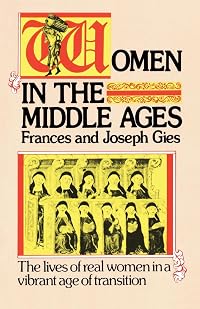
Reissued for the first time in decades, this ambitious work of Medieval scholarship by bestselling historians Frances and Joseph Gies traces the stories and fates of women in Medieval Europe over the course of a millennium. Medieval history is often written as a series of battles and territorial shifts. But the essential contributions of women during this period have been too often relegated to the dustbin of history. In Women in the Middle Ages, Frances and Joseph Gies reclaim this lost show more history, in a lively historical survey that charts the evolution of women's roles throughout the period, and profiles eight individual women in depth. We learn of Hildegarde of Bingen, an abbess who was a noted composer and founded two monasteries; of Eleanor de Montfort, a 13th century Princess of Wales who was captured by Edward I and held as a political prisoner for three years; and women of somewhat more modest means, such as the spouse of an Italian merchant, and a peasant's wife. Drawing upon their various stories, talented historians Frances and Joseph Gies--whose books were used by George R.R. Martin in his research for Game of Thrones--offer a kaleidoscopic view of the lives of women throughout this tumultuous period. "A wealth of solid information." -New York Times show lessTags
Recommendations










Member Recommendations
by anonymous user
Member Reviews
Yes, this is the type of nonfiction that I devour. Daily life history woven around stories of real life people. The details are grounding while the narratives are exciting. It's succinct yet brimming with vibrancy of these women's lives. I found myself caring about all of these women, and that interest made me want to keep reading. This book was hard to put down! What really sets this book apart is the attention to detail and that lens being turned on all walks of life in the medieval ages. Readers learn about nuns with Abbess Hildegarde of Bingen, royal women with Blanche of Castile and Eleanor de Montfort, peasant women and Agnes li Patiniere, and then upper-middle class women in Margherita Dating and Margaret Paston. It's a very show more comprehensive view of medieval life, and I loved it.
With such fascinating women, the book was constantly interesting. The only time it really faltered was when it was discussing peasant women, and that is because there is a dearth of information regarding medieval peasants, in general. Gies had to get her information from manorial court records and church books of major life events. Even so, it was interesting reading about the guildswomen and the struggles they went through. Their fight for workers' rights echoed today's struggles, and it makes them seem more human. These weren't just mindless people going about their work, but people with thoughts and feelings who demanded justice.
I will say that some sections were more focused on the historical figures than the life of all women of that status, which made sense. There were a lot of nuns, so Hildegard's life was mostly glossed over in favor of revealing convent life to readers. Meanwhile, the lives of Blanche of Castile and Eleanor de Montfort took center stage in their sections. As royal women, their lives were certainly more unique, but no less fascinating.
Honestly, the standout for me was Margherita Datini. She is sort of the Italian Margaret Paston, in that historians understand a lot about medieval life from her letters to her husband, which have survived centuries. Additionally, Margherita taught herself to read and write as an adult woman so that she could correspond with her husband in private while Margaret relied on others to write her letters for her, and I just think that is the sweetest and neatest detail.
There aren't any battles or treaties in this book. In fact, it's as different from Gies's The Knight in History as you can get. Nevertheless, this is a must read for anyone interested in medieval history or women's history. I happen to love both, so I was in heaven reading this book, and I would totally read it again. show less
With such fascinating women, the book was constantly interesting. The only time it really faltered was when it was discussing peasant women, and that is because there is a dearth of information regarding medieval peasants, in general. Gies had to get her information from manorial court records and church books of major life events. Even so, it was interesting reading about the guildswomen and the struggles they went through. Their fight for workers' rights echoed today's struggles, and it makes them seem more human. These weren't just mindless people going about their work, but people with thoughts and feelings who demanded justice.
I will say that some sections were more focused on the historical figures than the life of all women of that status, which made sense. There were a lot of nuns, so Hildegard's life was mostly glossed over in favor of revealing convent life to readers. Meanwhile, the lives of Blanche of Castile and Eleanor de Montfort took center stage in their sections. As royal women, their lives were certainly more unique, but no less fascinating.
Honestly, the standout for me was Margherita Datini. She is sort of the Italian Margaret Paston, in that historians understand a lot about medieval life from her letters to her husband, which have survived centuries. Additionally, Margherita taught herself to read and write as an adult woman so that she could correspond with her husband in private while Margaret relied on others to write her letters for her, and I just think that is the sweetest and neatest detail.
There aren't any battles or treaties in this book. In fact, it's as different from Gies's The Knight in History as you can get. Nevertheless, this is a must read for anyone interested in medieval history or women's history. I happen to love both, so I was in heaven reading this book, and I would totally read it again. show less
I liked most of the Gies' books I have read- at this is no exception. A fascinating and useful introduction to the source material revealing Medieval Women in every guise. Perhaps it will serve to challenge the misconceptions that they were an universally repressed and downtrodden class with no rights. From noblewomen to Merchants, there was far more to the fairer sex in the Middle Ages than being locked on towers.....also it has proved useful for a number of academic pursuits and assignments.
The problem with the brothers Gies is that they drag their 20th Century prejudices back with them through time. They are hindered in this work, for example, by the assumption that women were powerless in early Medieval times, because women were oppressed in more recent history.
They do not look openly at the evidence, in my opinion. The power of Fredegund, Ringunth and others evades them. The book is an easy read but misrepresentative and thus a danger to those without a firm understanding of the primary sources from that time.
They do not look openly at the evidence, in my opinion. The power of Fredegund, Ringunth and others evades them. The book is an easy read but misrepresentative and thus a danger to those without a firm understanding of the primary sources from that time.
If an author can place Oxfordshire in the north Midlands, the rest of their scholarship becomes suspect.
Overall this was disappointing
Overall this was disappointing
Borrowed from the shelves of one of my sisters; interesting
Great book, very interesting & informative
Members
- Recently Added By
Lists

Favourite Medieval Books
49 works; 17 members
Author Information

13 Works 8,204 Members

21 Works 7,795 Members
Joseph Gies was born on October 8, 1916 in Ann Arbor, Mich and attended the University of Michigan and Columbia University. He held jobs with several publishers including Encyclopaedia Britannica, and was editor-in-chief for a division of Doubleday. Gies is best known for several books, such as Life in a Medieval Castle, Life in a Medieval City, show more and Life in a Medieval Village. These books, written with his wife Frances Carney, explore existence in Medieval times. The works, and his others, are noted for their highly readable, but thorough quality. Topics such as archaeology, government, dining, entertainment, and daily life are presented in fascinating detail. (Bowker Author Biography) show less
Awards and Honors
Notable Lists
Series

Common Knowledge
- Original publication date
- 1978-03
- People/Characters
- Hildegard of Bingen; Blanche of Castile; Eleanor Plantagenet (Eleanor de Montfort); Piers Plowman's Wife; Agnes li Patiniere of Douai; Margherita Datini (show all 15); Margaret Paston; Alice Benyt; Francesco Datini; Henry III, King of England; John, King of England; Louis IX, King of France; Christine de Pizan; Geoffrey Chaucer; Marguerite of Provence
- Important places
- Kenilworth Castle, Kenilworth, Warwickshire, England, UK; Prato, Italy
- Dedication
- To Dory with love
- First words
- 1
Women in History
Traditional history, all about politics, wars, and revolutions, has devoted few pages to women because few women were prominent in those male-dominated activities. - Last words
- (Click to show. Warning: May contain spoilers.)But only within the peasant and artisan classes, where toil was demanded of all, did the numerous Alice Benyts and Agnes li Patinieres share work and responsibility with husbands and brothers on a nearly equal basis.
Classifications
- Genres
- History, Nonfiction, General Nonfiction, Sexuality and Gender Studies, Biography & Memoir
- DDC/MDS
- 305.4 — Society, government, & culture Social sciences, sociology & anthropology Social group - Age, Gender, Ethnicity Women
- LCC
- HQ1143 .G53 — Social sciences The family. Marriage, Women and Sexuality The Family. Marriage. Women Women. Feminism
- BISAC
Statistics
- Members
- 737
- Popularity
- 38,214
- Reviews
- 7
- Rating
- (3.54)
- Languages
- English, Polish
- Media
- Paper, Audiobook, Ebook
- ISBNs
- 6
- ASINs
- 4