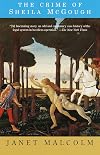
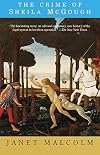
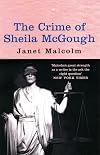
The Crime of Sheila McGough
by Janet Malcolm
On This Page
Description
Biography & Autobiography. True Crime. Nonfiction. HTML:"[N]o other writer tells better stories about the perpetual, the unwinnable, battle between narrative and truth." —The New York Times Book ReviewThe Crime of Sheila McGough is Janet Malcolm's brilliant exposé of miscarriage of justice in the case of Sheila McGough, a disbarred lawyer recently released from prison. McGough had served 2 1/2 years for collaborating with a client in his fraud, but insisted that she didn't commit any of show more the 14 felonies she was convicted.
An astonishingly persuasive condemnation of the cupidity of American law and its preference for convincing narrative rather than the truth, this is also a story with an unconventional heroine. McGough is a zealous defense lawyer duped by a white-collar con man; a woman who lives, at the age of 54, with her parents; a journalistic subject who frustrates her interviewer with her maddening literal-mindedness. Spirited, illuminating, delightfully detailed, The Crime of Sheila McGough is both a dazzling work of journalism and a searching meditation on character and the law. show less
Tags
Recommendations















Member Reviews
"The law's demand that witnesses speak "nothing but the truth" is a demand no witness can fulfill, of course, even with God's help."
In 1996 Malcolm receives a letter from Shelia McGough, a lawyer who has been disbarred and claims the crime she was convicted of were bogus. That she was the victim of a campaign to oust her from the legal profession due to her zealous approach to representing her client. Malcolm is naturally intrigued and begins an investigation into not finding the truth per say, but understanding the people, the system and how the truth is derived in the legal system.
Malcolm examines how the law is not about the truth but whether the defense or prosecution can weave the better narrative. It is how the jury can be show more persuaded that the version of events presented is the correct one, which will lead to acquittal or conviction. Malcolm could become bogged down in arguing or defending but her gift, to me, is how she allows the characters to present the differing views.
Shelia McGough, is central and her actions, her determination to stay the course for her client are commendable but expose her weakness. For, Bob Bailes is the other main player in this book. The death of Bob Bailes is a double edged sword, for McGough was willing to pursue her own personal justice as client confidentiality was no longer relevant but Malcolm is not able to interview Bailes. It is the big 'what if' as what information would Malcolm have been able to illicit, what observations would she have made of his character? While Malcolm attempts to get a sense of the man by visiting locations she knew he frequented, it does not give her any insights.
McGough, on the other hand is a woman that could not be fictionally dreamt up. She is complex, linear, devoted, black and white and sheltered. I can understand Malcolm's frustration and admiration in interviewing and engaging with McGough. McGough's unwavering commitment and belief that Bailes was honest and deserving of her full support is hard to comprehend. Even when Malcolm presents to McGough example after example of Bailes indiscretions, she refuses to budge.
Malcolm stumbled onto and documented the beginnings of the movement in the US at the moment where distrust of the government and religion above law is prominent. At one stage McGough's mother laments "When you're just an older, middle-class taxpayer, forget it." and how "the Justice Department is an American KGB". Further in the book Malcolm interviews S. Strother Smith, a lawyer Bailes previously employed who refuses to use as social security number as a form of identification as it is against his religious beliefs. For in the Bible 'every time God blessed someone, He named him and every time He cursed someone, He numbered him."
Even as Malcolm unravels this tale for you, there are moments when her descriptive writing allows you to physically be in that place and time:
"Here things were allowed to turn up, to pile up, to be pressed into service, to not match, to not impress anyone. The conference table was an old rather beat up, glass top model, with an agreeable mess of papers and objects on it. There was a bookcase of lawbooks some with very old leather covers, a serviceable blue carpet; a TV set and a video camera' and orange crates filled with papers, pitched into a corner."
For a book under 200 pages, it is dense with characters, studies and ruminations on the legal system. It is maddening and engaging. show less
In 1996 Malcolm receives a letter from Shelia McGough, a lawyer who has been disbarred and claims the crime she was convicted of were bogus. That she was the victim of a campaign to oust her from the legal profession due to her zealous approach to representing her client. Malcolm is naturally intrigued and begins an investigation into not finding the truth per say, but understanding the people, the system and how the truth is derived in the legal system.
Malcolm examines how the law is not about the truth but whether the defense or prosecution can weave the better narrative. It is how the jury can be show more persuaded that the version of events presented is the correct one, which will lead to acquittal or conviction. Malcolm could become bogged down in arguing or defending but her gift, to me, is how she allows the characters to present the differing views.
Shelia McGough, is central and her actions, her determination to stay the course for her client are commendable but expose her weakness. For, Bob Bailes is the other main player in this book. The death of Bob Bailes is a double edged sword, for McGough was willing to pursue her own personal justice as client confidentiality was no longer relevant but Malcolm is not able to interview Bailes. It is the big 'what if' as what information would Malcolm have been able to illicit, what observations would she have made of his character? While Malcolm attempts to get a sense of the man by visiting locations she knew he frequented, it does not give her any insights.
McGough, on the other hand is a woman that could not be fictionally dreamt up. She is complex, linear, devoted, black and white and sheltered. I can understand Malcolm's frustration and admiration in interviewing and engaging with McGough. McGough's unwavering commitment and belief that Bailes was honest and deserving of her full support is hard to comprehend. Even when Malcolm presents to McGough example after example of Bailes indiscretions, she refuses to budge.
Malcolm stumbled onto and documented the beginnings of the movement in the US at the moment where distrust of the government and religion above law is prominent. At one stage McGough's mother laments "When you're just an older, middle-class taxpayer, forget it." and how "the Justice Department is an American KGB". Further in the book Malcolm interviews S. Strother Smith, a lawyer Bailes previously employed who refuses to use as social security number as a form of identification as it is against his religious beliefs. For in the Bible 'every time God blessed someone, He named him and every time He cursed someone, He numbered him."
Even as Malcolm unravels this tale for you, there are moments when her descriptive writing allows you to physically be in that place and time:
"Here things were allowed to turn up, to pile up, to be pressed into service, to not match, to not impress anyone. The conference table was an old rather beat up, glass top model, with an agreeable mess of papers and objects on it. There was a bookcase of lawbooks some with very old leather covers, a serviceable blue carpet; a TV set and a video camera' and orange crates filled with papers, pitched into a corner."
For a book under 200 pages, it is dense with characters, studies and ruminations on the legal system. It is maddening and engaging. show less
In this book, journalist Janet Malcolm purports to tell the true story of the legal troubles of Sheila McGough. McGough was a lawyer who was sued, prosecuted, and disbarred for certain actions she took in connection with one of her clients. Malcolm spoke extensively with McGough herself, and also with the lawyers in the civil and criminal trials, with McGough’s family, and with a few key witnesses from the trials. After her investigation and research, Malcolm concluded that Sheila McGough was unjustly convicted and that the legal system failed her in a monumental way.
I absolutely hated this book. Normally I don’t say that, but I have to make an exception in this case. I spent the entire book being angry at Janet Malcolm; her point show more of view is so obviously biased that I couldn’t believe a single thing she said. She chose Sheila McGough as her “heroine” and then skewed her entire story to reflect that. The man who started legal proceedings against her became a Snidely Whiplash-esque villain, and all the lawyers were chastised as being either incompetent or downright malicious. I simply didn’t find the story credible, especially because I couldn’t even fathom what the case was supposed to be about – which leads me to believe that Malcolm doesn’t know either. Then there’s the overwritten, pretentious writing style, which was so precious and condescending that I wanted to throw the book across the room. Do not read this book. It really is that bad. show less
I absolutely hated this book. Normally I don’t say that, but I have to make an exception in this case. I spent the entire book being angry at Janet Malcolm; her point show more of view is so obviously biased that I couldn’t believe a single thing she said. She chose Sheila McGough as her “heroine” and then skewed her entire story to reflect that. The man who started legal proceedings against her became a Snidely Whiplash-esque villain, and all the lawyers were chastised as being either incompetent or downright malicious. I simply didn’t find the story credible, especially because I couldn’t even fathom what the case was supposed to be about – which leads me to believe that Malcolm doesn’t know either. Then there’s the overwritten, pretentious writing style, which was so precious and condescending that I wanted to throw the book across the room. Do not read this book. It really is that bad. show less
Ratings
Members
- Recently Added By
Lists

99
19 works; 1 member
Author Information

20+ Works 4,234 Members
Janet Malcolm is the acclaimed author of many books, including In the Freud Archives; Two Lives: Gertrude and Alice; and Burdock, a volume of her photographs of a "rank weed." She is a frequent contributor to The New Yorker and The New York Review of Books.
Classifications
Statistics
- Members
- 99
- Popularity
- 327,743
- Reviews
- 2
- Rating
- (3.64)
- Languages
- English
- Media
- Paper, Ebook
- ISBNs
- 5
- ASINs
- 1