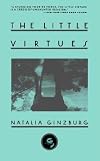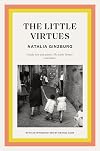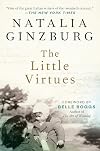
The Little Virtues
by Natalia Ginzburg
On This Page
Description
"As far as the education of children is concerned," states Natalia Ginzburg in this collection of her finest and best-known short essays, "I think they should be taught not the little virtues but the great ones. Not thrift but generosity and an indifference to money; not caution but courage and a contempt for danger; not shrewdness but frankness and a love of truth; not tact but a love of one's neighbor and self-denial; not a desire for success but a desire to be and to know." Whether she show more writes of the loss of a friend, Cesare Pavese; or what is inexpugnable of World War II; or the Abruzzi, where she and her first husband lived in forced residence under Fascist ru≤ or the importance of silence in our society; or her vocation as a writer; or even a pair of worn-out shoes, Ginzburg brings to her reflections the wisdom of a survivor and the spare, wry, and poetically resonant style her readers have come to recognize. "A glowing light of modern Italian literature . . . Ginzburg's magic is the utter simplicity of her prose, suddenly illuminated by one word that makes a lightning streak of a plain phrase. . . . As direct and clean as if it were carved in stone, it yet speaks thoughts of the heart." --The New York Times Book Review show lessTags
Recommendations














Member Reviews
Imagine a mid-20th-century Italian intellectual who admits without embarrassment to wearing worn-out shoes, claims that she isn't interested in cooking and always buys the wrong things from the market, can't drive (in Torino!), can't sing (and starts an essay on the topic of "Silence" by discussing an opera), never uses two words where one will do, and has never been known to drop names of any description.
No, I can't, either. But that is the image that Natalia Ginzburg likes to project. In the land of bella figura her provocative self-mockery and her brusque, no-nonsense style seem to have caused quite a few cases of spontaneous combustion amongst literary critics, but they clearly won her a lot of respect as well.
The short essays in show more Le piccole virtù, written between 1945 and 1962, form something between a memoir and a manifesto for literature in a post-war world, but without the egotism either of those forms usually implies.
"Inverno in Abruzzo" describes the experience of being banished by the fascists to a remote village near Aquila — she writes about the privations of daily life for the family, and how much she and her husband miss the city (the children are too young to imagine what a city might be like). And then in the last paragraph she turns everything upside-down by telling us that her husband was murdered in a Roman jail, a few months after they left Abruzzo. She couldn't imagine it at the time, but now she sees that the months they spent together in the back of beyond were the best time of her life. "Le scarpe rotte", written shortly after the war when she was working in Rome, the kids parked with her parents in Torino, is about the unexpected pleasures of poverty, and a classic attack on one of the most sacred things in Italian culture.
Then there's a lovely — but unsentimental — portrait of her friend, the poet Cesare Pavese, who killed himself in August 1950, and two pieces about London in 1960. The second of these, "La Maison Volpé", is a glorious denunciation of the English food-culture of the time, possibly the most unapologetically Italian piece in the whole book, but spot-on in its dry mockery. No-one who remembers the dusty curtains and rotating plastic oranges of those days could possibly take offence. "Lui e io" is a funny, self-deprecatory description of her relationship with her second husband, Gabriele Baldini, which could be about any middle-aged couple ("he's always too hot, I'm always too cold...").
In the second part, she discusses how the experience of the war has changed things for her generation and the things they can write about, she talks about developing as a writer ("Il mio mestiere") and as a human being ("I rapporti humani"), and in the piece that gives the collection its title, about the responsibilities of parenting, which for her seems to be more about non-intervention than anything else, in a very sixties spirit.
All the pieces in this collection are clever, subtle, amazing bits of writing, but the ones that really stood out for me were "Il mio mestiere" and "I rapporti humani", two pieces that seem to sum up everything that needs to be said about the puzzling business of growing up. I really wish I'd read them as a teenager! show less
No, I can't, either. But that is the image that Natalia Ginzburg likes to project. In the land of bella figura her provocative self-mockery and her brusque, no-nonsense style seem to have caused quite a few cases of spontaneous combustion amongst literary critics, but they clearly won her a lot of respect as well.
The short essays in show more Le piccole virtù, written between 1945 and 1962, form something between a memoir and a manifesto for literature in a post-war world, but without the egotism either of those forms usually implies.
"Inverno in Abruzzo" describes the experience of being banished by the fascists to a remote village near Aquila — she writes about the privations of daily life for the family, and how much she and her husband miss the city (the children are too young to imagine what a city might be like). And then in the last paragraph she turns everything upside-down by telling us that her husband was murdered in a Roman jail, a few months after they left Abruzzo. She couldn't imagine it at the time, but now she sees that the months they spent together in the back of beyond were the best time of her life. "Le scarpe rotte", written shortly after the war when she was working in Rome, the kids parked with her parents in Torino, is about the unexpected pleasures of poverty, and a classic attack on one of the most sacred things in Italian culture.
Then there's a lovely — but unsentimental — portrait of her friend, the poet Cesare Pavese, who killed himself in August 1950, and two pieces about London in 1960. The second of these, "La Maison Volpé", is a glorious denunciation of the English food-culture of the time, possibly the most unapologetically Italian piece in the whole book, but spot-on in its dry mockery. No-one who remembers the dusty curtains and rotating plastic oranges of those days could possibly take offence. "Lui e io" is a funny, self-deprecatory description of her relationship with her second husband, Gabriele Baldini, which could be about any middle-aged couple ("he's always too hot, I'm always too cold...").
In the second part, she discusses how the experience of the war has changed things for her generation and the things they can write about, she talks about developing as a writer ("Il mio mestiere") and as a human being ("I rapporti humani"), and in the piece that gives the collection its title, about the responsibilities of parenting, which for her seems to be more about non-intervention than anything else, in a very sixties spirit.
All the pieces in this collection are clever, subtle, amazing bits of writing, but the ones that really stood out for me were "Il mio mestiere" and "I rapporti humani", two pieces that seem to sum up everything that needs to be said about the puzzling business of growing up. I really wish I'd read them as a teenager! show less
This is a collection of essays written over a period of sixteen years for different publications, and the tone and style varies wildly throughout, as Ginzburg herself admits in the foreword. But then I fell in love with the last essay (which lends the collection its name), which is comprised of perhaps the most sensible parenting advice I have ever heard in my life, so much that it made me love the whole book so much more.
My other favorite in the collection was the first essay, "Winter in the Abruzzi," about a period during WWII when her family retreated to a small village in the countryside to avoid the dangers and upheaval in the city. It is full of the observations of the mundane in life that Ginzburg is so good at, plus some show more musings on memory and perception — how she expected her children to view their time in the countryside vs. what they remember of it, how it felt living through that time vs. looking back on it, and then the entire essay takes a sharp tragic turn at the end that took my breath away.
There is much about WWII here, but mainly in terms of how it shaped those who survived it.
I probably would not recommend this if you are new to Ginzburg, but if you have read a few of her books and are curious about her as a person, this offers some very satisfying glimpses into the life that shaped her writing. show less
My other favorite in the collection was the first essay, "Winter in the Abruzzi," about a period during WWII when her family retreated to a small village in the countryside to avoid the dangers and upheaval in the city. It is full of the observations of the mundane in life that Ginzburg is so good at, plus some show more musings on memory and perception — how she expected her children to view their time in the countryside vs. what they remember of it, how it felt living through that time vs. looking back on it, and then the entire essay takes a sharp tragic turn at the end that took my breath away.
There is much about WWII here, but mainly in terms of how it shaped those who survived it.
I probably would not recommend this if you are new to Ginzburg, but if you have read a few of her books and are curious about her as a person, this offers some very satisfying glimpses into the life that shaped her writing. show less
There is so much to say about this little collection of essays that I'm going to have to read it again. I loved it. Natalia Ginsburg is a powerful writer and what I'm left with after this first reading is a sense of self-confidence. This is a woman who knows who she is. But it's her exploration of doubts and insecurities that create this impression. I think it was half through the piece ''He and I' when I realised what a powerful writer she was and how writing about opposites can be so self-affirming. I laughed out loud at her examination of London and the English, a piece that was really about longing for home. I found the lack of certainly and permanence in a post-war world strangely poignant having been burnt out by bush fire and show more expecting another. I'm still thinking about the signature piece, 'The Little Virtues' which somehow embodies what I'm trying to say about her work in that it is about the 'big' virtues and what is really important. Thanks for sending me this Jim. show less
The eleven essays collected here cover a long period in Natalia Ginzburg’s writing life. Her vocation, as she often refers to it, has brought her solace through hard times and other pleasures as well. It is her guide to much of life’s vicissitudes, even to the point of steering her understanding of the virtues, little and great.
I preferred the essays in part one of the collection. These are at times nostalgic, a touch mournful, highly particularized, and personal. The very first essay, “Winter in the Abruzzi,” may be the best, though her two portraits of England are charming, if only because they describe a land that no longer exists: “It is a country which has always shown itself ready to welcome foreigners, from very diverse show more communities, without I think oppressing them.” If only.
The essays of the second part of the book are more abstract. Not because they deal with essentially abstract notions, but because, I think, Ginzburg’s writing style has changed. Her claims become sweeping, about childhood, education, her own vocation and vocations in general, and the nature of virtue. Here the writing is less compelling, less communicative, less appealing. At least for me. show less
I preferred the essays in part one of the collection. These are at times nostalgic, a touch mournful, highly particularized, and personal. The very first essay, “Winter in the Abruzzi,” may be the best, though her two portraits of England are charming, if only because they describe a land that no longer exists: “It is a country which has always shown itself ready to welcome foreigners, from very diverse show more communities, without I think oppressing them.” If only.
The essays of the second part of the book are more abstract. Not because they deal with essentially abstract notions, but because, I think, Ginzburg’s writing style has changed. Her claims become sweeping, about childhood, education, her own vocation and vocations in general, and the nature of virtue. Here the writing is less compelling, less communicative, less appealing. At least for me. show less
Pequenos ensaios de cariz autobiográfico, escritos num estilo ao mesmo tempo distanciado e profundo, numa prosa perfeitamente límpida e cuidada. Parece falar-nos sobre outra pessoa, falando sobre ela mesma. A profundidade do pensamento, o seu detalhe e minúcia, é, pelo menos neste caso, inversamente proporcional à intensidade com que é relatado. Não se trata contudo de uma escrita fria, é antes ponderada e clara. O seu afastamento torna-se uma proximidade ao leitor. Não é pela veemência exacerbada que se comunicam emoções profundas ou situações dramáticas. Dessa forma o texto chegar-nos-ia como um bolo alimentar dengoso e indistinto, com tempero em demasia, que se sobreporia a tudo o resto, conduzindo a uma show more insensibilidade geral. O leitor mais experimentado prefere fazer a sua própria digestão, saborear no palato cada um dos ingredientes, e desenvolvê-los. Trata-se, apesar de tudo, de um processo inverso à digestão, não de decomposição, mas de elaboração e expansão. show less
A collection of essays by Italian author Natalia Ginzburg focused primarily on her life in Italy during and after World War II, her vocation as a writer, and her reflections on human behavior and relationship. The title of the book comes from her essay by the same name, which discusses the importance of teaching children "big virtues" such as courage, generosity, and love.
Ginzburg's prose feels personal yet distant, and there is a lyrical cadence to many of her pieces that belies her poetic soul. Her descriptions of the people and places in wartime and post-war Europe manage to communicate the despair and weariness of a survivor, yet are still tinged with hope and affection. These are essays that will both move you and remain with you.
Ginzburg's prose feels personal yet distant, and there is a lyrical cadence to many of her pieces that belies her poetic soul. Her descriptions of the people and places in wartime and post-war Europe manage to communicate the despair and weariness of a survivor, yet are still tinged with hope and affection. These are essays that will both move you and remain with you.
O exílio, os sapatos rotos de quem sabe o que não é necessário, o retrato do amigo que às vezes ficava muito triste, a Inglaterra melancólica e as conversas sem perigo, o vulto da casa caída, os silêncios, a diferença entre escrevermos felizes ou infelizes, as relações humanas, as pequenas virtudes mas sobretudo as grandes, o amor à vida que gera amor à vida. Neste pequeno livro, com textos tão bem escritos, cabe tanto.
Members
- Recently Added By
Published Reviews
ThingScore 75
So light is the touch of the Italian writer Natalia Ginzburg in these 11 essays, written between 1944 and 1960 and translated by Dick Davis, that they might float through the reader’s mind unimpeded, if it weren’t for the ballast hidden within.
added by Nevov
Lists

500 Great Books by Women
507 works; 60 members

Italian Literature
558 works; 42 members

Mustich's 1000 Books to Read Before You Die: A Life Changing List
1,001 works; 19 members
Author Information

71+ Works 5,897 Members
Some Editions
Awards and Honors
Series
Belongs to Publisher Series
Work Relationships
Is contained in
Common Knowledge
- Canonical title*
- Les petites vertus
- Original title
- Le piccole virtù
- Original publication date
- 1962
- Important places
- Abruzzo, Italy
- Important events
- World War II
- Epigraph
- Deus nobis haec otia fecit
- First words
- There are only two seasons in the Abruzzi: summer and winter.
- Quotations*
- Per quanto riguarda l’educazione dei figli, penso che si debbano insegnar loro non le piccole virtù, ma le grandi. Non il risparmio, ma la generosità e l’indifferenza al denaro; non la prudenza, ma il coraggio e l... (show all)o sprezzo del pericolo; non l’astuzia, ma la schiettezza e l’amore alla verità; non la diplomazia, ma l’amore al prossimo e l’abnegazione, non il desiderio del successo, ma il desiderio di essere e di sapere.
Di solito invece facciamo il contrario: ci affrettiamo a insegnare il rispetto per le piccole virtù, fondando su di esse tutto il nostro sistema educativo. Scegliamo, in questo modo, la via più comoda: perché le piccole virtù non racchiudono alcun pericolo materiale, e anzi tengono al riparo dai colpi della fortuna. Trascuriamo d’insegnare le grandi virtù, e tuttavia le amiamo, e vorremmo che i nostri figli le avessero: ma nutriamo fiducia che scaturiscano spontaneamente nel loro animo, un giorno avvenire, ritenendole di natura istintiva, mentre le altre, le piccole, ci sembrano il frutto d’una riflessione e di un calcolo e perciò noi pensiamo che debbano assolutamente essere insegnate.
In realtà la differenza è solo apparente. Anche le piccole virtù provengono dal profondo del nostro istinto, da un istinto di difesa: ma in esse la ragione parla, sentenzia, disserta, brillante avvocato dell’incolumità personale. Le grandi virtù sgorgano da un istinto in cui la ragione non parla, un istinto a cui mi sarebbe difficile dare un nome. E il meglio di noi è in quel muto istinto: e non nel nostro istinto di difesa, che argomenta, sentenzia, disserta con la voce della ragione.
L’educazione non è che un certo rapporto che stabiliamo fra noi e i nostri figli, un certo clima in cui fioriscono i sentimenti, gli istinti, i pensieri. Ora io credo che un clima tutto ispirato al rispetto per le piccole virtù, maturi insensibilmente al cinismo, o alla paura di vivere. Le piccole virtù, in se stesse, non hanno nulla da fare col cinismo, o con la paura di vivere: ma tutte insieme, e senza le grandi, generano un’atmosfera che porta a quelle conseguenze.
Non che le piccole virtù, in se stesse, siano spregevoli: ma il loro valore è di ordine complementare e non sostanziale; esse non possono stare da sole senza le altre, e sono, da sole senza le altre, per la natura umana un povero cibo. Il modo di esercitare le piccole virtù, in misura temperata e quando sia del tutto indispensabile, l’uomo può trovarlo intorno a sé e berlo nell’aria: perché le piccole virtù sono di un ordine assai comune e diffuso tra gli uomini.
Ma le grandi virtù, quelle non si respirano nell’aria: e debbono essere la prima sostanza del nostro rapporto coi nostri figli, il primo fondamento dell’educazione. Inoltre, il grande può anche contenere il piccolo: ma il piccolo, per legge di natura, non può in alcun modo contenere il grande. - Last words
- (Click to show. Warning: May contain spoilers.)This is perhaps the one real chance we have of giving them some kind of help in their search for a vocation - to have a vocation ourselves, to know it, to love it and service it passionately; because love of life begets love of life.
- Original language
- Italian
*Some information comes from Common Knowledge in other languages. Click "Edit" for more information.
Classifications
Statistics
- Members
- 741
- Popularity
- 38,045
- Reviews
- 20
- Rating
- (3.90)
- Languages
- 11 — Catalan, Dutch, English, French, German, Italian, Norwegian, Polish, Portuguese, Spanish, Swedish
- Media
- Paper, Audiobook, Ebook
- ISBNs
- 41
- ASINs
- 11