On This Page
Description
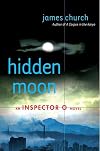
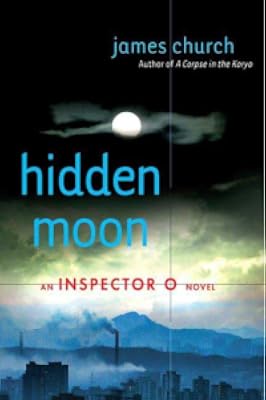
In A Corpse in the Koryo, James Church introduced readers to one of the most unique detectives to appear in print in years-the elusive Inspector O. The stunning mystery was named one of the best mystery/thrillers of 2006 by the Chicago Tribune for its beautifully spare prose and layered descriptions of a terrain Church knows by heart. And now the inspector is back. In Hidden Moon, Inspector O returns from a mission abroad to find his new police commander waiting at his office door. There has show more been a bank robbery-the first ever in Pyongyang-and the commander demands action, and quickly. But is this urgency for real? Somewhere, someone in the North Korean leadership doesn't want Inspector O to complete his investigation. And why not? What if the robbery leads to the highest levels of the regime? What if power, not a need for cash, is the real reason behind the heist at the Gold Star Bank? Given a choice, this isn't a trail a detective in the Pyongyang police would want to follow all the way to the end, even a trail marked with monogrammed silk stockings. "I'm not sure I know where the bank is," is O's laconic observation as the warning bells go off in his head. A Scottish policeman sent to provide security for a visiting British official, a sultry Kazakh bank manager, and a mournful fellow detective all combine to put O in the middle of a spider web of conspiracies that becomes more tangled-and dangerous-the more he pulls on the threads. Once again, as he did in A Corpse in the Koryo, James Church opens a window into a society where nothing is quite as it seems. The story serves as the listener's flashlight, illuminating a place that outsiders imagine is always dark and too far away to know. Church's descriptions of the country and its people are spare and starkly beautiful; the dialogue is lean, every thought weighed and measured before it is spoken. Not a word is wasted because in this place no one can afford to be misunderstood. show lessTags
Recommendations



Member Reviews
It is hard to know what to make of this book, since the average American knows so little about N. Korea. The pseudonymous author claims to be a former Western intelligence officer, but even if true, such a career might produce little in the way of actual knowledge of Korean police procedures. The protagonist suspects that he is not "really" intended to solve the robbery of a bank, the first he has heard of. But there are mixed messages from his own department and from others. In N. Korea nothing is non-political.
Hidden Moon is an interesting book by a writer with great promise; Church's vision of North Korea is by turns Kafkaesque, tragic, funny, and exciting. Though his multiple threads in some ways end up reflecting the chaotic and elliptical setting, Hidden Moon nonetheless has something offer both fans of the detective genre, and those new to it.
Inspector O is offered a one-of-a-kind case: the first bank robbery in North Korea. But different forces are operating on the department: someone high up desperately wants it solved, and someone else high up is equally desperate to ensure the case doesn't go anywhere. Under surveillance, harried, stonewalled, and cajoled, can O make progress on the case - or at least the appearance of progress - show more without losing his life?
The setting of a quirky detective toiling against conspiracy immediately brings Martin Cruz Smith's Gorky Park to mind, but whilst Church shares some of Smith's talents - an ear for dialogue, a dry kind of humour, and dazzling realism - Inspector O is quite a different creature to Arkady Renko. O is more at ease in his North Korean environment, and also more opaque. Staying afloat in a country awash in paranoia, ignorance and spies is something O manages adroitly, but as the reader you may have more trouble.
Church rarely deigns to explicate the motives or complete thoughts of his characters, and the narrative itself is introducing new elements and facts right up until practically the last page. This means that anyone seeking a more traditional mystery may find Hidden Moon a frustrating experience; there aren't clues so much as a few stars peeking through breaks in the clouds. Trying to construct the night sky from these scattered and partial constellations is more akin to augury than astronomy, and so too is the mystery of this novel; built on hunches and gut feelings.
But there are many rewards here. Church's vision of North Korea - not just the location, but the mindset - feels effortlessly real. It's an unusual glimpse into a hidden world and you genuinely feel like you're peeking in. His characters are alluring; you want to know more about them, all of them. And O himself makes a wonderful centre, both representative of the world he lives in, and apart from it. Hidden Moon is not a perfect novel - and it's certainly no Gorky Park - but this world, like the cases confronted O, definitely warrants further investigation. show less
Inspector O is offered a one-of-a-kind case: the first bank robbery in North Korea. But different forces are operating on the department: someone high up desperately wants it solved, and someone else high up is equally desperate to ensure the case doesn't go anywhere. Under surveillance, harried, stonewalled, and cajoled, can O make progress on the case - or at least the appearance of progress - show more without losing his life?
The setting of a quirky detective toiling against conspiracy immediately brings Martin Cruz Smith's Gorky Park to mind, but whilst Church shares some of Smith's talents - an ear for dialogue, a dry kind of humour, and dazzling realism - Inspector O is quite a different creature to Arkady Renko. O is more at ease in his North Korean environment, and also more opaque. Staying afloat in a country awash in paranoia, ignorance and spies is something O manages adroitly, but as the reader you may have more trouble.
Church rarely deigns to explicate the motives or complete thoughts of his characters, and the narrative itself is introducing new elements and facts right up until practically the last page. This means that anyone seeking a more traditional mystery may find Hidden Moon a frustrating experience; there aren't clues so much as a few stars peeking through breaks in the clouds. Trying to construct the night sky from these scattered and partial constellations is more akin to augury than astronomy, and so too is the mystery of this novel; built on hunches and gut feelings.
But there are many rewards here. Church's vision of North Korea - not just the location, but the mindset - feels effortlessly real. It's an unusual glimpse into a hidden world and you genuinely feel like you're peeking in. His characters are alluring; you want to know more about them, all of them. And O himself makes a wonderful centre, both representative of the world he lives in, and apart from it. Hidden Moon is not a perfect novel - and it's certainly no Gorky Park - but this world, like the cases confronted O, definitely warrants further investigation. show less
Oh, delightful. I just finished a book that I really liked for its imaginative topic - but when I started reading Hidden Moon, I realized that the real glory in a book is its prose. So, 5 stars for its prose. (An example? See pg. 137, for the two paragraphs describing the weather as gray.)
I had a few quibbles with the suspension of disbelief, beginning around p.147 when the Scot appears. He and O have sophisticated repartee - and that just doesn't work with 2 people who meet each other for the first time from two different cultures and in a language foreign to one of them. Conversing in a foreign language, unless one is bilingual from an early age and well educated in both, is an awkward proposition. One says what one can, not show more necessarily what one wants to, and this is true when the language is one's mother tongue, because one must take into account what the other will understand. It's hard. The dialog reads as between fluent speakers, and that's not the situation here. (I love the dialog. It's just not the right characters for it.)
Final quibble (minor; but why is it easier to note the quibble?) is on p. 248 when the Scot says that he cannot read Korean; he can speak it fluently but not read it. He complains about the alphabet. Nonsense. I have taught people in 20 minutes to read Korean. The alphabet is exquisitely sane. Chinese characters, on the other hand, frequently mixed into literary Korean, is nearly impossible to learn as an adult, but Korean alphabet is a snap, and it's impossible for me to imagine how one learns to speak Korean, which is difficult, without being able to use a dictionary, which requires reading the alphabet.
I look forward to reading the rest in this series. show less
I had a few quibbles with the suspension of disbelief, beginning around p.147 when the Scot appears. He and O have sophisticated repartee - and that just doesn't work with 2 people who meet each other for the first time from two different cultures and in a language foreign to one of them. Conversing in a foreign language, unless one is bilingual from an early age and well educated in both, is an awkward proposition. One says what one can, not show more necessarily what one wants to, and this is true when the language is one's mother tongue, because one must take into account what the other will understand. It's hard. The dialog reads as between fluent speakers, and that's not the situation here. (I love the dialog. It's just not the right characters for it.)
Final quibble (minor; but why is it easier to note the quibble?) is on p. 248 when the Scot says that he cannot read Korean; he can speak it fluently but not read it. He complains about the alphabet. Nonsense. I have taught people in 20 minutes to read Korean. The alphabet is exquisitely sane. Chinese characters, on the other hand, frequently mixed into literary Korean, is nearly impossible to learn as an adult, but Korean alphabet is a snap, and it's impossible for me to imagine how one learns to speak Korean, which is difficult, without being able to use a dictionary, which requires reading the alphabet.
I look forward to reading the rest in this series. show less
Inspector O is fast becoming one of the most compelling characters in modern crime fiction. A detective in the Ministry of People's Security in North Korea, O works in a country and system that few of us can scarcely imagine. In this novel, O is called to investigate a bank robbery, the first to ever occur in Pyongyang. As he investigates, he learn that this event is only the tip of the iceberg in a plot that has national and international ramifications. The pseudonymous James Church, a former intelligence officer stationed in Asia, has written a mystery that unfolds slowly like a flower. This thoughtful narrative requires patience from the reader, but that patience is rewarded with a truly first rate story and fully developed show more characters. Anyone who has enjoyed John Burdett's wonderful series of mystery novels set in Bangkok will feel a kinship. This is a true thinking-person's mystery novel and it is recommended without reservation. show less
Excellent illustration of the North Korean paranoia where everything is political. Inspector O must decide if he is supposed to investigate or solve the case. Some cases are expected to be investigated and solved if possible, some should look like they are being investigated but are not to be solved. The third category are those cases to be avoided, every stone left unturned, no records, no files. Church's writing style is not much to my liking. I didn't quite get the analogies used, such as the investigation being like bookshelves - not with books, just the shelves. Nor did I see the relevance of the many descriptions of wood: "there's a certain smugness to walnut"; mulberry "a wood with too much of a mind of its own". The depiction of show more North Korea and methods of investigation (even though I've no way of verifying the details) earned this book three stars. show less
Beautifully written, thoughtful, brutal. Inspector O is one of the most fascinating detectives I have encountered in a long time set in a fascinating place. A novel to be savored over a quiet rainy afternoon without interuptions. A novel to bring bad dreams, tempered by the inner moral and intellectual strength of its principal character and voice.
One of the best I have read this year!
Members
- Recently Added By
Author Information

7 Works 1,044 Members
Series

Common Knowledge
- Canonical title
- Hidden Moon
- People/Characters*
- Inspector O
- Important places*
- Noord-Korea
*Some information comes from Common Knowledge in other languages. Click "Edit" for more information.
Classifications
Statistics
- Members
- 205
- Popularity
- 159,382
- Reviews
- 8
- Rating
- (3.88)
- Languages
- English, French
- Media
- Paper, Audiobook, Ebook
- ISBNs
- 12
- ASINs
- 6