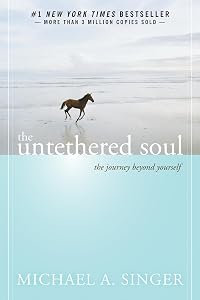
The Untethered Soul: The Journey Beyond Yourself
by Michael A. Singer
On This Page
Description
Psychology. Self-Improvement. Nonfiction. Who are you? When you start to explore this question, you find out how elusive it really is. Are you a physical body? A collection of experiences and memories? A partner to relationships? Each time you consider these aspects of yourself, you realize that there is much more to you than any of these can define. In The Untethered Soul, spiritual teacher Michael A. Singer explores the question of who we are and arrives at the conclusion that our identity show more is to be found in our consciousness, the fact of our ability to observe ourselves, and the world around us. By tapping into traditions of meditation and mindfulness, Singer shows how the development of consciousness can enable us all to dwell in the present moment and let go of painful thoughts and memories that keep us from achieving happiness and self-realization.The Untethered Soul offers a frank and friendly discussion of consciousness and how we can develop it. In part one, Singer examines the notion of self and the inner dialogue we all live with. Part two examines the experience of energy as it flows through us and works to show listeners how to open their hearts to the energy of experience that permeates their lives. Ways to overcome tendencies to close down to the rest of the world are the subject of part three. Enlightenment, the embrace of universal consciousness, is the subject of part four. And finally, in part five, Singer returns to daily life and the pursuit of unconditional happiness. Throughout, the book maintains a light and engaging tone, free from heavy dogma and prescriptive religious references. The easy exercises that figure in each chapter help listeners experience the ideas that Singer presents. show lessTags
Recommendations


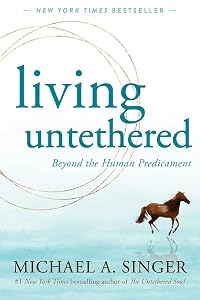
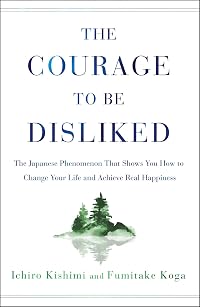
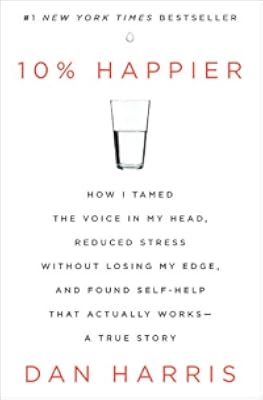
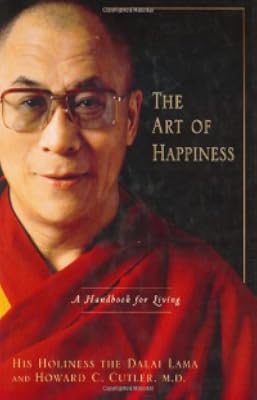
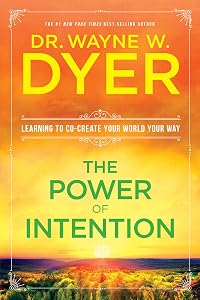

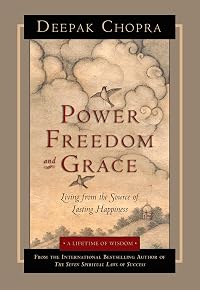
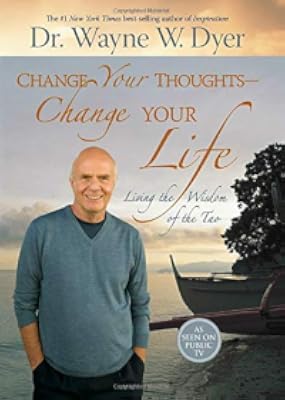
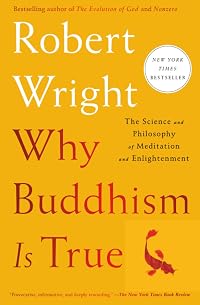
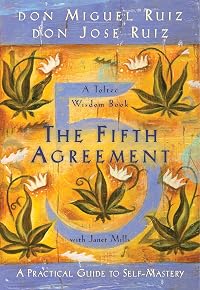


Member Recommendations

Member Reviews
I picked this up after seeing endless glowing reviews and bestseller claims, expecting something powerful and deeply spiritual. As someone who is very spiritual, I truly wanted to love this — but it’s honestly one of the worst books I’ve read in this genre.
From the first chapter I wanted to put it down, but I pushed myself to continue until halfway. The writing felt shallow, repetitive & circular, with the author repeating ideas without ever providing real depth or practical understanding. It came across more as pseudospirituality than genuine insight, presenting simplistic solutions to complex human struggles.
The examples given often felt unrealistic, and I couldn’t help but feel this book might even leave some readers feeling show more worse — as if they’d “failed” if the ideas didn’t work for them. For me, it lacked substance and spirit, and I walked away without having learnt anything meaningful.
If you’re truly seeking personal or spiritual growth, there are far better books out there. Sadly, this one left me disappointed and uninspired. show less
From the first chapter I wanted to put it down, but I pushed myself to continue until halfway. The writing felt shallow, repetitive & circular, with the author repeating ideas without ever providing real depth or practical understanding. It came across more as pseudospirituality than genuine insight, presenting simplistic solutions to complex human struggles.
The examples given often felt unrealistic, and I couldn’t help but feel this book might even leave some readers feeling show more worse — as if they’d “failed” if the ideas didn’t work for them. For me, it lacked substance and spirit, and I walked away without having learnt anything meaningful.
If you’re truly seeking personal or spiritual growth, there are far better books out there. Sadly, this one left me disappointed and uninspired. show less
I've been skirting around this book for a little while now as it's had so much hype, but here was a bit of a borrowing queue at my library for it and when it came round to my turn I wasn't really in the mood for a personal development read / listen. However, I'm glad I persevered as it was very insightful and worthwhile.
I quite enjoy a good old personal development book, so having read a few was there anything particularly new or startling in this one? Yes and no. There was certainly a lot of ground that's been covered in many other books, but perhaps Singer comes at common issues from a different angle. If I was to sum up the messaging in one line, it would be that happiness lies in stopping trying to fix and control everything and show more learning instead to allow feelings and experiences to pass through you.
I'm one of life's worriers. When I was four and got my first school report I distinctly remember the teacher commented "Alison must learn to stop worrying". Sage advice, but unfortunately I'm still work in progress in that regard. I thought it interesting how Singer zones in on fear being at the root of so many negative emotions, not just worry but other emotions such as anger and jealousy. Much of it is about control, or lack of control - a need to create a sense of safety which results in life feeling more frightening than it needs to. Life lived in this way, according to Singer, starts to become something that to be endured and battled with rather than enjoyed, and the solution is apparently to learn to let things go right away; issues become much harder to deal with if you continually are trying to process everything first.
Singer refers a lot to the heart / the spirit within / the chakra. To some ears that probably sounds very woo woo, but it definitely resonated with me when he talks of how continually churning things over and over-analysing results in a lot of negative energy being trapped inside. You cannot find happiness until you allow difficult emotions and things which have happened to you to pass through you, rather than holding on to them. That made me think of how many victims of terrible traumas who have spoken of the need to forgive the perpetrators, otherwise holding onto the hatred and anger will destroy you. That's one extreme end of the spectrum, but I think it holds true for holding onto all sorts of small things which annoy you as well. Singer gives examples of getting annoyed with someone cutting up your car on your drive to work, and allowing your anger at the selfishness of the other driver to completely negatively shift your mood for the rest of the day, rather than just letting that pass through.
People generally either love personal development writing or they don't. If you're in the former camp, this is definitely a book I would recommend. It's well written, with the points explained well yet concisely.
4.5 stars - up there with the best of personal development titles. show less
I quite enjoy a good old personal development book, so having read a few was there anything particularly new or startling in this one? Yes and no. There was certainly a lot of ground that's been covered in many other books, but perhaps Singer comes at common issues from a different angle. If I was to sum up the messaging in one line, it would be that happiness lies in stopping trying to fix and control everything and show more learning instead to allow feelings and experiences to pass through you.
I'm one of life's worriers. When I was four and got my first school report I distinctly remember the teacher commented "Alison must learn to stop worrying". Sage advice, but unfortunately I'm still work in progress in that regard. I thought it interesting how Singer zones in on fear being at the root of so many negative emotions, not just worry but other emotions such as anger and jealousy. Much of it is about control, or lack of control - a need to create a sense of safety which results in life feeling more frightening than it needs to. Life lived in this way, according to Singer, starts to become something that to be endured and battled with rather than enjoyed, and the solution is apparently to learn to let things go right away; issues become much harder to deal with if you continually are trying to process everything first.
Singer refers a lot to the heart / the spirit within / the chakra. To some ears that probably sounds very woo woo, but it definitely resonated with me when he talks of how continually churning things over and over-analysing results in a lot of negative energy being trapped inside. You cannot find happiness until you allow difficult emotions and things which have happened to you to pass through you, rather than holding on to them. That made me think of how many victims of terrible traumas who have spoken of the need to forgive the perpetrators, otherwise holding onto the hatred and anger will destroy you. That's one extreme end of the spectrum, but I think it holds true for holding onto all sorts of small things which annoy you as well. Singer gives examples of getting annoyed with someone cutting up your car on your drive to work, and allowing your anger at the selfishness of the other driver to completely negatively shift your mood for the rest of the day, rather than just letting that pass through.
People generally either love personal development writing or they don't. If you're in the former camp, this is definitely a book I would recommend. It's well written, with the points explained well yet concisely.
4.5 stars - up there with the best of personal development titles. show less
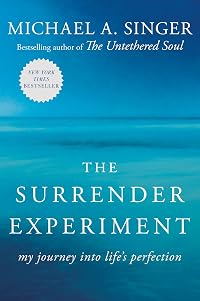
I found Singer's The Surrender Experiment to be an incredible book, a look at what it might mean to be "enlightened" in a 21st century sense: serene, secure in community and professional success, with major projects soaring to completion without much apparent struggle. The Untethered Soul is the how-to, and is a solid gloss of Singer's syncretic American Buddhism.
The main, indeed only, barrier to your spiritual and worldly fulfillment is you. Specifically, the chattering neurotic thinking part of the mind, rather than the listening seat of awareness. Still the chatter, and you'll find yourself opened to the infinite energy and love of the universe.
Two things are particularly provocative, at least for me. The first is that happiness is show more a choice that you make. So much of life is lived in fear, in opposition to a past which won't change or a future which is inherently unknowable. It's like an injury, and one way to live is to protect the wound from anything which might aggravate it, avoiding hazardous situations and building up mechanisms of protection. Or you can heal, and live in the open. Of course, "just heal", "just let go of your thoughts and beliefs", is very much the "now draw the rest of the owl" of enlightenment.
The other provocative question is around death. What if you knew you were going to die in a week? What would you do? It probably wouldn't be the same as your actual plans for next week. Yet, we know we're going to die someday, and odds are we won't even have the kindness of knowing a date. The conflict between awareness of mortality and mundanity is at the center of a lot of the world's religions, and there's not a satisfactory answer. show less
The main, indeed only, barrier to your spiritual and worldly fulfillment is you. Specifically, the chattering neurotic thinking part of the mind, rather than the listening seat of awareness. Still the chatter, and you'll find yourself opened to the infinite energy and love of the universe.
Two things are particularly provocative, at least for me. The first is that happiness is show more a choice that you make. So much of life is lived in fear, in opposition to a past which won't change or a future which is inherently unknowable. It's like an injury, and one way to live is to protect the wound from anything which might aggravate it, avoiding hazardous situations and building up mechanisms of protection. Or you can heal, and live in the open. Of course, "just heal", "just let go of your thoughts and beliefs", is very much the "now draw the rest of the owl" of enlightenment.
The other provocative question is around death. What if you knew you were going to die in a week? What would you do? It probably wouldn't be the same as your actual plans for next week. Yet, we know we're going to die someday, and odds are we won't even have the kindness of knowing a date. The conflict between awareness of mortality and mundanity is at the center of a lot of the world's religions, and there's not a satisfactory answer. show less
Just let go.
Agreed. Too bad you can't throw a digital book across the room. 1.25 stars
I apologize for a negative review of what should have been a good book. But, it just wasn't.
I brought more to this book than it gave in return. Up through Chapter 10, I was all in, waiting for the big insight, while fighting my urge to outright hate his long-winded blathering and his using imprecise words, bland words like "stuff" and "energy."
He spills a whole lot of ink yet doesn't say nearly enough. It was "Blah, blah, blah, blah, blah, [then insert magic here] and voila! Just let go." Rinse and repeat for 183 pages.
It reminded me of the old Magic Eye books. Remember those? You also had to let go to see the picture and then it was this crummy 3D show more digital tree or something. (Magic Eye 1: A New Way of Looking at the World)
I read the whole book but started being really unhappy about half way, with its sloppy language, its thinned down Eastern philosophy, and then was astounded when in the last couple chapters he brought in a complete muddle of pointless poppycock by adding God and Christianity into the otherwise Eastern philosophy mix. Pathway to enlightenment? Or just one man's cherry-picking to arrive at a nebulous conglomerate? It might work for him and I'm glad. But the dude sorely needed an editor!
For example, unless you lead a remarkably charmed life, you will find his endless examples of "pain" so superficial as to be ridiculous. It would be laughable if it wasn't so insulting. If you read his book and it didn't help you, it's not you.
And what's all this about the "real" you being separate from your mind? It's his big premise. One that quite possibly could be unhealthy, and dubious scientifically. Surely we can have both: consciousness and thoughts. Silly bear, you can even have thoughts about your thoughts without contending there is a separate entity that does that.
I can't imagine this book's success without Oprah's endorsement. I do appreciate her attempts to widen horizons but I've been disappointed before. Her picks are dips into a grab bag of mixed quality.
If you are a seeker that's honorable. You deserve some help from good teachers.
If you need some Buddha-style assistance with suffering, with concrete steps that will blow your monkey mind without adding more "pain" of irritation to your short life, try Loving What Is: Four Questions That Can Change Your Life Nearing 20 years now, I still use the steps I learned in her book when I feel pain and use those steps to release and move on.
Or if you want a Western-accessible exploration of Eastern thought written in lean, to-the-point language, try Zen Art for Meditation. At just 115 pages (and many of those are reproductions of art) it covers 15 tenets. Unique tenets, I might add, not just hammering away with one identical message ad nauseum. I found I greatly enjoyed the included minimalistic artistry of sumi-e and haiku, both further illustrated and added a deeper, intuitive grasp of the concepts.
Neither of those books will disrespect your pain or intelligence. show less
Agreed. Too bad you can't throw a digital book across the room. 1.25 stars
I apologize for a negative review of what should have been a good book. But, it just wasn't.
I brought more to this book than it gave in return. Up through Chapter 10, I was all in, waiting for the big insight, while fighting my urge to outright hate his long-winded blathering and his using imprecise words, bland words like "stuff" and "energy."
He spills a whole lot of ink yet doesn't say nearly enough. It was "Blah, blah, blah, blah, blah, [then insert magic here] and voila! Just let go." Rinse and repeat for 183 pages.
It reminded me of the old Magic Eye books. Remember those? You also had to let go to see the picture and then it was this crummy 3D show more digital tree or something. (Magic Eye 1: A New Way of Looking at the World)
I read the whole book but started being really unhappy about half way, with its sloppy language, its thinned down Eastern philosophy, and then was astounded when in the last couple chapters he brought in a complete muddle of pointless poppycock by adding God and Christianity into the otherwise Eastern philosophy mix. Pathway to enlightenment? Or just one man's cherry-picking to arrive at a nebulous conglomerate? It might work for him and I'm glad. But the dude sorely needed an editor!
For example, unless you lead a remarkably charmed life, you will find his endless examples of "pain" so superficial as to be ridiculous. It would be laughable if it wasn't so insulting. If you read his book and it didn't help you, it's not you.
And what's all this about the "real" you being separate from your mind? It's his big premise. One that quite possibly could be unhealthy, and dubious scientifically. Surely we can have both: consciousness and thoughts. Silly bear, you can even have thoughts about your thoughts without contending there is a separate entity that does that.
I can't imagine this book's success without Oprah's endorsement. I do appreciate her attempts to widen horizons but I've been disappointed before. Her picks are dips into a grab bag of mixed quality.
If you are a seeker that's honorable. You deserve some help from good teachers.
If you need some Buddha-style assistance with suffering, with concrete steps that will blow your monkey mind without adding more "pain" of irritation to your short life, try Loving What Is: Four Questions That Can Change Your Life Nearing 20 years now, I still use the steps I learned in her book when I feel pain and use those steps to release and move on.
Or if you want a Western-accessible exploration of Eastern thought written in lean, to-the-point language, try Zen Art for Meditation. At just 115 pages (and many of those are reproductions of art) it covers 15 tenets. Unique tenets, I might add, not just hammering away with one identical message ad nauseum. I found I greatly enjoyed the included minimalistic artistry of sumi-e and haiku, both further illustrated and added a deeper, intuitive grasp of the concepts.
Neither of those books will disrespect your pain or intelligence. show less
If you've read Eckhardt Tolle much will seem familiar to you here, such as the concept of "being aware of being aware" (a catchword in our family as a reminder to step back from emotional intensity). Singer adds a number of other ways for you to re-assess and re-align your habitual responses-- to recognize, for example, when what may feel like a good self-protective strategy ends up isolating you and encouraging the kind of inflexibility that ends up, literally, breaking you. There were some confusing moments for me when Singer has an unexpected outburst about the anthropomorphized Being running the Universe, the possibility of being Totally Happy, and some other things that went a bit off the rails, most of the book is astonishingly show more straight-forward, sensible, down-to-earth about some big stuff. The later chapters on the Tao and on meditating about the inevitablity of your own death as a way of focussing yourself on the present, was excellent. I had a vision of hoarding, for example, not just as hanging on to the past, but a real fear of actually Being in the present and refusal to move in to a future. We hoard mentally, by the way, not just in our attics and barns. Very good stuff! ****1/2 show less
I read this book because one of my clients from work loves it and talks about it all the time. I wish I could say it lived up to the expectations but sadly it didn't. There are a couple parts of the book that are good and has some wisdom, like when he talks about changing our negative self-talk and ignoring our inner critic, which he calls the "psyche." I also liked what he said about death kind of being like a wake up call for us and explains why we should live life to the fullest everyday. However this is the extent of what I liked, which is why it got 2 stars instead of 1.
There are a lot of things I don't like and don't agree with as well. My biggest problem with the book comes in chapter 15 when he talks about happiness. I get that show more we can choose to be happy even despite certain circumstances but to say we can be happy every moment of everyday for the rest of our lives is just unrealistic. There are going to be moments when we're sad or angry or hurt and that's ok. We have a range of emotions for a reason, they serve a purpose (I love the Disney film Inside Out for pointing this out so well), we're not meant to be happy all the time. Let's look at some of our emotions and how they play an important role in our lives. Take anger, if you see someone on the corner getting beat up and attacked, (for most people) it rouses your anger at the injustice and motivates you to want to help. Anger can be a good motivator sometimes. I said sometimes, not always. There are plenty of times when people act out on their anger and that's not a good thing but sometimes it's that spark we need to make a change in our world. Same thing can be said for sadness sometimes as well. In America, we've come a long way in gaining equal rights for others (not saying we don't still have a long way to go, cause we do) but we have come a long way and that never would have happened if everyone was just happy all the time. If you're happy and believe things are going well than what's there to change? But if you're angry or sad and have a heavy heart for all the injustices in the world, than it makes you want to change things, make them better.
The author also brings up God in here and says that God wouldn't want to be around people that are always unhappy, he wants to be around happy people. Now it's hard to know what "God" he's talking about here cause he does mesh some different theologies together but in his later chapters he does use a lot of Bible verses so let's assume he's talking about the "God" in Christianity and I'll point out some things that wouldn't make that statement true. God is not always happy himself, bold statement I know but let me show why I say this. Colossians 3:5-6 (NLT) says "So put to death the sinful, earthly things lurking within you. Have nothing to do with sexual immorality, impurity, lust, and evil desires. Don't be greedy, for a greedy person is an idolater, worshiping the things of this world. Because of these sins, the anger of God is coming." So here we clearly see that God gets angry, there are many other verses that show this as well but I won't get into them. Besides, would a God who is always happy flood the world for 40 days and nights during Noah's time? Would a happy Jesus make a whip from some ropes and chase out the merchants selling stuff in the Temple? (John 2: 13-17). Jesus also wept with Mary and Martha, even though he raised Lazarus from death, he still wept with them first (John 11:33-35). So that whole statement about God wanting to be around happy people is total BS. Besides God is described as a Father to his creation, think about your father, do you really think he expects you to be happy 24/7?
The author does talk about not closing your heart and building up walls but remaining open to others and I think maybe he makes the assumption that to do this (remain open) you have to be happy all the time and not let things bother you but again this is unrealistic. Besides you can be sad and still be open to others. If you had a parent (or anyone close to you) pass away and you go to the funeral, chances are you're not going to be happy (unless you really hated the person) nor should you have to pretend to be. It's ok to be sad, like I mentioned earlier, even Jesus wept. Also, just because you are sad doesn't mean you have to shut down and close your heart. Yes that can happen, but it doesn't have to. You have to allow yourself to grieve and be ok with it.
Another issue I had with this book was saying that your problems are not really problems, they're just events that you perceive as problems. So hundreds or thousands of college freshman getting raped on campus every year is not a problem, just an event? Child abuse is not a problem, just an event? Mass shootings and genocide is not a problem, just an event? I'm sorry but that's more BS.
Honestly I'm hoping that I'm just misunderstanding what the author is trying to say cause it's hard to believe that someone of intelligence in this day and age would make statements like these but it seems like that's what he's doing.
The last 2 things I'll say about this book is that it lacks a flow. There seems to be a lot of different thoughts and ideas here but they're all jumbled together and doesn't seem to make sense. I think part of this may be due to the author trying to appeal to everyone, seeing as he starts bringing in Bible verses towards the end of the book. But you can't appeal to everyone at the same time, it's just not possible. The author himself talks about this in an earlier chapter when he talks about the ridiculousness of the "psyche" trying to make the world perfect for you by making sure everyone is happy with you, no one is offended, everyone likes you, etc. Yet it seems like he's trying to make everyone happy with the book and not offend anyone, again not possible. This brings me to my last point, I would be wary of anyone who preached something they're not even able to practice themselves. I'm willing to bet this author is not happy all the time 24/7. It's just not possible or healthy. Ok rant over, just know I wouldn't recommend this book to anyone. show less
There are a lot of things I don't like and don't agree with as well. My biggest problem with the book comes in chapter 15 when he talks about happiness. I get that show more we can choose to be happy even despite certain circumstances but to say we can be happy every moment of everyday for the rest of our lives is just unrealistic. There are going to be moments when we're sad or angry or hurt and that's ok. We have a range of emotions for a reason, they serve a purpose (I love the Disney film Inside Out for pointing this out so well), we're not meant to be happy all the time. Let's look at some of our emotions and how they play an important role in our lives. Take anger, if you see someone on the corner getting beat up and attacked, (for most people) it rouses your anger at the injustice and motivates you to want to help. Anger can be a good motivator sometimes. I said sometimes, not always. There are plenty of times when people act out on their anger and that's not a good thing but sometimes it's that spark we need to make a change in our world. Same thing can be said for sadness sometimes as well. In America, we've come a long way in gaining equal rights for others (not saying we don't still have a long way to go, cause we do) but we have come a long way and that never would have happened if everyone was just happy all the time. If you're happy and believe things are going well than what's there to change? But if you're angry or sad and have a heavy heart for all the injustices in the world, than it makes you want to change things, make them better.
The author also brings up God in here and says that God wouldn't want to be around people that are always unhappy, he wants to be around happy people. Now it's hard to know what "God" he's talking about here cause he does mesh some different theologies together but in his later chapters he does use a lot of Bible verses so let's assume he's talking about the "God" in Christianity and I'll point out some things that wouldn't make that statement true. God is not always happy himself, bold statement I know but let me show why I say this. Colossians 3:5-6 (NLT) says "So put to death the sinful, earthly things lurking within you. Have nothing to do with sexual immorality, impurity, lust, and evil desires. Don't be greedy, for a greedy person is an idolater, worshiping the things of this world. Because of these sins, the anger of God is coming." So here we clearly see that God gets angry, there are many other verses that show this as well but I won't get into them. Besides, would a God who is always happy flood the world for 40 days and nights during Noah's time? Would a happy Jesus make a whip from some ropes and chase out the merchants selling stuff in the Temple? (John 2: 13-17). Jesus also wept with Mary and Martha, even though he raised Lazarus from death, he still wept with them first (John 11:33-35). So that whole statement about God wanting to be around happy people is total BS. Besides God is described as a Father to his creation, think about your father, do you really think he expects you to be happy 24/7?
The author does talk about not closing your heart and building up walls but remaining open to others and I think maybe he makes the assumption that to do this (remain open) you have to be happy all the time and not let things bother you but again this is unrealistic. Besides you can be sad and still be open to others. If you had a parent (or anyone close to you) pass away and you go to the funeral, chances are you're not going to be happy (unless you really hated the person) nor should you have to pretend to be. It's ok to be sad, like I mentioned earlier, even Jesus wept. Also, just because you are sad doesn't mean you have to shut down and close your heart. Yes that can happen, but it doesn't have to. You have to allow yourself to grieve and be ok with it.
Another issue I had with this book was saying that your problems are not really problems, they're just events that you perceive as problems. So hundreds or thousands of college freshman getting raped on campus every year is not a problem, just an event? Child abuse is not a problem, just an event? Mass shootings and genocide is not a problem, just an event? I'm sorry but that's more BS.
Honestly I'm hoping that I'm just misunderstanding what the author is trying to say cause it's hard to believe that someone of intelligence in this day and age would make statements like these but it seems like that's what he's doing.
The last 2 things I'll say about this book is that it lacks a flow. There seems to be a lot of different thoughts and ideas here but they're all jumbled together and doesn't seem to make sense. I think part of this may be due to the author trying to appeal to everyone, seeing as he starts bringing in Bible verses towards the end of the book. But you can't appeal to everyone at the same time, it's just not possible. The author himself talks about this in an earlier chapter when he talks about the ridiculousness of the "psyche" trying to make the world perfect for you by making sure everyone is happy with you, no one is offended, everyone likes you, etc. Yet it seems like he's trying to make everyone happy with the book and not offend anyone, again not possible. This brings me to my last point, I would be wary of anyone who preached something they're not even able to practice themselves. I'm willing to bet this author is not happy all the time 24/7. It's just not possible or healthy. Ok rant over, just know I wouldn't recommend this book to anyone. show less
Full disclosure: I chose The Untethered Soul because of the cover. I looked at it and said to myself, "Self, a horse running wild and free on a beach? That is so damn cheesy, they might just be on to something."
And, oh, they were.
I could count the number of "self-help"/"personal growth" books I've read in my life on one hand, but I've always side-eyed them with interest. As I am in a MAJOR turning point in my life right now where I can't tell if it's all a shambles or it's just being re-built, I was looking for some guidance.
There was nothing in The Untethered Soul that I haven't heard before, nothing that I hadn't already thought of myself. But it's the way that Singer says things, and repeats them (he repeats himself a lot, which I've show more read criticism about, but I think it's being used as a gentle way to drive really important points home) that really made all these things make sense to me. I am still not quite sure if I totally believe that my whole sense of being and my whole life is completely in my own control - I love science, so I understand chaos - but I am teaching myself to control some of it.
I am not the kind of person that would all of a sudden turn my back on everything in my past and live by the rules of one author, and one book alone. However, reading this book has been a really important experience for me and has given me some basic tools to take control of the ways that my life changes in the next few months/years, instead of feeling totally out of it. show less
And, oh, they were.
I could count the number of "self-help"/"personal growth" books I've read in my life on one hand, but I've always side-eyed them with interest. As I am in a MAJOR turning point in my life right now where I can't tell if it's all a shambles or it's just being re-built, I was looking for some guidance.
There was nothing in The Untethered Soul that I haven't heard before, nothing that I hadn't already thought of myself. But it's the way that Singer says things, and repeats them (he repeats himself a lot, which I've show more read criticism about, but I think it's being used as a gentle way to drive really important points home) that really made all these things make sense to me. I am still not quite sure if I totally believe that my whole sense of being and my whole life is completely in my own control - I love science, so I understand chaos - but I am teaching myself to control some of it.
I am not the kind of person that would all of a sudden turn my back on everything in my past and live by the rules of one author, and one book alone. However, reading this book has been a really important experience for me and has given me some basic tools to take control of the ways that my life changes in the next few months/years, instead of feeling totally out of it. show less
Members
- Recently Added By
Lists

Books Read in 2024
4,623 works; 126 members

Men's healing resources
747 works; 1 member

Healing resources for women
587 works; 1 member

spirituality and self growth
84 works; 1 member

el
1,139 works; 1 member
Author Information

41 Works 3,082 Members
Michael A. Singer is author of the #1 New York Times bestseller, The Untethered Soul, and the New York Times bestseller, The Surrender Experiment, both of which have been published worldwide.
Common Knowledge
- Canonical title
- The Untethered Soul: The Journey Beyond Yourself
- Original title
- The Untethered Soul: The Journey Beyond Yourself
- Original publication date
- 2007
- Dedication
- To the Masters
- First words
- In case you haven't noticed, you have a mental dialog going on inside your head that never stops.
- Last words
- (Click to show. Warning: May contain spoilers.)And if God is in ecstasy, I wonder what He sees when He looks at you?
Classifications
Statistics
- Members
- 2,356
- Popularity
- 8,323
- Reviews
- 40
- Rating
- (3.96)
- Languages
- 8 — Chinese, Danish, Dutch, English, Finnish, Portuguese, Serbian, Spanish
- Media
- Paper, Audiobook, Ebook
- ISBNs
- 30
- UPCs
- 2
- ASINs
- 9