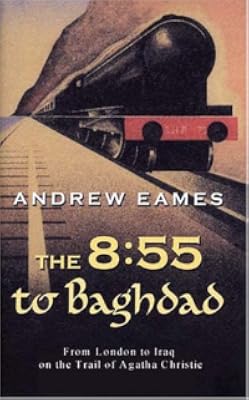
The 8:55 to Baghdad: From London to Iraq on the Trail of Agatha Christie and the Orient Express
by Andrew Eames
On This Page
Description
With her marriage to her first husband, Archie Christie, over, she decided to take a much needed holiday; the Caribbean had been her intended destination, but a conversation at a dinner party with a couple who had just returned from Iraq changed her mind. Five days later she was off on a completely different trajectory. Merging literary biography with travel adventure, and ancient history with contemporary world events, Andrew Eames tells a riveting tale and reveals fascinating and show more little-knowndetails en route in this exotic chapter in the life of Agatha Christie. His own trip from London to Baghdad—a journey much more difficult to make in 2002 with the political unrest in the Middle East and the war in Iraq, than it was in 1928—becomes ineluctably intertwined with Agatha's, and the people he meets could have stepped out of a mystery novel. Fans of Agatha Christie will delight in Eames' description of the places and events that appeared in andinfluenced her fiction—and armchair travelers will thrill in the exotica of the journey itself.. show less
Tags
Recommendations

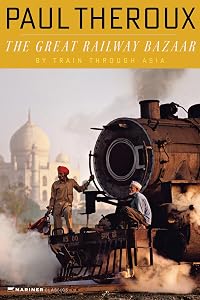
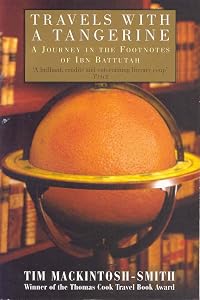
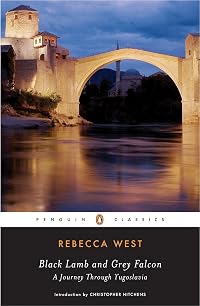

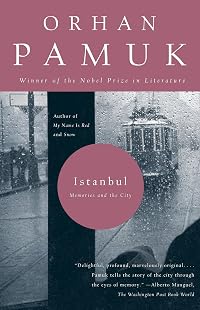















Member Recommendations



Member Reviews
Up front and immediately – this is a great find! From the enticing title (although I have never read her popular novels) to the book jacket blub that the author evidences a “sly wit” in his account of a journey through tense times, to a targeted Iraq, straight into a quote:
If you cannot find Osama, Bomb Iraq
If the markets are a drama, Bomb Iraq
If the terrorists are frisky
Pakistan is looking shifty
North Korea is too risky, Bomb Iraq.
Or from a fellow train traveler in rural Turkey about President Bush:"You have traveled. I have traveled. We understand each other. But President Bush? Has he traveled? What is that expression—travel broadens the mind?” Eames’ humour and the selections he chooses to write of, are far from show more sly!
Eames a British journalist recounts his travels by train, ferry and bus from London to Baghdad and onto Ur as he replicates the journey that Agatha Christie took back in 1928, but with far more difficulty as this is in the age of Desert Storm and the Axis of Evil. Never mind, he only gets bombed once, and that by his “own side”, at the conclusion of his quest in the area of the (claimed) original site of the “Garden of Eden”. He travels partly on the famed Orient Express with a cast of characters he suspects of being invented for his book’s purpose by Agatha Christy herself. He notes that the ”Swiss train track-men who walk the length of the ‘consist’, tapping wheels, keep their eyes firmly on their task. To raise the gaze to window level,” he says,”would have risked invading the privacy of a camp hairdresser touching up his highlights or a bouffant old goat touching up his African princess.”
He becomes far more serious about the openness and genuine hospitality of the Iraq people at the conclusion of his adventure, noting the warmth and friendliness, mixed with caution and fear of Sadam’s constant presence. This however is no “soft adventure” as the author calls those travel narratives of crossing the Atlantic in a barrel or seeking a punch-up in a bar, it contains some hard-core history, acute observations of people and politics and is a great – too rapidly finished- read.
The author hopes, as do many of the peoples of biblical Babylon he meets that the seemingly, now unstoppable war will cleanse away the isolation and mistrust of the region, the original “cradle of civilization” as the floods of the rainy season in Mesopotamia ”purge the streets of the accumulated rubbish in a free-flowing enema.” show less
If you cannot find Osama, Bomb Iraq
If the markets are a drama, Bomb Iraq
If the terrorists are frisky
Pakistan is looking shifty
North Korea is too risky, Bomb Iraq.
Or from a fellow train traveler in rural Turkey about President Bush:"You have traveled. I have traveled. We understand each other. But President Bush? Has he traveled? What is that expression—travel broadens the mind?” Eames’ humour and the selections he chooses to write of, are far from show more sly!
Eames a British journalist recounts his travels by train, ferry and bus from London to Baghdad and onto Ur as he replicates the journey that Agatha Christie took back in 1928, but with far more difficulty as this is in the age of Desert Storm and the Axis of Evil. Never mind, he only gets bombed once, and that by his “own side”, at the conclusion of his quest in the area of the (claimed) original site of the “Garden of Eden”. He travels partly on the famed Orient Express with a cast of characters he suspects of being invented for his book’s purpose by Agatha Christy herself. He notes that the ”Swiss train track-men who walk the length of the ‘consist’, tapping wheels, keep their eyes firmly on their task. To raise the gaze to window level,” he says,”would have risked invading the privacy of a camp hairdresser touching up his highlights or a bouffant old goat touching up his African princess.”
He becomes far more serious about the openness and genuine hospitality of the Iraq people at the conclusion of his adventure, noting the warmth and friendliness, mixed with caution and fear of Sadam’s constant presence. This however is no “soft adventure” as the author calls those travel narratives of crossing the Atlantic in a barrel or seeking a punch-up in a bar, it contains some hard-core history, acute observations of people and politics and is a great – too rapidly finished- read.
The author hopes, as do many of the peoples of biblical Babylon he meets that the seemingly, now unstoppable war will cleanse away the isolation and mistrust of the region, the original “cradle of civilization” as the floods of the rainy season in Mesopotamia ”purge the streets of the accumulated rubbish in a free-flowing enema.” show less
Why would anyone still read a travelogue in this, the beginning of the 21st century, when it was so easy to find outstanding independent film travel documentaries, many prepared by only one or two individuals at most? Certainly this visual medium combined with well-edited documentary realism and well-scripted travel guide dialog would serve better than print for the purpose of introducing a novice to a new culture, people, or place. But a modern-day print-based travelogue was what our book club leader assigned for our next book. That is how I came to read The 8:55 to Baghdad by Andrew Eames. I am glad I did.
In 2003, on the eve of the second Gulf War, seasoned English travel-writer Andrew Eames retraced the famous train trip that Agatha show more Christie made 75 years earlier on the Orient Express from London to Baghdad. Thus this book is a delightful hybrid—part history and biography of Christie, part travelogue concerning a unique trip through parts of the world where few Westerners choose to travel, and part transcribed candid conversations with strangers and interviews with local dignitaries that the author hooked up with during this travels.
Thankfully, Eames knew better than to bore us with the familiar. Most of the travelogue deals with the wholly unique—parts of the trip where the typical Western traveler has little to no experience. I am speaking of countries like Croatia, Serbia, Syria, and Iraq, as well as little travel portions of Hungary and Turkey.
Personally, I was only mildly interested in the Christie history. What interested me most was the candid conversations that the author was able to have with strangers everywhere along his travels. These conversations often open up a whole new perspective on world politics. Eames was able to pick up some amazingly straightforward points of view about important topics from complete strangers. This is what kept me glued to the book.
Take for example:
1) The conversation Eames had with a Belgrade businessman who genuinely felt that what Serbia needed was another war in order to jump start its stagnant economy. The man says: "Today, Serbia is old news. Now there's 9/11, Afghanistan, and Iraq, we're not important any more. Everyone's left or leaving and all the money is going elsewhere. That's why we need another war. To bring back the budgets." The author politely inquires against who the war should be. "Dunno. Someone will pop up. They always do" (p. 141).
2) The conversation Eames had with a fellow train traveler in rural Turkey about President Bush: "You have traveled. I have traveled. We understand each other. But President Bush? Has he traveled? What is that expression—travel broadens the mind? I wonder if he would still be demonizing the Islamic world if he'd come here on his holidays" (p. 205). A few pages later, while the author is still conversing with the same Turkish passenger, they start talking about Iraq. The man says: " Iraq will probably be a better place without Saddam Hussein, but the war must not go on for too long. Might is only right for a limited time; look at Genghis Khan. Justice, that is the important thing. If the U.S. treats Iraq with justice, then I don't think there'll be any backlash from here. But if America shows itself to be greedy, then it'll be a problem. A real problem." Then the conversation turns naturally to Israel and we get this candid comment: "There you see it, comes the problem of justice. There is no justice, not for the people of Palestine. For them Israel sets the parameters and inflicts the penalties. Imagine if a foreign power claimed the heart of London, and you could do nothing because it had a big, powerful bully of a friend. Well...I have Jewish friends, but we can't talk about it. It is such an injustice, and it is deeply felt elsewhere in the world. Deeply felt" (p. 209).
3) Or the conversation he had with a Canadian engineer on the border between Turkey and Syria. Eames asks the man if he thinks there is going to be a war. The man who builds grain silos for a living says that he does not think so, "Don't think the Syrians do either. How could there be, with so little pretext?" But what about the oil, the author asks. "No way; Even Big George wouldn't do anything so cynical. No, I tell you what...I predict that water, not oil, will be the next big justification for war. The Syrian aquifers are going down at a rate of fifteen feet a year. That's serious for Syria, and it's even more serious for Iraq...you know what Mesopotamia means? It means land between two rivers. The Tigris and the Euphrates. They both originate in the mountains of Turkey. Without those two rivers Iraq would not, could not exist." They go on to discuss the Turkish Central Anatolian Project to construct 20 dams on the Euphrates and the Tigris by the year 2020. "Those dams will pull the plug on Iraq...the poor buggers will die of thirst. They don't have any other source of water" (p. 251-2).
If you like reading that kind of candid dialogue, you'll love this book. I did, and it opened my eyes. show less
In 2003, on the eve of the second Gulf War, seasoned English travel-writer Andrew Eames retraced the famous train trip that Agatha show more Christie made 75 years earlier on the Orient Express from London to Baghdad. Thus this book is a delightful hybrid—part history and biography of Christie, part travelogue concerning a unique trip through parts of the world where few Westerners choose to travel, and part transcribed candid conversations with strangers and interviews with local dignitaries that the author hooked up with during this travels.
Thankfully, Eames knew better than to bore us with the familiar. Most of the travelogue deals with the wholly unique—parts of the trip where the typical Western traveler has little to no experience. I am speaking of countries like Croatia, Serbia, Syria, and Iraq, as well as little travel portions of Hungary and Turkey.
Personally, I was only mildly interested in the Christie history. What interested me most was the candid conversations that the author was able to have with strangers everywhere along his travels. These conversations often open up a whole new perspective on world politics. Eames was able to pick up some amazingly straightforward points of view about important topics from complete strangers. This is what kept me glued to the book.
Take for example:
1) The conversation Eames had with a Belgrade businessman who genuinely felt that what Serbia needed was another war in order to jump start its stagnant economy. The man says: "Today, Serbia is old news. Now there's 9/11, Afghanistan, and Iraq, we're not important any more. Everyone's left or leaving and all the money is going elsewhere. That's why we need another war. To bring back the budgets." The author politely inquires against who the war should be. "Dunno. Someone will pop up. They always do" (p. 141).
2) The conversation Eames had with a fellow train traveler in rural Turkey about President Bush: "You have traveled. I have traveled. We understand each other. But President Bush? Has he traveled? What is that expression—travel broadens the mind? I wonder if he would still be demonizing the Islamic world if he'd come here on his holidays" (p. 205). A few pages later, while the author is still conversing with the same Turkish passenger, they start talking about Iraq. The man says: " Iraq will probably be a better place without Saddam Hussein, but the war must not go on for too long. Might is only right for a limited time; look at Genghis Khan. Justice, that is the important thing. If the U.S. treats Iraq with justice, then I don't think there'll be any backlash from here. But if America shows itself to be greedy, then it'll be a problem. A real problem." Then the conversation turns naturally to Israel and we get this candid comment: "There you see it, comes the problem of justice. There is no justice, not for the people of Palestine. For them Israel sets the parameters and inflicts the penalties. Imagine if a foreign power claimed the heart of London, and you could do nothing because it had a big, powerful bully of a friend. Well...I have Jewish friends, but we can't talk about it. It is such an injustice, and it is deeply felt elsewhere in the world. Deeply felt" (p. 209).
3) Or the conversation he had with a Canadian engineer on the border between Turkey and Syria. Eames asks the man if he thinks there is going to be a war. The man who builds grain silos for a living says that he does not think so, "Don't think the Syrians do either. How could there be, with so little pretext?" But what about the oil, the author asks. "No way; Even Big George wouldn't do anything so cynical. No, I tell you what...I predict that water, not oil, will be the next big justification for war. The Syrian aquifers are going down at a rate of fifteen feet a year. That's serious for Syria, and it's even more serious for Iraq...you know what Mesopotamia means? It means land between two rivers. The Tigris and the Euphrates. They both originate in the mountains of Turkey. Without those two rivers Iraq would not, could not exist." They go on to discuss the Turkish Central Anatolian Project to construct 20 dams on the Euphrates and the Tigris by the year 2020. "Those dams will pull the plug on Iraq...the poor buggers will die of thirst. They don't have any other source of water" (p. 251-2).
If you like reading that kind of candid dialogue, you'll love this book. I did, and it opened my eyes. show less
In 2002 Eames embarked on a (mostly) train journey from London, England to Iraq to follow in the footsteps of mystery author Agatha Christie. It is a beyond brilliant idea for Eames is able to weave together a travelogue of his own experiences, historical snapshots of the regions he traverses and an abbreviated biography of one of the world's best known crime writers of the century. Eames's journey takes him through Belgium, France, Switzerland, Slovenia, Croatia, Bulgaria, Turkey and Syria; ending in Damascus on the eve of the Gulf War.
Picked up as an Audiobook from Audible, and read by the author, who does a decent job of it.
This book's concept started out as a "let's follow Agatha Christie's journeys to the middle east by train" story, but morphed into part travelogue, part history lesson and part Christie autobiography.
Eames attempts to do a trip between England and Baghdad, previously done several times and almost completely by train by Agatha Christie (and much on the Orient Express). This book is the result of when Eames tries to recreate this trip. The Orient Express, as was, was shut down in the 1970s, and has been recreated in part by some willing investors who, as a labour of love, have gathered the remaining rolling stock and put on some level of service. show more Lack of rolling stock, multiple local and global wars, and shifting borders (and that England is no longer a regional strong man in the area) has meant that such a trip undertaken by a solo Englisher is no longer really possible.[return][return]However, Eames does as he can, describing his various adventures through Europe and the Middle-east, and some of the more interesting people he meets. He goes through what remains of Yugoslavia, and finds out how some people are coping 10 years after the war that split the country in three.
His attempts to reach Baghdad on a bus with a motley crew of Westerners is tense, where noone really knows who is who, the English continue to have a stiff upper lipped colonial approach to travel, the Americans can be dodgy and everyone is trying to guess who the CIA agent is. This part of the trip reflects the tension and conflicting views of the potentially coming war. Eames� journey concluded on a bitter sweet note in Baghdad in 2003, with post-9/11 tensions running high and the Allied airplanes beginning to do bombing sorties in the skies. [return][return]At the end of the book is a �more straight� version of Christie�s trips in the Middle-East in her guise as the wife of an archaeologist and her continuing work as a worldwide known writer � several of her books, including �death in Mesopotamia� and �Murder on the Orient Express� were written during her second marriage. show less
This book's concept started out as a "let's follow Agatha Christie's journeys to the middle east by train" story, but morphed into part travelogue, part history lesson and part Christie autobiography.
Eames attempts to do a trip between England and Baghdad, previously done several times and almost completely by train by Agatha Christie (and much on the Orient Express). This book is the result of when Eames tries to recreate this trip. The Orient Express, as was, was shut down in the 1970s, and has been recreated in part by some willing investors who, as a labour of love, have gathered the remaining rolling stock and put on some level of service. show more Lack of rolling stock, multiple local and global wars, and shifting borders (and that England is no longer a regional strong man in the area) has meant that such a trip undertaken by a solo Englisher is no longer really possible.[return][return]However, Eames does as he can, describing his various adventures through Europe and the Middle-east, and some of the more interesting people he meets. He goes through what remains of Yugoslavia, and finds out how some people are coping 10 years after the war that split the country in three.
His attempts to reach Baghdad on a bus with a motley crew of Westerners is tense, where noone really knows who is who, the English continue to have a stiff upper lipped colonial approach to travel, the Americans can be dodgy and everyone is trying to guess who the CIA agent is. This part of the trip reflects the tension and conflicting views of the potentially coming war. Eames� journey concluded on a bitter sweet note in Baghdad in 2003, with post-9/11 tensions running high and the Allied airplanes beginning to do bombing sorties in the skies. [return][return]At the end of the book is a �more straight� version of Christie�s trips in the Middle-East in her guise as the wife of an archaeologist and her continuing work as a worldwide known writer � several of her books, including �death in Mesopotamia� and �Murder on the Orient Express� were written during her second marriage. show less
This feels like a first attempt at a travel book, with a good idea - retracing the journey that Agatha Christie made after her failed first marriage to Baghdad by train (Orient Express).
However it felt a bit forced and the author did not interweave his personal journey and that of Agatha Christie in a smooth manner.
Overall it was interesting, both the contemporary story and that of Agatha Christie's, but it felt somewhat disjointed.
However it felt a bit forced and the author did not interweave his personal journey and that of Agatha Christie in a smooth manner.
Overall it was interesting, both the contemporary story and that of Agatha Christie's, but it felt somewhat disjointed.
This book made me think more about the current situation in Iraq and Afghanistan from a different perspective. Also, it did make me sad to think that as an American, I probably couldn't safely travel to many of the countries described so wonderfully in the book, because my 'lovely' government has made being an American akin to being a big butthead. This book did inspire me to start rereading the Christie books that are set in or around the [b:Orient Express|16304|Murder on the Orient Express (Hercule Poirot Mysteries)|Agatha Christie|http://photo.goodreads.com/books/1166722586s/16304.jpg|2285570] and that area of the Middle East.
A nice idea, combining travel writing with a minibiography of Agatha Christie. Shame it drags on too long.
Members
- Recently Added By
Published Reviews
Eames follows the route that Agatha Christie took (in 1928, at age 38) when, newly divorced and already a best-selling author, she made her way solo from her dreaded marital home of Sunningdale, outside of London, via train to Baghdad, where she met the younger man who would become her second husband, archaeologist Max Mallowan. Leaving from Victoria Station, Eames travels on several modern show more reincarnations of the swanky old trains, including the ultra luxurious Venice-Simplon Orient Express, the longest passenger train in Europe. His delightfully entertaining quest spreads out over many weeks as he changes trains in Venice, then proceeds to Trieste, Ljubljana, Zagreb, Belgrade, Sofia, Istanbul, Aleppo, Damascus and, by bus, to Baghdad. He is personable and open to meeting all kinds of people, though also not above poking gentle fun at them. show less
added by John_Vaughan
Eames gives good accounts of these places, even though the writers he quotes are James Joyce and Rebecca West rather than the author of Murder on the Orient Express. He is especially interesting a bit further east, in the damaged worlds of Croatia and Serbia, now largely forgotten by the media since the theatre of war moved on. And he becomes really adventurous once in Middle Eastern show more territory, travelling across Syria and into Iraq with a small group of fellow-travellers on one of those extraordinary "holidays" undertaken by people with a lemming-like tendency towards suicidal destinations. show less
added by John_Vaughan
Author Information

18+ Works 485 Members
Common Knowledge
- People/Characters
- Agatha Christie; George W. Bush
- Important places
- Venice, Veneto, Italy; Trieste, Friuli-Venezia Giulia, Italy; Ljubljana, Slovenia; Zagreb, Croatia; Belgrade, Serbia; Sofia, Bulgaria (show all 9); Istanbul, Turkey; Aleppo, Syria; Damascus, Syria
- Important events
- Iraq War
- Quotations
- Then the conversation turns naturally to Israel and we get this candid comment: "There you see it, comes the problem of justice. There is no justice, not for the people of Palestine. For them Israel sets the parameters and in... (show all)flicts the penalties. Imagine if a foreign power claimed the heart of London,
Classifications
Statistics
- Members
- 276
- Popularity
- 116,623
- Reviews
- 11
- Rating
- (3.47)
- Languages
- English
- Media
- Paper, Audiobook, Ebook
- ISBNs
- 12
- ASINs
- 10