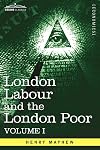
London Labour and the London Poor : Volume I
by Henry Mayhew
London Labour and the London Poor (Volume I)
53 Members (4.83)
On This Page
Description
Assembled from a series of newspaper articles first published in the newspaper *Morning Chronicle* throughout the 1840s, this exhaustively researched, richly detailed survey of the teeming street denizens of London is a work both of groundbreaking sociology and salacious voyeurism. In an 1850 review of the survey, just prior to its initial book publication, William Makepeace Thackeray called it "tale of terror and wonder" offering "a picture of human life so wonderful, so awful, so piteous show more and pathetic, so exciting and terrible, that readers of romances own they never read anything like to it." Delving into the world of the London "street-folk"-the buyers and sellers of goods, performers, artisans, laborers and others-this extraordinary work inspired the socially conscious fiction of Charles Dickens in the 19th century as well as the urban fantasy of Neil Gaiman in the late 20th. Volume I explores the lives of: - the "wandering tribes" - costermongers - sellers of fish, fruits and vegetables - sellers of books and stationery - sellers of manufactured goods - women and children on the streets - and more. English journalist HENRY MAYHEW (1812-1887) was a founder and editor of the satirical magazine *Punch.* show lessTags
Recommendations

















Member Reviews
Members
- Recently Added By
Lists

A Good Read (Radio 4)
287 works; 1 member
Author Information

63+ Works 2,094 Members
Henry Mayhew had a varied career as a London writer of the mid-Victorian period. He was the son of a London solicitor, Joshua Mayhew, who reputedly was a rather tyrannous father. Apparently, Henry was a bitter disappointment to his father; the younger Mayhew had been educated at the Westminster School but, in objection to a flogging he had show more received, ran away from school and went to sea for a year. On his return, he was articled to his father but after three years, he abandoned the law to seek a career as a journalist and a dramatist. Mayhew achieved some early success as a dramatist, most notably with his 1834 farce, "The Wandering Minstrel." In the late 1830's, he was the joint editor of a successful satirical weekly, Figaro in London, and later helped to found Figaro's most significant and long-lived successor, Punch. Evidently, a fairly serious rift developed between Mayhew and his magazine colleagues, although the details of this falling-out remain a mystery---one of the many unanswered questions about Mayhew's life. Mayhew was never without financial worries, and, as a means of making quick money, he collaborated on a number of comic novels with his younger brother, Augustus (1826--75). Their most successful work is "The Greatest Plague of Life" (1847), which was issued in monthly numbers and proved very popular. They followed it with "Whom to Marry and How to Get Married" (1848); later Mayhew singly authored 1851, or, "The Adventures of Mr. and Mrs. Sandbags 1851," (1851). Mayhew's attempt, in 1851, to publish the 82 "letters" he had written for the Morning Chronicle, in which he investigates the plight of London's urban poor, was a financial failure. They were issued in 1861, however, in four volumes under the title London Labour and the London Poor. It is for this classic work that Mayhew is today best known. In it, he unhesitatingly depicts the opprobrium under which most of the London working classes led their lives. In many ways, London Labour and the London Poor epitomizes the Victorian tendency to be simultaneously repulsed and fascinated by the working classes, the "Great Unwashed" huddled together in the urban centers of England. Along with Edwin Chadwick and J.P. Kay-Shuttleworth, Mayhew stands as one of the earliest of urban sociologists. Although recent years have witnessed an increase in interest in Henry Mayhew, a "definitive" biography remains to be written. The introductions to his work, notably John Rosenberg's preface to the Dover facsimile edition of London Labour and the London Poor and the essays framing the edition of "The Unknown Mayhew," are good sources of information. (Bowker Author Biography) show less
Some Editions
Series

Belongs to Publisher Series
Work Relationships
Is contained in
Common Knowledge
- Canonical title
- London Labour and the London Poor : Volume I
- Important places
- London, England, UK
- Original language
- English
Classifications
- Genres
- Sociology, Nonfiction, Anthropology, History, General Nonfiction
- DDC/MDS
- 301.452309421 — Society, government, & culture Social sciences, sociology & anthropology Sociology and anthropology Formerly: Social structure
- LCC
- HV4088 .L8 .M52 — Social sciences Social pathology. Social and public welfare. Criminology Social pathology. Social and public welfare. Protection, assistance and relief Poor in cities. Slums
- BISAC
Statistics
- Members
- 53
- Popularity
- 576,179
- Rating
- (4.83)
- Languages
- English
- Media
- Paper
- ISBNs
- 5
- ASINs
- 2