On This Page
Description
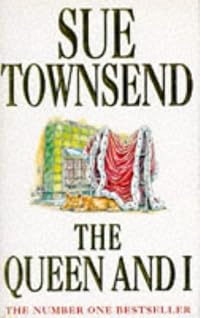
When a Republican party wins the General Election, they strip the royal family of everything and send them to live on a housing estate in the Midlands. Exchanging caviar for boiled eggs, servants for a social worker named Trish, the Queen and her family learn what it means to be poor among the great unwashed. Is their breeding sufficient to allow them to rise above their changed circumstance or deep down are they really just like everyone else?Tags
Recommendations

















Member Recommendations
Member Reviews
In this anarchic comical story, the Queen falls asleep on election night in April 1992, expecting that the following day either "nice" John Major or "perfectly agreeable" Neil Kinnock will be prime minister, both of whom she prefers to Mrs Thatcher, "whose mad eyes and strangulated voice [had] quite unnerved [her]". Instead, she wakes up to discover that republican Jack Barker has become Prime Minister, having used his position in the Television Technicians' Union to broadcast subliminal messages to viewers to vote the end the monarchy. The Queen and the rest of the royal family (except Andrew and Edward who are abroad) are forced to live on a council estate. Unlike the rest of the family, the Queen and Princess Anne take to their new show more lives and emerge with more dignity than the others. Written at a time when the monarchy was going through a lot of troubles and was relatively unpopular (this was the Queen's annus horribilis), this is very funny, but also rather sad and pathetic, and in my view hasn't aged well, unlike the wonderful Adrian Mole series, for which the author is better known. show less
Sprightly fantasy about what might happen if the British Royal Family was suddenly removed from power and reduced to living on the dole.
As the Queen, Prince Phillip, Princess Margaret, Princess Anne and her children, and Charles and Diana and their boys settle into Council housing in a dreary Midlands subdivision, surrounded by guards to keep the press and curiosity-seekers away, each member of the family faces their new estate in life with a different mindset. The neighbors' reactions also range from tongue-tied awe to puzzled acceptance, though the Queen's spoiled Corgi, Harris, causes more than one raised eyebrow.
The book has some fun moments, but Townsend loses points for the abrupt and easy-way-out ending.
As the Queen, Prince Phillip, Princess Margaret, Princess Anne and her children, and Charles and Diana and their boys settle into Council housing in a dreary Midlands subdivision, surrounded by guards to keep the press and curiosity-seekers away, each member of the family faces their new estate in life with a different mindset. The neighbors' reactions also range from tongue-tied awe to puzzled acceptance, though the Queen's spoiled Corgi, Harris, causes more than one raised eyebrow.
The book has some fun moments, but Townsend loses points for the abrupt and easy-way-out ending.
What a hoot! The royal family is fired by a newly elected "Republican" government and they are sent to live in a council estate. Each of them copes differently with the situation, but as you might expect the Queen bears up quite swimmingly.
This book came highly recommended by a cousin with similar reading tastes to me. Perhaps I was expecting too much. First published in 1992, it was amusing and thought-provoking with a touch of clairvoyance about it, but it wasn't the laugh out loud read I was led to expect.
I loved the character Philomena Toussaint - I have know women like her - and almost shed a tear when I found out about the food stored on top of the cabinet.
I loved the character Philomena Toussaint - I have know women like her - and almost shed a tear when I found out about the food stored on top of the cabinet.
I’ve only recently discovered the books of Sue Townsend, and this is one of the best.
It tells of the dire fate of the British royal family when the People’s Republican Party with Jack Barker as PM wins the election.
What happens is that the monarchy has been overturned and the Queen and her family evicted from Buckingham Palace and relocated in Hell(ebore) Close, which is a street inhabited by, Horror of Horrors, the poorest members of the working class.
The Queen is allocated a pensioner’s bungalow. She remarks, “Will my staff be living in or out?”
“Jack laughed and looked at his fellow Republicans. --- They laughed along with Jack. ‘You don’t seem to understand. There’ll be no staff, no dressers, no cooks, no show more secretaries, cleaners, chauffeurs.’
Prince Philip falls into a deep depression, retires to his bed and refuses to eat. He says,”It’s abso-bloody-utely impossible. I refuse. I’d sooner live in a bloody ditch.”
Charles, who now sports a ponytail, is ecstatic with this simple life he has always yearned for (he has, of course, his own littlecouncil house together with Diana and the two kids); he spends his time pottering in his little organic garden.
The Queen has a little trouble communicating with her neighbours, Tony and Beverly. “’Excuse me, but would you have an axe I could borrow?’
‘An ix?’ repeated Tony.
‘Yes, an axe.’ The Queen came to their front gate.
‘An ix?’ puzzled Beverley.
‘Yes!’
‘I dunno what an ix is’, Tony said.
‘You don’t know what an axe is?’
‘No.’
‘One uses it for chopping wood.’
The Queen was growing impatient. She had made a simple request; her new neighbours were obviously morons. She was aware that education standards had fallen, but not to know what an axe was – It was a scandal.’
‘I need an implement of some kind to gain access to my house.’
‘Arse?’
‘House!’
The driver volunteered his services as translator. His hours talking to the Queen had given him a new found linguistic confidence.”
“Furniture filled every room. They had to squeeze past each other with frequent apologies for touching.”
The children, William and Harry, are quick to learn the new dialect. “Charles --- said, ‘Harry for goodness sake, speak properly.’
Harry said, ‘If I speak proper I get my cowin’ face smashed in.’
‘By whom?’ asked Charles.
‘By who’, corrected Harry. ‘By the kids in ‘ell Close, that’s who.’”
The Queen’s dog, Harris, allowed to roam freely in the neighbourhood, soon becomes the leader of a (dog) gang, Top Dog.
Charles isn’t too kind to Diana, which frequently leads to tears. He has been arrested, unjustly charged with a minor misdemeanour. Diana checks her wardrobe to choose something to wear in court – he ends up getting six months in gaol.
The Queen finds it difficult to scrape together enough coins for the family’s basic needs, money for the bus and the meter: the lights keep going out and she then needs to find a fifty pence coin for the meter.
She has heard that she can make a cheap, nutritious broth if she purchases some bones from the butcher. The butcher’s shop has closed but when she tells him the bones are for the dog, he relents and gives her “a collection of gruesome bones”.
Sure Townsend has a knack for rendering the speech of the various classes, well, at least, the working and upper classes, and we’re shown the penuriousness of the working classes in Hell Close and enlightened about the tinned and processed foods on which they subsist. (If the Royal family had had to live on such foods, I doubt whether they would have been as long-lived as is the case.) She has also perfectly captured the personalities of the various members of the Royal family.
The book is hilarious, perhaps Sue Townsend’s best. (I haven’t read them all yet.) If you like humorous books or need to be cheered up, I greatly recommend that you read this one. show less
It tells of the dire fate of the British royal family when the People’s Republican Party with Jack Barker as PM wins the election.
What happens is that the monarchy has been overturned and the Queen and her family evicted from Buckingham Palace and relocated in Hell(ebore) Close, which is a street inhabited by, Horror of Horrors, the poorest members of the working class.
The Queen is allocated a pensioner’s bungalow. She remarks, “Will my staff be living in or out?”
“Jack laughed and looked at his fellow Republicans. --- They laughed along with Jack. ‘You don’t seem to understand. There’ll be no staff, no dressers, no cooks, no show more secretaries, cleaners, chauffeurs.’
Prince Philip falls into a deep depression, retires to his bed and refuses to eat. He says,”It’s abso-bloody-utely impossible. I refuse. I’d sooner live in a bloody ditch.”
Charles, who now sports a ponytail, is ecstatic with this simple life he has always yearned for (he has, of course, his own littlecouncil house together with Diana and the two kids); he spends his time pottering in his little organic garden.
The Queen has a little trouble communicating with her neighbours, Tony and Beverly. “’Excuse me, but would you have an axe I could borrow?’
‘An ix?’ repeated Tony.
‘Yes, an axe.’ The Queen came to their front gate.
‘An ix?’ puzzled Beverley.
‘Yes!’
‘I dunno what an ix is’, Tony said.
‘You don’t know what an axe is?’
‘No.’
‘One uses it for chopping wood.’
The Queen was growing impatient. She had made a simple request; her new neighbours were obviously morons. She was aware that education standards had fallen, but not to know what an axe was – It was a scandal.’
‘I need an implement of some kind to gain access to my house.’
‘Arse?’
‘House!’
The driver volunteered his services as translator. His hours talking to the Queen had given him a new found linguistic confidence.”
“Furniture filled every room. They had to squeeze past each other with frequent apologies for touching.”
The children, William and Harry, are quick to learn the new dialect. “Charles --- said, ‘Harry for goodness sake, speak properly.’
Harry said, ‘If I speak proper I get my cowin’ face smashed in.’
‘By whom?’ asked Charles.
‘By who’, corrected Harry. ‘By the kids in ‘ell Close, that’s who.’”
The Queen’s dog, Harris, allowed to roam freely in the neighbourhood, soon becomes the leader of a (dog) gang, Top Dog.
Charles isn’t too kind to Diana, which frequently leads to tears. He has been arrested, unjustly charged with a minor misdemeanour. Diana checks her wardrobe to choose something to wear in court – he ends up getting six months in gaol.
The Queen finds it difficult to scrape together enough coins for the family’s basic needs, money for the bus and the meter: the lights keep going out and she then needs to find a fifty pence coin for the meter.
She has heard that she can make a cheap, nutritious broth if she purchases some bones from the butcher. The butcher’s shop has closed but when she tells him the bones are for the dog, he relents and gives her “a collection of gruesome bones”.
Sure Townsend has a knack for rendering the speech of the various classes, well, at least, the working and upper classes, and we’re shown the penuriousness of the working classes in Hell Close and enlightened about the tinned and processed foods on which they subsist. (If the Royal family had had to live on such foods, I doubt whether they would have been as long-lived as is the case.) She has also perfectly captured the personalities of the various members of the Royal family.
The book is hilarious, perhaps Sue Townsend’s best. (I haven’t read them all yet.) If you like humorous books or need to be cheered up, I greatly recommend that you read this one. show less
Sue Townsend turns her gimlet eye both on the Royal family and on a resurgent British Labour government in this hilarious novel. An election has brought s radical administration into power that abolishes the monarchy and sends the Queen, Prince Phillip, the Queen Mother and Princess Margaret, Princess Anne, and Prince Charles with Diana and the boys are to live in Council housing in a housing estate in the Midlands. Prince Philip immediately takes to his bed and fades away, but the Queen, Princess Anne, and remarkably Charles and Diana prove to be more adaptable leaning to live with government red tape, the necessity to make do, and the remarkable kindness of their neighbors.
While some reviewers have called this book dated, I find it show more oddly prescient. As the queen now teeters towards her century mark, the survival of the monarchy is very much in question. While they may not end up in a council flat, they may not be wearing crowns much longer. show less
While some reviewers have called this book dated, I find it show more oddly prescient. As the queen now teeters towards her century mark, the survival of the monarchy is very much in question. While they may not end up in a council flat, they may not be wearing crowns much longer. show less
So it probably wasn't the best of timing that meant I was listening to this the day the Queen died. But I'm not sure that made a huge difference to my reading enjoyment (or lack thereof). It is billed as provocative and hilarious. I'm not sure it lived up to billing.
It is based on the surmise that at the General Election the Republican Party, led by Jack Barker, win. They form a government and depose the monarchy, apparently all by Monday morning. The Queen and her family find themselves living in a council house on Hellebore close, only 5 letters are missing and it is Hell Close to all and sundry. There are a significant number of fish out of water set pieces, with some of the royals presented as being less practical than others. In show more some cases it feels that she has them badly misrepresented. Their interactions with their very poor neighbours are not entirely without malice, which seems to be aimed at both parties. The first portion of the book felt, to me, to be bordering on cruel to all concerned. It also feels like a portion of the dispute was manufactured. The argument between the Queen & Prince Philip about what their surname should be seemed redundant when the royal family's surname was changed to the double barrelled Mountbatten-Windsor in the 60s. by the time this was published it should hardly have raised an argument.
The book improves as it progresses. It becomes less about attempts at comedic set pieces and becomes more about the relationship between the various residents. There are some really touching moments, Philomena and the Queen Mother, for example, and their relationship, is one that goes beyond and reaches an greater depth. Harris, the corgi finds a whole new world outside the door of number 9 and generally causes mayhem. But that has to be balanced against the farcical elements and an increasingly unlikely story about the antics of the government. I borrowed this from the library and the last chapter had a scratch so bad that I couldn't listen to it, but I can't say I feel any great need to seek it out to finish it off.
While the idea is timeless, the details are not. The giro arriving in the post, the phone box on the end of the road, there are any number of references that anchor this in the 1990s. That probably makes sense to those who remember that time, but I wonder how much need explaining that would have seemed obvious. It feels rather dated, in that sense.
It raises, along the way, questions of the welfare state and how should that be structured. The people of Hell Close are trapped in poverty, some of them have had poor education and can't help their children out of their predicament, their school is crumbling, there are too many pupils. The local hospital has closed wards and the doctors overworked. The pension is barely enough to live on and they all struggle to make ends meet. It raises the question do we need a monarchy - and that, too, remains a valid question, along with an elite ruling class that seems to be more elite and less in touch with reality with every passing year. And all of those are perfectly valid points to have been making in the 1990s and they remain equally valid now. It feels like this is trying to be more than one book at once and I feel it fails at being a success at any of them. It improved significantly, but still only manages an OK show less
It is based on the surmise that at the General Election the Republican Party, led by Jack Barker, win. They form a government and depose the monarchy, apparently all by Monday morning. The Queen and her family find themselves living in a council house on Hellebore close, only 5 letters are missing and it is Hell Close to all and sundry. There are a significant number of fish out of water set pieces, with some of the royals presented as being less practical than others. In show more some cases it feels that she has them badly misrepresented. Their interactions with their very poor neighbours are not entirely without malice, which seems to be aimed at both parties. The first portion of the book felt, to me, to be bordering on cruel to all concerned. It also feels like a portion of the dispute was manufactured. The argument between the Queen & Prince Philip about what their surname should be seemed redundant when the royal family's surname was changed to the double barrelled Mountbatten-Windsor in the 60s. by the time this was published it should hardly have raised an argument.
The book improves as it progresses. It becomes less about attempts at comedic set pieces and becomes more about the relationship between the various residents. There are some really touching moments, Philomena and the Queen Mother, for example, and their relationship, is one that goes beyond and reaches an greater depth. Harris, the corgi finds a whole new world outside the door of number 9 and generally causes mayhem. But that has to be balanced against the farcical elements and an increasingly unlikely story about the antics of the government. I borrowed this from the library and the last chapter had a scratch so bad that I couldn't listen to it, but I can't say I feel any great need to seek it out to finish it off.
While the idea is timeless, the details are not. The giro arriving in the post, the phone box on the end of the road, there are any number of references that anchor this in the 1990s. That probably makes sense to those who remember that time, but I wonder how much need explaining that would have seemed obvious. It feels rather dated, in that sense.
It raises, along the way, questions of the welfare state and how should that be structured. The people of Hell Close are trapped in poverty, some of them have had poor education and can't help their children out of their predicament, their school is crumbling, there are too many pupils. The local hospital has closed wards and the doctors overworked. The pension is barely enough to live on and they all struggle to make ends meet. It raises the question do we need a monarchy - and that, too, remains a valid question, along with an elite ruling class that seems to be more elite and less in touch with reality with every passing year. And all of those are perfectly valid points to have been making in the 1990s and they remain equally valid now. It feels like this is trying to be more than one book at once and I feel it fails at being a success at any of them. It improved significantly, but still only manages an OK show less
Members
- Recently Added By
Lists

Blue Pyramid 1,276 Best Books of All Time
1,248 works; 32 members
Author Information

49+ Works 16,522 Members
Sue Townsend was born in Leicester, England on April 2, 1946. She left school at fifteen and worked a series of jobs before becoming a full-time author. She was best known for her books about the neurotic diarist Adrian Mole including The Secret Diary of Adrian Mole Aged 13 ¾, The Growing Pains of Adrian Mole, Adrian Mole: The Wilderness Years, show more Adrian Mole and the Weapons of Mass Destruction, and Adrian Mole: The Prostrate Years. Her other works include The Queen and I, Number Ten, The Public Confessions of a Middle-Aged Woman Aged 55¾, and The Woman Who Went to Bed for a Year. She died after a stroke on April 10, 2014 at the age of 68. (Bowker Author Biography) show less
Some Editions
Series

Belongs to Publisher Series
Empúries Narrativa (43)
Common Knowledge
- Canonical title
- The Queen and I
- Original publication date
- 1992
- People/Characters
- Anne, Princess Royal (1950-); Charles III, King of the United Kingdom; Diana, Princess of Wales; Elizabeth II, Queen of the United Kingdom; Princess Margaret, Countess of Snowdon; Prince Philip, Duke of Edinburgh
- Epigraph
- Now, when thou wak'st, with thine own fool's eyes peek
William Shakespeare
A Midsummer Night's Dream - Dedication
- For Gabrielle, Bailey and Niall
- First words
- The Queen was in bed watching television with Harris.
- Last words
- (Click to show. Warning: May contain spoilers.)'Oh God, what a nightmare!' groaned the Queen and pulled the sheet over her head.
- Original language
- English
Classifications
Statistics
- Members
- 1,178
- Popularity
- 21,132
- Reviews
- 27
- Rating
- (3.48)
- Languages
- 14 — Catalan, Czech, Danish, Dutch, English, Finnish, French, German, Italian, Lithuanian, Portuguese, Russian, Spanish, Swedish
- Media
- Paper, Audiobook, Ebook
- ISBNs
- 43
- ASINs
- 8