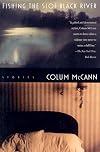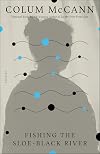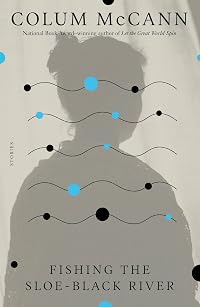
Fishing the Sloe-Black River
by Colum McCann 
On This Page
Description
The short fiction of Colum McCann documents a dizzying cast of characters in exile, loss, love, and displacement. There is the worn boxing champion who steals clothes from a New Orleans laundromat, the rumored survivor of Hiroshima who emigrates to the tranquil coast of Western Ireland, the Irishwoman who journeys through America in search of silence and solitude. But what is found in these stories, and discovered by these characters, is the astonishing poetry and peace found in the mundane: show more a memory, a scent on the wind, the grace in the curve of a street. "Fishing the Sloe-Black River "is a work of pure augury, of the channeling and re-spoken lives of people exposed to the beauty of the everyday. show lessTags
Recommendations











Member Reviews
Rating: 3.75* of five
The Publisher Says: The short fiction of Colum McCann documents a dizzying cast of characters in exile, loss, love, and displacement. There is the worn boxing champion who steals clothes from a New Orleans laundromat, the rumored survivor of Hiroshima who emigrates to the tranquil coast of Western Ireland, the Irishwoman who journeys through America in search of silence and solitude. But what is found in these stories, and discovered by these characters, is the astonishing poetry and peace found in the mundane: a memory, a scent on the wind, the grace in the curve of a street. Fishing the Sloe-Black River is a work of pure augury, of the channeling and re-spoken lives of people exposed to the beauty of the show more everyday.
My Review: Twelve stories written by an Irish-by-Irish-American talent whose work garnered praise from no less a short story luminary than Edna O'Brien. Justly so, may I add.
These are stories that go down easy, slipping into the eyes with no great effort and causing the brain no hiccups. Then, an hour later, why are they repeating like uncooked garlic? Because, dear readers of them, you've been *snookered*!
McCann's characters are delineated deftly, his settings established economically, and his stories told without fuss. But the end result is more than the sum of its parts. An example, decribing Flaherty the Irishman living in New Orleans, from "Step We Gaily, On We Go":
A washed up has-been boxer, Flaherty? Or a never-was dreamer? A lonely old man, surely, but why? What happened here? This is my favorite story in the collection, and I use it as an example of what I think McCann does best: He gives you the picture, and lets you decide what interests you most about it. Most short stories aren't that good, frankly, because they're just exactly the wrong length to do anything well, except in the hands of the talented.
"Cathal's Lake", the final story in the collection, is my runner-up favorite and would be even if only for its first line: "It's a sad Sunday when a man has to dig another swan from the soil." Cathal, a dirt farmer of no notable qualities, and his dog Wingnut are spending their morning digging up swans, see, and Cathal's mind (such as it is) wanders into some strange reveries...soldiers in battle, teen toughs in battle..."All this miraculous hatred. Christ, a man can't eat his breakfast for filling his belly full of it." It's sad to say that this is an evergreen trope in our world, this mindless exploration of anger and hate in calm and peace. It's a good story.
It's a good collection. I'd recommend it to anyone whose desire is to see *just enough* of a story and a character and a setting to get the story, but still want to hear the tale.
This work is licensed under a Creative Commons Attribution-NonCommercial-ShareAlike 3.0 Unported License. show less
The Publisher Says: The short fiction of Colum McCann documents a dizzying cast of characters in exile, loss, love, and displacement. There is the worn boxing champion who steals clothes from a New Orleans laundromat, the rumored survivor of Hiroshima who emigrates to the tranquil coast of Western Ireland, the Irishwoman who journeys through America in search of silence and solitude. But what is found in these stories, and discovered by these characters, is the astonishing poetry and peace found in the mundane: a memory, a scent on the wind, the grace in the curve of a street. Fishing the Sloe-Black River is a work of pure augury, of the channeling and re-spoken lives of people exposed to the beauty of the show more everyday.
My Review: Twelve stories written by an Irish-by-Irish-American talent whose work garnered praise from no less a short story luminary than Edna O'Brien. Justly so, may I add.
These are stories that go down easy, slipping into the eyes with no great effort and causing the brain no hiccups. Then, an hour later, why are they repeating like uncooked garlic? Because, dear readers of them, you've been *snookered*!
McCann's characters are delineated deftly, his settings established economically, and his stories told without fuss. But the end result is more than the sum of its parts. An example, decribing Flaherty the Irishman living in New Orleans, from "Step We Gaily, On We Go":
Give life long enough and it will solve all your problems, including the one of being alive. Should write that one on the stairwell, he chuckles to himself as he shuffles down the rat-gray steps of the apartment complex. He walks slowly, his big shoulders pitching back and forth in the folds of an old brown overcoat. Thick fists, blotched here and there with liver spots, pop out from the cuffs and a magenta handkerchief sprouts from the breast pocket. Beads of sweat gather beneath the peak of his flat tweed cap as he negotiates the corner on the third floor. Damn, he thinks, it's hot under this whole rigout.
A washed up has-been boxer, Flaherty? Or a never-was dreamer? A lonely old man, surely, but why? What happened here? This is my favorite story in the collection, and I use it as an example of what I think McCann does best: He gives you the picture, and lets you decide what interests you most about it. Most short stories aren't that good, frankly, because they're just exactly the wrong length to do anything well, except in the hands of the talented.
"Cathal's Lake", the final story in the collection, is my runner-up favorite and would be even if only for its first line: "It's a sad Sunday when a man has to dig another swan from the soil." Cathal, a dirt farmer of no notable qualities, and his dog Wingnut are spending their morning digging up swans, see, and Cathal's mind (such as it is) wanders into some strange reveries...soldiers in battle, teen toughs in battle..."All this miraculous hatred. Christ, a man can't eat his breakfast for filling his belly full of it." It's sad to say that this is an evergreen trope in our world, this mindless exploration of anger and hate in calm and peace. It's a good story.
It's a good collection. I'd recommend it to anyone whose desire is to see *just enough* of a story and a character and a setting to get the story, but still want to hear the tale.
This work is licensed under a Creative Commons Attribution-NonCommercial-ShareAlike 3.0 Unported License. show less
I had started this book of 12 stories about six or so years ago and then misplaced it. I found it again while spring cleaning. It was a nice surprise and I set out to re-read the stories I read earlier and finish the ones I had not. Once again, I am mesmerized by McCann's tight, gorgeous command of language. This relatively short book (196 pages) is focused on modern Irish people who have either emigrated or still cling to home. That seemed to be the common thread.
In the title story, "Fishing the Sloe-Black River," women go to a riverbank to fish for sons to replace the ones who have moved away from Ireland. One of my favorites, "A Basket Full of Wallpaper," was evocative of Charlotte Perkins Gilman's The Yellow Wallpaper, not just in show more name. In it, a Japanese survivor of Hiroshima moves to a small Irish village and compulsively wallpapers his cottage over and over, creating an ever-thickening insulation against the maddening world. Gilman's protagonist is lost in the wallpaper in the room to which she is confined as she descends into madness. Another favorite was "Cathal's Lake," a tale in which a new swan appears in the farmer's pond each time someone is killed in Irish factional violence until his pond is completely filled with swans. show less
In the title story, "Fishing the Sloe-Black River," women go to a riverbank to fish for sons to replace the ones who have moved away from Ireland. One of my favorites, "A Basket Full of Wallpaper," was evocative of Charlotte Perkins Gilman's The Yellow Wallpaper, not just in show more name. In it, a Japanese survivor of Hiroshima moves to a small Irish village and compulsively wallpapers his cottage over and over, creating an ever-thickening insulation against the maddening world. Gilman's protagonist is lost in the wallpaper in the room to which she is confined as she descends into madness. Another favorite was "Cathal's Lake," a tale in which a new swan appears in the farmer's pond each time someone is killed in Irish factional violence until his pond is completely filled with swans. show less
These are tales heavy with loss, grounded in life’s heartbreaking moments, yet buoyant in their inherent hopefulness. The twelve short stories in Colum McCann’s Fishing the Sloe-Black River are a true achievement of imagination and poignant effect. Ranging from harshly realistic to magical, the language and dialogue are deceptively simple, yet evocative. McCann is equally at home with settings in his native Ireland and his adopted United States, and creates characters that we know, ordinary and flawed, yet unfailingly dignified in the face of life events that are both familiar and unimaginable.
Some perform simple, personal acts of courage and remembrance. In A Basket Full of Wallpaper, a reclusive Japanese émigré to Ireland, show more imagined by his young employee to be a survivor of Hiroshima, finds peace in his obsession with hanging wallpaper. Breakfast for Enrique conveys a quietness of waiting, as a man employed as a fish-gutter prepares breakfast for his very ill lover. In Step We Gaily, On We Go an elderly boxer, slipping into senility, steals articles of women’s clothing, imagining them to be gifts for his wife. The small, daily acts undertaken for loved ones are portrayed in A Word in Edgewise, as a woman rambles on while helping her sister with her hair and make-up, one final time. And in the book’s title story, Fishing the Sloe-Black River, mothers fish in a futile effort to catch sons who have drifted away, while their aging husbands play football on a team in need of younger recruits.
Others struggle more outwardly. In Sisters, a woman bitter from years of promiscuity, illegally enters the United States to visit her dangerously ill sister, a nun who suffers from severe anorexia and self-abuse. In Along the Riverwall, a bicyclist who is confined to a wheelchair after being hit by a bread truck, disposes of an unwanted gift. And in From Many, One, a woman’s obsession with painting quarters leads to her husband’s discovery of a disturbing secret.
Employees and residents of institutional settings find solace in their commonalities. In Through the Field, a maintenance worker at a State School for juvenile delinquents reacts in an unusual and puzzling manner after learning that a resident who committed murder turned himself in because he was afraid of the dark. Stolen Child is narrated by an Irish immigrant, who while working as a counselor at a NYC children’s home, develops a surrogate-father relationship with a blind resident and must accept her plans to marry an older, disabled Vietnam veteran. And in Around the Bend and Back Again, a maintenance worker at a psychiatric facility becomes involved with a patient, unwittingly assisting in her final, destructive act of revenge and freedom.
The closing story, Cathal’s Lake, is simply heartrending. A farmer’s lake is overflowing with swans, as he is cursed to dig these stately birds out of the soil, one for each person dead from sectarian violence.
This is one of the most consistently excellent short story collections that I have read. What I loved the most was that each story, while complete in itself, leaves a space to be filled by the reader’s own imagination, interpretation and memories. show less
Some perform simple, personal acts of courage and remembrance. In A Basket Full of Wallpaper, a reclusive Japanese émigré to Ireland, show more imagined by his young employee to be a survivor of Hiroshima, finds peace in his obsession with hanging wallpaper. Breakfast for Enrique conveys a quietness of waiting, as a man employed as a fish-gutter prepares breakfast for his very ill lover. In Step We Gaily, On We Go an elderly boxer, slipping into senility, steals articles of women’s clothing, imagining them to be gifts for his wife. The small, daily acts undertaken for loved ones are portrayed in A Word in Edgewise, as a woman rambles on while helping her sister with her hair and make-up, one final time. And in the book’s title story, Fishing the Sloe-Black River, mothers fish in a futile effort to catch sons who have drifted away, while their aging husbands play football on a team in need of younger recruits.
Others struggle more outwardly. In Sisters, a woman bitter from years of promiscuity, illegally enters the United States to visit her dangerously ill sister, a nun who suffers from severe anorexia and self-abuse. In Along the Riverwall, a bicyclist who is confined to a wheelchair after being hit by a bread truck, disposes of an unwanted gift. And in From Many, One, a woman’s obsession with painting quarters leads to her husband’s discovery of a disturbing secret.
Employees and residents of institutional settings find solace in their commonalities. In Through the Field, a maintenance worker at a State School for juvenile delinquents reacts in an unusual and puzzling manner after learning that a resident who committed murder turned himself in because he was afraid of the dark. Stolen Child is narrated by an Irish immigrant, who while working as a counselor at a NYC children’s home, develops a surrogate-father relationship with a blind resident and must accept her plans to marry an older, disabled Vietnam veteran. And in Around the Bend and Back Again, a maintenance worker at a psychiatric facility becomes involved with a patient, unwittingly assisting in her final, destructive act of revenge and freedom.
The closing story, Cathal’s Lake, is simply heartrending. A farmer’s lake is overflowing with swans, as he is cursed to dig these stately birds out of the soil, one for each person dead from sectarian violence.
This is one of the most consistently excellent short story collections that I have read. What I loved the most was that each story, while complete in itself, leaves a space to be filled by the reader’s own imagination, interpretation and memories. show less
Worth reading for the final story alone. "Cathal's Lake" blends the real with the magical with the spiritual, and in a few pages says much about the modern world and the problem of evil that manifests, in this story, in the violence in Northern Ireland not too long ago. It should be read once without knowing the ending, then at least once again knowing what it is all about.
Every other story in this collection, some more than others of course, is well worth reading too.
Every other story in this collection, some more than others of course, is well worth reading too.
The short novellas included in this book have some points in common, like the recurring theme of Ireland and Irishness, stories of displacement and personal tragedies. The tone is not overly joyful, but you feel that each storyline has some deep background history that only the author, or displaced Irish citizens, can explain. There's a sense of intimacy that is shared throughout, with different narrative voices and also with the plots treated independently from each other. I have been pleasantly surprised by the stories and I would recommend the book to anyone who has lived in foreign countries or who has escaped from small, rural, communities to life in cities. We can never change where we come from, even if we live elsewhere.
A collection of short stories that expertly reveals character and conflict through subtle, yet concise details. McCann’s uncanny powers of manipulating the written word lie best in creating rounded characters that encounter struggles that grow out of their own actions (or mis-actions.) The collection truly highlights the importance and beauty of a well-turned sentence.
My favorite from the collection (and better with every read) is "Step We Gaily, On We Go."
My favorite from the collection (and better with every read) is "Step We Gaily, On We Go."
The audiobook Fishing the Sloe-Black River is a book of 12 short stories, narrated by Clodagh Bowyer, Tim Smallwood, Paul Nugent, Fiana Toibin, Sean Gormley, John Keating and Ed Malone. The Irish patois was perfectly executed by all except for the one story narrated by Ed Malone. Only he failed to space the words and give an intonation that fitted the lines well! I noted how if a narrator emphasizes the wrong words the meaning of the sentence would be messed up! Paul Nugent and Fiana Toibin must be Irish! Fiana even sang some songs for us! The lilt and the off-key tone could not have been improved upon.
I would not recommend listening to one story after the other, as I did. They all became jumbled in my head. I couldn't keep any of them show more straight. Some I didn't understand. So many people and such miserable existences; I was truly saddened. Usually this author makes me smile but only one story did that for me, and this was the second to the last one entitled "A Word in Edgewise"(Fiana Toibin). You soon realize that this is one woman reminiscing, as she lovingly and delicately paints makeup, for the last time, on the dead woman lying before her. Her lips, her cheeks, her eyebrows had to be done up just right! What these two did together! Shared jokes. Swimsuits today were nothing more than dental floss! Maybe their suits were more substantial but they were "a wiggling too" back then! Re condoms: "It must be like washing your feet with socks on!" If you are anything like me you will smile. But this was the only story that had me smiling, and this is unusual for McCann. The stories were too depressing.
Many marvelous details that pepper his longer novels are repeated in these short stories. Repeated, they are less fun. Songdogs and fishing and marmalade cats and blue anoraks and even exact phrases from the novels are here.
So this book was just OK. This is my first two star rating for a McCann book. Read something else by McCann. This is not representative of what he can write. However, I am not going to return this book to Audible. Why? Because I did like that one story, the one mentioned above. It was that good; I will listen to it again. It is beautiful and funny and sad, all rolled together.
Completed Mar 23, 2013 show less
I would not recommend listening to one story after the other, as I did. They all became jumbled in my head. I couldn't keep any of them show more straight. Some I didn't understand. So many people and such miserable existences; I was truly saddened. Usually this author makes me smile but only one story did that for me, and this was the second to the last one entitled "A Word in Edgewise"(Fiana Toibin). You soon realize that this is one woman reminiscing, as she lovingly and delicately paints makeup, for the last time, on the dead woman lying before her. Her lips, her cheeks, her eyebrows had to be done up just right! What these two did together! Shared jokes. Swimsuits today were nothing more than dental floss! Maybe their suits were more substantial but they were "a wiggling too" back then! Re condoms: "It must be like washing your feet with socks on!" If you are anything like me you will smile. But this was the only story that had me smiling, and this is unusual for McCann. The stories were too depressing.
Many marvelous details that pepper his longer novels are repeated in these short stories. Repeated, they are less fun. Songdogs and fishing and marmalade cats and blue anoraks and even exact phrases from the novels are here.
So this book was just OK. This is my first two star rating for a McCann book. Read something else by McCann. This is not representative of what he can write. However, I am not going to return this book to Audible. Why? Because I did like that one story, the one mentioned above. It was that good; I will listen to it again. It is beautiful and funny and sad, all rolled together.
Completed Mar 23, 2013 show less
Members
- Recently Added By
Lists

Top Five Books of 2013
1,562 works; 721 members
Author Information

24+ Works 14,427 Members
Irish writer Colum McCann was born near Dublin in 1965 and graduated from the University of Texas with a B.A. degree. He has worked as a newspaper journalist in Ireland and written several short stories and bestselling novels. The short film of Everything in this Country Must was nominated for an Academy Award in 2005. McCann's work has appeared show more in publications including The New York Times, The Atlantic Monthly, GQ, The Irish Times, La Repubblica, Die Zeit, Paris Match, the Guardian, and the Independent. He has won numerous awards, such as a Pushcart Prize, the Rooney Prize, the Irish Novel of the Year Award, and the 2002 Ireland Fund of Monaco Princess Grace Memorial Literary Award. In 2009 McCann was inducted into the Irish arts association Aosdana. He teaches in the Master of Fine Arts Creative Writing program at New York's Hunter College. (Bowker Author Biography) show less
Colum McCann is a LibraryThing Author, an author who lists their personal library on LibraryThing.
Awards and Honors
Work Relationships
Common Knowledge
- Canonical title
- Fishing the Sloe-Black River
- Original title
- Fishing the Sloe-Black River
- Original publication date
- 1996
Classifications
Statistics
- Members
- 252
- Popularity
- 129,236
- Reviews
- 9
- Rating
- (3.74)
- Languages
- 5 — Dutch, English, French, German, Italian
- Media
- Paper, Audiobook, Ebook
- ISBNs
- 24
- ASINs
- 5