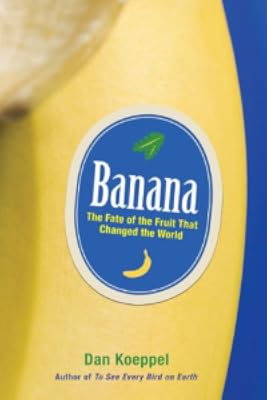
Banana: The Fate of the Fruit That Changed the World
by Dan Koeppel
On This Page
Description
To most people, a banana is a banana: a simple yellow fruit. Americans eat more bananas than apples and oranges combined. In others parts of the world, bananas are what keep millions of people alive. But for all its ubiquity, the banana is surprisingly mysterious; nobody knows how bananas evolved or exactly where they originated. Rich cultural lore surrounds the fruit: in ancient translations of the Bible, the "apple" consumed by Eve is actually a banana. But the biggest mystery about the show more banana today is whether it will survive. A seedless fruit with a unique reproductive system, every banana is a genetic duplicate of the next, and therefore susceptible to the same blights. Today's yellow banana, the Cavendish, is increasingly threatened by such a blight, and there's no cure in sight. Banana combines a pop-science journey around the globe, a fascinating tale of an iconic American business enterprise, and a look into the alternately tragic and hilarious banana subculture (one does exist)-ultimately taking us to the high-tech labs where new bananas are literally being built in test tubes, in a race to save the world's most beloved fruit. show lessTags
Recommendations





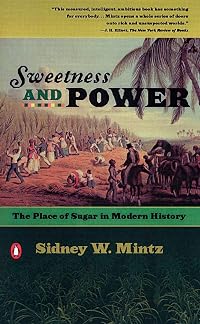
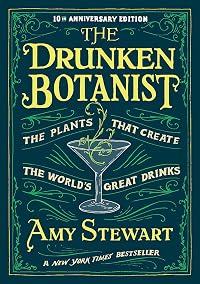
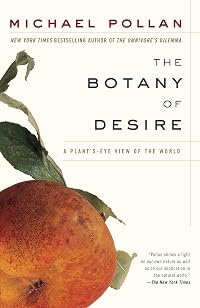


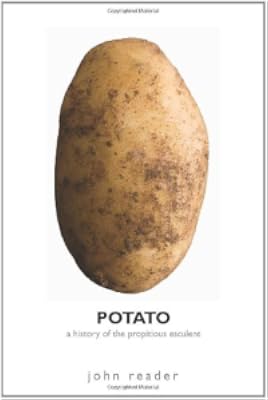










Member Reviews
I loved looking at history through banana-colored lenses. Dan Koeppel did a really nice work here. He did a lot of research, went around the world to interview experts, and managed to write a book that focuses on the history and science of the banana. The book kept my interest quite high from beginning to end. The structure / organization is not linear at all, it would be best visualized with a firework explosion, but in a sense it works even better this way: it's like sitting down in a pub with one of the top experts on bananas, getting him completely drunk, and listening to him rant away. The result is a "narrative" that jumps around, gets distracted, goes back, has sudden moments of humor and unexpectedly moving paragraphs, but it show more all kind of fits together nicely. I really liked it that way. Despite the large amount of facts and trivia, the book is a light read.
The author tried to infuse this work with an overarching drama, which is "a banana blight that is tearing through banana crops worldwide". This is a fact, however there seem to be some solutions in place, and at least several alternatives. In any case, some chapters end with sentences like "this is why the banana you eat today might be the last of its kind you eat. Ever!". Hilarious! But please, go on! Bring us another one of whatever this guy is drinking!!
Koeppel spent many chapters on the history of United Fruit, the modern Chiquita. I knew it was a history of violent colonialism, but I didn't know to what extent. The history of the "banana republics" of Honduras, Guatemala, Panama, etc. is fascinating, dark and disturbing. Guatemala in particular, with the CIA-orchestrated conspiracy / coup that was very much related to United Fruit and bananas.
One minor flaw: the focus seems to be almost entirely on American bananas and their history, only a little bit on South-East Asia, and almost nothing on Africa. The book would have been more complete if it expanded a bit more on Africa and what the fruit meant for African history, too.
In the end, the author recommends us to buy fair trade bananas, to help plantation workers, and he gives us a bit more background, without pushing that agenda too much. show less
The author tried to infuse this work with an overarching drama, which is "a banana blight that is tearing through banana crops worldwide". This is a fact, however there seem to be some solutions in place, and at least several alternatives. In any case, some chapters end with sentences like "this is why the banana you eat today might be the last of its kind you eat. Ever!". Hilarious! But please, go on! Bring us another one of whatever this guy is drinking!!
Koeppel spent many chapters on the history of United Fruit, the modern Chiquita. I knew it was a history of violent colonialism, but I didn't know to what extent. The history of the "banana republics" of Honduras, Guatemala, Panama, etc. is fascinating, dark and disturbing. Guatemala in particular, with the CIA-orchestrated conspiracy / coup that was very much related to United Fruit and bananas.
One minor flaw: the focus seems to be almost entirely on American bananas and their history, only a little bit on South-East Asia, and almost nothing on Africa. The book would have been more complete if it expanded a bit more on Africa and what the fruit meant for African history, too.
In the end, the author recommends us to buy fair trade bananas, to help plantation workers, and he gives us a bit more background, without pushing that agenda too much. show less
I thoroughly enjoyed this book for multiple reasons, but I want to enumerate two:
Firstly, I loved the true cross section of the banana. Of all the topics he covered, particularly, I found it admirable how Koeppel explains the biological history of the banana (ex: how does a seedless banana procreate? how did we get to a seedless banana?) while remaining, for me, entertaining. Not every writer can/wants to make evolutionary biology thrilling. He also covers the historical distribution of bananas, the cultural significances across the globe, the story of the banana within U.S. history, and more. And I loved it all.
Secondly, the sheer breadth of documents Koeppel reviewed, interviewed conducted, and life experiences encountered and shared show more all relating to the frigging banana is astounding. It's clear that the book comes from a place founded in both passion of knowledge and passion of the banana. To a regular ol' chum on the street, "passion for the banana" may sound strange; I think it is abnormal, but as Koeppel reminds us in the book, EVERYONE has a minor passion for the banana. That personal narrative mixed into the historical perspectives simply hits the spot.
I love this book. show less
Firstly, I loved the true cross section of the banana. Of all the topics he covered, particularly, I found it admirable how Koeppel explains the biological history of the banana (ex: how does a seedless banana procreate? how did we get to a seedless banana?) while remaining, for me, entertaining. Not every writer can/wants to make evolutionary biology thrilling. He also covers the historical distribution of bananas, the cultural significances across the globe, the story of the banana within U.S. history, and more. And I loved it all.
Secondly, the sheer breadth of documents Koeppel reviewed, interviewed conducted, and life experiences encountered and shared show more all relating to the frigging banana is astounding. It's clear that the book comes from a place founded in both passion of knowledge and passion of the banana. To a regular ol' chum on the street, "passion for the banana" may sound strange; I think it is abnormal, but as Koeppel reminds us in the book, EVERYONE has a minor passion for the banana. That personal narrative mixed into the historical perspectives simply hits the spot.
I love this book. show less
Read Dan Koeppel's Banana: The Fate of the Fruit that Changed the World (Hudson Street Press, 2008), and I bet you'll never look at a banana quite the same way again. Expanding on a 2005 Popular Science article, Koeppel's book is a biological, political and commercial history of the banana. It is also a call to action, since the banana as we know it may be just years away from disappearing completely thanks to a fast-moving series of pathogens which have the potential to bring its reign atop the fruit bowl to a precipitous end.
Part travelogue, part exposé, part history lesson, Koeppel's book takes us from the banana plantations to Latin America to the village plots of Africa to the research labs of Belgium, where scientists are racing show more against time to combat the spreading plague and make the world safe for bananas. What remains to be seen is whether the ultimately successful fruit will be the variety we currently eat (the Cavendish), or if some other version will have to be (or even can be) modified to meet the consumer needs the Cavendish currently satisfies (easily transported, hard to bruise, on a regular ripening schedule). It's happened before; the variety of banana grown and marketed until the late 1950s was the Gros Michel, which succumbed to the same cocktail of diseases our current banana faces today.
The banana's checkered past is laid bare here as Koeppel peels away the decades of nefarious practices engaged in by the large banana companies in Central and South America and the Caribbean as they fought each other for the commercial edge (and in the process greatly abused their works, the environment, and the governments of the nations they practically controlled). And Koeppel's point about the inherent weaknesses of the banana as an export crop is a good one: if we followed the precepts of locavorism, the banana would be about the last thing most of us would be eating, and perhaps that's the way it should be. But, as he writes, that seems unlikely, so perhaps at least understanding what's behind what we're eating is the best we can do for now.
A worthy book; I learned a great deal.
http://philobiblos.blogspot.com/2009/03/book-review-banana.html show less
Part travelogue, part exposé, part history lesson, Koeppel's book takes us from the banana plantations to Latin America to the village plots of Africa to the research labs of Belgium, where scientists are racing show more against time to combat the spreading plague and make the world safe for bananas. What remains to be seen is whether the ultimately successful fruit will be the variety we currently eat (the Cavendish), or if some other version will have to be (or even can be) modified to meet the consumer needs the Cavendish currently satisfies (easily transported, hard to bruise, on a regular ripening schedule). It's happened before; the variety of banana grown and marketed until the late 1950s was the Gros Michel, which succumbed to the same cocktail of diseases our current banana faces today.
The banana's checkered past is laid bare here as Koeppel peels away the decades of nefarious practices engaged in by the large banana companies in Central and South America and the Caribbean as they fought each other for the commercial edge (and in the process greatly abused their works, the environment, and the governments of the nations they practically controlled). And Koeppel's point about the inherent weaknesses of the banana as an export crop is a good one: if we followed the precepts of locavorism, the banana would be about the last thing most of us would be eating, and perhaps that's the way it should be. But, as he writes, that seems unlikely, so perhaps at least understanding what's behind what we're eating is the best we can do for now.
A worthy book; I learned a great deal.
http://philobiblos.blogspot.com/2009/03/book-review-banana.html show less
I picked this book because I wanted to know more about the role the banana-companies played in the political history of Central America. But apart from learning more about this topic, I also learned many unexpected facts about the history of the banana, the way it has spread over the world, about its biology, about plant-diseases and their "cures".
This may sound boring, but the book is written in a very accessible style and actually very interesting. Ever since I read this book I won't buy a banana in my supermarket without a great amount of wonder. About how mysterious it actually is: a fruit without seeds. And more than that: how such a delicate tropical fruit ended up here at all.
This may sound boring, but the book is written in a very accessible style and actually very interesting. Ever since I read this book I won't buy a banana in my supermarket without a great amount of wonder. About how mysterious it actually is: a fruit without seeds. And more than that: how such a delicate tropical fruit ended up here at all.
Bananas start my day. I eat one almost every morning and seldom leave a grocery store without a fresh bunch. But the familiar yellow Cavendish banana is a threatened fruit, succumbing to Panama Disease in several parts of the world and facing extinction like the Gros Michel banana so popular 50 years ago.
I heard about this threat a few years ago but the details were vague. I reacted to it with disbelief. How could a common fruit available at the corner store for 79 cents per pound be in peril? But it is, and it has been for decades. Dan Koeppel's new book, Banana: The Fate of the Fruit That Changed the World, explains it all and delivers a few surprises, too.
Koeppel, the author of To See Every Bird on Earth (a book I enjoyed a couple show more years ago), takes us on a history of the banana with all its innovations, corruption, and place in our culture.
* Innovations: Transporting a tropical fruit to northern markets before rotting brought about the beginnings of the modern fruit industry.
* Corruption: There's a reason 'banana republic' is a derisive term. The one or two largest banana companies operate in the shadow of terribly shameful histories.
* Culture: I need only to mention vaudevillians slipping on a peel, "Yes, We Have No Bananas", and that oval blue sticker.
Between the tragic tales of oppression in Central America and curious banana miscellany, Koeppel returns again and again to the research and strategies involved in the nearly century-long battle to save the Cavendish banana crop. The banana is eaten by more people around the world than apples and oranges combined, he says. It's more critical to their diets, too.
It's also more vulnerable. Every seedless Cavendish is a clone of it's mother plant, difficult to cultivate and susceptible to disease. Panama Disease, Black Sigatoka, and several other plant-choking maladies have already ravaged plantations across Asia and Africa. It's only a matter of time before it threatens Central America, devastating not only the fruit but the people and whole economies dependent on the banana. Banana republics have never had it easy.
I eat a Cavendish daily. I've had red bananas before. Lately I've been cooking plantains, too. I'd like to try some of the other varieties Koeppel mentions, but they are mostly unavailable in the United States due to economic reasons. Disease-resistant bananas might prove to be the solution to the Cavendish's problems, but, ironically, such engineered marvels would be unavailable in most foreign markets that prohibit genetically-modified foods.
There's no easy solution. The banana is a delicious fruit surrounded by problems.
Find more of my reviews at Mostly NF. show less
I heard about this threat a few years ago but the details were vague. I reacted to it with disbelief. How could a common fruit available at the corner store for 79 cents per pound be in peril? But it is, and it has been for decades. Dan Koeppel's new book, Banana: The Fate of the Fruit That Changed the World, explains it all and delivers a few surprises, too.
Koeppel, the author of To See Every Bird on Earth (a book I enjoyed a couple show more years ago), takes us on a history of the banana with all its innovations, corruption, and place in our culture.
* Innovations: Transporting a tropical fruit to northern markets before rotting brought about the beginnings of the modern fruit industry.
* Corruption: There's a reason 'banana republic' is a derisive term. The one or two largest banana companies operate in the shadow of terribly shameful histories.
* Culture: I need only to mention vaudevillians slipping on a peel, "Yes, We Have No Bananas", and that oval blue sticker.
Between the tragic tales of oppression in Central America and curious banana miscellany, Koeppel returns again and again to the research and strategies involved in the nearly century-long battle to save the Cavendish banana crop. The banana is eaten by more people around the world than apples and oranges combined, he says. It's more critical to their diets, too.
It's also more vulnerable. Every seedless Cavendish is a clone of it's mother plant, difficult to cultivate and susceptible to disease. Panama Disease, Black Sigatoka, and several other plant-choking maladies have already ravaged plantations across Asia and Africa. It's only a matter of time before it threatens Central America, devastating not only the fruit but the people and whole economies dependent on the banana. Banana republics have never had it easy.
I eat a Cavendish daily. I've had red bananas before. Lately I've been cooking plantains, too. I'd like to try some of the other varieties Koeppel mentions, but they are mostly unavailable in the United States due to economic reasons. Disease-resistant bananas might prove to be the solution to the Cavendish's problems, but, ironically, such engineered marvels would be unavailable in most foreign markets that prohibit genetically-modified foods.
There's no easy solution. The banana is a delicious fruit surrounded by problems.
Find more of my reviews at Mostly NF. show less
I loved looking at history through banana-colored lenses. Dan Koeppel did a really nice work here. He did a lot of research, went around the world to interview experts, and managed to write a book that focuses on the history and science of the banana. The book kept my interest quite high from beginning to end. The structure / organization is not linear at all, it would be best visualized with a firework explosion, but in a sense it works even better this way: it's like sitting down in a pub with one of the top experts on bananas, getting him completely drunk, and listening to him rant away. The result is a "narrative" that jumps around, gets distracted, goes back, has sudden moments of humor and unexpectedly moving paragraphs, but it show more all kind of fits together nicely. I really liked it that way. Despite the large amount of facts and trivia, the book is a light read.
The author tried to infuse this work with an overarching drama, which is "a banana blight that is tearing through banana crops worldwide". This is a fact, however there seem to be some solutions in place, and at least several alternatives. In any case, some chapters end with sentences like "this is why the banana you eat today might be the last of its kind you eat. Ever!". Hilarious! But please, go on! Bring us another one of whatever this guy is drinking!!
Koeppel spent many chapters on the history of United Fruit, the modern Chiquita. I knew it was a history of violent colonialism, but I didn't know to what extent. The history of the "banana republics" of Honduras, Guatemala, Panama, etc. is fascinating, dark and disturbing. Guatemala in particular, with the CIA-orchestrated conspiracy / coup that was very much related to United Fruit and bananas.
One minor flaw: the focus seems to be almost entirely on American bananas and their history, only a little bit on South-East Asia, and almost nothing on Africa. The book would have been more complete if it expanded a bit more on Africa and what the fruit meant for African history, too.
In the end, the author recommends us to buy fair trade bananas, to help plantation workers, and he gives us a bit more background, without pushing that agenda too much. show less
The author tried to infuse this work with an overarching drama, which is "a banana blight that is tearing through banana crops worldwide". This is a fact, however there seem to be some solutions in place, and at least several alternatives. In any case, some chapters end with sentences like "this is why the banana you eat today might be the last of its kind you eat. Ever!". Hilarious! But please, go on! Bring us another one of whatever this guy is drinking!!
Koeppel spent many chapters on the history of United Fruit, the modern Chiquita. I knew it was a history of violent colonialism, but I didn't know to what extent. The history of the "banana republics" of Honduras, Guatemala, Panama, etc. is fascinating, dark and disturbing. Guatemala in particular, with the CIA-orchestrated conspiracy / coup that was very much related to United Fruit and bananas.
One minor flaw: the focus seems to be almost entirely on American bananas and their history, only a little bit on South-East Asia, and almost nothing on Africa. The book would have been more complete if it expanded a bit more on Africa and what the fruit meant for African history, too.
In the end, the author recommends us to buy fair trade bananas, to help plantation workers, and he gives us a bit more background, without pushing that agenda too much. show less
This is yet another entry in the single-subject world of non-fiction. The narrowness of focus in books such as Salt and Cod and The Book on the Bookshelf and The Pencil and Longitude seems to be an increasingly preevalent trend in publishing. I am all for it on one level, since I like delving into the abstruse and wallowing in details that leave most people I know colder than a penguin's butt in the middle of the Antarctic winter; but on another level, I want to stop these publishers before they bore again with books inadequately edited and organized.
There are three pieces to the banana...the history of humanity's first cultivated plant (modern evidence from New Guinea shows human cultivation from 9000 years ago was of bananas, but for show more their corms not the fingers we eat today); the politics of the modern cultivation of the banana (the term "banana republic", which I have used without thinking for 30+ years, has a very literal beginning and a scarily modern ring); and the future of humankind's most basic and widely distributed food crop (essential to survival in several parts of the world, the banana is also under threat from several pests that defy modern chemistry to abate, still less conquer, and squeamish food-o-phobes in wealthy countries oppose all modern genetic engineering that could save the survival crop of many parts of the world). These three strands are awkwardly interwoven, with no obvious guiding editorial hand to make sense of their interrelation.
It's a shame, too, because this is a huge, important topic, and the author's not inconsiderable talents are well-used in bringing the facts to light. The loss of our American favorite banana, the Cavendish, from grocery shelves will be an inconvenience at most; the fact that two major American corporations are, double-handedly (is that a word?), responsible for the spread of the blights that threaten the world crop with the complicity of the American government, should mean that we as a country are liable to find solutions to the pressing problems of food security in the places we've so screwed over. Free. But that won't happen, you can bet on that.
Back to the book...too much narrative drive is lost in the author's back-and-forth cross-cutting of the basic story. I wish someone had said, "Yo Dan...first third of the book is the banana as a plant; second third is the politics of the banana; last is the science of the plant." I wonder if that was what they tried, and the interconnections of all the information prevented its success? I somehow don't think so.
It's a good-enough book on an important topic that SHOULD cause each person who reads it some discomfort at our societal callousness and myopia. I recommend it to those most likely to be irritated by progressive politics and social liberalism. Isolationists particularly encouraged to apply! show less
There are three pieces to the banana...the history of humanity's first cultivated plant (modern evidence from New Guinea shows human cultivation from 9000 years ago was of bananas, but for show more their corms not the fingers we eat today); the politics of the modern cultivation of the banana (the term "banana republic", which I have used without thinking for 30+ years, has a very literal beginning and a scarily modern ring); and the future of humankind's most basic and widely distributed food crop (essential to survival in several parts of the world, the banana is also under threat from several pests that defy modern chemistry to abate, still less conquer, and squeamish food-o-phobes in wealthy countries oppose all modern genetic engineering that could save the survival crop of many parts of the world). These three strands are awkwardly interwoven, with no obvious guiding editorial hand to make sense of their interrelation.
It's a shame, too, because this is a huge, important topic, and the author's not inconsiderable talents are well-used in bringing the facts to light. The loss of our American favorite banana, the Cavendish, from grocery shelves will be an inconvenience at most; the fact that two major American corporations are, double-handedly (is that a word?), responsible for the spread of the blights that threaten the world crop with the complicity of the American government, should mean that we as a country are liable to find solutions to the pressing problems of food security in the places we've so screwed over. Free. But that won't happen, you can bet on that.
Back to the book...too much narrative drive is lost in the author's back-and-forth cross-cutting of the basic story. I wish someone had said, "Yo Dan...first third of the book is the banana as a plant; second third is the politics of the banana; last is the science of the plant." I wonder if that was what they tried, and the interconnections of all the information prevented its success? I somehow don't think so.
It's a good-enough book on an important topic that SHOULD cause each person who reads it some discomfort at our societal callousness and myopia. I recommend it to those most likely to be irritated by progressive politics and social liberalism. Isolationists particularly encouraged to apply! show less
Members
- Recently Added By
Lists

Central America
14 works; 1 member

Penguin Random House
458 works; 4 members
Author Information

3+ Works 1,142 Members
Common Knowledge
- Canonical title*
- 바나나 : 세계를 바꾼 과일의 운명
- Original publication date
- 2008
- Important places
- Honduras; Panama; Guatemala; USA
- Dedication
- To Kalee, with love
- First words
- If you are an average American, about forty years old, you're probably approaching banana ten thousand, just as I am.
- Last words
- (Click to show. Warning: May contain spoilers.)That banana - and only that banana - could, quite possible, be the world's most perfect fruit.
- Blurbers
- Humes, Edward
*Some information comes from Common Knowledge in other languages. Click "Edit" for more information.
Classifications
- Genres
- General Nonfiction, Science & Nature, Nonfiction, History, Business
- DDC/MDS
- 634.772 — Applied science & technology Agriculture Orchards, fruits, forestry Berries, etc.; Bananas & Plantains, etc. Bananas & Plantains Bananas
- LCC
- SB379 .B2 .K66 — Agriculture Horticulture. Plant propagation. Plant breeding Plant culture Fruit and fruit culture
- BISAC
Statistics
- Members
- 779
- Popularity
- 35,826
- Reviews
- 29
- Rating
- (3.79)
- Languages
- English, Korean
- Media
- Paper, Audiobook, Ebook
- ISBNs
- 10
- ASINs
- 6