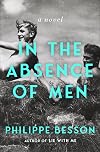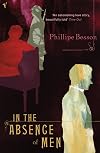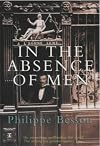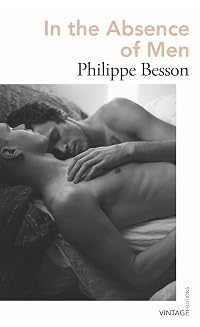
In the Absence of Men
by Philippe Besson
On This Page
Description
It is the summer of 1916 and, with German Zeppelins on the skyline, the men of Paris are off at war. For Vincent, the sixteen-year-old son of a prestigious family, the tranquillity of the city sits at odds with the salons and soirees he attends. But, after an electrifying encounter with the enigmatic writer, Marcel P, draws Vincent's desires out into the light, his ever-riskier liaisons with a young solider begin to shape Vincent's future.Tags
Recommendations





























Member Reviews
Rating: 4.5* of five
The Publisher Says: From the author of the international bestseller Lie with Me comes the tale of an affair between an aristocratic teenager and a soldier, as they discover the possibilities and perils of first love.
Summer, 1916. With German Zeppelins on the skyline, the men of Paris are off at war. For Vincent, sixteen and still too young to fight, this moment of dread is also a moment of possibility. An electrifying encounter with Marcel, an enigmatic middle-aged writer, draws Vincent’s desires out into the light. As he’s taken under Marcel’s wing, Vincent begins a dangerous affair with Arthur, the son of his governess and a young soldier on leave. Together, they share a secret that everyone seems to know and show more yet everyone remains silent about.
In this stunning portrait of young love, Philippe Besson depicts a young man who plays by his own rules and is not afraid of who he is. In the afternoons, Vincent is mentored by Marcel, the great novelist, in the city’s opulent cafés as they draw the judgment of society. And at night, he hides Arthur in his bedroom as the two risk everything to be together. Their affair initiates them into a world of pleasure and shields them from the encroaching war. During this magical week away from the trenches, Vincent shelters Arthur with happiness, reassuring him, “Nothing will happen to you.”
Tender and harrowing, In the Absence of Men captures how exhilarating and heart-crushing it is to fall in love for the first time.
I RECEIVED A DRC FROM THE PUBLISHER VIA EDELWEISS+. THANK YOU.
My Review: Tragedies hardest to endure, that produce the most emotional stress in me, are stories whose endings we know are coming while the characters do not, and we can do nothing to stop their devastation. This is that story writ tight and tart.
I'll say now that it takes a giant pair to use Marcel Proust...In Search of Lost Time Marcel Proust!...as a character guiding and mentoring, in a platonic way, your PoV character. It could, you know from the off, go horribly wrong, end up derailing your story, cause the beau ideal of a reader for your story to scoff, nitpick, judge, and tut his way through it because—well—hubris much?
That was me as I approached the read. I left it without the tutting, but with reservations.
I loved the setting, Paris during the Great War as they knew it, and will always resonate favorably with first gay love stories. I'm glad Author Besson did not make Proust more than a controlling mentor, I think that would've overpowered any positive feelings anyone could've developed for the story. As it was, Marcel's controlling side wasn't foregrounded, but was there in story-appropriate places. It's up to you how you feel about an older man leading a teen through the terrifying, obscure, all-consuming first experience of Love by a man for a man. I know I wish to gawd he'd been there for me to consult and be guided by!
I think most of what takes place in the under two hundred pages of the story is defined by brokenness, by change that can't be slowed or processed therefore controlled, by the absolute certainty of war: nothing survives unscathed. Arthur, Vincent's governess's son, is the love of Vincent's young life. He is sexually attracted to Vincent, he is just enough older...and rougher...to make their love passionate and fulfilling, and he is away to war amid all the changes accumulating in their lives.
Herein my half-star off's origin. The wartime separation means a good deal of what's happening is epistolary. I'm sad to say that, despite the words being lovely and the device being central to the story's core of reality, this shift in mode brought the momentum of the read too far down. It is undeniable that this is a feature not a bug...how could a war-set love story not separate its lovers?...and represents the most natural and logical evolution of this pair's inevitable trajectory, but it still just stopped me in my tracks. Recalibrating my pace cost me some emotional investment in the men's love story.
The twist did not surprise me, but did affect me profoundly. Some sniffling and a modest dampening of my pillow might have occurred. I'll never tell.
I'm very, very glad I read the story; I think Translator Wynne rendered the French he found into seamlessly readable English that feels almost as though it's not translated; but there's that botched downshift from fifth to second that juddered me a hair too much, caused a bit of excessive mental transmission wear, for me to get all the way to five stars.
Definitely a read I recommend all the same. show less
The Publisher Says: From the author of the international bestseller Lie with Me comes the tale of an affair between an aristocratic teenager and a soldier, as they discover the possibilities and perils of first love.
Summer, 1916. With German Zeppelins on the skyline, the men of Paris are off at war. For Vincent, sixteen and still too young to fight, this moment of dread is also a moment of possibility. An electrifying encounter with Marcel, an enigmatic middle-aged writer, draws Vincent’s desires out into the light. As he’s taken under Marcel’s wing, Vincent begins a dangerous affair with Arthur, the son of his governess and a young soldier on leave. Together, they share a secret that everyone seems to know and show more yet everyone remains silent about.
In this stunning portrait of young love, Philippe Besson depicts a young man who plays by his own rules and is not afraid of who he is. In the afternoons, Vincent is mentored by Marcel, the great novelist, in the city’s opulent cafés as they draw the judgment of society. And at night, he hides Arthur in his bedroom as the two risk everything to be together. Their affair initiates them into a world of pleasure and shields them from the encroaching war. During this magical week away from the trenches, Vincent shelters Arthur with happiness, reassuring him, “Nothing will happen to you.”
Tender and harrowing, In the Absence of Men captures how exhilarating and heart-crushing it is to fall in love for the first time.
I RECEIVED A DRC FROM THE PUBLISHER VIA EDELWEISS+. THANK YOU.
My Review: Tragedies hardest to endure, that produce the most emotional stress in me, are stories whose endings we know are coming while the characters do not, and we can do nothing to stop their devastation. This is that story writ tight and tart.
I'll say now that it takes a giant pair to use Marcel Proust...In Search of Lost Time Marcel Proust!...as a character guiding and mentoring, in a platonic way, your PoV character. It could, you know from the off, go horribly wrong, end up derailing your story, cause the beau ideal of a reader for your story to scoff, nitpick, judge, and tut his way through it because—well—hubris much?
That was me as I approached the read. I left it without the tutting, but with reservations.
I loved the setting, Paris during the Great War as they knew it, and will always resonate favorably with first gay love stories. I'm glad Author Besson did not make Proust more than a controlling mentor, I think that would've overpowered any positive feelings anyone could've developed for the story. As it was, Marcel's controlling side wasn't foregrounded, but was there in story-appropriate places. It's up to you how you feel about an older man leading a teen through the terrifying, obscure, all-consuming first experience of Love by a man for a man. I know I wish to gawd he'd been there for me to consult and be guided by!
I think most of what takes place in the under two hundred pages of the story is defined by brokenness, by change that can't be slowed or processed therefore controlled, by the absolute certainty of war: nothing survives unscathed. Arthur, Vincent's governess's son, is the love of Vincent's young life. He is sexually attracted to Vincent, he is just enough older...and rougher...to make their love passionate and fulfilling, and he is away to war amid all the changes accumulating in their lives.
Herein my half-star off's origin. The wartime separation means a good deal of what's happening is epistolary. I'm sad to say that, despite the words being lovely and the device being central to the story's core of reality, this shift in mode brought the momentum of the read too far down. It is undeniable that this is a feature not a bug...how could a war-set love story not separate its lovers?...and represents the most natural and logical evolution of this pair's inevitable trajectory, but it still just stopped me in my tracks. Recalibrating my pace cost me some emotional investment in the men's love story.
The twist did not surprise me, but did affect me profoundly. Some sniffling and a modest dampening of my pillow might have occurred. I'll never tell.
I'm very, very glad I read the story; I think Translator Wynne rendered the French he found into seamlessly readable English that feels almost as though it's not translated; but there's that botched downshift from fifth to second that juddered me a hair too much, caused a bit of excessive mental transmission wear, for me to get all the way to five stars.
Definitely a read I recommend all the same. show less
I found In the Absence of Men to be both insightful and irritating. This novel is insightful in the way in which it explores the central character's motivations, the way he explains himself to himself, the choices he makes to shape how he is perceived. He's just sixteen, living in Paris during WWI, the son of a wealthy family, with a great deal of freedom and access to various salons. He begins two relationships simultaneously.
The first is with Marcel Proust, who he meets at one of those salons. Proust finds the boy attractive, and the boy realizes this. They embark upon what they term a friendship, really more of a romance, though with very little physical contact. Their interactions are almost stylized—ritualized—in the kind of show more language the two use, the ways they choose to reveal themselves to one another.
The second is with the son of his former governess, a twenty-one year old soldier home for a week on leave from the front. Easily and willingly they fall in love, become intimate, and reveal themselves to one another. The relationship offers a simultaneous romantic and carnal awakening.
The irritating part has to do with the nature of the central character. He is sixteen and endlessly examines the world and those around him in the way a sixteen-year-old might, with some compassion, but also with an intense focus on himself, how he is perceived in each interaction, whether he is choosing the right words, the right gestures. Reading In the Absence of Men is like reading a transcript of someone talking to himself in a mirror. There's a self-consciousness to his voice that presents a self-assuredness he doesn't always actually possess.
If I had to sum this novel up in brief it would be something along the lines chaste carnality and carnal chastity, all filtered through the mind of a sixteen year old still learning who he is. If you can accept the central narrative voice, you'll find this a fascinating read, but, if you're like me, you'll have repeated moments of impatience with the "mirror boy," who you may find uncomfortably similar to your own younger self.
I received a free electronic review copy of this title from the publisher via NetGalley; the opinions are my own. show less
The first is with Marcel Proust, who he meets at one of those salons. Proust finds the boy attractive, and the boy realizes this. They embark upon what they term a friendship, really more of a romance, though with very little physical contact. Their interactions are almost stylized—ritualized—in the kind of show more language the two use, the ways they choose to reveal themselves to one another.
The second is with the son of his former governess, a twenty-one year old soldier home for a week on leave from the front. Easily and willingly they fall in love, become intimate, and reveal themselves to one another. The relationship offers a simultaneous romantic and carnal awakening.
The irritating part has to do with the nature of the central character. He is sixteen and endlessly examines the world and those around him in the way a sixteen-year-old might, with some compassion, but also with an intense focus on himself, how he is perceived in each interaction, whether he is choosing the right words, the right gestures. Reading In the Absence of Men is like reading a transcript of someone talking to himself in a mirror. There's a self-consciousness to his voice that presents a self-assuredness he doesn't always actually possess.
If I had to sum this novel up in brief it would be something along the lines chaste carnality and carnal chastity, all filtered through the mind of a sixteen year old still learning who he is. If you can accept the central narrative voice, you'll find this a fascinating read, but, if you're like me, you'll have repeated moments of impatience with the "mirror boy," who you may find uncomfortably similar to your own younger self.
I received a free electronic review copy of this title from the publisher via NetGalley; the opinions are my own. show less
It has taken me ages and ages to read this book because it was a handbag book: I read it in coffee shops, in waiting rooms and on trains. I read it that way because I read the French edition, and I wanted to stop myself from consulting the dictionary every time I was stuck for a word. And even though this means I mainly read it at plot level and probably missed some of its nuances, I still loved reading it because it is a beautiful book.
En l’absence des hommes is a story of doomed love. Doomed because the story is set during WW1 when Vincent is 16, and his first love, Arthur, is destined for the carnage on the battlefront. And even though Vincent’s narrative is imbued with all the insouciance of youth, there is a melancholic tone show more which tells the reader that this is going to end badly.
The story begins in Paris with Vincent meeting an esteemed middle-aged man of letters called Marcel. Although never named specifically as Marcel Proust, this character resembles the great author in many ways and Vincent is suitably intimidated. At first he can’t think of anything to say, and in their early acquaintance the reader imagines the awkward youth humbled in the presence of greatness – until gradually a gentle (platonic) friendship develops and they spend their afternoons in conversation at Marcel’s salon.
In the same week of summer 1916, Vincent also meets Arthur, their housekeeper’s son, who is home on leave. Arthur is a little older than Vincent and has yearned for him in silence for years. With fate looming, he declares his love and it’s reciprocated. It’s a grand passion, but Vincent remains a bit reserved while the older man is full of tender passion.
To read the rest of my review please visit https://anzlitlovers.com/2018/04/05/en-labsence-des-hommes-in-the-absence-of-men... show less
En l’absence des hommes is a story of doomed love. Doomed because the story is set during WW1 when Vincent is 16, and his first love, Arthur, is destined for the carnage on the battlefront. And even though Vincent’s narrative is imbued with all the insouciance of youth, there is a melancholic tone show more which tells the reader that this is going to end badly.
The story begins in Paris with Vincent meeting an esteemed middle-aged man of letters called Marcel. Although never named specifically as Marcel Proust, this character resembles the great author in many ways and Vincent is suitably intimidated. At first he can’t think of anything to say, and in their early acquaintance the reader imagines the awkward youth humbled in the presence of greatness – until gradually a gentle (platonic) friendship develops and they spend their afternoons in conversation at Marcel’s salon.
In the same week of summer 1916, Vincent also meets Arthur, their housekeeper’s son, who is home on leave. Arthur is a little older than Vincent and has yearned for him in silence for years. With fate looming, he declares his love and it’s reciprocated. It’s a grand passion, but Vincent remains a bit reserved while the older man is full of tender passion.
To read the rest of my review please visit https://anzlitlovers.com/2018/04/05/en-labsence-des-hommes-in-the-absence-of-men... show less
The story started slow for me and I did not have a good feeling about Marcel Proust who thought who was attracted to young men, he was 45 and was attracted to a sixteen year old. He was attracted to Vincent in Paris, a smart young man and pursued him discreetly. Proust is impressed by his intelligence and they form a friendship.
Vincent later meets a 21 year old soldier who is seems to be suffering from PTSD and destined to die on the battlefield. Then the middle of the book is made of letters between Proust, Vincent and Arthur, his love. That is very toughing. Proust accepted that his friend was in love with Arthur and warned him that you can never possess the one you love, and that will hurt deeply,
The last part is very sad and show more poignant and there was also an enormous surprise.
Well worth reading. show less
Vincent later meets a 21 year old soldier who is seems to be suffering from PTSD and destined to die on the battlefield. Then the middle of the book is made of letters between Proust, Vincent and Arthur, his love. That is very toughing. Proust accepted that his friend was in love with Arthur and warned him that you can never possess the one you love, and that will hurt deeply,
The last part is very sad and show more poignant and there was also an enormous surprise.
Well worth reading. show less
Summer of 1916 in Paris. Sixteen-year old Vincent meets Marcel, a famous writer in his mid-forties and befriends him. It soon becomes a love affair of the mind. At the same time, during one intense week, Vincent and Arthur, the 21-year old soldier son of Vincent's governess, become lovers. Vincent keeps going from one man in his life to the other, keeping the affairs separate. Then he is separated from both of them but starts talking about Arthur to Marcel and about Marcel to Arthur in his letters. The final twist took me by surprise. I've been reading this book intermittently for a couple of weeks, often while travelling in public transport, partly because I didn't want to devour the book in one sitting. Beautifully written, show more captivating, intense little book. show less
Beautiful writing. Some readers may struggle with the age of the main character.
The story is poetic at times, quite beautiful. The silence between Vincent and Arthur is captivating.
Big twist at the end.
I always struggle a little when the main character is 16 years old and entering into a relationship with a 21 year old. I recognize that this book is set in a very different time but it was still a strange partnership.
The story is poetic at times, quite beautiful. The silence between Vincent and Arthur is captivating.
Big twist at the end.
I always struggle a little when the main character is 16 years old and entering into a relationship with a 21 year old. I recognize that this book is set in a very different time but it was still a strange partnership.
When two young men cross paths during a war, they discover that their desires align. A lighthearted book with entertaining characters whose lives defy the conditions they must live in.
Members
- Recently Added By
Lists

Historical Fiction
889 works; 90 members

Best 21st Century Books (So Far)
679 works; 85 members

World War I Fiction
94 works; 15 members
First Novels
373 works; 17 members

Good LGBT fiction for LGBT folk and friends
551 works; 52 members

Favorite French Fiction
131 works; 59 members
Author Information

35+ Works 2,053 Members
Some Editions
Awards and Honors
Awards
Common Knowledge
- Canonical title
- In the Absence of Men
- Original title
- En l'absence des hommes
- Original publication date
- 2001
- People/Characters
- Marcel Proust
- Important places
- Paris, France
- Epigraph
- Si je viens à mourir, voilà ce que tu feras. D'abord, tu auras et conserveras beaucoup de calme, tu garderas ton sang-froid et tu ne t'en iras pas dans les rues en criant ton désespoir ; ta douleur sera calme et digne.
Rodolphe WURTZ
Lettre du front. Septembre 1915. - Dedication
- Pour Stéphane Cloutour
- First words*
- Ik ben zestien jaar. Ik ben tegelijk met deze eeuw geboren.
- Last words*
- (Click to show. Warning: May contain spoilers.)Ik neem hem mee op mijn reizen, waarvan ikzelf hoogstwaarschijnlijk dood terugkeer.
- Original language
- French
*Some information comes from Common Knowledge in other languages. Click "Edit" for more information.
Classifications
- Genres
- Fiction and Literature, LGBTQ+, General Fiction, Historical Fiction
- DDC/MDS
- 843.92 — Literature & rhetoric French Literature French fiction 1900- 2000-
- LCC
- PQ2702 .E84 .E513 — Language and Literature French, Italian, Spanish and Portuguese literatures French literature Modern literature 2001-
- BISAC
Statistics
- Members
- 338
- Popularity
- 94,165
- Reviews
- 10
- Rating
- (3.92)
- Languages
- 6 — Dutch, English, French, German, Italian, Portuguese
- Media
- Paper, Ebook
- ISBNs
- 22
- ASINs
- 4