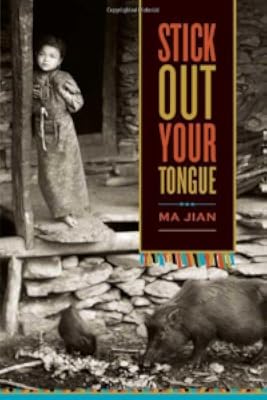
Stick Out Your Tongue: Stories
by Ma Jian
On This Page
Description
Tibet is a land lost in the glare of politics and romanticism, and Ma Jian set out to discover its truths. Stick Out Your Tongue is a revelation: a startlingly vivid portrait of Tibet, both enchanting and horrifying, beautiful and violent, seductive and perverse.In this profound work of fiction, a Chinese writer whose marriage has fallen apart travels to Tibet. As he wanders through the countryside, he witnesses the sky burial of a Tibetan woman who died during childbirth, shares a tent with show more a nomad who is walking to a sacred mountain to seek forgiveness for sleeping with his daughter, meets a silversmith who has hung the wind-dried corpse of his lover on the wall of his cave, and hears the story of a young female incarnate lama who died during a Buddhist initiation rite. In the thin air of the high plateau, the divide between dream and reality becomes confused.When this book was published in Chinese in 1997, the government accused Ma Jian of "harming the fraternal solidarity of the national minorities," and a blanket ban was placed on his future work. With its publication in English, including a new afterword by the author that sets the book in its personal and political context, readers get a rare glimpse of Tibet through Chinese eyes and a window on the imagination of one of China's foremost writers." show lessTags
Recommendations











Member Reviews
Having read Ma Jian's Stick Out Your Tongue a few months ago, I've spent last night and today re-reading a lot of it, plus many reviews online. I believe I've reached a much better understanding of this brief (93-page) collection of five very powerful vignettes of life in Tibet observed in the mid-1980s. (Maybe Ma Jian observed; maybe he dreamed; maybe he hallucinated; maybe all three).
I'd like to avoid repeating what most of the published reviewers have said. They hit all the main points and are easy to search on the Web. There are especially interesting comments in The Guardian, for example. It's worth noting that the translation by Flora Drew (the author's wife/partner) is very smooth and trustworthy.
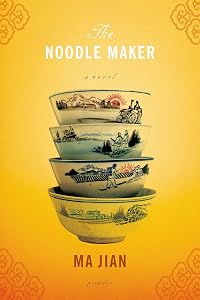
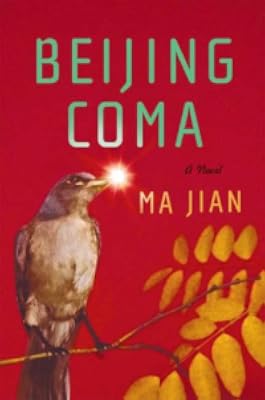
I've taken a personal liking to show more Ma Jian ever since I felt like I walked every step with him in [Red Dust]. Then I read The Noodle Maker, then Stick Out Your Tongue, and waiting on my shelf is Beijing Coma. More than some other writers, I see his body of work as a man's thoughts laid bare, wrestling with the troubles of his Motherland. Ma Jian is able to make us remember the self-destructiveness of China, the lingering emptiness wrought by the Cultural Revolution, the encroachment on Tibet, the dog-eat-dog poverty which political corruption perpetuates. Yet, he can write all these things without preaching, scolding, or whining. His literary voice is more of a howl of pain.
Officially, today's China finds it very inconvenient to recall yesterday's pain or to acknowledge today's social and cultural ills. When Stick Out Your Tongue was first published in China in 1985, it was condemned by the government. All of Ma Jian's works remain banned in China. He eventually opted to live in London. ("The Tiananmen Massacre of 1989 convinced me that I could never make China my permanent home." p 90).
Although purportedly a fictional work, Stick Out Your Tongue seems to be autobiographical, describing the author's attempt to run as far away as possible from the authorities in China. The stories are haunting verbal snapshots, and, like photographs, they don't attempt to pass judgment on the often horrific events. In the Afterward, Ma Jian is straightforward about the background for these stories, his sojourn in Tibet. His soul-searching came to a complete void, and he wrote "In this sacred land, it seemed that the Buddha couldn't even save himself, so how could I expect him to save me? As my faith crumbled, a void opened inside me. I felt empty and helpless, as pathetic as a patient who sticks out his tongue and begs his doctor to diagnose what's wrong with him." p 87.
There is a key reference to 'sticking out one's tongue in greeting' in the custom of the Tibetans, in the story called "The Eight-fanged Roach"—a tale of double incest, superstition, rape, abuse, insanity. This and the rest of the stories are alive with smells, blood, wind, cold, dirt, icy water, smoke from dung fires, the blue expanse of sky, the colors black, red, turquoise, and a kind of insanity of a people who have been robbed of their spiritual core. Numerous assaults on women seem to indicate the destruction of the Motherland. Death is palpable in every story.
I'm glad I went back to re-read; the first time through I thought they were simply shocking stories, but now I believe there is a much more penetrating message.
Here is an item about "sticking out the tongue" as a greeting: http://articles.latimes.com/p/1997/nov/08/local/me-51420 show less
I'd like to avoid repeating what most of the published reviewers have said. They hit all the main points and are easy to search on the Web. There are especially interesting comments in The Guardian, for example. It's worth noting that the translation by Flora Drew (the author's wife/partner) is very smooth and trustworthy.
I've taken a personal liking to show more Ma Jian ever since I felt like I walked every step with him in [Red Dust]. Then I read The Noodle Maker, then Stick Out Your Tongue, and waiting on my shelf is Beijing Coma. More than some other writers, I see his body of work as a man's thoughts laid bare, wrestling with the troubles of his Motherland. Ma Jian is able to make us remember the self-destructiveness of China, the lingering emptiness wrought by the Cultural Revolution, the encroachment on Tibet, the dog-eat-dog poverty which political corruption perpetuates. Yet, he can write all these things without preaching, scolding, or whining. His literary voice is more of a howl of pain.
Officially, today's China finds it very inconvenient to recall yesterday's pain or to acknowledge today's social and cultural ills. When Stick Out Your Tongue was first published in China in 1985, it was condemned by the government. All of Ma Jian's works remain banned in China. He eventually opted to live in London. ("The Tiananmen Massacre of 1989 convinced me that I could never make China my permanent home." p 90).
Although purportedly a fictional work, Stick Out Your Tongue seems to be autobiographical, describing the author's attempt to run as far away as possible from the authorities in China. The stories are haunting verbal snapshots, and, like photographs, they don't attempt to pass judgment on the often horrific events. In the Afterward, Ma Jian is straightforward about the background for these stories, his sojourn in Tibet. His soul-searching came to a complete void, and he wrote "In this sacred land, it seemed that the Buddha couldn't even save himself, so how could I expect him to save me? As my faith crumbled, a void opened inside me. I felt empty and helpless, as pathetic as a patient who sticks out his tongue and begs his doctor to diagnose what's wrong with him." p 87.
There is a key reference to 'sticking out one's tongue in greeting' in the custom of the Tibetans, in the story called "The Eight-fanged Roach"—a tale of double incest, superstition, rape, abuse, insanity. This and the rest of the stories are alive with smells, blood, wind, cold, dirt, icy water, smoke from dung fires, the blue expanse of sky, the colors black, red, turquoise, and a kind of insanity of a people who have been robbed of their spiritual core. Numerous assaults on women seem to indicate the destruction of the Motherland. Death is palpable in every story.
I'm glad I went back to re-read; the first time through I thought they were simply shocking stories, but now I believe there is a much more penetrating message.
Here is an item about "sticking out the tongue" as a greeting: http://articles.latimes.com/p/1997/nov/08/local/me-51420 show less
These stories tell the experiences of their narrators with a reality that rejects simple chronology and order. The sexuality is disturbing; the prose and detail are almost nauseating in their unflinching clarity. Ma Jian's genius is clear in the first story, "The Woman and the Blue Sky," which uses frustrated dialogue and the details of death to compel. The relations between men and women show an absolute binary of control and victimization, exercised through sexual and other violences, elaborated by different shades of myth and storytelling, all of which seem to be painted upon narrative presents in which at least one person is starving to death. These stories are an honest reflection of a certain perception of human life, a certain show more vantage point from which existence can be observed--but it is so different from my own that my first reaction was motion sickness. show less
Ma Jian's stories in this book are some of my favourite short stories. I discovered Ma Jian after I had begun my own writings, by the recommendation of a friend who told me I would find them inspiring.
Indeed, I did.
I love short stories and I think Ma Jian's stories in this book are so compellingly true that although it's fiction, it carries that unmistakeable element of truth, being written in the first person. Ma Jian does it with simple words, no fancy packaging, no smart sentences.. Just simplicity.
I am not going to write a spoiler, no way.
This is a kind of book you will either love or resent. In either case, it will make you think and I love books that make me think. The beauty of life lies, to me, in all it's mystery, both show more human and non human, however our human ways have to be considered as unique and often questionable in the realm of life and there are no answers but nonetheless we have the power to observe them and to judge them for better or for worse. show less
Indeed, I did.
I love short stories and I think Ma Jian's stories in this book are so compellingly true that although it's fiction, it carries that unmistakeable element of truth, being written in the first person. Ma Jian does it with simple words, no fancy packaging, no smart sentences.. Just simplicity.
I am not going to write a spoiler, no way.
This is a kind of book you will either love or resent. In either case, it will make you think and I love books that make me think. The beauty of life lies, to me, in all it's mystery, both show more human and non human, however our human ways have to be considered as unique and often questionable in the realm of life and there are no answers but nonetheless we have the power to observe them and to judge them for better or for worse. show less
Ma Jian, a Chinese writer, traveled alone through the Tibetan highlands during a period of personal difficulty, hoping to reconnect to nature and to his Buddhist faith. What he found, and wrote about in these five short stories, not left him even more desolate than before, but caused him to be banned in his native China. Tibet has been much romanticized over the years by Hollywood and naive Western spiritual tourists. Ma Jian reveals the harsh truths of Tibet life as he experienced it. While there is beauty and deep humanity, it's also violent, stark, filled with horrible suffering, poverty and superstition. I found the work profound, and masterfully written; I also found it shocking and heartbreaking. Whatever the reader's reaction, show more it's clearly a powerful and important work. The author is to be commended. show less
In 1983 Ma Jian set out on the three year journey around China and Tibet that is described in his book [Red Dust], published in 2001. [Stick Out Your Tongue] is a collection of five short stories based on his travels in Tibet. After its publication in the journal People's Literature in 1987, [[Ma Jian]]'s work was banned in China and Ma Jian went into exile in Hong Kong.
The narrator watches the sky burial of a seventeen-year-old girl, married to two husbands, who had died in childbirth. He spends a night in a tent with a nomad who has sold his yaks and donated the proceeds to a monastery and is on his way to a sacred lake to wash away his sins.
A nine-day old baby girl is the reincarnation of the living Buddha and at fifteen must go show more though an initiation that requires her to meditate for three days, immersed in a frozen river.
Ma Jian relates these stories in simple language, without emotion. I was shocked by the brutality of the lives he describes. In the afterword, Ma Jian compares his ideal of Tibet, "an earthly paradise, a hidden utopia" firstly with the harshness of the Tibet he experienced in 1985, then with the present "barren outpost of the great Chinese empire." show less
The narrator watches the sky burial of a seventeen-year-old girl, married to two husbands, who had died in childbirth. He spends a night in a tent with a nomad who has sold his yaks and donated the proceeds to a monastery and is on his way to a sacred lake to wash away his sins.
A nine-day old baby girl is the reincarnation of the living Buddha and at fifteen must go show more though an initiation that requires her to meditate for three days, immersed in a frozen river.
Ma Jian relates these stories in simple language, without emotion. I was shocked by the brutality of the lives he describes. In the afterword, Ma Jian compares his ideal of Tibet, "an earthly paradise, a hidden utopia" firstly with the harshness of the Tibet he experienced in 1985, then with the present "barren outpost of the great Chinese empire." show less
Tibet through eyes of Chinese traveler, strange tales, almost hallucinatory in places, banned in China for negative view of Tibetians
C’est marrant, ce livre est le deuxième que j’ai mis dans ma liste de livres à lire quand je me suis mise à faire une telle liste de façon formelle. Il m’aura donc fallu plus de 20 ans pour l’acquérir, et quelques mois de plus pour le lire… Et je ne suis pas sûre que le livre valait une telle attente. C’est un livre qui est difficile à cerner. D’abord, il parle du Tibet et est écrit par un Chinois, ce qui rend le livre illégitime aux yeux des Chinois qui voient le choix du sujet comme « anti-chinois », mais ce qui le rend aussi illégitime aux yeux des Occidents puisque précisément il est écrit par un Chinois (donc un envahisseur). Ensuite, c’est le regard de cet écrivain voyageur qui est complexe, car show more dans chacune des cinq courtes nouvelles qui composent ce fin recueil, il donne à voir un Tibet qui est bien loin des cartes postales idéalisées que l’on aime à nous montrer. Ici, dans ce Tibet rural et pastoral, la vie est dure, et les traditions sont à l’avenant. Pour bien commencer, on a le droit à une nouvelle qui parle de la tradition qui veut que les cadavres soient découpés et offerts aux vautours (une tradition que j’avais déjà vue dans le très beau film Himalaya, enfance d’un chef, et qui à mon sens est tout à fait adapté au climat et au sol et ne devrait donc pas choquer les occidentaux enterreurs de cadavres que nous sommes), mais pour faire bonne figure, on y mêle un thème qui sera récurrent, celui du viol ou de l’inceste, et les autres nouvelles sont dans la même veine…
On se retrouve donc avec un recueil d’à peine 100 pages qui décrit des conditions de vie et des traditions dures, et qui ne laisse aucune échappatoire au lecteur. On sent cependant de la fascination chez cet écrivain, qui a arpenté à plusieurs reprises et pendant de longs mois cette région, et cette fascination se transmet au lecteur, malgré un certain sentiment de malaise à côtoyer ainsi le sordide sur le toit du monde. show less
On se retrouve donc avec un recueil d’à peine 100 pages qui décrit des conditions de vie et des traditions dures, et qui ne laisse aucune échappatoire au lecteur. On sent cependant de la fascination chez cet écrivain, qui a arpenté à plusieurs reprises et pendant de longs mois cette région, et cette fascination se transmet au lecteur, malgré un certain sentiment de malaise à côtoyer ainsi le sordide sur le toit du monde. show less
Oct 21, 2025French
Members
- Recently Added By
Published Reviews
ThingScore 100
In 1983, Ma Jian was living in Beijing as a photographer and painter in a circle of dissident friends - young men and women who snatched moments of sexual licence, exchanged precious copies of foreign books, and discussed each other's work in tiny gatherings that were reported by the neighbours and raided by the police. They were seen as socially deviant - and so dangerous - elements and show more therefore vulnerable to persecution in the now quaint-sounding Campaign against Spiritual Pollution. It sounds less quaint when the figures are tallied: more than a million arrests and 24,000 executed. Ma Jian embarked on his journey to evade arrest himself and on publication of Stick Out Your Tongue he was held up as an example of both "spiritual pollution" and "bourgeois liberalism". He has lived in exile ever since......It is hard to disagree with the official verdict that "Ma Jian fails to depict the great strides the Tibetan people have made in building a united, prosperous and civilised socialist Tibet". But then, that version of the Tibet fantasy demanded a greater effort of the imagination even than Ma Jian's. The difference between them is that at the heart of Ma Jian's stories, there is both humanity and a piercing, if painful, literary truth. show less
added by vancouverdeb
This is how Ma transports us to places and times we're unlikely to experience, and why these narratives are winning. He remains a seeker, despite concluding: "I know now that no path is solitary, we all tread across other people's beginnings and ends." Stick Out Your Tongue is part of a very notable body of work.
added by vancouverdeb
Lists

Novels Published in 1987
81 works; 19 members
Author Information

14+ Works 2,099 Members
Ma Jian was born in 1953 in Qingdoo, China. In 1986 he moved to Hong Kong, where he published novels, essays, short stories & collections of poetry & reportage; edited political & cultural magazines & founded a publishing company. He currently lives in London. (Bowker Author Biography)
Some Editions
Awards and Honors
Awards
Notable Lists
Series
Belongs to Publisher Series
Work Relationships
Is contained in
Common Knowledge
- Canonical title*
- Tira fuori la lingua: storie dal Tibet
- Original title
- Stick out your tongue
- Original publication date
- 1987 (Original) (Original); 2006 (English Translation) (English Translation)
*Some information comes from Common Knowledge in other languages. Click "Edit" for more information.
Classifications
- Genres
- General Fiction, Fiction and Literature
- DDC/MDS
- 895.1352 — Literature & rhetoric Literatures of other languages Literatures of East and Southeast Asia Chinese Chinese fiction Modern period 1912–2010 1949–2010
- LCC
- PL2948.3 .J53 .S75 — Language and Literature Languages and literatures of Eastern Asia, Africa, Oceania Languages of Eastern Asia, Africa, Oceania Chinese language and literature Chinese literature Individual authors and works
- BISAC
Statistics
- Members
- 219
- Popularity
- 149,578
- Reviews
- 8
- Rating
- (3.83)
- Languages
- English, French, Italian
- Media
- Paper, Ebook
- ISBNs
- 9
- ASINs
- 3