
Geling Yan
Author of The Lost Daughter of Happiness
About the Author
Image credit: Yan Geling during Incroci di Civiltà International Literature Festival on November 05, 2021 in Venice, Italy
Works by Geling Yan
陆犯焉识 (Chinese Edition) 1 copy
Tagged
Common Knowledge
- Legal name
- Yan, Geling
严歌苓 - Birthdate
- 1958-12-19
- Gender
- female
- Education
- Wuhan University, China
Columbia College, Chicago - Occupations
- journalist
novelist - Organizations
- Hollywood Writers' Guild
- Nationality
- China
- Birthplace
- Shanghai, China
- Places of residence
- Shanghai, China
San Francisco, California, USA - Associated Place (for map)
- China
Members
Reviews

The Secret Talker by Geling Yan is a novella that rewards a second read while the first read is still fresh in your mind. While grouped in some places with mysteries and thrillers this is more of a psychological study that uses a tension-producing frame with which to tell the story. For me, this worked very well.
I understand that some people have to like a protagonist in order to like a book. Limiting but more common than I ever realized. If you're one of those, this may or may not be a good show more book for you. If you're a reader more interested in understanding characters, whether you like or approve of them or not, this book offers a wealth of avenues into and through the work.
While not a lot of people would ever reply to an anonymous email from someone who knows who they are, some people would. I don't find having a protagonist do something I wouldn't do as a reason to dislike a book. If I did, I probably would have to dislike most books since most depend on a character doing something that is at best ill-advised and at worst down right unethical, that is part of what leads to the conflict that makes a novel or novella.
The tension here, such as it is, derives from Hongmei not being sure who the secret talker is, even after most readers have a good idea. I read this more from the perspective of trying to understand who Hongmei is and why she does what she does. By the time we finish the book, we have her life story, yet because it is told nonlinearly we have to refer back and forth in understanding her. That is why I think a reread shortly after the first read is worthwhile. I waited a couple days to read it again and really enjoyed the second time through.
Again, because the secret talker is essentially a stalker there is a creepy element, but that quickly dissipates as we read since there are periods of no contact which defuses the possible sense of danger, at least to some extent. That said, some may simply not want to learn about a character who does something the reader considers foolish and dangerous. Well, their loss, Hongmei's life story is fascinating and even though the particulars are strictly hers, they highlight many feelings and conflicts we all experience. If you have ever asked yourself why you did something and later came to understand it, you might appreciate what Hongmei goes through here.
I recommend this to readers interested in psychological studies that are not linear. This is a short read and even with a second reading will still be shorter than many other books, so well worth any time investment on your part.
Reviewed from a copy made available by the publisher via NetGalley. show less
I understand that some people have to like a protagonist in order to like a book. Limiting but more common than I ever realized. If you're one of those, this may or may not be a good show more book for you. If you're a reader more interested in understanding characters, whether you like or approve of them or not, this book offers a wealth of avenues into and through the work.
While not a lot of people would ever reply to an anonymous email from someone who knows who they are, some people would. I don't find having a protagonist do something I wouldn't do as a reason to dislike a book. If I did, I probably would have to dislike most books since most depend on a character doing something that is at best ill-advised and at worst down right unethical, that is part of what leads to the conflict that makes a novel or novella.
The tension here, such as it is, derives from Hongmei not being sure who the secret talker is, even after most readers have a good idea. I read this more from the perspective of trying to understand who Hongmei is and why she does what she does. By the time we finish the book, we have her life story, yet because it is told nonlinearly we have to refer back and forth in understanding her. That is why I think a reread shortly after the first read is worthwhile. I waited a couple days to read it again and really enjoyed the second time through.
Again, because the secret talker is essentially a stalker there is a creepy element, but that quickly dissipates as we read since there are periods of no contact which defuses the possible sense of danger, at least to some extent. That said, some may simply not want to learn about a character who does something the reader considers foolish and dangerous. Well, their loss, Hongmei's life story is fascinating and even though the particulars are strictly hers, they highlight many feelings and conflicts we all experience. If you have ever asked yourself why you did something and later came to understand it, you might appreciate what Hongmei goes through here.
I recommend this to readers interested in psychological studies that are not linear. This is a short read and even with a second reading will still be shorter than many other books, so well worth any time investment on your part.
Reviewed from a copy made available by the publisher via NetGalley. show less
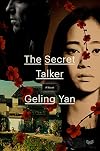
This intriguing story is about Hongmei, a Chinese immigrant, her American professor husband, Glen, and their marriage.
The narrative is set in the late 1990s, when the internet was a new thing and email was an exciting new way of corresponding. Hongmei is a youngish Chinese immigrant who is married to Glen, an American professor she met while he was in China. Their once fierce romance has given way to a stale marriage in which the two don't communicate much, and when they do it's terse, show more note-length conversations. The author reveals more as the story goes on.
One day Hongmei receives a mysterious email from a secret admirer, one she calls the "secret talker." She is drawn to him (her?) at the same time she tries to push him away, feeling guilty about this secret pleasure she hides from Glen. All the same, she can't let go of the guilty pleasure of baring her soul and telling her story in a way she has never told to anyone before. The anonymity of her confidant as well as her pent-up frustrations with her relationship with Glen impel her to continue the tryst. She reveals more and more to the secret talker as well as to the reader, and the character gets more interesting as we go, her history and past giving the character more and more depth and nuance. We understand Hongmei's desire for something new as rooted in her childhood in her small Chinese village. Glen was a way out of what she saw as a stifling world of deprivation and monotony, and America was the shining diamond suddenly within her reach. The reality of marriage however, settles into dullness for Hongmei, and this secret talker is her way out of the monotony and into something exciting.
The prose is well written, the characters well-drawn. However, this is billed as psychological thriller but it is not; publishers ought to be punished for misleading readers! It is however satisfying as a novel about communication, and the desires, "disppointments," and unhappiness beneath a stagnating relationship. show less
The narrative is set in the late 1990s, when the internet was a new thing and email was an exciting new way of corresponding. Hongmei is a youngish Chinese immigrant who is married to Glen, an American professor she met while he was in China. Their once fierce romance has given way to a stale marriage in which the two don't communicate much, and when they do it's terse, show more note-length conversations. The author reveals more as the story goes on.
One day Hongmei receives a mysterious email from a secret admirer, one she calls the "secret talker." She is drawn to him (her?) at the same time she tries to push him away, feeling guilty about this secret pleasure she hides from Glen. All the same, she can't let go of the guilty pleasure of baring her soul and telling her story in a way she has never told to anyone before. The anonymity of her confidant as well as her pent-up frustrations with her relationship with Glen impel her to continue the tryst. She reveals more and more to the secret talker as well as to the reader, and the character gets more interesting as we go, her history and past giving the character more and more depth and nuance. We understand Hongmei's desire for something new as rooted in her childhood in her small Chinese village. Glen was a way out of what she saw as a stifling world of deprivation and monotony, and America was the shining diamond suddenly within her reach. The reality of marriage however, settles into dullness for Hongmei, and this secret talker is her way out of the monotony and into something exciting.
The prose is well written, the characters well-drawn. However, this is billed as psychological thriller but it is not; publishers ought to be punished for misleading readers! It is however satisfying as a novel about communication, and the desires, "disppointments," and unhappiness beneath a stagnating relationship. show less
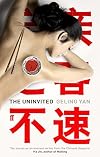
The Uninvited is a satirical look at the contradictions in modern China, where an economic boom has created an immensely privileged upper class, though hundreds of millions of people still live in poverty. It's a light novel, with shaky characterisation and a limp ending, but Yan's observation of the hypocrisies and absurdities of contemporary Beijing make for an entertaining read—there's just enough darkness there to leaven the farce.
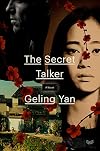
I found this book on my Kindle app, having no recollection of purchasing or otherwise acquiring it. Accordingly, I had no idea what genre it was nor even a vague notion what it was about, and I deliberately did not look it up. A complete blind date. It became apparent early on that this slim novel is a psychological thriller, not normally my cup of tea. Hongmei is a Chinese-born woman in her 20s, living in the Bay Area with Glen, her American professor husband in a perfunctory, drifting show more marriage when an anonymous person begins emailing her, someone who is watching her closely, following her, knowing many intimate details about her. As their correspondence continues, the “secret talker” becomes a person to whom she is able to open up about secrets and her yearnings. It was not too difficult to figure out the secret talker’s identity, but Hongmei’s personal story from her childhood in a small Chinese village where a massacre occurred to the present was beautifully exposed in page-turning writing. show less
Lists
You May Also Like


Associated Authors
Statistics
- Works
- 32
- Members
- 622
- Popularity
- #40,475
- Rating
- 3.4
- Reviews
- 23
- ISBNs
- 70
- Languages
- 6
- Favorited
- 2
