
Xinran
Author of The Good Women of China: Hidden Voices
About the Author
Xinran was born in 1958. After a career in the army, she became a journalist in the late 1980's, working as a radio broadcaster. A professor of psychology, Xinran is now living in England. She will be at the WORD Christchurch Writers & Readers Festival in 2015.
Works by Xinran
Associated Works
China Adorned: Ritual and Custom of Ancient Cultures (2022) — Afterword and Executive Editor, some editions — 11 copies
Tagged
Common Knowledge
- Legal name
- 薛欣然
Xuē, Xīnrán - Birthdate
- 1958
- Gender
- female
- Occupations
- writer
journalist
radio presenter - Organizations
- The Guardian
Asia House Festival of Asian Literature
The Mothers' Bridge of Love - Agent
- Toby Eady Associates
- Relationships
- Eady, Toby (husband)
Wesley, Mary (mother-in-law) - Nationality
- China
- Birthplace
- Beijing, China
- Places of residence
- Beijing, China
London, England, UK - Map Location
- China
Members
Reviews

During the late eighties and early nineties, Xinran presented a late-night programme on Chinese radio in which she invited women to come forward and tell their own stories, with the idea of breaking down some of the barriers that make it difficult to talk about gender issues in China. The book is a small selection from the many stories she was able to gather during that time, obviously put together both with a journalist's eye for what makes a good story and with the didactic intention of show more covering a suitable range of "key topics" to give her readers some perspective on the main issues affecting women in Chinese society.
As should be obvious (but isn't necessarily, until someone like Xinran comes along and points it out), China is a vast, complicated and diverse country that has gone through huge changes in a very short time, and there's no way you can get a real idea of what life is like there from listening to the accounts of a handful of individuals. The dozen or so stories we look at in detail in this book help, but it's still only scratching the surface. Xinran's point is of course not so much to tell outsiders what China is like, but rather to show Chinese women that talking about what's happened in their lives is a first step towards making things better.
What struck me about the stories? Firstly, and maybe most obviously, there's an element of the "banality of evil". The bad things that happen to Chinese women are essentially the same bad things that happen to the weaker members of society everywhere, especially in times of war and unrest. Sadly, sexual violence, incest, wife-battering and economic hardship are not exclusive to any region or type of society. Then of course there are the specifically Chinese elements. Women seem to have suffered disproportionately in the chaos of the Cultural Revolution, and Xinran illustrates this with many examples (including her own experience as a little girl sent to a special "black" school because she was the child of bourgeois parents). As we all know, China since the revolution has been a place where women work in "traditionally male" roles to an extent that's often surprising to outsiders, but there's still a "glass ceiling" in place (Xinran also tells the story of the educated young women who joined the revolution only to be assigned to the task of becoming replacement wives for party leaders who had been separated from their original families by the war). The state interferes in sexuality and private life to an extent that most of us would find difficult to believe, whilst cultural inhibitions make it difficult to talk openly about sexual matters. Xinran also makes it clear that we have to remember what a vast and diverse place China is: in a final chapter, she makes a short visit to a village in a semi-desert part of western China, where civilisation has had essentially no impact on day-to-day life, and women exist in conditions that make even the really bad things she describes elsewhere look positively benign. Yet those women, unlike any others she has interviewed, make a point of telling her that they are happy.
I'm glad I read this: it's a well-written, very carefully constructed book, and I think I learnt something from it, even if it is only scratching the surface. show less
As should be obvious (but isn't necessarily, until someone like Xinran comes along and points it out), China is a vast, complicated and diverse country that has gone through huge changes in a very short time, and there's no way you can get a real idea of what life is like there from listening to the accounts of a handful of individuals. The dozen or so stories we look at in detail in this book help, but it's still only scratching the surface. Xinran's point is of course not so much to tell outsiders what China is like, but rather to show Chinese women that talking about what's happened in their lives is a first step towards making things better.
What struck me about the stories? Firstly, and maybe most obviously, there's an element of the "banality of evil". The bad things that happen to Chinese women are essentially the same bad things that happen to the weaker members of society everywhere, especially in times of war and unrest. Sadly, sexual violence, incest, wife-battering and economic hardship are not exclusive to any region or type of society. Then of course there are the specifically Chinese elements. Women seem to have suffered disproportionately in the chaos of the Cultural Revolution, and Xinran illustrates this with many examples (including her own experience as a little girl sent to a special "black" school because she was the child of bourgeois parents). As we all know, China since the revolution has been a place where women work in "traditionally male" roles to an extent that's often surprising to outsiders, but there's still a "glass ceiling" in place (Xinran also tells the story of the educated young women who joined the revolution only to be assigned to the task of becoming replacement wives for party leaders who had been separated from their original families by the war). The state interferes in sexuality and private life to an extent that most of us would find difficult to believe, whilst cultural inhibitions make it difficult to talk openly about sexual matters. Xinran also makes it clear that we have to remember what a vast and diverse place China is: in a final chapter, she makes a short visit to a village in a semi-desert part of western China, where civilisation has had essentially no impact on day-to-day life, and women exist in conditions that make even the really bad things she describes elsewhere look positively benign. Yet those women, unlike any others she has interviewed, make a point of telling her that they are happy.
I'm glad I read this: it's a well-written, very carefully constructed book, and I think I learnt something from it, even if it is only scratching the surface. show less
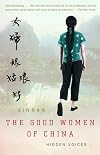
Wow. What a sobering read. Now, it is no secret that women across the world have gotten the shaft throughout history, in pretty much every country/culture around the world, but some grind it into their women more than others, and China is a prime example of this.
There are fascinating glimpses into the Cultural Revolution in this book and the way the Communist Party so negatively impacted the lives of countless innocent people. I read 'Life and Death in Shangai' by Nien Cheng not too long show more before this, so this book and that one make for a fascinating read about life in China under Chairman Mao's control.
The collection of stories here is quite heartbreaking, especially the final one, about the women of Shouting Hill. Yes, Xinran says these women are happy, but the story really illustrates the truth of 'ignorance is bliss' when you consider how fucking hard these women have it. They're not even allowed rice (a privilege reserved for the men of Shouting Hill for all the hard work they do farming, even though the lot of the woman is arguably just as hard if not more than the men)
The thing with the leaves, and prolapsed uteruses (oh dear god why) sounds absolutely nightmarish, but again, these women are happy because they literally do not know any better. I had to sit and think to myself for a bit of time after reading this story.
Water is so rare to the people of Shouting Hill because they live right at the fringes of the desert that makes up much of Northwestern China, in the loess (I actually learned a new word that day, I had no idea what loess was before this!) that I can not help but shudder when I think of their hygiene standards, and how extremely lucky I am to have access to a hot-water shower and sanitary napkins!
It truly is sobering to think about how the typical American/European female views standards of living when it comes to things like this. Even the poorest people in first-world nations still have access to running water - if not necessarily hot, it's still clean water that they don't have to hike HOURS for - and even if they don't have toilet paper, they can still use newspaper or other stuff, but that kind of thing simply does not exist in Shouting Hill or other villages like it located amongst the loesses of China.
One thing I would have liked in this book is a story from a woman who has/had bound feet. Back in the 1990's, there was still a share of old women who had bound feet, and I wish Xinran had included such a story, especially as this book is less than 300 pages. Nonetheless, this book is fascinating and educational, and I highly recommend it. 4.5/5 stars. show less
There are fascinating glimpses into the Cultural Revolution in this book and the way the Communist Party so negatively impacted the lives of countless innocent people. I read 'Life and Death in Shangai' by Nien Cheng not too long show more before this, so this book and that one make for a fascinating read about life in China under Chairman Mao's control.
The collection of stories here is quite heartbreaking, especially the final one, about the women of Shouting Hill. Yes, Xinran says these women are happy, but the story really illustrates the truth of 'ignorance is bliss' when you consider how fucking hard these women have it. They're not even allowed rice (a privilege reserved for the men of Shouting Hill for all the hard work they do farming, even though the lot of the woman is arguably just as hard if not more than the men)
The thing with the leaves, and prolapsed uteruses (oh dear god why) sounds absolutely nightmarish, but again, these women are happy because they literally do not know any better. I had to sit and think to myself for a bit of time after reading this story.
Water is so rare to the people of Shouting Hill because they live right at the fringes of the desert that makes up much of Northwestern China, in the loess (I actually learned a new word that day, I had no idea what loess was before this!) that I can not help but shudder when I think of their hygiene standards, and how extremely lucky I am to have access to a hot-water shower and sanitary napkins!
It truly is sobering to think about how the typical American/European female views standards of living when it comes to things like this. Even the poorest people in first-world nations still have access to running water - if not necessarily hot, it's still clean water that they don't have to hike HOURS for - and even if they don't have toilet paper, they can still use newspaper or other stuff, but that kind of thing simply does not exist in Shouting Hill or other villages like it located amongst the loesses of China.
One thing I would have liked in this book is a story from a woman who has/had bound feet. Back in the 1990's, there was still a share of old women who had bound feet, and I wish Xinran had included such a story, especially as this book is less than 300 pages. Nonetheless, this book is fascinating and educational, and I highly recommend it. 4.5/5 stars. show less

I had this slotted into March as a nonfiction read, only to discover after finishing it, that it's fiction. Weirdly, some sources on the internet still note it as NF, which is what it was originally published as, I think? Weirdness.
It's an interesting story, beautifully written in parts, about a Chinese woman who travels to Tibet in the 1950s to search for her husband, a doctor with the Chinese army. She ends up spending decades in Tibet, and the best part of the book, for me, was learning show more about the history and culture of the area. As a novel, it doesn't quite work because there are so many gaps in the narrative and Shu Wen is not fully developed as a character. But as a meditation on love, loyalty, and the essence of what makes us connected to others despite so many differences, it is a nice read.
3.5 stars show less
It's an interesting story, beautifully written in parts, about a Chinese woman who travels to Tibet in the 1950s to search for her husband, a doctor with the Chinese army. She ends up spending decades in Tibet, and the best part of the book, for me, was learning show more about the history and culture of the area. As a novel, it doesn't quite work because there are so many gaps in the narrative and Shu Wen is not fully developed as a character. But as a meditation on love, loyalty, and the essence of what makes us connected to others despite so many differences, it is a nice read.
3.5 stars show less
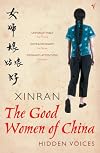
Doing an alphabetically inspired reading list can be considered restrictive but it can also lead you to read books that may not necessarily be high on the tbr pile. ‘The Good Women of China’ was not only my alphabetical X, but as it turns out, also a gem that has been hidden on my shelves for quite a while.
Without a hint of hyperbole or pretension, this is the saddest book I have ever read. This book should be required reading by every adult human being everywhere so that humanity learns show more what it is to suffer at the hands of power; learns that such suffering exists and that it is inherently wrong - a deep scar on our legacy and something our collective conscience should feel deeply unsettled by. The book’s title could have substituted the word good for several other adjectives: The poor/overlooked/long suffering/oppressed Women of China for example.
Xinran was a Chinese reporter with a radio phone-in show for women, which exposed her to their tragic stories from across the country which she shares here. One after the other, each story breaks your heart a little more than the last as we hear the brutal experiences of their female narrators. The theme: the weight of a regime, culture and hierarchy crushing and breaking the gender that gives them life and love.
I can’t fathom how important Xinran’s show must have been to the oppressed women nor how important this book being published is to a future hope of a better world - for by no means is China the only country where such oppression exists. I urge you to read this book, it is admittedly tough to read but I consider this small recompense for the pain these women have suffered. Hopefully a lot of people read it and the veil of China’s past treatment of women is lifted, understood and never seen again. show less
Without a hint of hyperbole or pretension, this is the saddest book I have ever read. This book should be required reading by every adult human being everywhere so that humanity learns show more what it is to suffer at the hands of power; learns that such suffering exists and that it is inherently wrong - a deep scar on our legacy and something our collective conscience should feel deeply unsettled by. The book’s title could have substituted the word good for several other adjectives: The poor/overlooked/long suffering/oppressed Women of China for example.
Xinran was a Chinese reporter with a radio phone-in show for women, which exposed her to their tragic stories from across the country which she shares here. One after the other, each story breaks your heart a little more than the last as we hear the brutal experiences of their female narrators. The theme: the weight of a regime, culture and hierarchy crushing and breaking the gender that gives them life and love.
I can’t fathom how important Xinran’s show must have been to the oppressed women nor how important this book being published is to a future hope of a better world - for by no means is China the only country where such oppression exists. I urge you to read this book, it is admittedly tough to read but I consider this small recompense for the pain these women have suffered. Hopefully a lot of people read it and the veil of China’s past treatment of women is lifted, understood and never seen again. show less
Lists
Awards


You May Also Like


Associated Authors
Statistics
- Works
- 20
- Also by
- 1
- Members
- 3,512
- Popularity
- #7,235
- Rating
- 3.9
- Reviews
- 145
- ISBNs
- 164
- Languages
- 17
- Favorited
- 3
