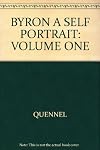
Byron: A Self-Portrait: Letters and Diaries 1798-1824 (Oxford Paperbacks)
by Lord George Gordon Byron
32 Members (4.50)
On This Page
Description
Literary legend has it that Byron left behind the beginnings of an autobiography, but that his publisher, John Murray, destroyed it after his death because he found it too shocking. With this fascinating selection of correspondence written by one of England's greatest letter writers, Peter Quennell comes as close as anyone can to salvaging what was lost by the alleged actions of one overcautious publisher. Drawing on letters from Byron's pre-Harrow days to those written in the weeks before show more his death, Quennell has pieced together the extraordinary story of Byron's life as told by himself. As Byron records his thoughts as a schoolboy, man-of-the-world, rake and womanizer, literary sensation, and poet-in-exile, he reveals the rebellious, warm-hearted, disorderly, fun-loving, and neurotic sides to his private character. The volume conveys how his writing, veering from racy vulgarity to polished eloquence, vividly evokes the worlds in which he lived--London and Venetian high society, the Swiss and Italian countryside, and the Greek war tents at Missolonghi. It also includes Byron's journals reprinted in full. show lessTags
Recommendations






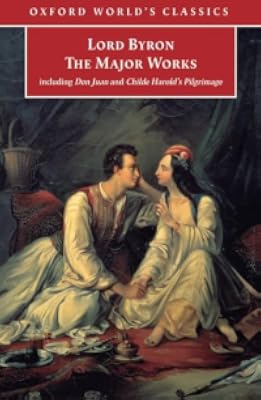


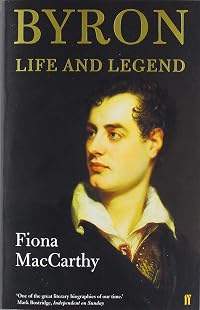
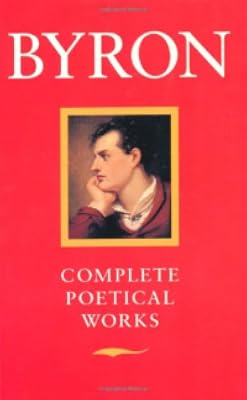
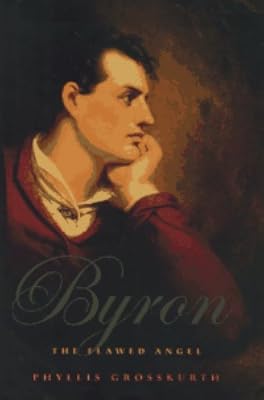














Member Reviews
Members
- Recently Added By
Lists

Trinity College Booklist (1951): Class Ten, English Literature
358 works; 5 members
Author Information

848+ Works 12,205 Members
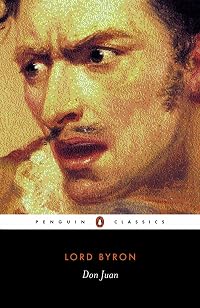
English poet and dramatist George Gordon, Lord Byron was born January 22, 1788, in London. The boy was sent to school in Aberdeen, Scotland, until the age of ten, then to Harrow, and eventually to Cambridge, where he remained form 1805 to 1808. A congenital lameness rankled in the spirit of a high-spirited Byron. As a result, he tried to excel in show more every thing he did. It was during his Cambridge days that Byron's first poems were published, the Hours of Idleness (1807). The poems were criticized unfavorably. Soon after Byron took the grand tour of the Continent and returned to tell of it in the first two cantos of Childe Harold (1812). Instantly entertained by the descriptions of Spain, Portugal, Albania, and Greece in the first publication, and later travels in Belgium, Germany, Switzerland, and Italy, the public savored Byron's passionate, saucy, and brilliant writing. Byron published the last of Childe Harold, Canto IV, in 1818. The work created and established Byron's immense popularity, his reputation as a poet and his public persona as a brilliant but moody romantic hero, of which he could never rid himself. Some of Byron's lasting works include The Corsair, Lara, Hebrew Melodies, She Walks In Beauty, and the drama Manfred. In 1819 he published the first canto of Don Juan, destined to become his greatest work. Similar to Childe Harold, this epic recounts the exotic and titillating adventures of a young Byronica hero, giving voice to Byron's social and moral criticisms of the age. Criticized as immoral, Byron defended Don Juan fiercely because it was true-the virtues the reader doesn't see in Don Juan are not there precisely because they are so rarely exhibited in life. Nevertheless, the poem is humorous, rollicking, thoughtful, and entertaining, an enduring masterpiece of English literature. Byron died of fever in Greece in 1824, attempting to finance and lead the Byron Brigade of Greek freedom fighters against the Turks. (Bowker Author Biography) show less
All Editions
Series
Belongs to Publisher Series
Work Relationships
Common Knowledge
- People/Characters
- Lord Byron
Classifications
Statistics
- Members
- 32
- Popularity
- 883,156
- Rating
- (4.50)
- Languages
- English
- Media
- Paper
- ISBNs
- 1
- ASINs
- 3