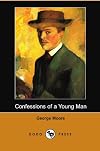
Confessions of a Young Man
by George Moore
On This Page
Description
This is a critical edition of the autobiographical novel about an Irish young man who moves to Paris and embraces the bohemian life during the 1870s and 1880s.Tags
Recommendations















Member Reviews
Confessions of a Young Man (1886) is a memoir by 30-year old Irish novelist George Moore (1852-1933). It is an unusually frank account, by the standards of the time, of an Irish expatriate's life as a bohemian artist in Paris and London during the "fin-de-siecle". Moore describes drinking absinthe in Parisian cafes with founders of Impressionism - Manet, Degas, Monet and Pissaro - before England had even heard of them. His Paris studio was adorned in "pagan" trappings such as Indian lamps, red velvet ceiling canopies "to give the appearance of a tent", Turkish rugs and couches, incense and candles of the Orient, a Buddhist temple, a statue of Apollo, "a faun in terra-cotta that laughed in the red gloom." He kept a large python (snake) show more in the house and once a month fed it live rabbits while Gregorian chant music was played on a pipe organ. Friends came to watch. His sexual escapades are only hinted at in typical Victorian fashion, such as two satin slippers nailed to the head of his bed and used as an ashtray, or bedrooms bedecked in trees of flowers. Moore is completely unapologetic about his debaucheries, which interestingly don't seem that shocking today.
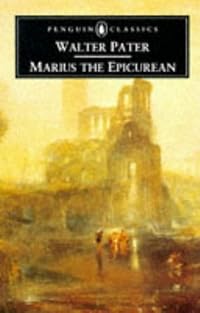
Moore's memoir is unusual for Victorian writers because he is so outward with his feelings and views. He spares no ones reputation, including his own, in the name of honesty. Oscar Wilde quipped of Moore: "He conducts his education in public". It is eerily modern, yet clearly Victorian in style, an uncanny valley. The Modern Library chose it in 1917 (1925?) as among the first to be included in the series, but is now long out of print. Moore spends a lot of space on literary criticism - he is critical of just about everyone popular in the day (except Shelly and Balzac), but praises the school of Aestheticism and Walter Pater. The last chapter is probably the most gripping, describing a duel between himself and a young aristocrat whom Moore baited into a fight to gain notoriety (Moore is boastingly unapologetic).
The book was written in various chapters over time and can be a bit inconsistent in style and focus, like a collection of essays, but lively and full of youthful energy. Two years after Confessions, his publisher Henry Vizetelly was charged with obscene libel for the publication of an uncensored translation of Emile Zola's La Terre (which contains incest and pedophilia, among other things). Moore supported Vizetelly's efforts, and his Confessions can be seen as weapon in the war against hypocritical Victorian morality. His last chapter is a sort of "bait" to his detractors to take up a public duel, Moore knew debating morality in public would expose the contradictions. He was ahead of his time and by WWI the old facades no longer held as Modernism took the center. The morality struggles Moore fought in the 1870s and 80s, like this book, are largely forgotten today - but it's a fun and curious step back in time to see how the rebels of another era are so much alike and so very different.
--Review by Stephen Balbach, via CoolReading (c) 2008 cc-by-nd show less
Moore's memoir is unusual for Victorian writers because he is so outward with his feelings and views. He spares no ones reputation, including his own, in the name of honesty. Oscar Wilde quipped of Moore: "He conducts his education in public". It is eerily modern, yet clearly Victorian in style, an uncanny valley. The Modern Library chose it in 1917 (1925?) as among the first to be included in the series, but is now long out of print. Moore spends a lot of space on literary criticism - he is critical of just about everyone popular in the day (except Shelly and Balzac), but praises the school of Aestheticism and Walter Pater. The last chapter is probably the most gripping, describing a duel between himself and a young aristocrat whom Moore baited into a fight to gain notoriety (Moore is boastingly unapologetic).
The book was written in various chapters over time and can be a bit inconsistent in style and focus, like a collection of essays, but lively and full of youthful energy. Two years after Confessions, his publisher Henry Vizetelly was charged with obscene libel for the publication of an uncensored translation of Emile Zola's La Terre (which contains incest and pedophilia, among other things). Moore supported Vizetelly's efforts, and his Confessions can be seen as weapon in the war against hypocritical Victorian morality. His last chapter is a sort of "bait" to his detractors to take up a public duel, Moore knew debating morality in public would expose the contradictions. He was ahead of his time and by WWI the old facades no longer held as Modernism took the center. The morality struggles Moore fought in the 1870s and 80s, like this book, are largely forgotten today - but it's a fun and curious step back in time to see how the rebels of another era are so much alike and so very different.
--Review by Stephen Balbach, via CoolReading (c) 2008 cc-by-nd show less
5195. Confessions of a Young Man, by George Moore (read 2 Sep 2014) This memoir, first published in 1886, when Moore was about 34, tells of his time in Paris and of his taking up residence in London. He early turns me off by telling of his hatred of the Faith into which he was born and of the country of his birth. But in the later part of the book he talks interestingly of 19th century writers, including Henry James, Thomas Hardy, Robert Louis Stevenson, George Meredith, R. D. Blackmore,and others. He has little good to say of Hardy though I suppose his opinion may have changed in the light of Hardy's final novels. The only other thing by Moore I have read is Esther Waters (read 11 Mar 1965) so now I think I have read the two of his show more books generally deemed his most important works. show less
It went on and on, and on, and said nothing to me.
Ratings
Members
- Recently Added By
Author Information

67+ Works 1,500 Members
Series
Belongs to Publisher Series
Modern Library (16)
Common Knowledge
- Original publication date
- 1886
- First words
- My soul, so far as I understand it, has very kindly taken colour and form from the many various modes of life that self-will an an impetuous temperament have forced me to indulge in.
- Last words
- (Click to show. Warning: May contain spoilers.)The Irish language is dead; the Welsh language is still alive, and it is the duty of everyone here present - except myself - to try to keep it alive.
Classifications
Statistics
- Members
- 139
- Popularity
- 234,227
- Reviews
- 3
- Rating
- (3.19)
- Languages
- English, French, Italian
- Media
- Paper, Ebook
- ISBNs
- 36
- ASINs
- 20