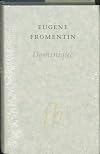
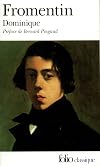
Dominique
by Eugène Fromentin
On This Page
Description
This is Fromentin's masterpiece which first appeared in 1862. The freshness of its landscapes alone is enchanting, but it is most remarkable as a sober analysis of delirious passion. While still at school Dominique de Bray falls in love with Madeleine d'Orsel, who is a few years older than him. She discovers that he loves her only after her marriage, and elects to cure him. Their moral distress rises to a climax when she falls in love herself. The book offers a vision of chastity and pain show more which hints at the dark side of life, suggesting that there are other ends to existence besides mere happiness. show lessTags
Recommendations

























Member Reviews
On the whole, I found this 19th century novel quite tedious, even boring. The best part of the book comes at the beginning where the narrator describes his initial encounters, while out hunting, with the landowner of the principal estate in the vicinity of Villeneuve, Dominique de Bray. Fromentin's description of what appears to be a maritime province's landscape and of the bucolic daily round on the De Bray estate are quite lovely. Unfortunately, the narrator soon hands over the storytelling duties to Dominique who recounts the drawn-out tale of his misguided youth and torturous (for all involved) romantic obsession with his friend Olivier’s cousin Madeleine (soon to be Mme. de Nièvres). When Dominique moves to Ceyssac to live with show more his aunt (Dominique’s parents are both deceased) and receive a formal education, he befriends Olivier, a schoolmate, and subsequently, Olivier’s cousins Madeleine and Julia. Once finished with high school, Dominique and Olivier, as is expected of young men of their class and education, relocate to Paris. In Paris, while Dominique endlessly pines after and obsesses over his impossible love for a now-married Madeleine, Olivier pursues a life of dissipated ennui, Julia pines away with unrequited love for Olivier, and Madeleine, now the wife of M. de Nièvres (often away tending to his business affairs), while attempting to cure Dominique of his love for her, becomes undone by it herself. The moral counterweight to all this feverish futility is provided by Dominique’s old tutor and other best friend, Augustin, who with neither money nor status (he was born out of wedlock) has built his life from the fruits of willpower, perseverance, generosity and an appreciation for small blessings and a peaceful married life. Augustin embodies Fromentin’s doctrine of “repos,” which can be construed as a kind of right-livelihood alternative to the perils of both romantic and debauched excess. show less
A friend of mine recommended me this anonimous story, and I have to say I cherished it every moment. Great style, I got lost in the streets of Paris, in its art parties, with its characters, so much to say and so little time...
Mooi geschreven 19e eeuwse saga over adel en liefde
Dec 26, 2011Dutch
Ratings
Members
- Recently Added By
Author Information

14+ Works 319 Members
Series
Belongs to Publisher Series
Franse Bibliotheek (Klassiek)
Common Knowledge
- Canonical title*
- Dominique
- Original title
- Dominique
- Original publication date
- 1862
- Original language*
- Francés
*Some information comes from Common Knowledge in other languages. Click "Edit" for more information.
Classifications
Statistics
- Members
- 171
- Popularity
- 192,290
- Reviews
- 3
- Rating
- (3.20)
- Languages
- 8 — Catalan, Dutch, English, French, German, Hebrew, Italian, Spanish
- Media
- Paper, Ebook
- ISBNs
- 23
- ASINs
- 15