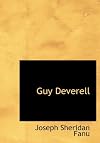
Guy Deverell
by Joseph Sheridan Le Fanu
On This Page
Description
If you're in the mood for a classic gothic thriller, add Sheridan Le Fanu's Guy Deverell to your list. Villainous machinations, contested wills, complex revenge plots, and a spooky haunting to boot this epic tale will suck you in and keep you engrossed until the very last page.Tags
Recommendations






















Member Reviews
Le Fanu is better known for his gothic novels, but much like his contemporary, Wilkie Collins, he also penned stories of suspense and mystery. Guy Deverell is an example of the latter genre. Though the tale does include some elements of gothic horror (a wicked Baronet, a mouldering old manor house, a purported ghost), the tale itself is grounded firmly in the familiar tropes of Victorian fiction: a beautiful and virginal young heiress, her handsome and noble suitor, a slick foreigner who is Up To No Good, a proud old estate, a gentile house party featuring the de rigueur list of Victorian party guests (a bishop, a clergyman, a military general, a self-important roué, intolerable in-laws, and various unmarried ladies accompanied by show more chaperones), lawsuits, subterfuges, and a disputed inheritance.
Yes, anyone paying attention to the clues Le Fanu liberally sprinkles along the way is going to figure out the "big reveal" long before it is formally revealed. Happily, however, the book offers so many other delights - among these, Le Fanu's lovely use of language and his satirical portrayal of Victorian society - that this doesn't necessarily detract from the fun. For fun this is, in its Victorian way, from the novel's unusually well-drawn cast of characters (especially Sir Jekyl Marlowe, the novel's protagonist, an unapologetic and entirely entertaining rogue)to the sinister and pleasingly preposterous plot involving a duel, a mysterious death, love, lust, revenge, and an ominous "Green Chamber" housing some sort of malignant secret.
In summary, if you're a fan of Collins, Dickens or Austen, I predict you'll find plenty here to enjoy; and if you're not, Guy Deverell works as an entirely satisfying introduction to the venerable Victorian mystery/suspense genre. show less
Yes, anyone paying attention to the clues Le Fanu liberally sprinkles along the way is going to figure out the "big reveal" long before it is formally revealed. Happily, however, the book offers so many other delights - among these, Le Fanu's lovely use of language and his satirical portrayal of Victorian society - that this doesn't necessarily detract from the fun. For fun this is, in its Victorian way, from the novel's unusually well-drawn cast of characters (especially Sir Jekyl Marlowe, the novel's protagonist, an unapologetic and entirely entertaining rogue)to the sinister and pleasingly preposterous plot involving a duel, a mysterious death, love, lust, revenge, and an ominous "Green Chamber" housing some sort of malignant secret.
In summary, if you're a fan of Collins, Dickens or Austen, I predict you'll find plenty here to enjoy; and if you're not, Guy Deverell works as an entirely satisfying introduction to the venerable Victorian mystery/suspense genre. show less
Ratings
Members
- Recently Added By
Author Information

265+ Works 12,358 Members
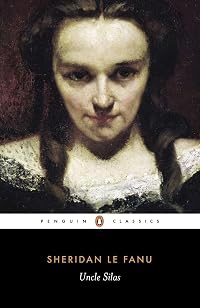
The greatest author of supernatural fiction during the nineteenth century was undoubtedly J. Sheridan Le Fanu. Le Fanu was born in Dublin and, as with so many other English popular fiction authors of his time, entered the genre of fiction by way of journalism, working on such publications as the Evening Mail and the Dublin University Magazine. Le show more Fanu came from a middle-class background; his family was of Huguenot descent. He graduated from Trinity College and married in 1844. After his wife died in 1858, until his own death, Le Fanu was known as a recluse, creating his ghost fiction late at night in bed. Probably he began writing ghost fiction in 1838; his earliest supernatural story is often cited as being either "The Ghost and the Bone-Setter" or the "Fortunes of Sir Robert Ardagh," both of which were later collected in the anthology entitled The Purcell Papers (1880). Writing most effectively in the short story form, Le Fanu's tales such as "Carmilla" (a vampire story that is thought possibly to have influenced Bram Stoker's Dracula) and the problematic "Green Tea" are considered by many literary scholars to be classics of the supernatural genre. His lengthy Gothic novels, such as Uncle Silas (1864), though less highly regarded than his shorter fiction, are nonetheless wonderfully atmospheric. Le Fanu's particular brand of literary horror tends toward the refined, subtle fright rather than the graphic sensationalism of Matthew Gregory Lewis. His work influenced other prominent horror fiction authors, including M. R. James. (Bowker Author Biography) show less
Work Relationships
Contains
Common Knowledge
- Original publication date
- 1865
Classifications
Statistics
- Members
- 39
- Popularity
- 747,315
- Reviews
- 1
- Rating
- (3.29)
- Languages
- English
- Media
- Paper, Ebook
- ISBNs
- 13
- ASINs
- 2