On This Page
Description
Beneath the rolling seas and deadly atmosphere of Venus are the Keeps-fully enclosed cities that house descendants of the survivors who first harbored atomic energy to escape a dying earth. In massive superstructures built beneath the Venusian seas, a complex feudal society devoted simply to decadence has evolved. Presiding over that society are Immortals-genetic throwbacks to the mutant atomic survivors. While the society is stable, the stability will only lead to its destruction, and the show more harsh environment outside the Keeps is malevolent and encroaching. Born into it all is Sam Harker, son of an Immortal and the object of his father's disdain after his mother perished during childbirth. Sam is subjected to treatments which stunt his growth and leave him hairless, and he is exiled from the society of the Immortals and set on the tumultuous path of a rebel's life-one inspired by hatred and a desire for vengeance on the society. Sam's search for revenge and his great abilities make him more powerful than the more decadent residents of the Keeps ... and perhaps even more powerful than the Immortals themselves. He seeks mass appeal as a politician in a campaign that assaults society. It is not until everything is destroyed-that is, in the aftermath of destruction-that the reclamation of human destiny is even a remote possibility. show lessTags
Recommendations







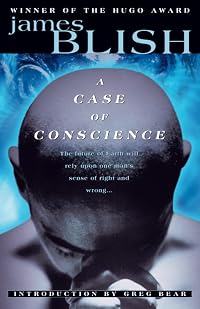





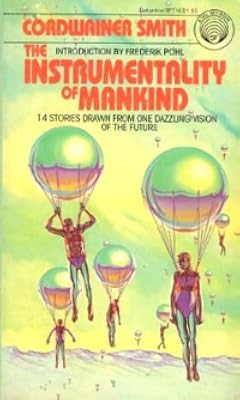


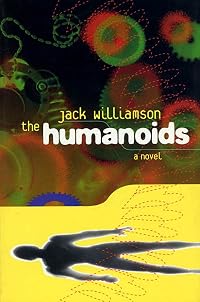


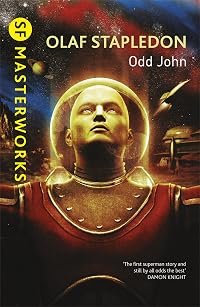






Member Recommendations
Member Reviews
Centuries after atomic wars destroyed Earth, the remnants of humanity live in domed cities called Keeps beneath Venus's oceans. The society has grown apathetic and class-ridden, strictly stratified between normal humans and the long-lived Immortal ruling class.
Sam Reed is born to an Immortal father, Blaze Harker. Following the death of his mother in childbirth, Sam's grief-stricken, deranged father has the infant surgically mutilated to look like a normal human. The baby is cast out to live in the plebs, the working-class sectors, growing up in foster care with no knowledge of his true heritage or his Immortal lifespan.
Growing up on the wrong side of the law, Sam Reed develops a deep-seated, psychopathic rage and a burning resentment show more for the ruling Immortals. He rises through the criminal underworld to become a wealthy and despised power player.
Driven by ambition and a desire to disrupt the stagnant status quo, Sam spearheads a massive, manipulative campaign. He believes that humanity needs struggle and danger to avoid atrophy, and forces society's hand into attempting to colonize the deadly, untamed surface of Venus.
After schemes and betrayals leave him drugged and unconscious for decades, Sam awakens as an eighty-year-old man, only to discover he hasn't aged. He uncovers the truth about his heritage, embraces his Immortal identity, and seeks revenge against his father and the ruling elite. Ultimately, Sam's violent, abrasive energy shatters the stagnancy of the underwater Keeps. His campaign forces humanity to conquer the surface, serving as a vital first step in returning mankind to the stars. show less
Sam Reed is born to an Immortal father, Blaze Harker. Following the death of his mother in childbirth, Sam's grief-stricken, deranged father has the infant surgically mutilated to look like a normal human. The baby is cast out to live in the plebs, the working-class sectors, growing up in foster care with no knowledge of his true heritage or his Immortal lifespan.
Growing up on the wrong side of the law, Sam Reed develops a deep-seated, psychopathic rage and a burning resentment show more for the ruling Immortals. He rises through the criminal underworld to become a wealthy and despised power player.
Driven by ambition and a desire to disrupt the stagnant status quo, Sam spearheads a massive, manipulative campaign. He believes that humanity needs struggle and danger to avoid atrophy, and forces society's hand into attempting to colonize the deadly, untamed surface of Venus.
After schemes and betrayals leave him drugged and unconscious for decades, Sam awakens as an eighty-year-old man, only to discover he hasn't aged. He uncovers the truth about his heritage, embraces his Immortal identity, and seeks revenge against his father and the ruling elite. Ultimately, Sam's violent, abrasive energy shatters the stagnancy of the underwater Keeps. His campaign forces humanity to conquer the surface, serving as a vital first step in returning mankind to the stars. show less
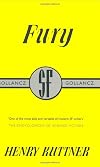
Those gold coloured covers of the Gollancz SF series proved irresistible to me as I haunted the local libraries when I was in my teens; their simple design made them leap out from the shelves. This edition was published in 2000 exactly 50 years after its first publication and the simple design looks even more pared down to how I remember them.
I don’t remember having read Fury before, but if I had read it way back then, I know I would have enjoyed it. The story line is a good one; no hard science fiction to confuse an already failed physics student, but plenty of good characterisation and imagination to delight an avid reader of science fiction. The story is set in a future where the human race has destroyed earth through atomic show more warfare and the survivors have fled to Venus and built impervious domes on the floor of the Venusian ocean. Selective breeding has produced a race of immortals who control the day to day lives of the vast majority of people who have a short term existence. Life in the domes (keeps) is peaceful but people are by nature inward looking and there is widespread use of narcotics. There has been a previous attempt to establish a colony on the Venusian land mass but an extremely hostile environment and hostilities amongst the colonists has driven the pioneers back to the keeps where they seem to be content to dream away their lives. Sam Reed bursts onto the scene a genetically altered immortal, unaware of his parentage or immortality looking to break through the somnambulistic existence and wrest the power away from the immortals.
One of the key themes throughout the book is living with and living without immortality; actually the people here who are called immortals live for about 1000 years, but during that time they can attain a certain amount of wisdom that puts them at a distinct advantage over the shorter term lifespan people. They become the social and political leaders living in enclaves separated largely from the rest of the population. Time is always on their side in as much as they can more easily endure difficult periods knowing that they will have plenty of life span to enjoy the good times when they come round again, however they cannot see a certain moribundity to their thinking and slowly the human race is loosing its energy, its vitality. Sam Reed changes all that, having to endure a difficult upbringing where he has to rely on becoming streetwise to survive. He is a man unafraid of taking risks, unscrupulous to a fault, he sees the colonisation of the land mass as his way forward and the main thrust of the book is his battle with the immortals to lead a revolution from the keeps. There is plenty of adventure and skullduggery to keep the pages turning, along with the contrast between the drug infused life style of the immortals and the adventures of the new pioneers.
Henry Kuttner collaborated with his wife L. C. Moore on many of his novels and perhaps this is why they tend to be more literate, and have better developed characters than many of the books in the genre at the time: certainly the female characters have more of a part to play. A good read for science fiction lovers even today and so 3.5 stars. show less
I don’t remember having read Fury before, but if I had read it way back then, I know I would have enjoyed it. The story line is a good one; no hard science fiction to confuse an already failed physics student, but plenty of good characterisation and imagination to delight an avid reader of science fiction. The story is set in a future where the human race has destroyed earth through atomic show more warfare and the survivors have fled to Venus and built impervious domes on the floor of the Venusian ocean. Selective breeding has produced a race of immortals who control the day to day lives of the vast majority of people who have a short term existence. Life in the domes (keeps) is peaceful but people are by nature inward looking and there is widespread use of narcotics. There has been a previous attempt to establish a colony on the Venusian land mass but an extremely hostile environment and hostilities amongst the colonists has driven the pioneers back to the keeps where they seem to be content to dream away their lives. Sam Reed bursts onto the scene a genetically altered immortal, unaware of his parentage or immortality looking to break through the somnambulistic existence and wrest the power away from the immortals.
One of the key themes throughout the book is living with and living without immortality; actually the people here who are called immortals live for about 1000 years, but during that time they can attain a certain amount of wisdom that puts them at a distinct advantage over the shorter term lifespan people. They become the social and political leaders living in enclaves separated largely from the rest of the population. Time is always on their side in as much as they can more easily endure difficult periods knowing that they will have plenty of life span to enjoy the good times when they come round again, however they cannot see a certain moribundity to their thinking and slowly the human race is loosing its energy, its vitality. Sam Reed changes all that, having to endure a difficult upbringing where he has to rely on becoming streetwise to survive. He is a man unafraid of taking risks, unscrupulous to a fault, he sees the colonisation of the land mass as his way forward and the main thrust of the book is his battle with the immortals to lead a revolution from the keeps. There is plenty of adventure and skullduggery to keep the pages turning, along with the contrast between the drug infused life style of the immortals and the adventures of the new pioneers.
Henry Kuttner collaborated with his wife L. C. Moore on many of his novels and perhaps this is why they tend to be more literate, and have better developed characters than many of the books in the genre at the time: certainly the female characters have more of a part to play. A good read for science fiction lovers even today and so 3.5 stars. show less
Meh. I read quite a number of science-fiction novels in my teen, college years, and 20's, including other 'classics' in the field. Maybe I've "outgrown" some of the content of the space-opera, or my taste in fiction have changed quite dramatically since then, but I felt that this plotline was hackneyed or due to its "golden-age" heritage has been touched on and refined by others writing in the genre since that time. The social psychology touched upon was fairly well presented, but I felt that there was too much surface and not enough depth of structure of the characters.
Classic SF from '47. It isn't bad and it has a solid plot thread and a very streamlined theme, from breaking off the yoke of immortals only to realize you are one, to founding a rebellion allowing all the people to earn their own immortality and a place in the sun. (On Venus, nonetheless.)
I don't have any outright complaints about this tale. No embarrassing idiocies and I can tolerate a climate-controlled venus just fine when it's in service to a decent tale.
However, all in all, it's just too simple for my taste. It's pretty much golden age pulp fiction designed for people hankering for adventure. Throw in a smattering of telepathy, the prejudice that might come from immortals, and a somewhat exotic location, and it's a pretty classic show more SF theme. Simple.
Get the rebellion on. Forward the Fury!
Like I said, no complaints, but no great accolades, either. show less
I don't have any outright complaints about this tale. No embarrassing idiocies and I can tolerate a climate-controlled venus just fine when it's in service to a decent tale.
However, all in all, it's just too simple for my taste. It's pretty much golden age pulp fiction designed for people hankering for adventure. Throw in a smattering of telepathy, the prejudice that might come from immortals, and a somewhat exotic location, and it's a pretty classic show more SF theme. Simple.
Get the rebellion on. Forward the Fury!
Like I said, no complaints, but no great accolades, either. show less
Starting in 1936 Kuttner was one of the more prolific SF writers of the early 20th century. He married author C. L. Moore and afterwards most of his published works were to some extent joint efforts – it is said that each could pick up and smoothly continue any story started by the other. They became part of John W Campbell Jr's stable of writers, working for Astounding Science-Fiction. They frequently used the pseudonyms of Lewis Padgett and Lawrence O'Donnel. Each had successful solo careers but most of the work under his name was 50% by Moore. After his death she went on to write for television. For me, his and their best works are the wonderful short stories.
Fury is considered one of his/their more memorable novels. It is epic in show more nature and follows the major character's struggle over decades. It reminded me a little of "The Stars My Destination" by Alfred Bester but it is not as good. show less
Fury is considered one of his/their more memorable novels. It is epic in show more nature and follows the major character's struggle over decades. It reminded me a little of "The Stars My Destination" by Alfred Bester but it is not as good. show less
I base the publication date on this entry from the ISFDB:
http://www.isfdb.org/cgi-bin/pl.cgi?14856
Remarkable man, and this is a good example of his work. I was always (and will always) be sad that Catherine Moore sublimated her own talent to support his efforts. She was so very productive before. Her introduction in this book is clearly written after his death (in 1958).
They collaborated on everything he wrote (to my knowledge). From her introduction:
"...mankind, having settled down into a luxurious Eden of the future, with no challenges left, would slowly strangle in its own inertia if, out of somewhere, a deliverer did not come with a flaming sword to drive them back to life."
So it goes.
http://www.isfdb.org/cgi-bin/pl.cgi?14856
Remarkable man, and this is a good example of his work. I was always (and will always) be sad that Catherine Moore sublimated her own talent to support his efforts. She was so very productive before. Her introduction in this book is clearly written after his death (in 1958).
They collaborated on everything he wrote (to my knowledge). From her introduction:
"...mankind, having settled down into a luxurious Eden of the future, with no challenges left, would slowly strangle in its own inertia if, out of somewhere, a deliverer did not come with a flaming sword to drive them back to life."
So it goes.
http://www.fireandsword.com/Reviews/destinationinfinity.html
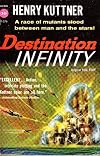
Henry Kuttner was a prolific and popular sf writer, his career spanned from the 1930s to the 1950s when he died young from a heart attack. Destination Infinity is one of the many books he wrote under a pen name, most likely in collaboration with his wife CL Moore.
Henry Kuttner was a prolific and popular sf writer, his career spanned from the 1930s to the 1950s when he died young from a heart attack. Destination Infinity is one of the many books he wrote under a pen name, most likely in collaboration with his wife CL Moore.
Members
- Recently Added By
Lists

S.F. Masterworks (Complete)
229 works; 15 members
Author Information

292+ Works 4,972 Members
Some Editions
Awards and Honors
Notable Lists
Series

Belongs to Publisher Series
Work Relationships
Common Knowledge
- Canonical title
- Fury
- Original title
- Fury
- Alternate titles
- Destination Infinity
- Original publication date
- 1947
- People/Characters
- Sam Reed; Zachariah Harker; Rob Hale; The Logician; Blaze Harker; Kedre Walton (show all 13); Slider; Jim Sheffield; Rosathe; Doc Mallard; Sari Walton; Platoon Commander French; Signa
- Important places
- Venus
- First words
- SAM HARKER'S birth was a double prophecy.
- Last words
- (Click to show. Warning: May contain spoilers.)Sam woke---
- Original language
- English
- Disambiguation notice*
- Il libro contiene il romanzo breve (short story) dello stesso autore: Scontro nella notte
(Clash by Night) del 1943.
*Some information comes from Common Knowledge in other languages. Click "Edit" for more information.
Classifications
Statistics
- Members
- 509
- Popularity
- 59,154
- Reviews
- 12
- Rating
- (3.16)
- Languages
- 5 — Dutch, English, German, Italian, Spanish
- Media
- Paper, Audiobook, Ebook
- ISBNs
- 20
- ASINs
- 34