
The Stars My Destination
by Alfred Bester
There is 1 current discussion about this work.
On This Page
Description
Gully Foyle, Mechanic's Mate 3rd Class, is the only survivor on his drifting, wrecked spaceship. When another space vessel, the Vorga, ignores his distress flares and sails by, Foyle becomes a man obsessed with revenge. He endures 170 days alone in deep space before finding refuge on the Sargasso Asteroid and then returning to Earth to track down the crew and owners of the Vorga. But, as he works out his murderous grudge, Foyle also uncovers a secret of momentous proportions.Tags
Recommendations




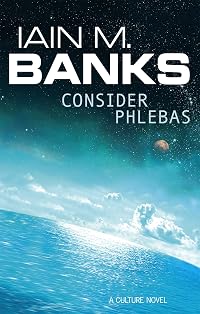
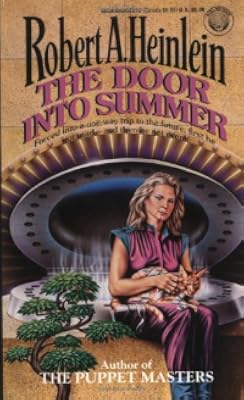
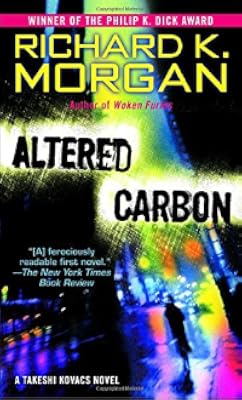
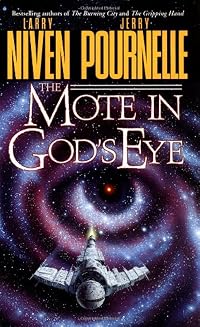





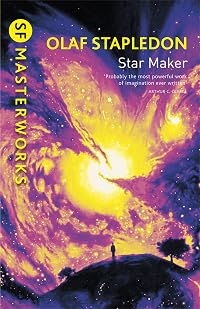
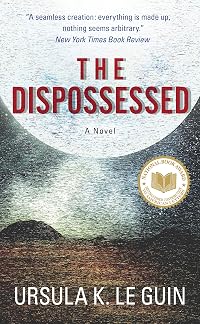
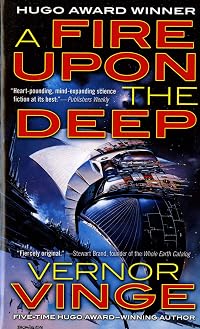
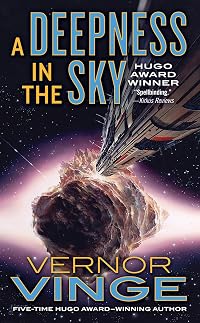

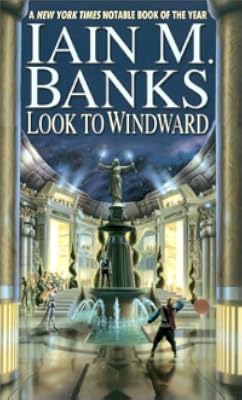
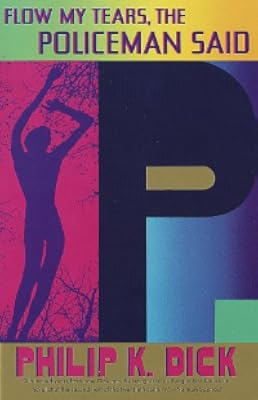
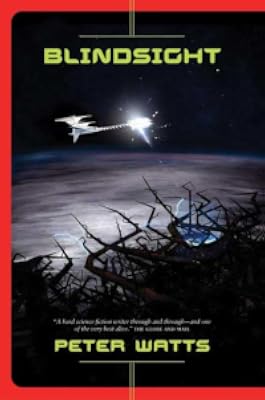

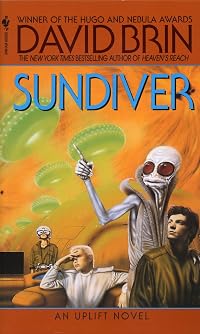


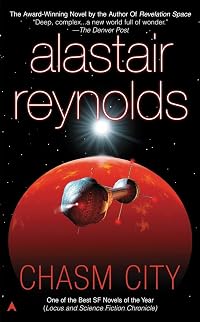
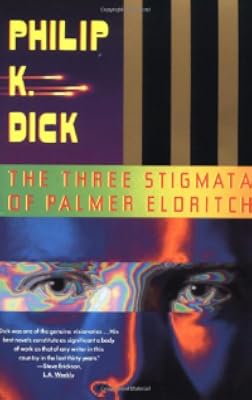
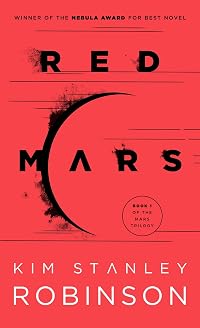
Member Recommendations

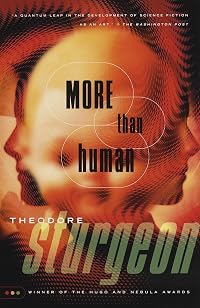
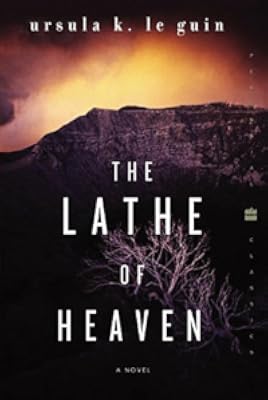
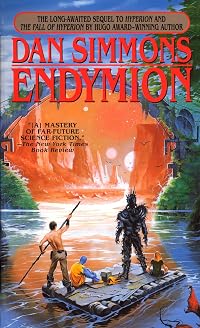
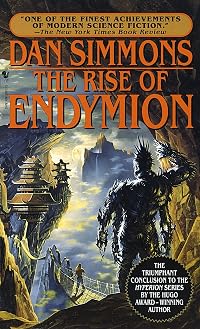
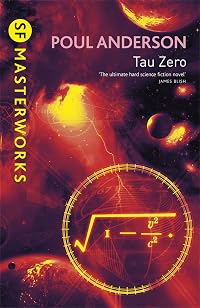
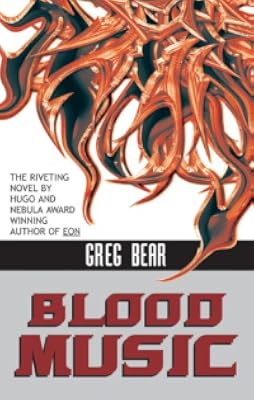
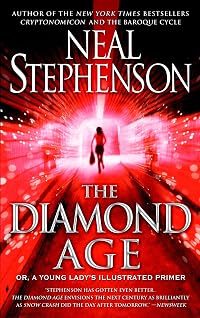
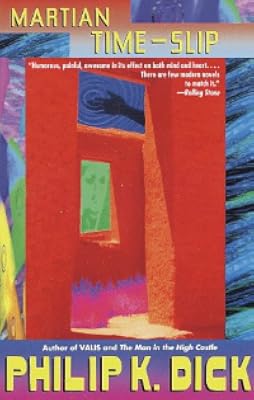
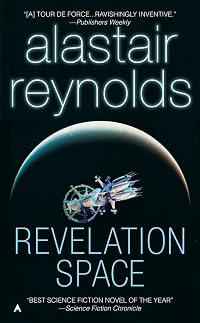
timspalding The rest of Bester isn't very good. These two are great.
180

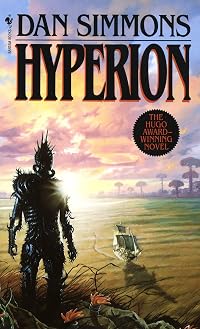
pnorth Another book based on The Count of Monte Cristo but closer to the original than Bester's.
04

by anonymous user

Member Reviews
I intensely disliked main character, Gulliver Foyle, as an individual and really wasn't sure I wanted to keep reading, but about a third through I started thinking of him as a personification of the struggle of the lumpenproletariat to achieve class consciousness, and that seemed to work for me, though I wasn't sure if that was Bester's intention. Ultimately, it did work that way for me, and the story is, if imperfectly, a dramatised sci-fi setting of Paulo Freire's Pedagogy of the Oppressed, the "cosmic" ending symbolising Foyle's awakening to his potential as a revolutionary liberationist figurehead. It was worth sticking with.
A couple of the names struck me as being symbolic, though I'm struggling to fully integrate them, so maybe show more I'm pareidolically seeing what's not there:
• Gulliver Foyle - Gullible Foil - Gullible Fool
• Presteign - Pristine - Prestige - Priest-Stain show less
A couple of the names struck me as being symbolic, though I'm struggling to fully integrate them, so maybe show more I'm pareidolically seeing what's not there:
• Gulliver Foyle - Gullible Foil - Gullible Fool
• Presteign - Pristine - Prestige - Priest-Stain show less
4.5/5
On a shallow level, The Stars My Destination is an exciting caper as a compelling anti-hero tries to exact revenge upon the people who left him for dead. It feels fresh for it's age, at least most the time, there are some terms that date the novel quickly. It's incredibly well-paced, drops unexpected twists to the plot line, and has ideas that well realized and integrated into the weave of the world.
The biggest of these ideas is human teleportation, which in this fictional future is something that most everybody can, at least to varying degrees. What surprised me was the level to which Bester thought through the implications of such a change upon our societal structure. Bester identifies the ways in which economic class will show more hinder a persons use of teleportation, the ways in which our government will adapt to continue to shackle us to our work and to their ideals, how the elite will grow to revile this development, preferring to use antiquated methods of transportation while continue to benefit from it passively. Most of the ideas in The Stars My Destination are similarly well realized. I also especially enjoyed the concept of PyrE, an explosive so powerful that it can rip through entire galaxies and is triggered by a targeted thought, one-way telekinesis, a cast off-cult of scientists that use space refuse as a building medium, and what 'jaunting' eventually leads to in the end of the book.
Bester also explores more philosophical ideas, especially towards the end of the book, which is certainly more new wave than the rest, and an absolute joy. Bester asks what it takes to wake up the everyday person from their satisfaction with being mundane, what it takes turn them into a leader, or conversely, a nightmare? What sort of burdens are we willing to carry with us for the rest of our lives? How much will we contort ourselves to fit into the set of standards that society has for us? Like I said earlier, this novel is focused vengeance, on the dichotomy of love and hate, on the power of obsession. Gully Foyle is such a great character to explore these emotions, to play with bigger ideas while still providing a genuinely thrilling narrative.
“Gully Foyle is my name
And Terra is my nation.
Deep space is my dwelling place,
The stars my destination.” show less
On a shallow level, The Stars My Destination is an exciting caper as a compelling anti-hero tries to exact revenge upon the people who left him for dead. It feels fresh for it's age, at least most the time, there are some terms that date the novel quickly. It's incredibly well-paced, drops unexpected twists to the plot line, and has ideas that well realized and integrated into the weave of the world.
The biggest of these ideas is human teleportation, which in this fictional future is something that most everybody can, at least to varying degrees. What surprised me was the level to which Bester thought through the implications of such a change upon our societal structure. Bester identifies the ways in which economic class will show more hinder a persons use of teleportation, the ways in which our government will adapt to continue to shackle us to our work and to their ideals, how the elite will grow to revile this development, preferring to use antiquated methods of transportation while continue to benefit from it passively. Most of the ideas in The Stars My Destination are similarly well realized. I also especially enjoyed the concept of PyrE, an explosive so powerful that it can rip through entire galaxies and is triggered by a targeted thought, one-way telekinesis, a cast off-cult of scientists that use space refuse as a building medium, and what 'jaunting' eventually leads to in the end of the book.
Bester also explores more philosophical ideas, especially towards the end of the book, which is certainly more new wave than the rest, and an absolute joy. Bester asks what it takes to wake up the everyday person from their satisfaction with being mundane, what it takes turn them into a leader, or conversely, a nightmare? What sort of burdens are we willing to carry with us for the rest of our lives? How much will we contort ourselves to fit into the set of standards that society has for us? Like I said earlier, this novel is focused vengeance, on the dichotomy of love and hate, on the power of obsession. Gully Foyle is such a great character to explore these emotions, to play with bigger ideas while still providing a genuinely thrilling narrative.
“Gully Foyle is my name
And Terra is my nation.
Deep space is my dwelling place,
The stars my destination.” show less
Brilliant but not very pleasant SF classic in which a wronged everyman wrecks vengeance in a future where humans can instantly transport themselves around the globe. Written in the 1950s, the book has aged very, very well, with just a few anachronistic references to break the spell. You'll be dazzled by Bester's vision, but don't expect to like any, and I mean any, of the characters.
It was cool to read the book that contains the namesake for one of Stephen King's better short stories, "The Jaunt." You definitely get the feeling while reading that its influence spans many authors and decades. Its originality is inarguable, the style fresh and bold, and in the end it sort of reminds me of Isaac Asimov on acid. . . not your sterile, buttoned-down science fiction but rather your crazy ex-hippy uncle of a sci-fi story.
That said, crazy ex-hippy uncles are not noted for their stalwart reliability, and Asimov is notable for his horrendous writing (especially his earlier works, which I address most directly in my review of [b:Foundation and Empire|29581|Foundation and Empire (Foundation, #2)|Isaac show more Asimov|http://d.gr-assets.com/books/1320416087s/29581.jpg|1703483]). Unfortunately, "Stars" suffers from both these defects. While it is head-and-shoulders above [b:The Demolished Man|76740|The Demolished Man|Alfred Bester|http://d.gr-assets.com/books/1360171879s/76740.jpg|1247570] in quality and scope, it is still quite rough around the edges with stilted dialogue, thin characterization, too-sparse narration (especially of the action sequences) and a casual misogyny that exemplifies an ultimately very dated atmosphere. Try this on for dated:
I'll admit it's a minor quibble and I want it on record that I admire the hell out of Bester's bold vision. It's inevitable that you're going to fall on your face a few times when you're projecting that far into the future. And some of his predictions really work: telepathy, the idle leisure class, the interplanetary colonization wars, the anti-gravity fields, etc. Even the jaunting (his name for "teleporting") he handles deftly, imagining the full security and privacy implications of everyone being able to instantly transport themselves basically anywhere. I still don't really buy some of the logistics (e.g., how does knowing the coordinates correspond to being able to visualize your exact location, and vice versa?), but the whole venture is quite impressive.
The thin characterizations were the real drag of the book. There is only one character, the protagonist, who is not completely one-dimensional, and he is merely two-dimensional. He experiences four "romances" during the novel and apparently picks them up and drops them off at random, with no real explanation or consideration. One of them is a "true love" and we know this because at the moment he falls in love with her we are told over and over how much he loves her. There's no build-up or rational context. He makes a transformation at the end that is hollow because until then he has been a murderous, savage, torturing, raping vengeance-seeker with no conscience and no depth.
This lack of depth keeps the reader at a remove, unable to fully engage with the story or care about what happens to Foyle, to Terra, to the solar system, or whatever else. This is worsened at the end whenthe entire explanation for Foyle's abandonment, which led to his revenge in the first place, is revealed to be nothing more than psychopathic bitterness about being blind on the part of a heretofore minor character. . . nevermind that she has visual capabilities outside of the normal spectrum that appear to dwarf a regular person's .
That said, the end offers a lot of pleasant twists and turns. Despite a relatively simple message ("Revenge is bad."), Bester is able to turn the book into more than just a revenge tale in the last couple of chapters. You find out that Foyle is about to open mankind to an entire new era, and the way he illustrates Foyle's cross-sensed perceptions is innovative and ingenious (you can see the same mind that wrote some of the telepath choreographies from "Demolished"). There's even a moral dilemma about whether or not dangerous secrets should be kept from the masses, and although it's lamentably answered by a "robot ex machina" Bester's attempt to tackle the question head on is laudable.
All in all the pluses of the book -- its bold vision, compelling narrative and memorable protagonist -- is weighed down but little by the principal minus (clumsy prose). I tend to think the most memorable sci-fi writers are primarily idea men, their prose led by their vision, so I don't think less of them if their writing doesn't quite hold up. Asimov was definitely this way, as was Bradbury most of the time (despite the literarily underrated [b:Fahrenheit 451|4381|Fahrenheit 451|Ray Bradbury|http://d.gr-assets.com/books/1351643740s/4381.jpg|1272463]) and maybe even Huxley. Bester definitely belongs in this group, and not in the next tier which I reserve for the greater literary talents of sci-fi: Vonnegut, Dick, Le Guin and [b:1984|5470|1984|George Orwell|http://d.gr-assets.com/books/1348990566s/5470.jpg|153313].
Here's some praise: I checked it out from the library because I figured after "Demolished" I'd probably be okay not owning it. After reading it, however, I'm putting it back on my list to buy. show less
That said, crazy ex-hippy uncles are not noted for their stalwart reliability, and Asimov is notable for his horrendous writing (especially his earlier works, which I address most directly in my review of [b:Foundation and Empire|29581|Foundation and Empire (Foundation, #2)|Isaac show more Asimov|http://d.gr-assets.com/books/1320416087s/29581.jpg|1703483]). Unfortunately, "Stars" suffers from both these defects. While it is head-and-shoulders above [b:The Demolished Man|76740|The Demolished Man|Alfred Bester|http://d.gr-assets.com/books/1360171879s/76740.jpg|1247570] in quality and scope, it is still quite rough around the edges with stilted dialogue, thin characterization, too-sparse narration (especially of the action sequences) and a casual misogyny that exemplifies an ultimately very dated atmosphere. Try this on for dated:
Presteign did not care for the artists, musicians, and fops Olivia kept about her, but he was pleased to see a scattering of society notables this morning. There was a Sears-Roebuck, a Gillette, young Sidney Kodak who would one day be Kodak of Kodak, a Houbigant, Buick of Buick, and R.H. Macy XVI, head of the powerful Saks-Gimbel clan. 45This is the 25th century we're talking about, with the same economic royalty that didn't even make it out of the 20th.
I'll admit it's a minor quibble and I want it on record that I admire the hell out of Bester's bold vision. It's inevitable that you're going to fall on your face a few times when you're projecting that far into the future. And some of his predictions really work: telepathy, the idle leisure class, the interplanetary colonization wars, the anti-gravity fields, etc. Even the jaunting (his name for "teleporting") he handles deftly, imagining the full security and privacy implications of everyone being able to instantly transport themselves basically anywhere. I still don't really buy some of the logistics (e.g., how does knowing the coordinates correspond to being able to visualize your exact location, and vice versa?), but the whole venture is quite impressive.
The thin characterizations were the real drag of the book. There is only one character, the protagonist, who is not completely one-dimensional, and he is merely two-dimensional. He experiences four "romances" during the novel and apparently picks them up and drops them off at random, with no real explanation or consideration. One of them is a "true love" and we know this because at the moment he falls in love with her we are told over and over how much he loves her. There's no build-up or rational context. He makes a transformation at the end that is hollow because until then he has been a murderous, savage, torturing, raping vengeance-seeker with no conscience and no depth.
This lack of depth keeps the reader at a remove, unable to fully engage with the story or care about what happens to Foyle, to Terra, to the solar system, or whatever else. This is worsened at the end when
That said, the end offers a lot of pleasant twists and turns. Despite a relatively simple message ("Revenge is bad."), Bester is able to turn the book into more than just a revenge tale in the last couple of chapters. You find out that Foyle is about to open mankind to an entire new era, and the way he illustrates Foyle's cross-sensed perceptions is innovative and ingenious (you can see the same mind that wrote some of the telepath choreographies from "Demolished"). There's even a moral dilemma about whether or not dangerous secrets should be kept from the masses, and although it's lamentably answered by a "robot ex machina" Bester's attempt to tackle the question head on is laudable.
All in all the pluses of the book -- its bold vision, compelling narrative and memorable protagonist -- is weighed down but little by the principal minus (clumsy prose). I tend to think the most memorable sci-fi writers are primarily idea men, their prose led by their vision, so I don't think less of them if their writing doesn't quite hold up. Asimov was definitely this way, as was Bradbury most of the time (despite the literarily underrated [b:Fahrenheit 451|4381|Fahrenheit 451|Ray Bradbury|http://d.gr-assets.com/books/1351643740s/4381.jpg|1272463]) and maybe even Huxley. Bester definitely belongs in this group, and not in the next tier which I reserve for the greater literary talents of sci-fi: Vonnegut, Dick, Le Guin and [b:1984|5470|1984|George Orwell|http://d.gr-assets.com/books/1348990566s/5470.jpg|153313].
Here's some praise: I checked it out from the library because I figured after "Demolished" I'd probably be okay not owning it. After reading it, however, I'm putting it back on my list to buy. show less
An excellent analysis of the Trump candidacy and events leading up to his election as #45. Uses both his perspective and that of the anonymous supporter to chilling effect. Guest appearance by Ivanka near the end.
***********************************
Forgive me my little joke; when I picked up the classic by Bester, I had no idea what I was in for, except a classic sci-fi--in space, with a rather appealing title.
The main character is Gully Foyle, a spacer with no real motivation in life. Content to be lazy, without purpose beyond existence, he's a bit of a drifter, until a spaceship he is traveling on is destroyed. Gully discovers a will to live and manages to keep himself barely alive, leaving the tiny reinforced space he exists in to show more scavenge supplies five minutes at a time in his barely functional spacesuit. At last, he sees a ship passing close by. He sends up a signal flare. The ship slows, almost stops, and then turns away. From here, the story takes off, as Gully discovers the heat of revenge as the one thing that can give him purpose.
One might think that discovering a passion could connect Gully, a previously amorphous blob of a human who was content to vegetate his way through life, to humanity, and possibly even the reader. But no, most certainly, absolutely no; Gully is a psychopath. In his quest for revenge, he meets a woman, Robin, who teaches the previously head-blind the skill of jaunting or limited teleportation. She has the unfortunate distinction of being a one-way telepath, so those around her can hear her thoughts when she isn't concentrating. Gully, it becomes clear, has a moment where he can understand what she is feeling/thinking, but doesn't actually empathize, instead choosing to ignore her humanity in his fit of rage and frustration.
Throughout the rather short book, Gully goes through transformations, each a step on his goal, each transformation followed by a fall back into the depths. He is caught, he spends time in prison, he meets another woman and--dare we recognize it?--falls into his version of love. But as is everything with Gully, his love is the negative side of the emotion, and though it can offer salvation, it is obvious what his choice will be.
It is an inverse of the levels of hell; each reinvention has Gully reinventing himself to become more surfacely human, moving up the ladder of society into something that appears more socially acceptable but that remains rotten at the core. Depending on the reader's point of view, he may become more accessible, but really he is the same single-minded psychopath, single-minded in pursuit of his goal and unable to recognize or empathize with others. At one point he thinks he 'falls in love' but as with everything, he's fallen in love with an idea, an instant of emotion and not anything real.
It's a brilliant book. Bester does an unbelievable job at getting at Gully's emotion; I found myself taking a break at each transformation, needing to get a way from the miasma of hate for some untainted air. While Gully transforms, we're offered commentary on each section of 'society' he encounters, from the parody of scientists on an asteroid to the 'high' society of the richest men in the universe and their cloistered women. It's one of those amazing little stories that you understand as you read is offering up a scathing social indictment and yet wraps you up in its fast-paced plotting. I can't remember the last book I read with a main character so filled with hate and rage, that ignores every opportunity for redemptive actions.
The ending was a little slap-dash and has me wondering if dropping acid at least once during a book was a basic requirement of some of the sci-fi boundary pushers (thinking of Zelazny and Philip K. Dick here). Well, no matter, but I think it would have been more powerful had Bester relied on words instead of word-pictures. The circular nature of the ending is asthetically pleasing, although someone pushing the rules of the book. No matter, it was powerful nonetheless.
We can all only hope that Trump will experience something similar. show less
***********************************
Forgive me my little joke; when I picked up the classic by Bester, I had no idea what I was in for, except a classic sci-fi--in space, with a rather appealing title.
The main character is Gully Foyle, a spacer with no real motivation in life. Content to be lazy, without purpose beyond existence, he's a bit of a drifter, until a spaceship he is traveling on is destroyed. Gully discovers a will to live and manages to keep himself barely alive, leaving the tiny reinforced space he exists in to show more scavenge supplies five minutes at a time in his barely functional spacesuit. At last, he sees a ship passing close by. He sends up a signal flare. The ship slows, almost stops, and then turns away. From here, the story takes off, as Gully discovers the heat of revenge as the one thing that can give him purpose.
One might think that discovering a passion could connect Gully, a previously amorphous blob of a human who was content to vegetate his way through life, to humanity, and possibly even the reader. But no, most certainly, absolutely no; Gully is a psychopath. In his quest for revenge, he meets a woman, Robin, who teaches the previously head-blind the skill of jaunting or limited teleportation. She has the unfortunate distinction of being a one-way telepath, so those around her can hear her thoughts when she isn't concentrating. Gully, it becomes clear, has a moment where he can understand what she is feeling/thinking, but doesn't actually empathize, instead choosing to ignore her humanity in his fit of rage and frustration.
Throughout the rather short book, Gully goes through transformations, each a step on his goal, each transformation followed by a fall back into the depths. He is caught, he spends time in prison, he meets another woman and--dare we recognize it?--falls into his version of love. But as is everything with Gully, his love is the negative side of the emotion, and though it can offer salvation, it is obvious what his choice will be.
It is an inverse of the levels of hell; each reinvention has Gully reinventing himself to become more surfacely human, moving up the ladder of society into something that appears more socially acceptable but that remains rotten at the core. Depending on the reader's point of view, he may become more accessible, but really he is the same single-minded psychopath, single-minded in pursuit of his goal and unable to recognize or empathize with others. At one point he thinks he 'falls in love' but as with everything, he's fallen in love with an idea, an instant of emotion and not anything real.
It's a brilliant book. Bester does an unbelievable job at getting at Gully's emotion; I found myself taking a break at each transformation, needing to get a way from the miasma of hate for some untainted air. While Gully transforms, we're offered commentary on each section of 'society' he encounters, from the parody of scientists on an asteroid to the 'high' society of the richest men in the universe and their cloistered women. It's one of those amazing little stories that you understand as you read is offering up a scathing social indictment and yet wraps you up in its fast-paced plotting. I can't remember the last book I read with a main character so filled with hate and rage, that ignores every opportunity for redemptive actions.
The ending was a little slap-dash and has me wondering if dropping acid at least once during a book was a basic requirement of some of the sci-fi boundary pushers (thinking of Zelazny and Philip K. Dick here). Well, no matter, but I think it would have been more powerful had Bester relied on words instead of word-pictures. The circular nature of the ending is asthetically pleasing, although someone pushing the rules of the book. No matter, it was powerful nonetheless.
We can all only hope that Trump will experience something similar. show less
(2nd reading)
Gully Foyle of The Stars My Destination is a freak in a world of freaks. Like Paul Atreides (Dune) and Jack Remillard (Jack the Bodiless), Foyle has powers which make him the agent of evolutionary change for humanity.
This book rollicks along through the bizarre and sometimes brutal Solar System of the 25th century, following Gulliver Foyle on his vengeful and apocalyptic path. It's obvious that cyberpunk novels such as Neuromancer owe quite a debt to this book. Its language is fresh and clean, characters larger than life. Parts of it (Geoffrey Fourmyle's circus for example) also reminded me of Jack Vance's 'To Live Forever' (not sure which came first).
The only thing which didn't quite convince me this time (although I can show more see how integral it was to the plot) was Gully Foyle falling in love with Olivia Presteign. Gully seemed incapable of love up to that point; his rage against Vorga was too much. But otherwise, a ripper of a book. show less
Gully Foyle of The Stars My Destination is a freak in a world of freaks. Like Paul Atreides (Dune) and Jack Remillard (Jack the Bodiless), Foyle has powers which make him the agent of evolutionary change for humanity.
This book rollicks along through the bizarre and sometimes brutal Solar System of the 25th century, following Gulliver Foyle on his vengeful and apocalyptic path. It's obvious that cyberpunk novels such as Neuromancer owe quite a debt to this book. Its language is fresh and clean, characters larger than life. Parts of it (Geoffrey Fourmyle's circus for example) also reminded me of Jack Vance's 'To Live Forever' (not sure which came first).
The only thing which didn't quite convince me this time (although I can show more see how integral it was to the plot) was Gully Foyle falling in love with Olivia Presteign. Gully seemed incapable of love up to that point; his rage against Vorga was too much. But otherwise, a ripper of a book. show less
Why did I wait so long to read this? Bester's depiction of a future world where nearly everyone can jaunte, or teleport, and his protagonist Gully Foyle is a classic of SF and now I know why.
The plot is strongly reminiscent of Dumas' The Count of Monte Cristo, complete with an undereducated, imprisoned protagonist who escapes and uses the power and wealth he falls into as a tool against his enemies. However, its more than that. Bester explores the implications of a society where everyone can teleport. What happens to privacy in homes? How do you imprison someone? How does the social structure change?
And Bester doesn't even stop there, when the nature of the real Macguffin that was aboard Foyle's ship is revealed, and even beyond that, show more the true abilities that Foyle protests.
Sure, by the standards of today, there are a few weaknesses in the plot and the writing--characterization, mostly, of the characters outside of Foyle himself. Still, the book holds up today very well indeed.
Its clear that The Stars My Destination is one of those novels that anyone who considers themselves educated in the seminal texts of SF must read. Let me clarify that though, since it makes it sound like its a chore to read. The Stars My Destination is fun, engaging, well written and entertaining. If you enjoy SF and you haven't read it--do so. show less
The plot is strongly reminiscent of Dumas' The Count of Monte Cristo, complete with an undereducated, imprisoned protagonist who escapes and uses the power and wealth he falls into as a tool against his enemies. However, its more than that. Bester explores the implications of a society where everyone can teleport. What happens to privacy in homes? How do you imprison someone? How does the social structure change?
And Bester doesn't even stop there, when the nature of the real Macguffin that was aboard Foyle's ship is revealed, and even beyond that, show more the true abilities that Foyle protests.
Sure, by the standards of today, there are a few weaknesses in the plot and the writing--characterization, mostly, of the characters outside of Foyle himself. Still, the book holds up today very well indeed.
Its clear that The Stars My Destination is one of those novels that anyone who considers themselves educated in the seminal texts of SF must read. Let me clarify that though, since it makes it sound like its a chore to read. The Stars My Destination is fun, engaging, well written and entertaining. If you enjoy SF and you haven't read it--do so. show less
Members
- Recently Added By
Published Reviews
ThingScore 100
When I first read this novel 25 years ago, I didn't completely understand it, but I knew it was good. Now, rereading it, I am in awe. Well-written and fast paced, The Stars My Destination is a splendid book.
added by Nevov
Lists

Best Science Fiction Novels
816 works; 426 members

The Guardian's 1000 Novels Everyone Must Read
1,005 works; 550 members

Best Dystopias
280 works; 276 members
Survey of Classic Science Fiction
171 works; 48 members

Classics you know you should have read but probably haven't
421 works; 408 members

S.F. Masterworks (Complete)
229 works; 15 members

SF Masterworks
193 works; 8 members

David Pringle's Science Fiction: The 100 Best Novels
101 works; 9 members
Amazon's 100 Science Fiction & Fantasy Books to Read in a Lifetime
87 works; 23 members
Science Fiction
42 works; 7 members

Introduction to Fantasy and Science Fiction (Proposed Reading List)
28 works; 6 members

The 5 Parsec Shelf
50 works; 7 members

Science Fiction: Top 10
10 works; 1 member

Must read
30 works; 2 members

Speculative Fiction to Read
706 works; 32 members

Isaac Arthur’s Book Recommendations
98 works; 3 members

Mustich's 1000 Books to Read Before You Die: A Life Changing List
1,001 works; 19 members

Books Read in 2021
5,361 works; 114 members

Books Read in 2023
5,547 works; 145 members

Books Read in 2024
4,623 works; 126 members

Books Read in 2019
4,052 works; 110 members
Books Read in 2018
4,360 works; 110 members
Les 100 principaux titres de la science-fiction (1981)
126 works; 3 members
Rereads list from my library
23 works; 1 member
Favorite Science Fiction
456 works; 218 members

SomethingAwful TBB BOTM
66 works; 2 members

Blue Pyramid 1,276 Best Books of All Time
1,248 works; 32 members

Best of American Literature
146 works; 9 members

Favourite Books
1,819 works; 316 members

Fiction For Men
142 works; 11 members

Read
293 works; 4 members

Solar System
12 works; 3 members

Stories Inspired by Other Fiction
127 works; 24 members
Read These Too
458 works; 9 members
XB-1: Osobnosti zanru doporucuji
67 works; 1 member

A Novel Cure
742 works; 23 members

Speculative Fiction and William Blake's The Tyger
5 works; 2 members

Best Revenge Stories
69 works; 9 members
1950s
340 works; 22 members

Unread books
1,063 works; 87 members
Books tagged unread
41 works; 1 member

Books Read in 2026
1,950 works; 66 members
Talk Discussions
Current Discussions
FEBRUARY READ - SPOILERS - The Stars My Destination in The Green Dragon (May 6)
Past Discussions
FEBRUARY READ - NO SPOILERS - The Stars My Destination in The Green Dragon (February 2014)
Author Information

99+ Works 17,373 Members
Some Editions
Awards and Honors
Awards
Distinctions
Notable Lists
Series
Belongs to Publisher Series
SF Masterworks (5)
Work Relationships
Is contained in
Has the adaptation
Was inspired by
Common Knowledge
- Canonical title*
- Mannen som ikke ville dø
- Original title
- Tiger! Tiger!
- Alternate titles
- The Stars My Destination
- Original publication date
- 1956-06-14
- People/Characters
- Gulliver "Gully" Foyle; Presteign of Presteign; Jisabella McQueen; Fourmyle of Ceres; Olivia Presteign; Peter Y'ang-Yeovil (show all 14); Robin Wednesbury; Saul Dagenham; Regis Sheffield; Ben Forrest; Sergei Orel; Rodger Kempsey; Lindsey Joyce; Sigurd Magsman
- Important places
- New York, New York, USA; Aldebaran; Rigel; Sargasso Asteroid; Asteroid Belt; Mars (show all 8); Mars St Michele, Mars; Sklotsky Colony, Mars
- Epigraph
- Tiger! Tiger! burning bright
In the forests of the night,
What immortal hand or eye
Could frame thy fearful symmetry?
—Blake - Dedication
- To Truman M. Talley
- First words
- This was a Golden Age, a time of high adventure rich living and hard dying . . . but nobody thought so.
~ Prologue
He was one hundred and seventy days dying and not yet dead. - Quotations
- He was Gully Foyle, the oiler, wiper, bunkerman; too easy for trouble, too slow for fun, too empty for friendship, too lazy for love.
It was an age of freaks, monsters, and grotesques. All the world was misshapen in marvelous and malevolent ways.
Gully Foyle is my name
And Terra is my nation.
Deep space is my dwelling place,
The stars my destination.
The man who upsets the morphology of society is a cancer. The man who gives his own decisions priority over society is a criminal. But there are chain reactions. Purging yourself with punishment isn't enough. Everything's got... (show all) to be set right.
“Vorga, I kill you deadly.” (original UK edition)
“Vorga, I kill you filthy.” (later US editions) - Last words
- (Click to show. Warning: May contain spoilers.)Then she settled down alongside Joseph ... alongside the world ... prepared to await the awakening.
- Publisher's editor*
- Jeschke, Wolfgang
- Blurbers
- Disch, Thomas M.; Delany, Samuel R.; Haldeman, Joe; Lovegrove, James; Gibson, William; Harrison, M. John
- Original language
- English
- Disambiguation notice
- Bester's original title, first published in the UK on 14th June 1956, was Tiger! Tiger! (a reference to the Blake poem, The Tyger). In the USA, it was first serialised across several editions of Galaxy magazine ... (show all)as The Stars My Destination, starting in the October 1956 issue.
*Some information comes from Common Knowledge in other languages. Click "Edit" for more information.
Classifications
Statistics
- Members
- 6,963
- Popularity
- 1,704
- Reviews
- 197
- Rating
- (3.98)
- Languages
- 21 — Catalan, Czech, Dutch, English, Estonian, Finnish, French, German, Hebrew, Hungarian, Italian, Japanese, Norwegian (Bokmål), Norwegian, Polish, Portuguese, Romanian, Russian, Spanish, Swedish, Turkish
- Media
- Paper, Audiobook, Ebook
- ISBNs
- 69
- ASINs
- 53