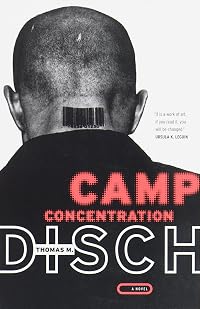
Camp Concentration: A Novel
by Thomas M. Disch
On This Page
Description
In this chillingly plausible work of speculative fiction, Thomas M. Disch imagines an alternate 1970s in which America has declared war on the rest of the world and much of its own citizenry and is willing to use any weapon to assure victory. Louis Sacchetti, a poet imprisoned for draft resistance, is delivered to a secret facility called Camp Archimedes, where he is the unwilling witness to the army's conscienceless experiments in "intelligence maximization." In the experiment, Prisoners show more are given Pallidine, a drug derived from the syphilis spirochete, and their mental abilities quickly rise to the level of genius. Unfortunately, a side effect of Pallidine is death. show lessTags
Recommendations














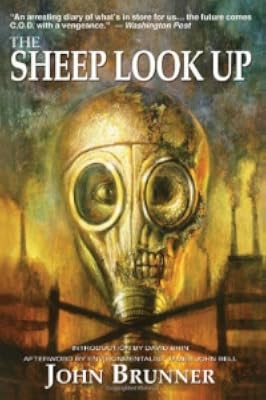
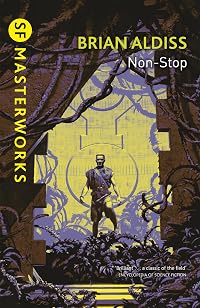

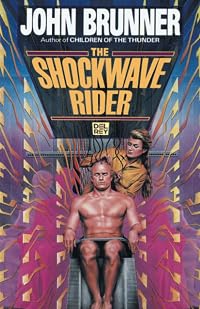
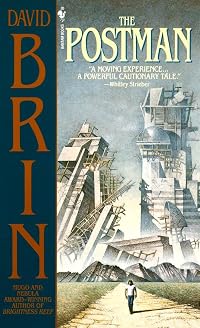

Member Recommendations
by anonymous user
rat_in_a_cage Thomas M. Disch verweist am Anfang seines Romans auf dieses Werk.
Member Reviews
I know some readers don’t class this novel as science fiction at all—it’s not really about the future, it’s not at all about predicting the future, and so on—but I’ve reread Camp Concentration a number of times now and, for me, it’s an example of what SF can be at its very best.
It is the near-future here (or the near-future from 1968 when Thomas Disch wrote it) and there’s a large-scale war in progress. The story itself is set inside a complex called Camp Archimedes, built deep underground in a disused goldmine and which is simultaneously both prison and research facility. Its inmates (who volunteered for this as a way of escaping life in a conventional prison or US Army brig) are human guinea-pigs deliberately show more infected with Pallidine, a preparation containing a bacterium derived from the one which causes syphilis. In real life, syphilis has often been linked with genius—as if the spirochaete which causes the one also somehow unleashes the other—and so it is here: “Sometimes I think maybe it wasn’t such a big mistake. I’ll say this for the stuff they gave us—it beats acid. With acid you think you know everything; with this, you goddamn well do.” There’s quite a price to pay though: in the space of just a few short months this Pallidine not only raises your IQ to genius level—it also kills you.
Into this antechamber of Hell comes poet Louis Sacchetti, jailed as a conscientious objector to the ongoing war, then transferred to Archimedes and assigned the task of keeping a journal as an additional, independent and more subjective record of the experiment as it proceeds. By the time he arrives, some of the inmates have been there for months already and, as their minds soar, are very close to death. And they seem to be wasting their genius: the aim of the programme was to devise entirely new kinds of weaponry for the military, yet the prisoners seem to have become obsessed with … alchemy. Yes, this is what Sacchetti stumbles into: Camp A’s collective genius is being frittered away on concocting an Elixir of Everlasting Life, on attempting to cheat death using alchemy.
I love everything about this book. For a start, there’s the richness and imagery of Disch’s prose (his journalist Louis Sacchetti is a published poet). Then there’s the subterranean setting: laboratory-like, hermetic, a former goldmine. In fact there’s a lot of alchemical symbolism, but just as in medieval Europe where alchemy was sometimes a cover, a harmless-looking front for more covert experimentations, so too here. Much of the medieval version, too, was really about the transformation, not of base metals into gold, but of the alchemist.
Camp Archimedes also resembles a stage—claustrophobic, artificial, the prisoners’ every word and deed minutely scrutinised—and the play being acted out on its boards is familiar enough: selling your soul to Satan in exchange for knowledge and all that. But, with the liquid gold of Pallidine coursing through your veins, might you become cunning enough to outwit even the Devil? show less
It is the near-future here (or the near-future from 1968 when Thomas Disch wrote it) and there’s a large-scale war in progress. The story itself is set inside a complex called Camp Archimedes, built deep underground in a disused goldmine and which is simultaneously both prison and research facility. Its inmates (who volunteered for this as a way of escaping life in a conventional prison or US Army brig) are human guinea-pigs deliberately show more infected with Pallidine, a preparation containing a bacterium derived from the one which causes syphilis. In real life, syphilis has often been linked with genius—as if the spirochaete which causes the one also somehow unleashes the other—and so it is here: “Sometimes I think maybe it wasn’t such a big mistake. I’ll say this for the stuff they gave us—it beats acid. With acid you think you know everything; with this, you goddamn well do.” There’s quite a price to pay though: in the space of just a few short months this Pallidine not only raises your IQ to genius level—it also kills you.
Into this antechamber of Hell comes poet Louis Sacchetti, jailed as a conscientious objector to the ongoing war, then transferred to Archimedes and assigned the task of keeping a journal as an additional, independent and more subjective record of the experiment as it proceeds. By the time he arrives, some of the inmates have been there for months already and, as their minds soar, are very close to death. And they seem to be wasting their genius: the aim of the programme was to devise entirely new kinds of weaponry for the military, yet the prisoners seem to have become obsessed with … alchemy. Yes, this is what Sacchetti stumbles into: Camp A’s collective genius is being frittered away on concocting an Elixir of Everlasting Life, on attempting to cheat death using alchemy.
I love everything about this book. For a start, there’s the richness and imagery of Disch’s prose (his journalist Louis Sacchetti is a published poet). Then there’s the subterranean setting: laboratory-like, hermetic, a former goldmine. In fact there’s a lot of alchemical symbolism, but just as in medieval Europe where alchemy was sometimes a cover, a harmless-looking front for more covert experimentations, so too here. Much of the medieval version, too, was really about the transformation, not of base metals into gold, but of the alchemist.
Camp Archimedes also resembles a stage—claustrophobic, artificial, the prisoners’ every word and deed minutely scrutinised—and the play being acted out on its boards is familiar enough: selling your soul to Satan in exchange for knowledge and all that. But, with the liquid gold of Pallidine coursing through your veins, might you become cunning enough to outwit even the Devil? show less
What should be shocking instead arouses a curiosity. Camp Concentration details a government experiment where prisoners are injected with a compound which makes them progressively hyper intelligent before the syphilis component in the injection leads them to madness and death. A poet who had been imprisoned as a conscientious objector to the forever war is asked to chronicle the process. The inmates stage a play Faustus (by Kit Marlow) and the poet pens a play Auschwitz: a comedy. The whole enterprise feels like it is staged, people speak in speeches, think Marat/Sade meets Punishment Park. The Peter Watkins reference is telling, both Camp Concentration and Punishment Park can't escape feeling dated. our concepts of dissent have show more evolved, been altered. My initial high hopes melted to bemusement. show less
‘Camp Concentration’ reads to me as a novel very much of its time. It was first published in 1968 and is set in a near future that is now decades past. The narrator is a conscientious objector to America’s latest war in Asia, this one apparently including the use of tactical nukes in Malaysia. After an initial period in a normal prison sharing a cell with criminals, he is transferred to a mysterious underground base. There, he learns that the other prisoners are being experimented on and is asked to keep a journal of what he observes. I found Louie the narrator interesting for his obvious unreliability, but also irritating for his racism, homophobia, and florid verbosity. I have no objection to verbosity in principle, however he show more takes it too far into pretentiousness. Of course, since he knows that his journal is being read by the camp authorities, likely he is being deliberately obtuse.
The main themes of the novel appeared to be the interplay between genius & madness and how people reconcile themselves to death. The narrative certainly dances all around the two themes without coming to firm conclusions. There are three major twists in the story, one and a half of which I saw coming. The first of these seemed inevitable, the second plausible but under-explored, and the third surprising and yet oddly lacking impact. I found the novel unsettling and intriguing, yet perhaps the message it conveyed most strongly was the paranoia and confusion associated with the Cold War. Camp Archimedes, where the vast majority of the novel is set, seems ostensibly to be a weapons research facility. Yet it is much less focused than that, the parameters of the experimentation are unclear, and there is a sense that the war itself is no longer important. Whether madness or genius is predominant in our narrator, it is focused on his internal life and channelled into writing fiction. The same appears largely true of the other prisoners, although our narrator clearly takes relatively little interest in other people much of the time. The implication could be that the war is something that those of genius transcend, or perhaps merely disregard? I’m not sure.
Overall, it’s a thought-provoking and unusual little novel without any clear answers to the various questions it asks. I can’t help feeling I am of the wrong generation to understand or truly appreciate it. show less
The main themes of the novel appeared to be the interplay between genius & madness and how people reconcile themselves to death. The narrative certainly dances all around the two themes without coming to firm conclusions. There are three major twists in the story, one and a half of which I saw coming. The first of these seemed inevitable, the second plausible but under-explored, and the third surprising and yet oddly lacking impact. I found the novel unsettling and intriguing, yet perhaps the message it conveyed most strongly was the paranoia and confusion associated with the Cold War. Camp Archimedes, where the vast majority of the novel is set, seems ostensibly to be a weapons research facility. Yet it is much less focused than that, the parameters of the experimentation are unclear, and there is a sense that the war itself is no longer important. Whether madness or genius is predominant in our narrator, it is focused on his internal life and channelled into writing fiction. The same appears largely true of the other prisoners, although our narrator clearly takes relatively little interest in other people much of the time. The implication could be that the war is something that those of genius transcend, or perhaps merely disregard? I’m not sure.
Overall, it’s a thought-provoking and unusual little novel without any clear answers to the various questions it asks. I can’t help feeling I am of the wrong generation to understand or truly appreciate it. show less
The most notable thing about the dystopic view of an alternative America in Thomas Disch's novel is the status of the narrator. This topic is important to me in part because I am currently reading Vladimir Nabokov's Pale Fire for which the issue is paramount, but while thinking about that book my view of the status of other narratives was called into question. I mention this because Camp Concentration is told in the first person as the journal of Louis Sacchetti, poet and draft resistor (this is the 1970s), and the question of its reliability is just as important as in Nabokov's meta-fictional work. The story is somewhat reminiscent of Daniel Keyes' Flowers for Algernon, but with a Dostoevskian twist.
Adding to the complexities of the show more narrative are many literary references, most important of which are references to the fictional poetry of Sacchetti himself and those to the Faust legend as told by Goethe and Marlowe. There is the character of Mordecai Washington who plays Mephistofeles to Sacchetti's Faust. As another inmate undergoing the drug treatment that enhances intelligence, Mordecai has become obsessed with alchemy to the bewilderment of Sacchetti. Unfortunately, the drug is based on a bug that is related to syphilis and results in death of the test subject. The parallels in this book abound, but with the notion of poisoned minds, whether by the State which is engaged in perpetual war) or through the experiments in Camp Archimedes, where Sacchetti has been sent to participate in tests of a new mind-expanding drug, one is reminded that this book was written during the middle of the Viet Nam War era.
Sachetti's journal tells a horrific story, but how much can we believe when it (apparently) has been through the prison censors. Is Sacchetti like one of Plato's banished artists? Is he a revolutionary, in spite of his claims to the contrary? Or is his story a figment of his imagination? The reader will have to decide for himself and this book has more depth than most I have read leading me to recommend it to all. The reviewer who called it "exciting, allegorical, suspenseful, disturbing. Superb prose and [a} novelist's integrity." (Amazing) was close to describing the feelings I had while reading Camp Concentration. Reading it was a journey into an alternative world that, unfortunately, was all too believable. show less
Adding to the complexities of the show more narrative are many literary references, most important of which are references to the fictional poetry of Sacchetti himself and those to the Faust legend as told by Goethe and Marlowe. There is the character of Mordecai Washington who plays Mephistofeles to Sacchetti's Faust. As another inmate undergoing the drug treatment that enhances intelligence, Mordecai has become obsessed with alchemy to the bewilderment of Sacchetti. Unfortunately, the drug is based on a bug that is related to syphilis and results in death of the test subject. The parallels in this book abound, but with the notion of poisoned minds, whether by the State which is engaged in perpetual war) or through the experiments in Camp Archimedes, where Sacchetti has been sent to participate in tests of a new mind-expanding drug, one is reminded that this book was written during the middle of the Viet Nam War era.
Sachetti's journal tells a horrific story, but how much can we believe when it (apparently) has been through the prison censors. Is Sacchetti like one of Plato's banished artists? Is he a revolutionary, in spite of his claims to the contrary? Or is his story a figment of his imagination? The reader will have to decide for himself and this book has more depth than most I have read leading me to recommend it to all. The reviewer who called it "exciting, allegorical, suspenseful, disturbing. Superb prose and [a} novelist's integrity." (Amazing) was close to describing the feelings I had while reading Camp Concentration. Reading it was a journey into an alternative world that, unfortunately, was all too believable. show less
Camp Concentration – American author Thomas M. Disch’s 1968 science/speculative fiction, alternate history set in the near future where the United States has declared war on the entire world and features main character Louis Sacchetti, a poet who resists the draft and chooses prison rather than the army. But what a prison! The poet is sent to a secret camp where prisoners are given an experimental drug without their knowledge or consent, a drug that increases intelligence but in less than a year will most certainly cause death.
Written at the height of the US involvement in Vietnam and in the aftermath of CIA experiments with LSD on unknowing subjects, Disch’s novel is a hornet’s nest of vicious stings. Below are a number of show more stinging direct quotes from the pages of Louis Sacchetti's diary that, in effect, comprises Camp Concentration. I have included a modest comment of my own coupled with each quote. Here goes:
“The cells are as bony-clean as a dream of Philip Johnson (Grand Central Bathroom), while we, the prisoners, carry about with us the incredible, ineradicable smell of our stale, wasted flesh.” ---------- The irony of much military mentality – make sure all objects are scrubbed antiseptic clean as counterpoint to minds of the dehumanizers that are little more than open cesspools inflicting a life of psychic filth on inmates.
“Nasty as this prison is, there is this advantage to it – that it will not lead so promptly, so probably, to death. Not to mention the inestimable advantage of righteousness.” --------- Sounds like our poet is a bit naive. Little does he know that the prison officials will subject any prisoner they want to any torture they want. If things get a bit touchy, well, those officials can have their guards snuff out a prisoner’s life with no more hesitation than stepping on a cockroach. And a prisoner’s righteousness! Such nonsense can be dealt with via all sorts of manipulations, including bad diet, light deprivation and powerful drugs.
“I have an almost desperate desire to understand him, for it is R.M. and his like who perpetuate this incredible war, who believe, with a sincerity I cannot call into doubt, that in doing so they perform a moral action.” ---------- During the Vietnam War, many were the officers and soldiers who, like R.M., thought their participation in the war was highly moral. But many in the country, both in and out of the service, did not agree. It is this contrast the author’s narrator finds fascinating - Louis Sacchetti endeavors to understand the mindset of those like R.M..
Sidebar: During George W. Bush’s war, a huge number of cadets from the Air Force Academy were pumping Mel Gibson’s film about Christ, attempting to bully all cadets, even Jews, into watching and supporting. This to say, when the goal is achieved, when everyone upholds a common religious zeal linked to their inflicting war, there is nobody left like Louis Sacchetti to question the morality of the military action.
“Not since the playground tyrannies of childhood have the rules of the game been so utterly and; Knowledge arrogantly abrogated, and I am helpless to cope.” ---------- Again, the narrator is naïve in assuming just because he is a United States citizen protected by the law that as a prisoner he will retain his rights. Sorry, Louis, the military mentality here says the ends justify the means. As a conscientious objector you have not only surrendered your rights but also your humanity.
“It is an investigation of learning processes. I need not explain to you the fundamental importance of education with respect to the national defense effort. Ultimately it is intelligence that is a nation’s most vital resource, and education can be seen as the process of maximizing intelligence.” ---------- In similar spirit to the LSD experiments conducted by the CIA on unknowning subjects, the death producing drug Louis and others are given will ultimately produce much more intelligent military personnel. Thus the sacrifice of their lives is a contribution to a worthy cause.
“Before you were brought here you may be sure we examined every dirty little cranny of your past. We had to be certain you were harmless.” ---------- Ah, the government has no scruples or misgivings in prying into the privacy of any individual. After all, if you have nothing to hide, you have no grounds to object.
“If I should ever start feeling subjective again, I need only say the word and a guard will bring me a tranquilizer.” ---------- Drugs and counter-drugs to the rescue. Those in power can be so kind and considerate - as long as it servers their ends, that is.
“And it isn’t just Camp Archimedes. It’s the whole universe. The whole goddammed universe is a fucking concentration camp.” ---------- Rather harsh words from one of the other prisoners. To discover why he would say such a thing, I encourage you to read this distinctive novel for yourself.
Thomas M. Disch, age 28 in 1968, the publication year of Camp Concentration show less
Written in the form of a prison memoir by a poet incarcerated as a conscientious objector, Camp Concentration gives Disch the opportunity to ruminate on the nature of authority in both its punitive and intellectual forms. The prose—rich with literary & religious allusions and rants against the capricious exercise of power—effectively tracks the writer’s adjustment to confinement, his response to experimental chemistries, and his inevitable decline. Despite the dark tone of the story, Disch leaves room for hope in his denouement, and the bits of news that reach our prisoner from the outside world reveal a cranky, absurdist sense of humor. In one instance, Andy Warhol is appointed Parks Commissioner by the City Council of Kansas show more City.
But doesn't that just beg the question? Education, memory itself, is but the recapitulation of all the moments of genius in that culture. Education is always breaking down old categories and recombining them in better ways. And who has a better memory, strictly speaking, than the catatonic who resurrects some part of the past in all its completeness, annihilating the present moment utterly? I might go so far as to say that thought itself is a disease of the brain, a degenerative condition of matter.
Kennebunk Porter
Magic Hat #9 show less
But doesn't that just beg the question? Education, memory itself, is but the recapitulation of all the moments of genius in that culture. Education is always breaking down old categories and recombining them in better ways. And who has a better memory, strictly speaking, than the catatonic who resurrects some part of the past in all its completeness, annihilating the present moment utterly? I might go so far as to say that thought itself is a disease of the brain, a degenerative condition of matter.
Kennebunk Porter
Magic Hat #9 show less
“Beauty,” he said solemnly, “is nothing but the beginning of a terror that we are able barely to endure.” And with those words George Wagner heaved the entirety of a considerable breakfast into that pure, Euclidean space.
It’s hard to put into words why these two sentences filled me with despair reading this book, but let me try. First, Disch has a mentally ill man quoting Rilke. If that wasn’t a cliche then, it certainly is now. Second, I really can’t believe that Louis, the narrator and through whose eyes we see this arrogant and at times pretentious mess, looks at a man puking and immediately thinks of the clean, geometric lines into which the man is horking. Louis is a writer though, and as a result, he thinks very show more writerly things. He can’t just speak or write. He expounds. He is a hammy stage actor on paper and it hurts reading his thoughts and then thinking about the implications of those thoughts. Read my entire review here: http://ireadeverything.com/camp-concentration-by-thomas-m-disch/ show less
It’s hard to put into words why these two sentences filled me with despair reading this book, but let me try. First, Disch has a mentally ill man quoting Rilke. If that wasn’t a cliche then, it certainly is now. Second, I really can’t believe that Louis, the narrator and through whose eyes we see this arrogant and at times pretentious mess, looks at a man puking and immediately thinks of the clean, geometric lines into which the man is horking. Louis is a writer though, and as a result, he thinks very show more writerly things. He can’t just speak or write. He expounds. He is a hammy stage actor on paper and it hurts reading his thoughts and then thinking about the implications of those thoughts. Read my entire review here: http://ireadeverything.com/camp-concentration-by-thomas-m-disch/ show less
Members
- Recently Added By
Lists

The Guardian's 1000 Novels Everyone Must Read
1,005 works; 547 members

Best Dystopias
280 works; 271 members

Best Science Fiction Novels
816 works; 426 members

Dystopian and Apocalyptic Literature
350 works; 74 members

Speculative Fiction to Read
706 works; 32 members

Fiction Set Primarily in a Prison
52 works; 24 members

5 Best 5 Years
71 works; 4 members

Blue Pyramid 1,276 Best Books of All Time
1,248 works; 32 members
David Pringle's Science Fiction: The 100 Best Novels
101 works; 9 members

Jones & Newman: Best Horror Books Further Recommended Reading
577 works; 4 members
Author Information

165+ Works 8,111 Members
Thomas Disch was a popular & prolific poet, playwright, essayist, & novelist. He is the author of many works of science fiction & the poetry collections "Dark verses & Light" & "Yes, Let's: New & Selected Poems". (Publisher Provided) Thomas M. Disch was born in Des Moines, Iowa on February 2, 1940. He dropped out of the architecture program at show more Cooper Union, and then left New York University after he sold a short story entitled The Double Timer. His first novel, The Genocides, was published in 1965. His other novels include The House That Fear Built, 334, The M.D., The Priest, The Word of God: Or, Holy Writ Rewritten, and Clara Reeve written under the pseudonym Leonie Hargreave. He won several awards including the 1969 Ditmar Award for Camp Concentration, the O. Henry Award in 1975 for Getting into Death and in 1977 for Xmas, the 1980 John W. Campbell, Jr. Memorial Award for On Wings of Song, and the 1981 British Science Fiction Award for The Brave Little Toaster: A Bedtime Story for Small Appliances. He was also wrote poetry, opera librettos, plays, and criticism of theater, films and art. His collections of poetry include Here I Am, There You Are, Where Are We; The Dark Old House; Yes, Let's: New and Selected Poetry; and Dark Verses and Light. He won the 1999 biennial Michael Braude Award for Light Poetry for A Child's Garden of Grammar, the Locus and Hugo Awards for 1999 for The Dreams Our Stuff is Made Of: How Science Fiction Conquered the World, and the Puschcart Prize for The First Annual Performance Art Festival at Slaughter Rock Battlefield. His criticism appeared in several publications including The Nation, The New York Daily News, and The New York Sun. In 1987, he wrote a script for the television series Miami Vice. He shot himself on July 4, 2008 at the age of 68. (Bowker Author Biography) show less
Some Editions
Awards and Honors
Awards
Notable Lists
Series
Belongs to Publisher Series
Azimut (10)
Work Relationships
Is contained in
Common Knowledge
- Canonical title*
- Στρατόπεδο Α
- Original title
- Camp Concentration
- Original publication date
- 1968
- People/Characters
- Louis Sacchetti
- Important places
- Camp Archimedes
- Epigraph
- Was ich im Traum gesehn, erzähl' ich dir;
Jetzt, Leser, deute dieses Traumbild mir,
Dir selbst, dem Nachbarn. Doch sei dir bewußt,
Daß falsche Deutung du vermeiden mußt.
Denn willst du Böses in dem Traum erra... (show all)ten,
So wirst du, Leser, dir nur selber schaden.
Und richte deinen Blick nicht nur gebannt
Auf meines Traumes äußeres Gewand.
Was er von mir erzählt, soll nicht verleiten
Zum Lachen dich, geschweige denn zum Streiten;
Das steht den Kindern, steht den Narren zu.
Des Traumes wahren Sinn erkenne du!
Du mußt enthüllen, was der Schleier deckt.
Was hinter den Metaphern sich versteckt;
Die echte Botschaft wird dir dann zuteil,
Und dir und andern dient der Traum zum Heil.
Manch unnütz' Ding mag dieser Traum enthalten,
Wirf es von dir! Das Gold gilt's zu behalten,
Auch dann, wenn es von Erz noch nicht umschlossen:
Den Kern nur findet, wer die Frucht genossen.
Und solltest diese Einsicht du versäumen,
Dann werd' ich dennoch immer wieder träumen.
JOHN BUNYAN
›Des Pilgers Reise‹
Now, reader, I have told my dreams to thee,
See if thou canst interpret it to me,
Or to thyself or neighbor. But take heed
of misinterpreting; for that, instead
Of doing good, will but thyself abuse.
By misinte... (show all)rpreting evil issues.
Take heed, also, that thou be not extreme,
In playing with the outside of my dream.
Nor let my figure, nor similitude,
Put thee into a laughter, or a feud;
Leave this for boys, and fools;but as for thee,
Do thou the substance of my matter see.
Put by the curtains;look within my veil;
Turn up my metaphors and do not fail.
There, if thou seekst them, such things to find,
As will be helpful to an honest mind.
What of my dross thou findest there, be bold
To throw away, but yet preserve the gold.
What if my gold be wrapped in ore?
None throws away an apple for the core.
But if thou shalt cast away all in vain,
I know not but 'twill make me dream again.
John Bunyan, Pilgrim's Progress - Dedication
- This book is dedicated, with thanks, to John Sladek and Thomas Mann, two good writers.
- First words
- Young R.M., my Mormon guard, has brought me a supply of paper at last.
- Quotations
- The best we can hope for, in a finite and imperfect world, is that our minds be free...
- Last words
- (Click to show. Warning: May contain spoilers.)It is December 31, another tidiness. Today Mordecai said: "Much that is terrible we do not know. Much that is beautiful we shall discover. Let's sail till we come to the edge."
- Publisher's editor*
- Wolfgang Jeschke
- Blurbers
- Delany, Samuel R.; O'Neil, Dennis; LeGuin, Ursula K.; Aldiss, Brian W.
- Original language
- English
*Some information comes from Common Knowledge in other languages. Click "Edit" for more information.
Classifications
Statistics
- Members
- 1,224
- Popularity
- 20,176
- Reviews
- 34
- Rating
- (3.63)
- Languages
- 8 — Dutch, English, French, German, Greek, Polish, Spanish, Turkish
- Media
- Paper, Ebook
- ISBNs
- 19
- ASINs
- 18