
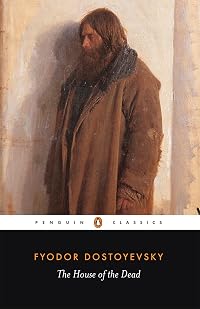
The House of the Dead
by Fyodor Dostoyevsky
On This Page
Description
In 1849, renowned Russian thinker and novelist Fyodor Dostoyevsky was sentenced to execution for his subversive political beliefs. As he awaited his turn in front of the firing squad, Tsar Nicholas I sent a message commuting the writer's sentence to a period of exile in Siberia. He spent the next four years there engaged in hard labor. Dostoyevsky's gripping novel The House of the Dead is based largely on his own experiences in a Siberian labor camp..
Tags
Recommendations

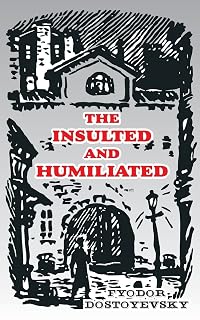

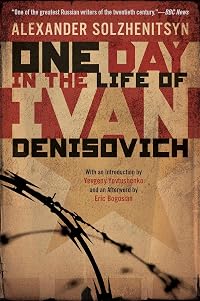
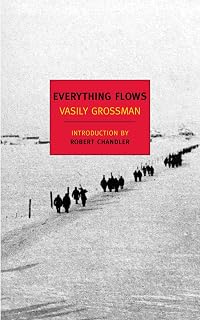
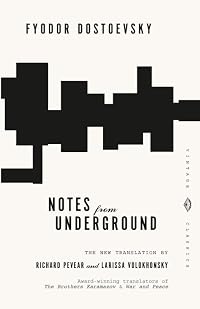
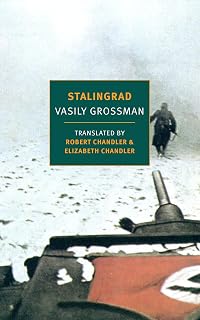
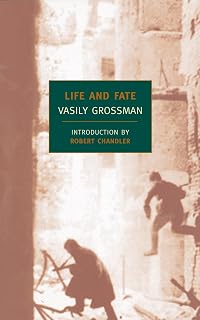

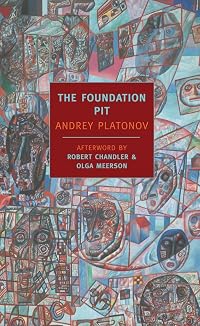





Member Recommendations
rat_in_a_cage Thomas M. Disch verweist am Anfang seines Romans auf dieses Werk.
Member Reviews
This was my first Dostoyevsky. I'd always dreaded reading him because his weight--not only in length but also in canonical import--intimidated me, but the subject matter of this deeply personal book intrigued me and felt like a good introduction given my tastes in fiction. I wasn't wrong. Dostoyevsky's portrayal of life in a 19th-C. Siberian work prison is bleak and sometimes brutal, a stark vision of human depravity as well as humanity's capacity for adapting to--and accepting--almost any depth of depravity. The book is long, occasionally over-descriptive, and sometimes tedious, and the fractured arrangement of events and categorical assortment of characters feels disorienting at times, but even in translation Dostoyevsky has an show more powerful ability to paint deeply moving portraits of human beings, so I appreciated his work with character tremendously. My only real complaint is the ending: the back of the book promised revelation and redemption for the novel's broken, autobiographical narrator, but--though Dostovevsky does attempt to spell this idea out for us--the "resurrection" in the end feels rushed, forced, perhaps even trite, and ultimately anticlimactic, nothing nearly as profound as similar movements in, say, Maribou Stork Nightmares or For Whom the Bell Tolls. Still, the book was moving in places, and utterly brilliant in the middle few chapters, so I will definitely return to Dostoyesvky for some slow leisure reading in the distant future. show less
There is a sentence from Memoirs From The House Of The Dead, which summarizes this entire book neatly: "Here I am, however, trying to classify the whole prison into types: but is this possible?"
Even though this book has been described as the "least Dostoevskian of his works", the mind-numbing precision of Dostoevsky's human psyche analysis still pervades this book strongly, through Alexander Petrovich's observations of the prisoners going about their daily lives in penal servitude. Not all is gloomy and dry though - Dostoevsky's a great narrator as well and he easily breathes personalities and humanity into his characters, some of who also possess a roguish, riotous wit. I'd recommend this to anyone starting out with his books.
Even though this book has been described as the "least Dostoevskian of his works", the mind-numbing precision of Dostoevsky's human psyche analysis still pervades this book strongly, through Alexander Petrovich's observations of the prisoners going about their daily lives in penal servitude. Not all is gloomy and dry though - Dostoevsky's a great narrator as well and he easily breathes personalities and humanity into his characters, some of who also possess a roguish, riotous wit. I'd recommend this to anyone starting out with his books.
Fascinating in a couple thousand ways — among them the apparent necessity of properly motivating a Siberian convict workforce. The barking of armed guards is not enough. The guards had to define the conditions of work, at least in Dostoyevsky's telling, in terms that made the prisoners want to stop lounging in the grass, smoking their pipes and trading insults. Once given sufficient reason to set to the task, they went at it with alacrity. Who knew that workplace psychology applied?
"Novel" (but reads like memoirs) based on his experiences in a Siberian hard labour camp.
Also shades of Robinson Crusoe: self-assurance of his own superiority and the pragmatic and ingenious approach to making the best of things, coupled with earnest self improvement and positive spin (eg "I also particularly enjoyed shovelling snow" - really!?).
Although the conditions were dire, there were some unexpected (to me) freedoms and comforts, and some wry humour, so it's brighter than Kafka in many ways.
There is a huge "cast", but at least the nomenclature is consistent (unlike Crime & Punishment).
Also shades of Robinson Crusoe: self-assurance of his own superiority and the pragmatic and ingenious approach to making the best of things, coupled with earnest self improvement and positive spin (eg "I also particularly enjoyed shovelling snow" - really!?).
Although the conditions were dire, there were some unexpected (to me) freedoms and comforts, and some wry humour, so it's brighter than Kafka in many ways.
There is a huge "cast", but at least the nomenclature is consistent (unlike Crime & Punishment).
This book is Dostoyevsky's memoir of his years in a Siberian prison camp. He did create a fictional first-person narrator for this book, but it's so weak that the narrator can't even keep up the facade enough to remember why he was sent to the camp in the first place. This book is incoherent, meandering and disjointed but nonetheless interesting and reveals great love for humanity. It reads like a collection of sketches and short stories woven together loosely by the complete experience. This was Leo Tolstoy's favorite Dostoyevsky book.
"Just how horrible that time was I have not the strength to tell you....."
Yet he does tell the reader, most effectively. Wow - this book is so powerful.
Dostoyevsky wrote this after he spent four years in a penal colony in Siberia. (He was convicted of treason, sentenced to death, and reprieved at the last moment).
Presented as a fictional account of a noble convicted of murder, I think this is a thinly disquised memoir of his time in the colony. It is not for the faint-hearted, but beautifully written in a controlled and almost journalistic style.
It reminds me of the Primo Levi book Survival in Auschwitz. It shares the same astounding personal control - maintaining detached evaluation and avoiding any anger or resentment in the face show more of great suffering. The essential feature of both seems to be the removal of personality with the lack of freedom and autonomy.
After the first shocking impact of entering the prison passes, the mood becomes more uplifting as he discovers friends and companions and is impressed by their vitality and resilience.
I admire Levi enormously - and now can add Dostoyevsky to that list. Some of the descriptions of flogging and cruelty may not appeal, but I am so glad to have read this book before tackling his later fiction. show less
Yet he does tell the reader, most effectively. Wow - this book is so powerful.
Dostoyevsky wrote this after he spent four years in a penal colony in Siberia. (He was convicted of treason, sentenced to death, and reprieved at the last moment).
Presented as a fictional account of a noble convicted of murder, I think this is a thinly disquised memoir of his time in the colony. It is not for the faint-hearted, but beautifully written in a controlled and almost journalistic style.
It reminds me of the Primo Levi book Survival in Auschwitz. It shares the same astounding personal control - maintaining detached evaluation and avoiding any anger or resentment in the face show more of great suffering. The essential feature of both seems to be the removal of personality with the lack of freedom and autonomy.
After the first shocking impact of entering the prison passes, the mood becomes more uplifting as he discovers friends and companions and is impressed by their vitality and resilience.
I admire Levi enormously - and now can add Dostoyevsky to that list. Some of the descriptions of flogging and cruelty may not appeal, but I am so glad to have read this book before tackling his later fiction. show less
La maison des morts, c'est le bagne de Sibérie où Dostoïevski a purgé comme condamné politique une peine de quatre années de travaux forcés et de six ans de « service militaire ». Mais la maison des morts, c'est aussi le Goulag. La Russie de Dostoïevski est déjà celle de Staline, de Beria, de Vychinski, des grands procès où les accusés rivalisent devant leurs procureurs de contrition et d'aveux. Comme l'écrit Claude Roy, « la Russie d'hier et la Russie moderne sont exemplaires dans la science du 'châtiment' sur deux points essentiels. Elles ont poussé plus avant peut-être qu'aucun peuple l'art de donner aux tortionnaires cette paix de l'esprit que procure la bonne conscience. Elles ont su simultanément contraindre show more un nombre important de leurs victimes, non seulement à subir sans révolte les épreuves infligées, mais à donner à leurs tourmenteurs un total acquiescement. » show less
Members
- Recently Added By
Published Reviews
Opptegnelser fra det døde hus er nært knyttet til Dostojevskijs erfaringer fra tukthusoppholdet i Sibir 1850-54. Den er en merkelig kombinasjon av rapport og fiksjon, med dokumentarisk detaljerte beskrivelser av de forferdelige forhold fangene lever under, og fremfor alt en rekke portretter av mennesker som har bragt seg selv - eller av omstendighetene er blitt bragt - på den gale siden av show more loven, inkludert hovedpersonen selv. show less
added by kirstenlund
Lists

Russian Literature
184 works; 35 members

Fiction Set Primarily in a Prison
52 works; 24 members

Favourite Books
1,817 works; 316 members

Daria Morgendorffer's Bookshelf
70 works; 5 members

Existentialism
90 works; 11 members

philosophy
28 works; 2 members

In Our Time books
4,934 works; 2 members

el
1,139 works; 1 member

My Favorite Russian Novels
37 works; 2 members

current
52 works; 1 member

Which house?
423 works; 16 members

autobiographies, biographies & memoirs
56 works; 1 member
All Things Russia
459 works; 11 members

Found manuscripts
35 works; 2 members

Trinity College Booklist (1951): Class Nine, Foreign Literatures
161 works; 3 members
Writers at Risk
106 works; 17 members

Fyodor Dostoevsky books
17 works; 1 member
Talk Discussions
Past Discussions
Dostoyevsky: The House of the Dead in Author Theme Reads (June 2009)
Author Information

One of the most powerful and significant authors in all modern fiction, Fyodor Dostoevsky was the son of a harsh and domineering army surgeon who was murdered by his own serfs (slaves), an event that was extremely important in shaping Dostoevsky's view of social and economic issues. He studied to be an engineer and began work as a draftsman. show more However, his first novel, Poor Folk (1846), was so well received that he abandoned engineering for writing. In 1849, Dostoevsky was arrested for being a part of a revolutionary group that owned an illegal printing press. He was sentenced to be executed, but the sentence was changed at the last minute, and he was sent to a prison camp in Siberia instead. By the time he was released in 1854, he had become a devout believer in both Christianity and Russia - although not in its ruler, the Czar. During the 1860's, Dostoevsky's personal life was in constant turmoil as the result of financial problems, a gambling addiction, and the deaths of his wife and brother. His second marriage in 1887 provided him with a stable home life and personal contentment, and during the years that followed he produced his great novels: Crime and Punishment (1886), the story of Rodya Raskolnikov, who kills two old women in the belief that he is beyond the bounds of good and evil; The Idiots (1868), the story of an epileptic who tragically affects the lives of those around him; The Possessed (1872), the story of the effect of revolutionary thought on the members of one Russian community; A Raw Youth (1875), which focuses on the disintegration and decay of family relationships and life; and The Brothers Karamazov (1880), which centers on the murder of Fyodor Karamazov and the effect the murder has on each of his four sons. These works have placed Dostoevsky in the front rank of the world's great novelists. Dostoevsky was an innovator, bringing new depth and meaning to the psychological novel and combining realism and philosophical speculation in his complex studies of the human condition. (Bowker Author Biography) show less

Fyodor Dostoyevsky has a Legacy Library. Legacy libraries are the personal libraries of famous readers, entered by LibraryThing members from the Legacy Libraries group.
Some Editions
Awards and Honors
Series
Belongs to Publisher Series
Work Relationships
Is contained in
Has the adaptation
Has as a commentary on the text
Common Knowledge
- Canonical title
- The House of the Dead
- Original title
- Записки из мертвого дома; Zapiski iz mertvogo doma (translit.) (translit.)
- Alternate titles
- Notes from a Dead House; Memoirs from the House of the Dead
- Original publication date
- 1860; 1860: First part; 1862; 1862: Second part; 1862: Complete book; 1971-10: Classics Illustrated Joint European Series E65 (#211 - Sweden) (#211 - Sweden)
- People/Characters
- Aleksandr Petrovich Goryanchikov; Akim Akimych; The Major
- Important places*
- Siperia
- First words
- In the remote regions of Siberia, amidst the steppes, mountains and impassable forests, one sometimes comes across little, plainly built wooden towns of one or often two thousand inhabitants, with two churches – one in the ... (show all)town itself, and the other in the cemetery outside – towns that are more like the good-sized villages of the Moscow district than they are like towns.
(David McDuff translation) - Last words
- (Click to show. Warning: May contain spoilers.)Yes. God go with you! Freedom, a new life, resurrection from the dead... What a glorious moment!
(David McDuff translation) - Original language
- Russian
*Some information comes from Common Knowledge in other languages. Click "Edit" for more information.
Classifications
- Genres
- General Fiction, Fiction and Literature
- DDC/MDS
- 891.733 — Literature & rhetoric Asian Literature East Indo-European and Celtic literatures Russian and East Slavic languages Russian fiction 1800–1917
- LCC
- PG3326 .Z3 — Language and Literature Slavic languages and literatures. Baltic languages. Albanian language Slavic. Baltic. Albanian Russian literature Individual authors and works 1800-1870 Dostoyevsky
- BISAC
Statistics
- Members
- 3,723
- Popularity
- 4,297
- Reviews
- 37
- Rating
- (3.93)
- Languages
- 29 — Bosnian, Catalan, Chinese, Czech, Danish, Dutch, English, Estonian, Finnish, French, German, Greek, Hebrew, Hungarian, Italian, Japanese, Norwegian (Bokmål), Norwegian, Polish, Romanian, Russian, Serbian, Croatian, Slovak, Spanish, Swedish, Turkish, Portuguese (Portugal), Portuguese (Brazil)
- Media
- Paper, Audiobook, Ebook
- ISBNs
- 224
- UPCs
- 3
- ASINs
- 110