On This Page
Description
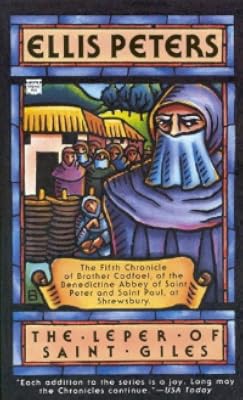
Setting out for the Saint Giles leper colony outside Shrewsbury, Brother Cadfael has more pressing matters on his mind than the grand wedding coming to his abbey. Yet as fate would have it, Cadfael arrives at Saint Giles just as the nuptial party passes the colony's gates. He sees the fragile bride, looking like a prisoner between her two stern guardians, and the bridegroom, an arrogant, fleshy aristocrat old enough to be her grandfather. And he quickly discerns that this union may be more show more damned than blessed. Indeed, a savage murder will interrupt the May-December marriage, and leave Brother Cadfael with a dark, terrible mystery to solve. The key to the killing--and a secret--is hidden among the lepers of Saint Giles. Now, Brother Cadfael's skills must ferret out a sickness not of the body, but of a twisted soul. show lessTags
Recommendations












Member Reviews
Eh. This one did not work for me at all. I was bugged throughout by the vast number of unsympathetic characters and wildly uneven pacing. EP is usually far better at pacing! Even worse: while I spotted the murderer right off (he was the only character with opportunity -- not a red herring in sight!), there was *nothing* in the text to provide him a motive until the (eyerolling) reveal. I hate reveals where the detective springs new information on the audience, as if the writer couldn't be bothered to set things up properly within the story. It's lazy writing, grrr.
(Actually, what it seems like is EP wasn't sure what book she was writing. The various plot threads feel borrowed from totally different stories and clodged together by show more force.)
Disability tag for leprosy. Disability FAIL because of the ending, as if it's better to be dead than disfigured. It's especially noxious in a post-war/veteran context, as it implies that veterans who come home from war with disfiguring injuries or infections have no right to family, love, or happiness and should retire from society, abandon their loved ones and property, and live out their lives as beggars. That is not noble sacrifice. That is fucking AWFUL.
Granted, YES, I KNOW, the history of leprosy and treatment of its patients is fucking awful, but this was published in 1981, not 1881. Grandpa should get to come home. show less
(Actually, what it seems like is EP wasn't sure what book she was writing. The various plot threads feel borrowed from totally different stories and clodged together by show more force.)
Disability tag for leprosy. Disability FAIL because of the ending, as if it's better to be dead than disfigured. It's especially noxious in a post-war/veteran context, as it implies that veterans who come home from war with disfiguring injuries or infections have no right to family, love, or happiness and should retire from society, abandon their loved ones and property, and live out their lives as beggars. That is not noble sacrifice. That is fucking AWFUL.
Granted, YES, I KNOW, the history of leprosy and treatment of its patients is fucking awful, but this was published in 1981, not 1881. Grandpa should get to come home. show less
When an older man marries a woman young enough to be his granddaughter, today's cynic assumes she's married him for his money. In Cadfael's England, Huon de Domville, a baron “well past the prime”, is set to marry 18-year-old heiress Iveta de Massard for her wealth and lands. Iveta is in love with one of his squires, and the young lovers haven't given up all hope of finding a way out for Iveta. However, no one was prepared for what happened next.
Peters avoids the faults of some historical fiction authors whose characters seem to have modern world views. I think the difference is that other writers often emphasize attitudes and opinions, while Peters focuses on emotions and character traits like love and hatred, compassion and show more cruelty, fear and comfort, trust and betrayal. Even though I could see early on where the plot was heading and guessed many of the characters' secrets, there were still some surprises along the way. I haven't read many writers who are able to tell a story so well and resolve the problems so satisfactorily. Highly recommended. show less
Peters avoids the faults of some historical fiction authors whose characters seem to have modern world views. I think the difference is that other writers often emphasize attitudes and opinions, while Peters focuses on emotions and character traits like love and hatred, compassion and show more cruelty, fear and comfort, trust and betrayal. Even though I could see early on where the plot was heading and guessed many of the characters' secrets, there were still some surprises along the way. I haven't read many writers who are able to tell a story so well and resolve the problems so satisfactorily. Highly recommended. show less
This fifth book in the medieval mystery series involving Brother Cadfael is my favorite thus far.
It is 1139, and Brother Cadfael is in charge of the herbarium at the abbey of Saint Peter and Saint Paul of Shrewsbury. His usual assistant, Brother Mark, is serving for a year with the lepers at the nearby asylum of Saint Giles.
Unlike the common citizens, who shun the lepers, the monks are happy to serve them. As Cadfael reflects, “he knows of leprosies of the heart and ulcers of the soul worse than any of these he poulticed and lanced with his herbal medicines.”
The lepers, like the rest of Shrewsbury, are caught up in the excitement of the wedding of a famous baron and his beautiful, much younger, bride-to-be. But a vicious murder show more halts the proceedings, and Cadfael, the unofficial coroner and detective of the abbey, must solve the crime. The focus turns to the asylum, since the place everyone wants to avoid is a perfect place to hide.
Evaluation: I love learning about medieval healing arts and customs via this “whodunnit” series. Moreover, without modern technology, the characters have nothing but their minds to help solve crimes, and sharing in their ratiocinations is most entertaining. show less
It is 1139, and Brother Cadfael is in charge of the herbarium at the abbey of Saint Peter and Saint Paul of Shrewsbury. His usual assistant, Brother Mark, is serving for a year with the lepers at the nearby asylum of Saint Giles.
Unlike the common citizens, who shun the lepers, the monks are happy to serve them. As Cadfael reflects, “he knows of leprosies of the heart and ulcers of the soul worse than any of these he poulticed and lanced with his herbal medicines.”
The lepers, like the rest of Shrewsbury, are caught up in the excitement of the wedding of a famous baron and his beautiful, much younger, bride-to-be. But a vicious murder show more halts the proceedings, and Cadfael, the unofficial coroner and detective of the abbey, must solve the crime. The focus turns to the asylum, since the place everyone wants to avoid is a perfect place to hide.
Evaluation: I love learning about medieval healing arts and customs via this “whodunnit” series. Moreover, without modern technology, the characters have nothing but their minds to help solve crimes, and sharing in their ratiocinations is most entertaining. show less
For slower paced, traditional mysteries that are very skilfully written, you can't go wrong with Brother Cadfael. When Peters created a crusader turned monk, she gave herself a large canvas on which to paint a variety of clever, interesting crimes.
The Leper of St. Giles takes place largely in and around St. Giles, the hospice for lepers that lies just outside Shrewsbury, but it's largely about the wedding of an 18 year old girl, sold off by her guardians for a large portion of her own inheritance, to a cold, unfeeling 60-something land baron who only bought her lands and is taking her on sufferance. Of course she's fragile and innocent and lovely and of course his squire is around the bend in love with her and incandescent over the show more injustice of her treatment. And of course the baron ends up murdered.
There's a plot twist in this book; a rather major one, but it's telegraphed early on, so that I knew long before it was revealed. It's a good one, but if Peters hadn't split the difference, the early guess would have ruined the story. As it is, Peters seems to have covered her bets and kept that reveal from being absolutely pivotal to the plot, making the ultimate solution a surprise, and a tragic one at that.
A few of the series characters readers enjoy aren't here in this book, but there are other characters that endear themselves to the reader. There's a bit of humor here and there too, making this a much more enjoyable read than the last, St. Peters' Fair, which was a good story but dragged. I'd be best pleased if we saw Bran and Joscelin again, though I'm not counting on it. show less
The Leper of St. Giles takes place largely in and around St. Giles, the hospice for lepers that lies just outside Shrewsbury, but it's largely about the wedding of an 18 year old girl, sold off by her guardians for a large portion of her own inheritance, to a cold, unfeeling 60-something land baron who only bought her lands and is taking her on sufferance. Of course she's fragile and innocent and lovely and of course his squire is around the bend in love with her and incandescent over the show more injustice of her treatment. And of course the baron ends up murdered.
There's a plot twist in this book; a rather major one, but it's telegraphed early on, so that I knew long before it was revealed. It's a good one, but if Peters hadn't split the difference, the early guess would have ruined the story. As it is, Peters seems to have covered her bets and kept that reveal from being absolutely pivotal to the plot, making the ultimate solution a surprise, and a tragic one at that.
A few of the series characters readers enjoy aren't here in this book, but there are other characters that endear themselves to the reader. There's a bit of humor here and there too, making this a much more enjoyable read than the last, St. Peters' Fair, which was a good story but dragged. I'd be best pleased if we saw Bran and Joscelin again, though I'm not counting on it. show less
After a while the murders and young love in peril tend to blur one into another when reading these books.
In this installment, a young heiress is being married off against her will to a man old enough to be her grandfather, but the wedding is halted by a murder. A squire who is in love with the young heiress is accused of the murder. Naturally all ends happily, but there is one final, moving, revelation.
Brother Cadfael is an intriguing but comforting character. With him to help and with Father Radulfus to oversee things, what irreparable harm could come to us?
In this installment, a young heiress is being married off against her will to a man old enough to be her grandfather, but the wedding is halted by a murder. A squire who is in love with the young heiress is accused of the murder. Naturally all ends happily, but there is one final, moving, revelation.
Brother Cadfael is an intriguing but comforting character. With him to help and with Father Radulfus to oversee things, what irreparable harm could come to us?
Six-word review: Medieval monastery generates consistently satisfying mysteries.
Extended review:
Once again we have Brother Cadfael sympathetically befriending young lovers while seeking an elusive culprit in order to clear an innocent falsely accused. The pattern of unlamented victims is becoming familiar enough that it's getting pretty easy to predict which despicable obstacle to the happiness of others is likely to wind up in a coffin in Shrewsbury.
Nonetheless, there are surprising enough twists and turns, beguiling enough characters, and fascinating enough details of setting to keep me coming back. I regularly read a fair number of dense, heavy tomes; these quick, reliable puzzles in more than competent prose are a welcome leavening show more in my literary diet. show less
Extended review:
Once again we have Brother Cadfael sympathetically befriending young lovers while seeking an elusive culprit in order to clear an innocent falsely accused. The pattern of unlamented victims is becoming familiar enough that it's getting pretty easy to predict which despicable obstacle to the happiness of others is likely to wind up in a coffin in Shrewsbury.
Nonetheless, there are surprising enough twists and turns, beguiling enough characters, and fascinating enough details of setting to keep me coming back. I regularly read a fair number of dense, heavy tomes; these quick, reliable puzzles in more than competent prose are a welcome leavening show more in my literary diet. show less
Description
A marriage has been arranged between an ageing nobleman and a very young woman. As both parties arrive for the ceremony, there is a savage killing, and Brother Cadfael is called on to investigate. Outside the city stands a leper house, a sanctuary for the sick, and a refuge for the hunted man?
This story seemed rather simple compared to other mysteries I’ve read but it was very well written. It captures well the atmosphere of the middle ages and the situation of the people with leprosy. A young squire is falsely accused of stealing and murder and gets help from the Brothers and the lepers. There were two surprises at the end that I hadn’t figured out. This was an enjoyable historical mystery.
A marriage has been arranged between an ageing nobleman and a very young woman. As both parties arrive for the ceremony, there is a savage killing, and Brother Cadfael is called on to investigate. Outside the city stands a leper house, a sanctuary for the sick, and a refuge for the hunted man?
This story seemed rather simple compared to other mysteries I’ve read but it was very well written. It captures well the atmosphere of the middle ages and the situation of the people with leprosy. A young squire is falsely accused of stealing and murder and gets help from the Brothers and the lepers. There were two surprises at the end that I hadn’t figured out. This was an enjoyable historical mystery.
Members
- Recently Added By
Lists

Historical Fiction
889 works; 91 members

The Top 100 Crime Novels of All Time
100 works; 15 members

Crime and Mysteries to Read
746 works; 31 members

British Mystery
469 works; 14 members

Books I've Read More Than Once
602 works; 49 members

Best Crime Fiction
48 works; 3 members

Books About Murder
313 works; 7 members

Detective Stories
343 works; 5 members

#MysteryBingo2021Silver(Revised)
36 works; 1 member
#MysteryBingo2021Silver(Original)
36 works; 1 member
#JustTheFacts2021Silver
60 works; 1 member

Set in the Middle Ages
42 works; 9 members

Best Mysteries With a Historical Setting
292 works; 160 members

Fiction with Men's Given Names in the Title
302 works; 11 members

Books Read in 2020
4,379 works; 123 members

Books Read in 2017
4,249 works; 129 members

al.vick-parents books
301 works; 1 member

Books Read in 2016
4,666 works; 197 members

Books Read in 2024
4,623 works; 126 members
Author Information

154+ Works 58,674 Members
Ellis Peters is the pseudonym for Edith Pargeter, who was born in Horsehay, Shropshire. She was a chemist's assistant from 1933 to 1940 and participated during World War II in the Women's Royal Navy Service. The name "Ellis Peters" was adopted by Edith Pargeter to clearly mark a division between her mystery stories and her other work. Her brother show more was Ellis and Petra was a friend from Czechoslovakia, thus the name. She came to writing mysteries, she says, "after half a lifetime of novel-writing." Her detective fiction features well-rounded, knowledgeable characters with whom the reader can empathize. Her most famous literary creation is the medieval monk Brother Cadfael. The blend of history and the formula of the detective story gives Peters's works their popular appeal. As detective hero, Brother Cadfael remains faithful to the requirements of the formula, yet the historical milieu in which he operates is both fully realized and well textured. Peters received the Mystery Writers of America's Edgar Award in 1963 and the Crime Writers Association's Silver Dagger Award in 1981. (Bowker Author Biography) show less
Some Editions
Awards and Honors
Notable Lists
Series

Belongs to Publisher Series
Work Relationships
Common Knowledge
- Canonical title
- The Leper of Saint Giles
- Original title
- The Leper of Saint Giles
- Alternate titles*
- Der Hochzeitsmord
- Original publication date
- 1981
- People/Characters
- Brother Cadfael; Brother Denis; Brother Edmund; Sister Magdalen; Brother Mark; Brother Oswin (show all 20); Prior Robert Pennant; Gilbert Prestcote (sheriff); Abbot Radulfus; Simon Aguilon; Bran (child); Huon de Domville; Canon Eudo; Guy FitzJohn; Lazarus; Joscelin Lucy; Iveta de Massard; Agnes Picard; Sir Godfrid Picard; Avice of Thornbury
- Important places
- Shrewsbury, Shropshire, England, UK (12th century); Godric's Ford, Shropshire, England, UK (12th century)
- Important events
- Nineteen Year Winter (1135 | 1154)
- Related movies
- Cadfael (1994 | IMDb); The Leper of St. Giles (1994 | IMDb)
- Epigraph
- [None]
- Dedication
- [None]
- First words
- Brother Cadfael set out from the gatehouse, that Monday afternoon of October, in the year of 1139, darkly convinced that something ominous would have happened before he re-entered the great court, though he had no reason to s... (show all)uppose that he would be absent more than an hour or so.
- Last words
- (Click to show. Warning: May contain spoilers.)Certain it is he came no more to Shrewsbury.
- Original language*
- Inglese
- Disambiguation notice
- This is the main work for the The Leper of Saint Giles by Ellis Peters. Please do not combine with any adaptation (e.g. the BBC TV adaptation starring Derek Jacobi), abridgement (e.g. the abridged audio recording read ... (show all)by Derek Jacobi), etc.
*Some information comes from Common Knowledge in other languages. Click "Edit" for more information.
Classifications
Statistics
- Members
- 2,152
- Popularity
- 9,465
- Reviews
- 52
- Rating
- (3.92)
- Languages
- 14 — Czech, Dutch, English, Estonian, Finnish, French, German, Italian, Japanese, Norwegian (Bokmål), Polish, Portuguese, Spanish, Swedish
- Media
- Paper, Audiobook, Ebook
- ISBNs
- 66
- UPCs
- 2
- ASINs
- 38