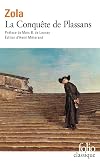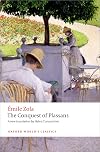
The Conquest of Plassans
by Émile Zola
Les Rougon-Macquart (publication order) (4), Les Rougon-Macquart (Zola's recommended reading order) (6)
There is 1 current discussion about this work.
On This Page
Description
'Abbé Faujas has arrived!'The arrival of Abbé Faujas in the provincial town of Plassans has profound consequences for the community, and for the family of François Mouret in particular. Faujas and his mother come to lodge with François, his wife Marthe, and their three children, and Marthe quickly falls under the influence of the priest. Ambitious and unscrupulous, Faujas gradually infiltrates into all quarters of the town, intent on political as well as religious conquest. Intrigue, show more slander, and insinuation tear the townsfolk apart, creating suspicion and distrust, and driving theMourets to ever more extreme actions.The fourth novel in Zola's Rougon-Macquart sequence, The Conquest of Plassans returns to the fictional Provençal town from which the family sprang in The Fortune of the Rougons. In one of the most psychological of his novels, Zola links small-town politics to the greater political and national dramas of the Second Empire.ABOUT THE SERIES: For over 100 years Oxford World's Classics has made available the widest range of literature from around the globe. Each affordable volume reflects Oxford's commitment to scholarship, providing the most accurate text plus a wealth of other valuable features, including expert introductions by leading authorities, helpful notes to clarify the text, up-to-date bibliographiesfor further study, and much more.Readership: Readers of classic fiction, French literature, the novels of Zola; students of Modern Languages, the novel, Realism and Naturalism, cultural studies, religion in literature. show lessTags
Recommendations
































Member Reviews
A dramatic entry in the Rougon-Macquart series that takes us back to the town of Plassans and continues to build on the hereditary themes between the two branches of the family. The main characters are the married couple Marthe, who is a Rougon, and François Mouret, who is Macquart. They live with their 3 children in Plassans and while life is not perfect, it has a "normal" feel. Then they decide to rent their upstairs to a new priest in town who is clearly down on his luck - Abbe Faujas and his mother. At first they are quiet and unobtrusive, but they slowly begin to overtake the home and the arrival of Faujas's sister and her husband make this overthrow of the Mouret's even more dramatic. Abbé Faujas insinuates himself into not only show more Mouret's home, but also into the political and societal life of the town. His rise parallels the dramatic fall of Marthe and Mouret, though in typical Zola fashion, things don't end well for anyone - to say the least.
I really enjoyed this one. It had everything I expect from Zola - drama, insidious characters, larger themes, and a great set piece - this time involving a badminton match. Still not where I would begin with Zola, but I think anyone reading the series can look forward to this one. show less
I really enjoyed this one. It had everything I expect from Zola - drama, insidious characters, larger themes, and a great set piece - this time involving a badminton match. Still not where I would begin with Zola, but I think anyone reading the series can look forward to this one. show less
This is the sixth volume in Zola's 20 volume Rougon-Macquart cycle of novels set against the backdrop of the rule of Napoleon III in the 1850s and 60s. This backdrop is more prominent than in the immediately previous novel The Dream; nevertheless like that novel, this story basically focuses around one household. M. Mouret and his wife Marthe live with (in modern parlance) their two late teenage sons and a daughter with learning difficulties. They invite into their home a priest Abbe Faujas and his mother who are looking for rented accommodation. Before long, the newcomers have also invited in Faujas's sister Olympe and her feckless husband. And they proceed to take over the household in subtle ways, pitting family members against each show more other and causing the Mouret parents to turn against each other, and against their children. The story really takes off in dramatically violent and destructive ways in the last third with a shocking denouement. For me this lifted the novel up and it is probably my favourite of the series so far for the shocking and tragic portrayal of family conflict it depicts. show less
‘You will excuse us for receiving you in this way in our poor dwelling. We cannot all be wealthy.’
After three compelling, and completely different novels, Zola's Rougon-Macquart takes yet another turn in the fourth installment. Returning us to Plassans, and numerous characters from the first novel, this is one of Zola's anti-clerical novels, a sign of the foreboding role the Church had played in propagating both the Monarchy and then the Empire (and also of the author's own biases)!
I don't think I liked this one as much as the previous three, although I very much appreciated seeing the core members of the families again. For two reasons, perhaps. 1) I think that greater knowledge of the period is needed not to understand the plot show more which is straightforward, but to understand the implications. And 2) I prefer the literary artistry of the sumptuous descriptions in The Belly of Paris, the overt symbolism of The Kill, and the sheer narrative breadth of The Fortune of the Rougons. For all of the above, I suspect normal people might enjoy this novel more than me! It's pacy and more focused than the others.
Nevertheless, what shines here is Zola's gift for characterisation. Especially Marthe Rougon, the character at the centre of the novel, whose rise and fall are not just visible in terms of the narrative but in terms of her reactions, her thoughts, her every breath. show less
After three compelling, and completely different novels, Zola's Rougon-Macquart takes yet another turn in the fourth installment. Returning us to Plassans, and numerous characters from the first novel, this is one of Zola's anti-clerical novels, a sign of the foreboding role the Church had played in propagating both the Monarchy and then the Empire (and also of the author's own biases)!
I don't think I liked this one as much as the previous three, although I very much appreciated seeing the core members of the families again. For two reasons, perhaps. 1) I think that greater knowledge of the period is needed not to understand the plot show more which is straightforward, but to understand the implications. And 2) I prefer the literary artistry of the sumptuous descriptions in The Belly of Paris, the overt symbolism of The Kill, and the sheer narrative breadth of The Fortune of the Rougons. For all of the above, I suspect normal people might enjoy this novel more than me! It's pacy and more focused than the others.
Nevertheless, what shines here is Zola's gift for characterisation. Especially Marthe Rougon, the character at the centre of the novel, whose rise and fall are not just visible in terms of the narrative but in terms of her reactions, her thoughts, her every breath. show less
Although published fourth in the Rougon-Macquart cycle, I read The Conquest of Plassans sixth, per Zola's recommended reading order. It returns the reader to the setting of the first novel, The Fortune of the Rougons. The village of Plassans has quieted since the tumult of the coup. Félicité and Pierre are living in a grand house, where Félicité gives weekly salons. Their daughter Marthe and her husband, François Mouret, are the principles of the family in this book. The two are first cousins, Marthe being a Rougon and François, a Macquart. The two lead a peaceful retired life with their three teenage children. Against their polite protestations, the Abbé Bourrette has rented some rooms in their house for a newly arrived priest, show more Abbé Faujas and his mother. François is against it because he dislikes the clergy, Marthe because she enjoys the peace of their home. But Faujas arrives, and they take him in. At first, they find him a quiet and humble man, and François is unable to find any faults, despite spying on him. But slowly, cunningly, Faujas begins to manipulate not only the Mouret family, but the entire town.
Zola focuses on the influence of the clergy on local politics in this book. I found the middle section, which deals most heavily with the politics a bit slow and difficult, as I struggled to keep track of who is a Legitimist, an Orléanist, a Republican, or a Bonapartist. The rest of the book, and it's focus on the Mouret family, was more to my taste. As usual, Zola's writing is lovely, and the characters are well-drawn and fascinating. A solid entry to the cycle, though not my favorite. show less
Zola focuses on the influence of the clergy on local politics in this book. I found the middle section, which deals most heavily with the politics a bit slow and difficult, as I struggled to keep track of who is a Legitimist, an Orléanist, a Republican, or a Bonapartist. The rest of the book, and it's focus on the Mouret family, was more to my taste. As usual, Zola's writing is lovely, and the characters are well-drawn and fascinating. A solid entry to the cycle, though not my favorite. show less
Quando il silenzio conquista, ossia l’abate Faujas.
Marthe era desolata. Guardava, intorno a sé, la casa felice, immersa nell’addio del sole, il giardino, dove l’ombra diventava più scura; guardava i suoi figli, la sua felicità addormentata, raccolta, lì, in quello stretto angolo. (8)
L’abate Faujas, ogni volta che la tirava su questo argomento, avvertiva in lei (Marthe) una vaga amarezza. Era certamente felice, come assicurava; ma egli credeva di individuare antichi conflitti in quella natura nervosa, acquietata ora dall’avvicinarsi della quarantina. E s’immaginava il dramma: una moglie e un marito, simili all’aspetto, che tutti i conoscenti giudicavano fatti l’uno per l’altra, mentre invece dentro di loro, nel show more profondo del loro essere, il fermento dell’origine bastarda e l’irrequietezza del sangue misto e sempre ribelle esasperavano l’antagonismo di due temperamenti diversi. Poi, si spiegava le rinunce fatali di una vita ritmata, l’usura dei caratteri per le cure quotidiane del commercio, la torpida indolenza di quelle due nature nella fortuna conquistata in quindici anni e goduta modestamente, in fondo al quartiere deserto di una piccola città. Oggi, nonostante fossero tutti e due ancora giovani, sembrava che in loro non fosse rimasta che cenere. (88)
L’abate Faujas, nel mezzo di tanta gioia trionfante, rimaneva serio. Per lui, la vittoria era una pesante realta’. Il cicaleccio della signora Condamin lo stancava; la soddisfazione di quegli ambiziosi volgari lo riempiva di disprezzo. In piedi, appoggiato contro il caminetto, sembrava sognare, con gli occhi fissi lontano. Era il padrone, non aveva piu’ bisogno di mentire, di dominare i suoi istinti; poteva allungare la mano, prendere la citta’, farla tremare. Quell’alta figura nera riempiva il salotto. A poco a poco, le poltrone si erano avvicinate, formando un cerchio intorno a lui. Gli uomini si aspettavano che dicesse una parola di soddisfazione; le donne lo sollecitavano con lo sguardo, come schiave sottomesse. Ma egli, brutalmente, rompendo il cerchio, se ne ando’ via per primo, accomiatandosi con brevi parole. (306-7)
L’abate Faujas, impassibile, lasciava passare quel fiotto di parole ardenti.
Non c’e’ niente, non c’e’ niente! - continuo’ lei (Marthe) con trasporto; - allora mi avete ingannata… Mi avete promesso il cielo, di sotto, sulla terrazza, durante quelle serate piene di stelle. Io ho accettato. Mi sono venduta, mi sono abbandonata. Ero pazza, durante quelle prime lusinghe della preghiera… Oggi i conti non tornano piu’; desidero ritornare nel mio angolo, ritrovare la mia vita tranquilla. Mettero’ tutti alla porta, sistemero’ la casa, rammendero’ la biancheria al mio solito posto, sulla terrazza… Si’, mi piaceva rammendare la biancheria. Cucire non mi stancava… E voglio che Desiree stia accanto a me, sul suo panchetto; rideva, faceva le bambole, cara bambina innocente… (329)
E per come va a finire… Zola non e’ Dickens... show less
Marthe era desolata. Guardava, intorno a sé, la casa felice, immersa nell’addio del sole, il giardino, dove l’ombra diventava più scura; guardava i suoi figli, la sua felicità addormentata, raccolta, lì, in quello stretto angolo. (8)
L’abate Faujas, ogni volta che la tirava su questo argomento, avvertiva in lei (Marthe) una vaga amarezza. Era certamente felice, come assicurava; ma egli credeva di individuare antichi conflitti in quella natura nervosa, acquietata ora dall’avvicinarsi della quarantina. E s’immaginava il dramma: una moglie e un marito, simili all’aspetto, che tutti i conoscenti giudicavano fatti l’uno per l’altra, mentre invece dentro di loro, nel show more profondo del loro essere, il fermento dell’origine bastarda e l’irrequietezza del sangue misto e sempre ribelle esasperavano l’antagonismo di due temperamenti diversi. Poi, si spiegava le rinunce fatali di una vita ritmata, l’usura dei caratteri per le cure quotidiane del commercio, la torpida indolenza di quelle due nature nella fortuna conquistata in quindici anni e goduta modestamente, in fondo al quartiere deserto di una piccola città. Oggi, nonostante fossero tutti e due ancora giovani, sembrava che in loro non fosse rimasta che cenere. (88)
L’abate Faujas, nel mezzo di tanta gioia trionfante, rimaneva serio. Per lui, la vittoria era una pesante realta’. Il cicaleccio della signora Condamin lo stancava; la soddisfazione di quegli ambiziosi volgari lo riempiva di disprezzo. In piedi, appoggiato contro il caminetto, sembrava sognare, con gli occhi fissi lontano. Era il padrone, non aveva piu’ bisogno di mentire, di dominare i suoi istinti; poteva allungare la mano, prendere la citta’, farla tremare. Quell’alta figura nera riempiva il salotto. A poco a poco, le poltrone si erano avvicinate, formando un cerchio intorno a lui. Gli uomini si aspettavano che dicesse una parola di soddisfazione; le donne lo sollecitavano con lo sguardo, come schiave sottomesse. Ma egli, brutalmente, rompendo il cerchio, se ne ando’ via per primo, accomiatandosi con brevi parole. (306-7)
L’abate Faujas, impassibile, lasciava passare quel fiotto di parole ardenti.
Non c’e’ niente, non c’e’ niente! - continuo’ lei (Marthe) con trasporto; - allora mi avete ingannata… Mi avete promesso il cielo, di sotto, sulla terrazza, durante quelle serate piene di stelle. Io ho accettato. Mi sono venduta, mi sono abbandonata. Ero pazza, durante quelle prime lusinghe della preghiera… Oggi i conti non tornano piu’; desidero ritornare nel mio angolo, ritrovare la mia vita tranquilla. Mettero’ tutti alla porta, sistemero’ la casa, rammendero’ la biancheria al mio solito posto, sulla terrazza… Si’, mi piaceva rammendare la biancheria. Cucire non mi stancava… E voglio che Desiree stia accanto a me, sul suo panchetto; rideva, faceva le bambole, cara bambina innocente… (329)
E per come va a finire… Zola non e’ Dickens... show less
After two books set in the metropolis, we return to the claustrophobic small-town setting of Plassans (Aix-en-Provence) for this fourth book in the series. The Mourets have let their top floor to Abbé Foujas, who has been transferred to a minor appointment in the cathedral at Plassans after getting into some unspecified bother in Besançon. Over a period of several years, we see the scruffy, tetchy and apparently unsophisticated priest - without any obvious effort - gradually gaining more and more influence over the Mouret household, the local clergy, and the politics of the town. And of course, we know how it's all going to end, since this is Zola: catastrophically.
Because of the way that the political story is mostly told indirectly show more through the small-scale domestic tragedy of the Mourets, Zola doesn't give himself much room in this book for the kind of narrative excesses that we are looking for in a Zola novel, especially if we've just read Le ventre de Paris. There are some nice minor flourishes, like the two grand social-work projects the Abbé presides over, both designed with the sole purpose of preventing under-age working-class girls from debauching the sons of the haute-bourgeoisie (well, it couldn't happen the other way round, could it?), and the bishop's lovely young chaplain who spends his time either reading Ovid to Monseigneur or playing badminton, and there's a very Zolaesque grand guignol final scene, but the rest is really rather flat. Barchester Towers with a higher body-count and fewer laughs... show less
Because of the way that the political story is mostly told indirectly show more through the small-scale domestic tragedy of the Mourets, Zola doesn't give himself much room in this book for the kind of narrative excesses that we are looking for in a Zola novel, especially if we've just read Le ventre de Paris. There are some nice minor flourishes, like the two grand social-work projects the Abbé presides over, both designed with the sole purpose of preventing under-age working-class girls from debauching the sons of the haute-bourgeoisie (well, it couldn't happen the other way round, could it?), and the bishop's lovely young chaplain who spends his time either reading Ovid to Monseigneur or playing badminton, and there's a very Zolaesque grand guignol final scene, but the rest is really rather flat. Barchester Towers with a higher body-count and fewer laughs... show less
6.5/10
I was beginning to fear that this one would never end. No matter how much I read, there were always at least 100 pages left to go. I felt certain I'd read the equivalent of two thousand pages when I looked up to see "100 more to go". Was Penelope at work, on her magic shroud? While I slept, she added 100 pages each night. This is surely the most boring book in the Rougon-Macquart series yet. (This is my 4th.)
Multiple stray thoughts occurred to me as I was sighing and bemoaning my way through this one: I would have enjoyed this as a teenager, just "eating up" every word of Zola's religious and political caricatures; I would have enjoyed this as a young uni student as we dissected and parsed every precious Zolaian (is that a word? show more if not it should be) thought. Now: not so much. Now, it just annoyed me because the more I read, the more absurd it became. I even read it in French for a while, thinking that the translator had dropped the ball on this one, as often happens with Zola. Nope. The translator was bang-on, in sentiment, in cultural reference, in boring old prose.
"Mon Dieu. Mon Dieu. Would that Abbé Faujas and precious Marthe Mouret be swallowed whole by the religious fire that burns them," I thought. Oh, such prophecies, in the old and wise! I could have written this in my sleep and made it a barn-burning mini-series for television.
Plodding. Lumbering. Dragging. Floundering. Hummmmdrrum. I still hear the low base rumbling in my skull. This book has driven me to the edge of distraction.
These characters were too far-fetched even for me, and I say that having lived in the shadow (and grip) of small-town (catholic) Ontario where the priests and nuns ruled the communities with iron fists; where the manipulations and maneuverings could have been the prototypes for Zola's people, had they lived in his time. But even they, in their machinations, could never have gone this far.
Zola's main characters don't work here, because the caricatures are flawed; they are consistently evil and nasty specimens, without once achieving a breath of kind humanity. Human nature is not like that, and I am surprised that Zola should paint them this way. Even 'umble Uriah has his moments of tenderness -- where he reveals the soft underbelly of his humanity. Here, Abbé Faujas is persistently evil, from the moment he walks into the town with his gnarly crone of a mother in tow, to the moment he expires on the mythical pyre. (One can almost hear Satan cackling, and crackling away, over Faujas's demise.)
Marthe Mouret is the epitome of religious ecstasy gone badder-than-bad: a portrait incarnate of unrelenting religious fervour and obeisance-to-the-Black-Cloth in misplaced adoration: in loving the man, she thinks she is loving God. Such women were indeed created by the Catholic Church, but never such a woman as Mme Mouret.
François Mouret plays the fool from beginning to end, a relentless hard-headed, narcissistic moron who is saved from himself by his own wilful madness.
The dozens of other evil characters that populate the novel are no more than stick figures of evilness, which once again surprised me in Zola. I'd expected more depth and perspicuity from him. (Perhaps by this point in the series he was getting tired of his own mission, of painting the baseness of human nature and so let loose like a cannon shot, without much accuracy.)
As I slept on this, and reflected more, my estimation fell even more, and so slipped to a mere 6.5/10 stars because of the total implausibility of this scenario. I've never had difficulty in suspending my disbelief in literature, for the sake of a good story, but this one, for some reason stretches the very bounds of cockeyed credulity. This one was so over the top, that even Le ventre de Paris was less gormandizing. show less
I was beginning to fear that this one would never end. No matter how much I read, there were always at least 100 pages left to go. I felt certain I'd read the equivalent of two thousand pages when I looked up to see "100 more to go". Was Penelope at work, on her magic shroud? While I slept, she added 100 pages each night. This is surely the most boring book in the Rougon-Macquart series yet. (This is my 4th.)
Multiple stray thoughts occurred to me as I was sighing and bemoaning my way through this one: I would have enjoyed this as a teenager, just "eating up" every word of Zola's religious and political caricatures; I would have enjoyed this as a young uni student as we dissected and parsed every precious Zolaian (is that a word? show more if not it should be) thought. Now: not so much. Now, it just annoyed me because the more I read, the more absurd it became. I even read it in French for a while, thinking that the translator had dropped the ball on this one, as often happens with Zola. Nope. The translator was bang-on, in sentiment, in cultural reference, in boring old prose.
"Mon Dieu. Mon Dieu. Would that Abbé Faujas and precious Marthe Mouret be swallowed whole by the religious fire that burns them," I thought. Oh, such prophecies, in the old and wise! I could have written this in my sleep and made it a barn-burning mini-series for television.
Plodding. Lumbering. Dragging. Floundering. Hummmmdrrum. I still hear the low base rumbling in my skull. This book has driven me to the edge of distraction.
These characters were too far-fetched even for me, and I say that having lived in the shadow (and grip) of small-town (catholic) Ontario where the priests and nuns ruled the communities with iron fists; where the manipulations and maneuverings could have been the prototypes for Zola's people, had they lived in his time. But even they, in their machinations, could never have gone this far.
Zola's main characters don't work here, because the caricatures are flawed; they are consistently evil and nasty specimens, without once achieving a breath of kind humanity. Human nature is not like that, and I am surprised that Zola should paint them this way. Even 'umble Uriah has his moments of tenderness -- where he reveals the soft underbelly of his humanity. Here, Abbé Faujas is persistently evil, from the moment he walks into the town with his gnarly crone of a mother in tow, to the moment he expires on the mythical pyre. (One can almost hear Satan cackling, and crackling away, over Faujas's demise.)
Marthe Mouret is the epitome of religious ecstasy gone badder-than-bad: a portrait incarnate of unrelenting religious fervour and obeisance-to-the-Black-Cloth in misplaced adoration: in loving the man, she thinks she is loving God. Such women were indeed created by the Catholic Church, but never such a woman as Mme Mouret.
François Mouret plays the fool from beginning to end, a relentless hard-headed, narcissistic moron who is saved from himself by his own wilful madness.
The dozens of other evil characters that populate the novel are no more than stick figures of evilness, which once again surprised me in Zola. I'd expected more depth and perspicuity from him. (Perhaps by this point in the series he was getting tired of his own mission, of painting the baseness of human nature and so let loose like a cannon shot, without much accuracy.)
As I slept on this, and reflected more, my estimation fell even more, and so slipped to a mere 6.5/10 stars because of the total implausibility of this scenario. I've never had difficulty in suspending my disbelief in literature, for the sake of a good story, but this one, for some reason stretches the very bounds of cockeyed credulity. This one was so over the top, that even Le ventre de Paris was less gormandizing. show less
Members
- Recently Added By
Lists

Favourite Books
1,817 works; 316 members
Talk Discussions
Current Discussions
July 2025 The Conquest of Plassans (La Conquête de Plassans) Intro-Chapters 1-3 in Emile Zola Group Read (January 4)
Past Discussions
The Conquest of Plassans by Zola in Author Theme Reads (May 2013)
Author Information

676+ Works 35,725 Members
Zola was the spokesperson for the naturalist novel in France and the leader of a school that championed the infusion of literature with new scientific theories of human development drawn from Charles Darwin (see Vol. 5) and various social philosophers. The theoretical claims for such an approach, which are considered simplistic today, were show more outlined by Zola in his Le Roman Experimental (The Experimental Novel, 1880). He was the author of the series of 20 novels called The Rougon-Macquart, in which he attempted to trace scientifically the effects of heredity through five generations of the Rougon and Macquart families. Three of the outstanding volumes are L'Assommoir (1877), a study of alcoholism and the working class; Nana (1880), a story of a prostitute who is a femme fatale; and Germinal (1885), a study of a strike at a coal mine. All gave scope to Zola's gift for portraying crowds in turmoil. Today Zola's novels have been appreciated by critics for their epic scope and their visionary and mythical qualities. He continues to be immensely popular with French readers. His newspaper article "J'Accuse," written in defense of Alfred Dreyfus, launched Zola into the public limelight and made him the political conscience of his country. (Bowker Author Biography) show less
Some Editions
Series

Les Rougon-Macquart (publication order)
21 works (4)

Les Rougon-Macquart (Zola's recommended reading order)
20 works (6)
Belongs to Publisher Series
Work Relationships
Common Knowledge
- Canonical title
- The Conquest of Plassans
- Original title
- La Conquête de Plassans
- Alternate titles
- A Priest in the House
- Original publication date
- 1874
- People/Characters
- Marthe Rougon; Francois Mouret; Octave Mouret; Serge Mouret; Desiree Mouret; Abbé Faujas
- Important places
- Plassans, Provence-Alpes-Côte d'Azur, France (fictional)
- Original language
- French
Classifications
Statistics
- Members
- 448
- Popularity
- 68,118
- Reviews
- 16
- Rating
- (3.76)
- Languages
- 10 — Dutch, English, French, German, Hungarian, Italian, Polish, Romanian, Spanish, Turkish
- Media
- Paper, Audiobook, Ebook
- ISBNs
- 49
- ASINs
- 19